Cart
0
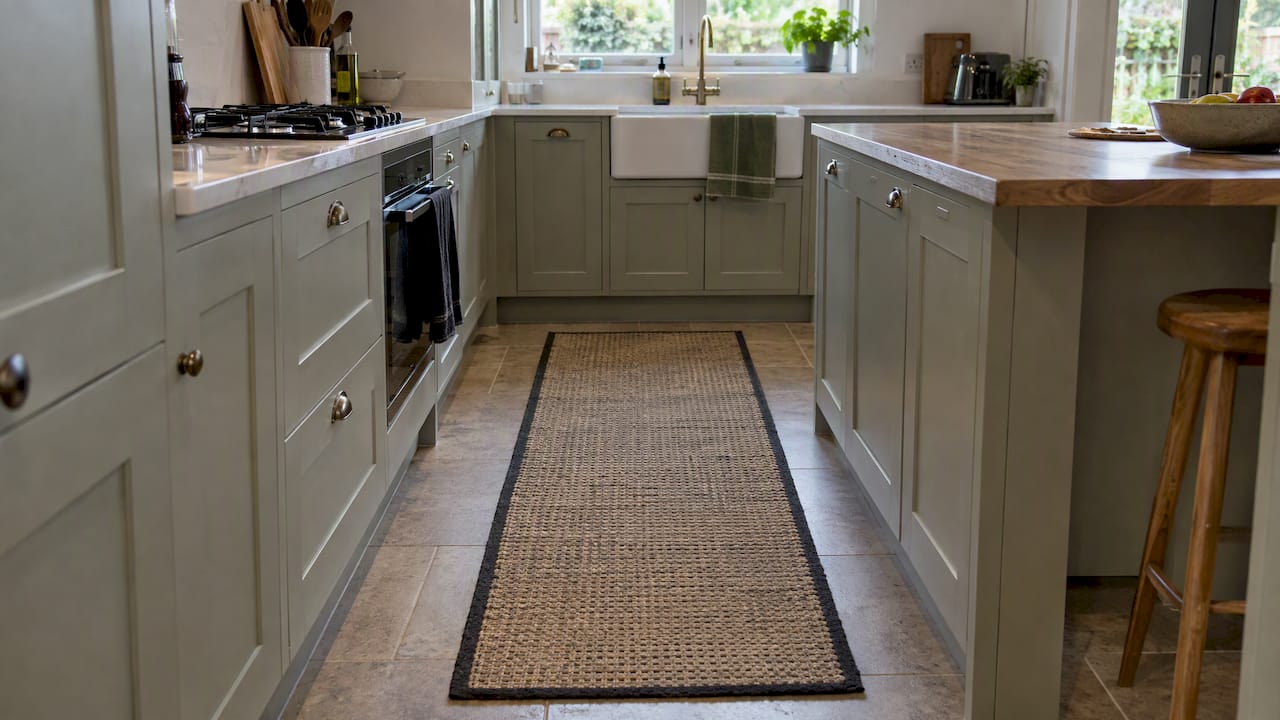
Try a 60 to 90 cm wide runner, choosing length by layout: 180 to 215 cm for short runs near the sink or hob, and 245 to 305 cm for islands or long galley kitchens. Width matters more than length for comfort, since it governs clearance. Always measure your kitchen’s narrowest point first and check the clearance guidance below before buying.
TL;DR:
- Most kitchens require a runner width of 60 to 90 cm, with length depending on the length of the work zone, typically 180 to 305 cm.
- Measure the narrowest point in your kitchen first to determine the maximum runner width, then account for door and drawer clearance before purchasing.
- Low-pile, flatweave, or washable synthetic runners are best for durability, stain resistance, and ease of cleaning in high-traffic, spill-prone areas.
- For longer runs over 2.5 meters, a two-piece runner set is easier to lift for cleaning and prevents uneven wear.
- Custom or cut-to-size runners are available from some retailers, but confirm finished measurements, backing, and care instructions before buying.
Table of Contents
- Which runner sizes suit which kitchen layouts
- Measuring your kitchen and checking clearance
- Which materials and pile heights work best in a kitchen
- Using a runner to zone an open-plan kitchen
- Matching runner sizes to real kitchen measurements
- Where to buy the right size, including custom options
- What we see go wrong with kitchen runner sizing
- The shop option: washable runners and kitchen mats from Homable
- FAQ
- Sources
Which runner sizes suit which kitchen layouts
Kitchen shape decides more about runner size than taste does. A galley kitchen with two facing runs needs a narrower rug than a single-wall kitchen with open floor on one side, and an island changes the clearance sums completely.
Width is the first decision. In a very narrow galley passage, a 60 cm runner keeps enough floor visible on either side to walk comfortably. Most standard kitchens suit 75 cm, which covers the main standing zones without crowding the base units. A 90 cm runner works in wide single-wall kitchens or where you want the rug to read as a statement piece rather than a strip along the floor.
Length follows the work pattern rather than the room length. A 180 cm runner suits a short run, typically placed in front of the sink and hob where most standing time happens. The 215 cm length is the most versatile choice and tends to stretch from near the sink to the edge of the main prep area. For long galley kitchens or runs that wrap around an island, 245 to 305 cm (or longer, from a two-piece set) covers more ground without leaving bare patches at either end.
- Narrow galley (under 2 m wide): 60 cm wide, 180 to 215 cm long.
- Standard galley or single-wall: 75 cm wide, 215 cm long.
- Wide single-wall or L-shape: 75 to 90 cm wide, 215 to 245 cm long.
- Long galley or island perimeter: 75 to 90 cm wide, 245 to 305 cm long, often as a two-piece runner.
A two-piece runner is worth considering for any run longer than about 2.5 metres. Splitting the rug into two lengths makes it easier to lift for cleaning and avoids one giant piece that has to be manoeuvred around an island leg or a floor vent.
Whatever size you land on, leave clearance at both sides of the runner rather than sizing it to touch the units. In open-plan kitchens, this also stops the rug reading as a long corridor that visually cuts the room in half, something covered in more detail further down.

Measuring your kitchen and checking clearance
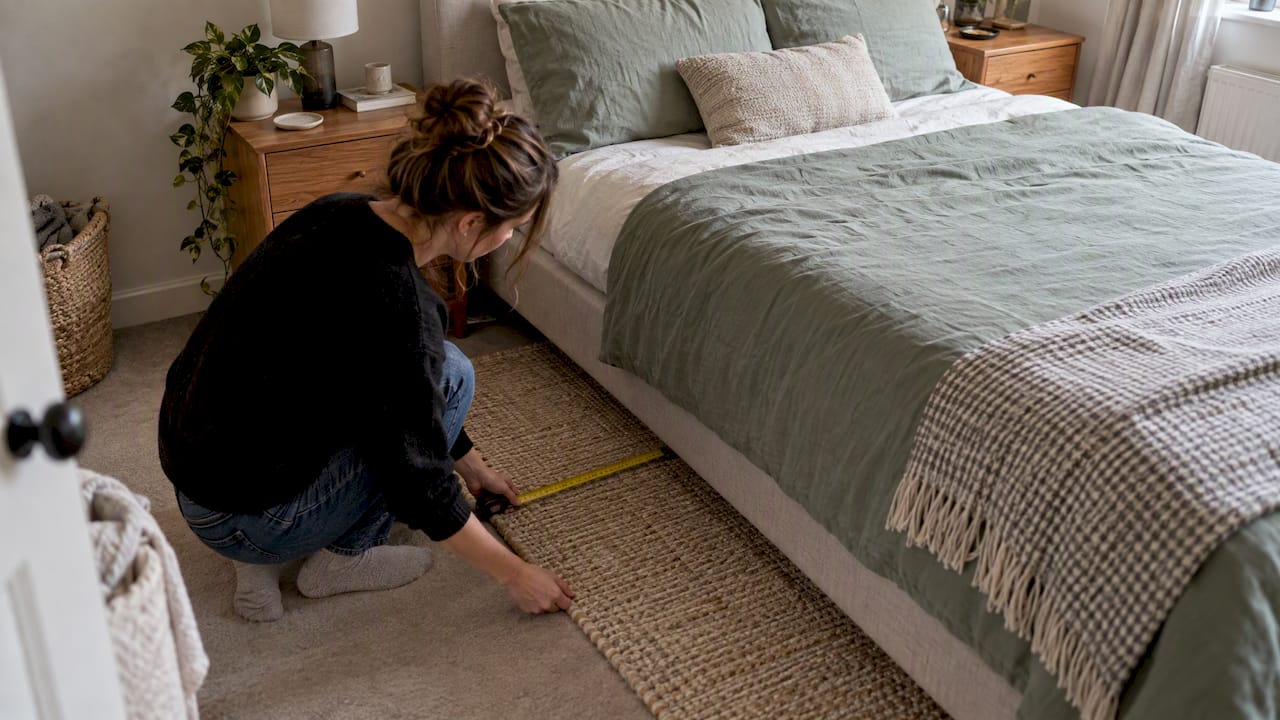
Getting the width right depends on one measurement: the narrowest gap the runner has to sit inside. Skip this step and even a well-chosen runner can end up blocking a drawer or crowding a walkway.
- Measure the narrowest point between facing unit faces, or between the island and the nearest run, using a tape measure and marking both edges on the floor.
- Subtract the clearance you need to keep clear on either side from that measurement to find your maximum runner width.
- Check appliance and drawer swing: dishwasher and oven doors open outward and downward, so allow for their full extension before fixing the runner’s position.
Kitchen planning guidance recommends at least 120 cm between parallel units for comfortable two-person movement, and 80 to 100 cm of clearance around an island, depending on whether it is used by one person or two. That figure sets a practical ceiling on runner width in tighter kitchens: a passage with 120 cm total clearance might only have room for a 75 cm runner once you subtract comfortable walking space on each side.
Before ordering, tape the runner’s outline directly onto the floor using masking tape, or lay down a cut piece of cardboard at the intended size. Walk the route you normally take between the sink, hob and fridge, and open every nearby door and drawer to confirm nothing catches. This five-minute test catches sizing mistakes that are much harder to fix once a rug has arrived.

Which materials and pile heights work best in a kitchen
A kitchen runner has a harder job than one in a hallway or bedroom. Spills, dropped utensils and constant foot traffic mean the construction matters as much as the size.
- Choose low-pile, flatweave or washable synthetic runners: they sit flush to the floor, resist staining and do not trap crumbs the way a thick pile does.
- Avoid shaggy or deep-pile runners in a kitchen: they catch on toe-kicks, make dropped items harder to find and are slower to dry if they get wet.
- Fit a non-slip backing or a separate anti-slip pad underneath, particularly near the sink and hob where the floor is more likely to be damp.
- Keep any rug a reasonable distance from the oven door’s swing and keep it off tiles that get splashed directly, since repeated heat and moisture exposure shortens the life of most backings.
Washable runners are the easiest to live with day to day, since they can go through a machine wash rather than needing a professional clean. A flatweave construction also tends to lie flatter after washing, which matters for a rug that gets walked on daily rather than admired from a sofa.
Pro Tip: Keep a spare washable runner on hand so you can swap one out for a wash without leaving the kitchen floor bare for days.
Using a runner to zone an open-plan kitchen
In an open-plan layout, a runner has to do two jobs at once: mark out the kitchen as its own space and still let the room read as one continuous area, as explained in DIY Doors: How to design an open-plan kitchen cabinet layout. Get the length wrong and it either disappears into the room or cuts it in two.
- Stop the runner short of the dining or living area rather than running it the full length of the combined space, so it defines the work zone without becoming a corridor.
- Match the tone or pattern family of nearby rugs rather than choosing an identical design, which creates better visual flow between zones than an exact match.
- Use the runner’s length to anchor the sink, hob and prep run specifically, letting the rest of the floor stay bare or carry a separate rug.
- Leave a visible gap of floor between the kitchen runner and any adjoining rug so each zone still reads as distinct.
This approach keeps the practical benefit of a runner, which is a softer, safer surface where you actually stand, without turning an open-plan room into a strip of walkway.
Matching runner sizes to real kitchen measurements
Translating a floor plan into a runner size is easier with a few worked examples. Each one starts from a measured width and clearance, not a guess.
- A galley kitchen with 180 cm between the two runs: choose a 60 cm wide runner at 180 to 215 cm long, leaving roughly 60 cm of clear floor on each side for walking.
- A kitchen measuring 320 cm across with an island that leaves 100 cm of clearance on the working side: a 75 to 90 cm wide runner at 245 to 305 cm long covers the full work run while keeping clearance intact.
- A long single-wall kitchen over 3 metres: a two-piece runner set, each piece 245 cm or longer, is easier to lift for cleaning than one continuous rug and avoids a single section wearing out faster than the rest.
Before buying any of these, run through a short checklist: tape the outline on the floor, open every nearby door and drawer to confirm clearance, fit a non-slip pad underneath, and check the washing or cleaning instructions match how the kitchen actually gets used.
Where to buy the right size, including custom options
Most retailers stock runners in a narrow band of standard widths and lengths, which is enough for the majority of kitchens once you know your target size. Longer runs or awkward layouts sometimes call for a custom or two-piece option instead.
- Expect standard widths of 60, 75 and 90 cm, and standard lengths around 180, 215 and 305 cm from most rug retailers.
- Ask any supplier for the exact finished measurements of the piece you are buying, not just the nominal size on the listing, since hemming and seam allowances can shave off a centimetre or two.
- For bespoke lengths, confirm the backing type, washing instructions and returns policy before ordering, particularly for runners cut specifically to your measurements.
- Machine-washable two-piece runners are worth checking for first if your kitchen run is longer than about 2.5 metres, since they solve both the cleaning and the handling problem.
What we see go wrong with kitchen runner sizing
The most common mistake is picking a runner by how it looks in a photograph rather than by the width of the actual passage it has to sit in. A rug that looks proportionate online can leave barely enough room to open a dishwasher door once it is on the floor.
The second recurring issue is pile height. A deep or shaggy pile might feel soft underfoot in a showroom, but in daily use it snags on toe-kicks, holds crumbs and spills, and wears unevenly along the walked path. Some ranges lean towards washable, flatweave constructions for exactly this reason, alongside bamboo rugs and mats that suit a working kitchen floor.
Both problems have the same fix: tape the outline on the floor before buying, and choose a low-pile or flatweave construction over anything thick.
— Cristiano
The shop option: washable runners and kitchen mats from Homable
Once you know your target width and length, the easiest next step is checking the finished dimensions on the product listing against your tape measure line on the floor.
 Homable stocks washable kitchen rugs alongside bamboo rugs and mats sized for everyday kitchen use, all browsable from the Homable home page.
- Check the washable kitchen rug in coffee black velvet, 45 by 150 cm against your measured clearance before ordering.
- For a flatweave alternative, the natural bamboo rug 2-piece set at 120 by 180 cm suits kitchens that need a low-pile, splittable option.
- Whichever piece you choose, confirm the listed finished size matches the width and length you worked out from your own kitchen.
FAQ
How big should a kitchen runner be?
Most kitchens suit a runner between 60 and 90 cm wide and 180 to 305 cm long, with the exact size set by the narrowest point in the room. Measure that gap first, then pick a width that leaves comfortable clearance on each side before choosing a length that covers the sink, hob and prep zone.
What size should a runner be?
A runner’s width should leave at least enough floor clear on either side for comfortable walking, with 120 cm between parallel units generally recommended for two-person movement in a kitchen. Length is chosen to match the work zone rather than the full room, typically 180 to 215 cm for a short run and 245 to 305 cm for a longer one.
Where can I find kitchen rugs cut to size?
Specialist rug retailers and some home decor shops offer custom or cut-to-size runners, alongside standard widths such as 60, 75 and 90 cm from most mainstream retailers. When ordering a custom length, ask the supplier for the exact finished measurement rather than the nominal size listed.
What is the size of a normal runner?
A typical runner falls between 60 and 90 cm wide, with common lengths around 180, 215 and 305 cm depending on the retailer. The right choice for a specific kitchen depends on the narrowest passage width and the length of the work zone it needs to cover.