Cart
0
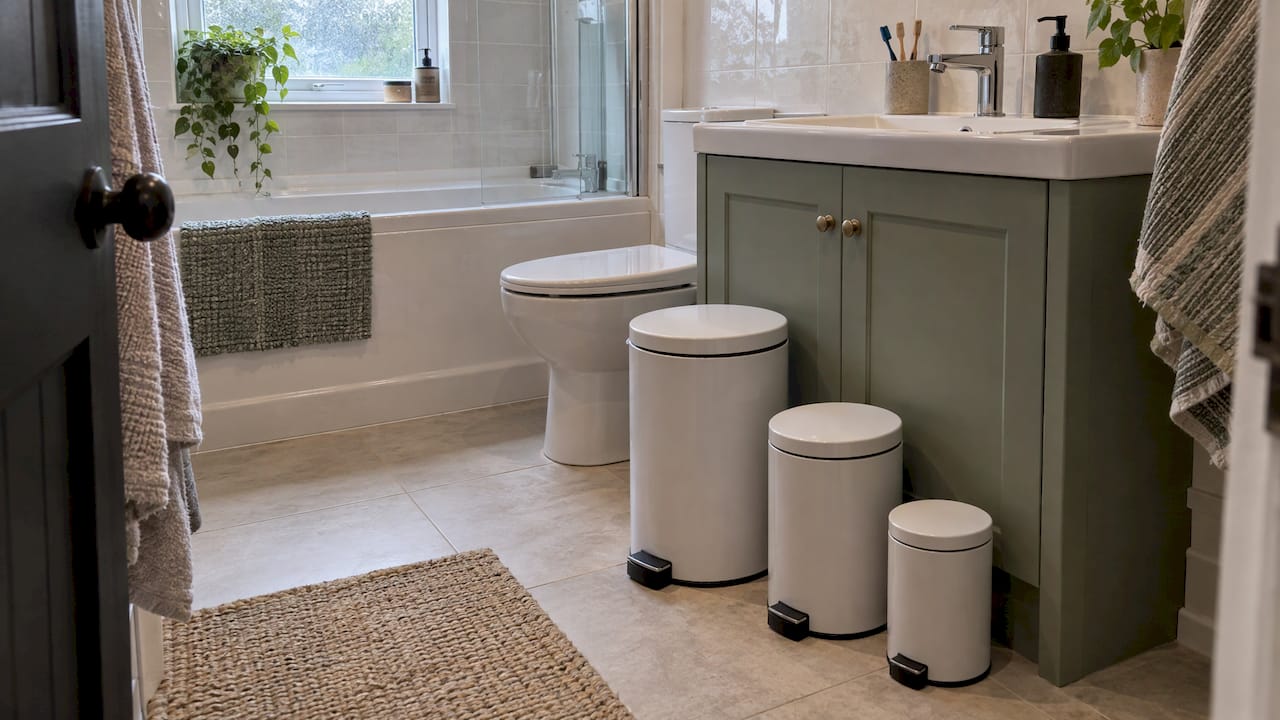
A bath mat slips for one of three reasons: the surface under it is wrong, the underside is dirty or worn, or the mat is the wrong type for where you have put it. Work out which of the three applies, fix that, and replace the mat if it still moves. A mat that slides or curls should not be used until it is sorted, because a loose mat on a wet floor is a hazard in its own right.
This guide covers both places a bath mat lives: inside the bath or shower, and on the bathroom floor beside it. They slip for different reasons and need different fixes.
TL;DR
- Inside the tub or shower, a mat needs a clean, smooth, flat base. Soap film, limescale and textured tiles are the usual reasons it lets go.
- On the bathroom floor, a rug needs a non-slip backing or a grip layer under it, and it must lie flat with no curled corners.
- Wash off soap residue, rinse, and lift the mat out to dry after use so the grip surface stays effective.
- If a mat still slides or curls after cleaning, replace it rather than patching it.
- Choose the right type for the job: a non-slip shower mat for the tub, a backed bath rug for the floor, and the right size for the space.
Table of Contents
- Why bath mats slip in the first place
- Work out which type of slip you have
- How to fix a mat that slips inside the bath or shower
- How to stop a bathroom rug sliding on the floor
- What to put under a bath mat
- When the floor itself is the problem
- Keep the grip: cleaning, drying and replacing
- Choosing a mat that stays put
- Beyond the mat: other ways to make a bathroom safer
- Ready to replace a mat that keeps sliding?
- FAQ
- Sources
Why bath mats slip in the first place
A mat has two jobs. It has to stay where you put it, and it has to give a wet, bare foot something to grip. Most slipping is a failure of the first job, and it nearly always comes down to what the mat is sitting on.
The common culprits are:
- Soap scum and limescale. A thin film on the tub floor stops suction cups or a rubber backing from sealing. The Northern Ireland Public Health Agency specifically warns that soap suds can build up on mats and cause a slip, and advises taking slip-resistant mats out after use to air-dry.
- A textured or uneven surface. Suction cups need a smooth, flat area to seal against. Embossed anti-slip patterns in the tub itself, grout lines and the sloping area around the drain all stop the cups making contact.
- A worn or hardened backing. Rubber and PVC backings lose their grip with age, heat and repeated washing.
- A smooth floor under a rug. Tiles, vinyl and lino are slick when splashed. The Reading Borough Council guidance notes that wet tiles, wood and lino can become extremely slippery, which is why a rug without any backing slides so easily.
- Trapped water. A mat left lying in the tub stays damp underneath, which keeps the grip layer wet and slippery and encourages residue.
Work out which type of slip you have
Before buying or fixing anything, spend a minute diagnosing the problem. It saves guesswork.
| What you notice | Likely cause | Where to start |
|---|---|---|
| Mat in the tub slides when you step on it | Soap film, limescale or a textured tub floor | Deep clean the tub floor and the mat underside |
| Edges of the tub mat curl up | Cups have lost their seal, or the mat is old | Press down firmly on a clean, wet floor; replace if it keeps lifting |
| Mat comes loose only in one area | Grout line, drain slope or embossed pattern under that part | Reposition, or choose a mat sized to sit on the flat part |
| Floor rug slides when you step off the bath | No grip backing, or a smooth floor | Add a grip layer or switch to a backed rug |
| Floor rug corners curl | Backing has worn or the rug is the wrong shape for the space | Flatten, re-lay on a clean dry floor, or replace |
If you cannot tell, test the mat on a dry, clean section of floor first. If it slides dry, the backing is the problem. If it only slides wet, the surface or residue is the problem.
How to fix a mat that slips inside the bath or shower
A mat in the tub is the one that matters most, because you are barefoot, wet and often standing on one leg. Here is the routine, step by step.
- Take the mat out and look at the underside. Check for grime, mould, flattened or cracked suction cups and any hardened or peeling rubber. If the cups are split or the backing is brittle, stop here and replace the mat.
- Clean the tub floor properly. Remove soap scum and limescale with a bathroom cleaner suited to your tub material, then rinse well. Any residue left behind will stop the cups sealing, however firmly you press.
- Clean the mat. Wash the underside and the cups with warm soapy water, rinse thoroughly and shake off the excess. Do not leave cleaning product on the mat, because that is itself slippery.
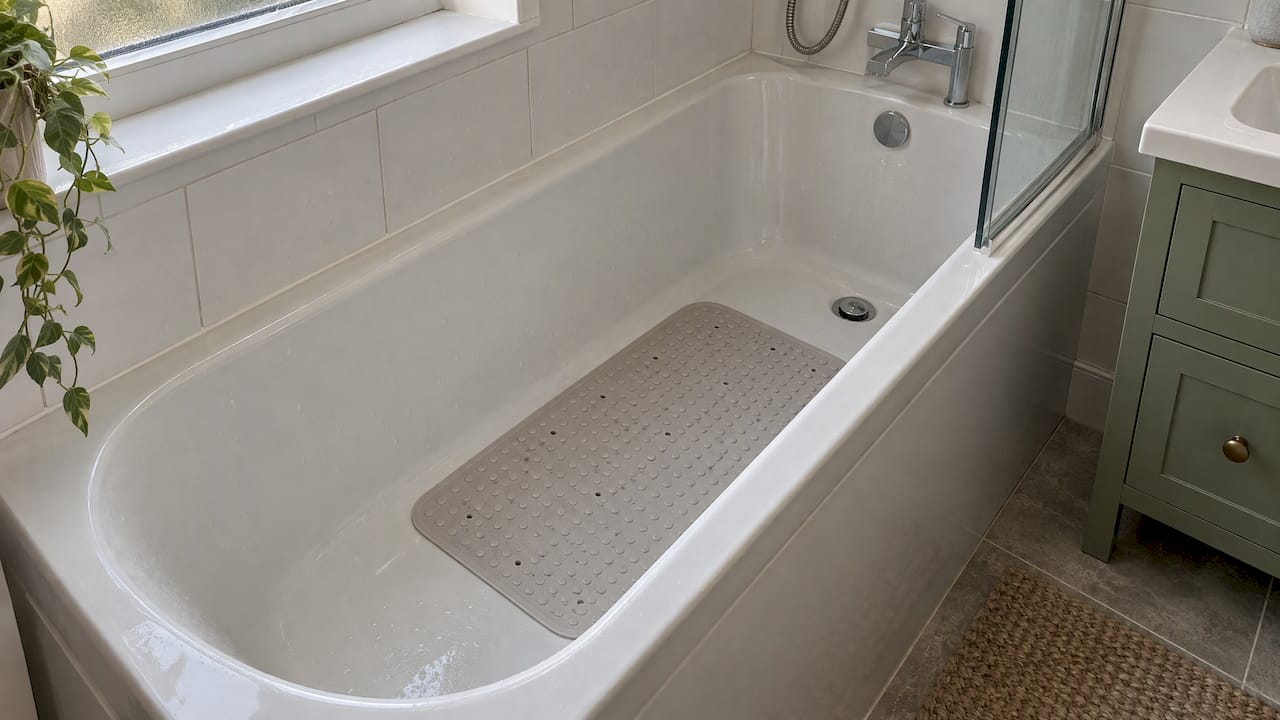
- Wet the floor and the cups, then press. Most suction mats grip best on a wet, smooth surface. Lay the mat in the centre of the tub and press down firmly across the whole surface, working from the middle out so the cups push their air out.
- Give it a tug test. With the tub empty, pull at the edges. A properly seated mat resists. If it lifts easily, repeat the clean and press, and if it still lifts, the surface or the mat is the issue.
- Remove it after every use. Lift it out, rinse it and hang it or stand it to air-dry. This keeps the grip surface clean and stops residue building up.
The approach has a clear limit: suction mats are designed for smooth, non-textured surfaces. If your tub has an anti-slip pattern moulded into the base, check what the mat’s instructions say about it before you rely on the cups. In that case a mat with a heavier, flatter backing or a different design may suit better.
What the UK standard tells you
There is a British standard for exactly this product. BS 8445:2012 covers the testing and assessment of slip resistance for bath and shower mats used inside a bath or shower. The test fixes the mat to a simulated acrylic bath surface, runs warm soapy water over it, and checks whether the person or the mat is the one that slips. It is a useful reminder that what matters is a mat holding firm on a soapy surface, not just looking grippy. Check a product’s listing or packaging for whether it states that it meets the standard.
How to stop a bathroom rug sliding on the floor
The rug outside the bath or shower is where people step with wet feet onto a smooth floor, so it needs to stay put just as firmly. Cornwall Council’s advice is to use a bath mat that does not slip and to secure rugs on wooden or tiled floors. Here is how.
- Flip the rug and check the backing. A rug with no backing, or a worn backing, will not stay still on tile. If the backing is cracked or shiny and smooth, it has done its job.
- Clean and dry the floor. Dust, hair and moisture under a rug make it slide. Mop the area dry before you lay the rug.
- Add a grip layer if the rug has no backing. A non-slip underlay or carpet grip designed for hard floors sits between rug and floor. The Chartered Society of Physiotherapy lists non-slip mats and rugs or a carpet grip underneath among its core fall-prevention measures. Cut it slightly smaller than the rug so it cannot show or catch an edge.
- Lay it flat, with no raised edges. A curled corner is a trip hazard. If a corner will not lie flat, the rug is past its best.
- Do not treat tape as a universal fix. Tape can leave residue, lift tile finishes, and create a raised edge that you catch your toe on. Where an official source suggests securing a rug, it means securing it properly, and a mat that keeps curling should simply be retired.
For more on getting a rug to stay put on hard flooring, our guide to floor-first non-slip rug solutions for UK homes walks through the options room by room.
What to put under a bath mat
This question comes up often, and the answer depends on where the mat is.
- Under a floor rug: a thin non-slip underlay or carpet grip made for hard floors. It adds friction between rug and tile and is the standard fix when the rug itself has no grip backing.
- Inside the tub: nothing. A mat in the bath or shower is meant to sit directly on the tub floor so its cups or backing can grip. Putting a layer underneath defeats the seal and makes sliding more likely. If it will not hold on the tub floor, the answer is a better-suited mat, not a layer beneath it.
Whichever applies, the underlay should be clean, dry and flat, and should never poke out beyond the rug’s edge.
When the floor itself is the problem
Sometimes the mat is fine and the surface is simply too slick. If you have a polished or very smooth tub, or a bathroom floor that is slippery even when only slightly damp, you can improve grip on the surface itself, for example with adhesive anti-slip strips applied directly to the tub or floor. These make the floor grippy without a loose item that can move. A mat used on top of a grippier surface also tends to behave better.

Treat this as a complement, not a cure-all. A grippy floor, a good mat and a clean routine work together.
Keep the grip: cleaning, drying and replacing
A mat that was fine in January can be a hazard by autumn. A simple routine keeps it working.
- After each use: rinse off soap and shampoo, lift the mat out of the tub and let it air-dry. This matches the advice from the Northern Ireland Public Health Agency on removing slip-resistant mats after use.
- Weekly: wash the underside and the cups, and clean the tub floor beneath.
- Monthly: check the backing for cracks, flattened cups, curled edges and any smooth, shiny patches where the grip has worn away.
- Mop up spills quickly. Water on the floor outside the bath is as much a slip risk as the mat. Both Cornwall Council and the Public Health Agency advise wiping up water and spills as soon as possible.
Replace the mat when it no longer holds, when the backing is worn or loose, or when the edges will not lie flat. NHS guidance from Guy’s and St Thomas’ NHS Foundation Trust also says to remove loose rugs or secure them. A worn mat is not worth the risk, and replacing one costs far less than a fall.
Choosing a mat that stays put
If your current mat has failed, a few checks at the buying stage prevent a repeat.
- Match the mat to the job. A shower mat is made to sit on the tub floor. A bath rug is made for the floor outside. Do not use one in place of the other.
- Look for non-slip construction on the listing. The product description should say the mat is non-slip, and the underside should look grippy, not smooth.
- Get the size right. A mat that is too large for the tub floor will overlap the sloping sides and lift. Measure the flat area first. Our bath mat size guide shows how to measure once and avoid returns.
- Decide between mat and rug. If you are unsure whether the floor needs a mat or a larger rug, the bath mat vs rug checklist covers four checks before you choose a style.
- Think about the whole bathroom. Using a non-slip mat in the bath and a separate mat outside it is the usual advice, because splashed water makes the outside floor slippery too.
For the tub, the RIDDER non-slip shower mat Playa in blue and the white version are both 54 x 54 cm. For the floor, a non-slip bathroom mats set with a bath mat and pedestal mat covers the area in front of the bath and the toilet in one go.
Beyond the mat: other ways to make a bathroom safer

A mat is one part of a safe bathroom. The Chartered Society of Physiotherapy frames it as working alongside grab rails, good lighting, well-fitting footwear with grip and clearing trip hazards. It also advises against walking on slippery floors in socks or tights.
If you or someone you live with is unsteady on their feet, has had a fall or is worried about falling, ask a GP or a physiotherapist for advice. A physiotherapist can assess your home and identify where you are at risk of tripping. Do not rely on a mat alone.
Our view: a mat should be the least dramatic thing in your bathroom
We think a good bath mat should do its job without anyone noticing. You step out of the shower, your foot lands on something that stays where it is, and you carry on with your morning. The moment you have to nudge it back into place with your toe, it has stopped being a decorative accessory and become a small daily risk.
That is why we pair style with function when we choose bathroom mats and rugs. A mat can be soft, colourful and well matched to your towels, and still be listed as non-slip. We would always choose that over a mat that only looks good on the product page.
Our advice is to buy for the specific job. Get a non-slip shower mat sized to the flat part of your tub, and a backed bath rug or mat set for the floor outside. Measure first, keep the surface clean and replace the mat when it wears out. Our range of bathroom mats, rugs and sets is built around that idea: pieces that suit a modern home and are designed to stay put.
Cristiano
Ready to replace a mat that keeps sliding?
If your current mat has had its day, we stock non-slip bathroom mat sets and RIDDER non-slip shower mats, along with rugs, kitchen mats and other home accessories for every room. Our bathroom mat sets include soft absorbent anti-slip bath rugs and a plush non-slip bath floor rug collection. Free shipping applies on orders over £100.

You can browse the full range on the Homable home page.
FAQ
Why does my bath mat keep slipping even though it has suction cups?
The cups need a clean, smooth, flat surface to seal. Soap scum, limescale, a textured tub floor or a grout line will break the seal. Clean the tub floor and the mat underside, wet both, and press the mat down firmly from the centre outwards. If it still lifts, the cups or backing are probably worn and the mat needs replacing.
What can I put under a bath rug to stop it slipping?
Use a non-slip underlay or carpet grip made for hard floors, cut slightly smaller than the rug so it does not show. Lay it on a clean, dry floor and keep everything flat. Do not put anything under a mat that sits inside the bath or shower, because that mat needs to grip the tub floor directly.
How often should I replace a non-slip bath mat?
There is no fixed lifespan, so go by condition. Replace it when the backing cracks or hardens, the cups flatten, the edges curl, or it moves even after a thorough clean. Check it monthly, and take it out to air-dry after each use so the grip lasts longer.
How do I store a bath mat when I am not using it?
Lift it out of the tub after each shower or bath and let it air-dry fully, hung over the edge of the bath or stood upright. Official guidance from the Northern Ireland Public Health Agency is to remove slip-resistant mats after use to air-dry. Store it dry, with the grip side clean, so it is ready for next time.
Sources
- Protect yourself against falls at home, Public Health Agency Northern Ireland
- Bathroom, Reading Borough Council
- Staying safe at home: tips to prevent slips, trips and falls, Cornwall Council
- Preventing falls at home, Guy’s and St Thomas’ NHS Foundation Trust
- Avoiding accidents with bath and shower mats, SATRA
- Avoiding trips and falls at home, Chartered Society of Physiotherapy