Cart
0
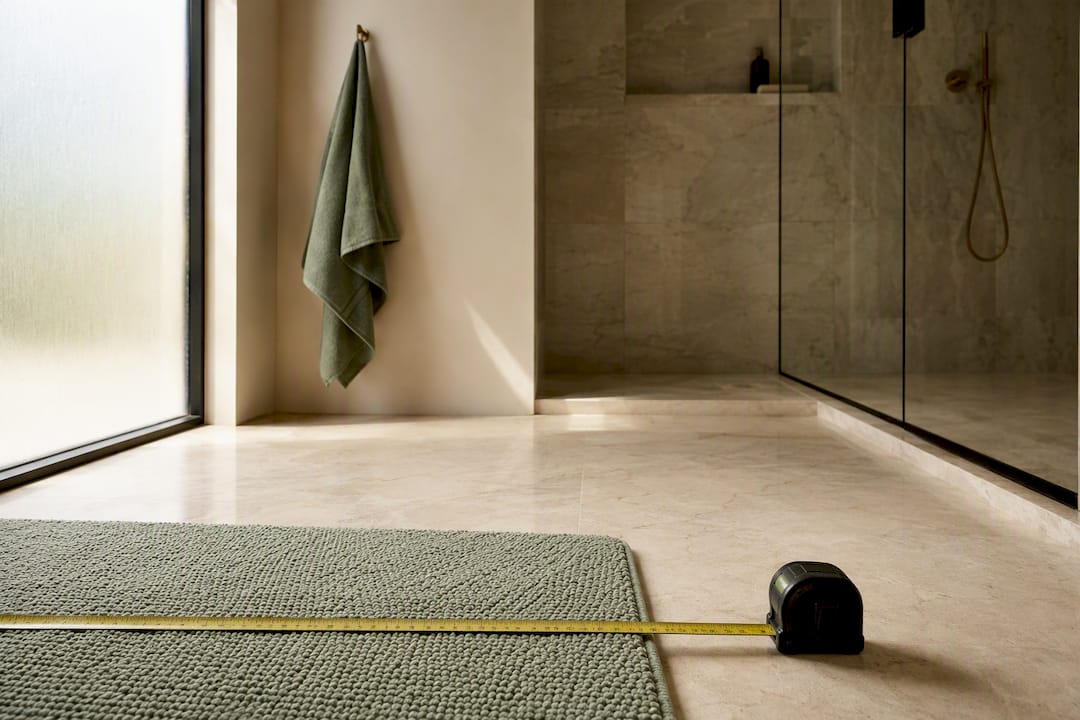
For most bathrooms, the standard bath mat measures around 20 × 30 inches (50 × 76 cm), which suits a typical single vanity or shower opening. The simplest rule: pick a mat that proportionally fits at least two thirds the width of your fixture, or one that matches the opening for full coverage. Below you’ll find a compact size chart, measuring steps, and placement advice by fixture type.
TL;DR:
- Choosing a bath mat that covers at least two thirds of the fixture width ensures proper coverage and reduces the risk of slipping.
- Measure fixture openings and walking distances carefully, and use the two-thirds rule to select the right size for your bathroom layout.
- Select mats with non-slip rubber, latex, or textured backing to improve safety on wet tiles, especially in households with children or elderly residents.
- Runners and contour mats are better suited for irregular bathroom layouts, with specific measurements ensuring a snug fit without sliding.
- Avoid relying solely on standard sizes, and prioritize precise measurements over generic advice to ensure safety, fit, and comfort.
Table of Contents
- Bath mat size guide: standard dimensions and a quick chart
- How do you measure your bathroom for the right mat size?
- Where should a bath mat sit in each part of the bathroom?
- Which material and backing should you choose?
- What about runners, contour mats and awkward-shaped bathrooms?
- Homable examples: matching in-stock sizes to this guide
- What most sizing advice gets wrong
- Find your size, then find your mat at Homable
- Sources
Bath mat size guide: standard dimensions and a quick chart
Bath mats come in a handful of size bands, and knowing which one matches your fixture saves you a return trip to the shop. The 20 × 30 inch (50 × 76 cm) size sits as the default for most mid-sized bathrooms with a single vanity, because it covers the stepping-out zone without swallowing the floor.
Smaller mats, around 17 × 24 inches (43 × 61 cm), work well tucked in front of pedestal sinks or beside a toilet. Larger mats, from 24 × 36 inches (61 × 91 cm) upward, suit bigger bathrooms, walk-in showers, or spaces where two people share a vanity. Review roundups also list sizes such as 16 × 23 in, 23 × 39 in, and 27 × 45 in, along with runners that stretch past 60 inches for galley-style layouts.
| Size band | Inches | Centimetres | Best for |
|---|---|---|---|
| Small | 17 × 24 in | 43 × 61 cm | Pedestal sinks, toilets, tight corners |
| Standard | 20 × 30 in | 50 × 76 cm | Single vanities, mid-sized bathrooms |
| Large | 24 × 36 in | 61 × 91 cm | Walk-in showers, double vanities |
| Runner | 24 × 60+ in | 61 × 60+ cm | Galley bathrooms, long vanity counters |
| Contour | Fits toilet base | Varies by model | Wrapping around a toilet pedestal |
A few things worth knowing before you order:
- Sizes vary slightly between brands, so treat these as guide bands rather than exact specifications.
- Square mats around 22 × 22 in or 54 × 54 cm are common for shower stalls, where a rectangular shape would overhang awkwardly.
- Thicker mats often run a touch larger once you account for pile height, so check the listed dimensions rather than judging by eye in a photo.
How do you measure your bathroom for the right mat size?
Guessing is how most mat returns happen. Measuring the actual fixture opening and walking path, rather than eyeballing it, is the single biggest factor in getting the size right first time.
- Measure the fixture opening. Run a tape measure across the width of the tub, shower door, or vanity front, then note the clearance on either side.
- Measure the walking path. Stand where you’d step out and measure the depth you want covered, typically 24 to 36 inches from the fixture edge.
- Apply the two-thirds rule. A mat covering at least two thirds of the fixture width looks proportionate and catches most drips; match the full width if the bathroom is small enough that gaps would look odd.
- Check for double fixtures. Double vanities or open-plan layouts often call for a runner or a mat sized up from the standard band.
- Convert as you go. Multiply inches by 2.54 to get centimetres, or divide centimetres by 2.54 for inches, since UK retailers often list both.
Pro Tip: Measure twice, once with the door open and once closed. Door swing eats into floor space more than most people expect, and a mat that catches on a door hinge is a mat you’ll be returning.
Where should a bath mat sit in each part of the bathroom?
Placement matters as much as size. A mat in the wrong spot either misses the wet zone entirely or creates a trip hazard where you don’t need one.
- Showers: centre the mat on the door or opening, with 24 to 36 inches of depth so you land on it fully when stepping out.
- Bathtubs: a two-thirds-width mat suits most tubs; go full-length if the bathroom is small enough that a shorter mat would look stranded on the tiles.
- Single vanities: a standard 20 × 30 in mat centred on the sink covers splashes without crowding the toe-kick.
- Double vanities: either one wide runner spanning both basins or two matching mats, one per sink, work better than a single oversized mat.
- Small bathrooms: a short runner or two small mats define separate zones (sink and toilet, for instance) without eating the floor space a compact room can’t spare. Vertical storage and layout tweaks help free up room for mats without cluttering the space further.
Which material and backing should you choose?
Material choice affects how a mat feels, dries, and how long it lasts. Thicker mats give more cushioning underfoot, while thinner mats dry faster but offer less padding, so the right pick depends on whether you value comfort or quick turnaround more.
- Cotton: soft and absorbent, but slower to dry in humid bathrooms without good ventilation.
- Memory foam: plush underfoot, though it holds moisture longer if not aired out regularly.
- Rubber and PVC: dry quickly and grip well, suited to shower stalls and wet rooms.
- Bamboo: rigid and water-resistant, a good fit for a spa-style look.
Non-slip backing is not a style extra. Textured, rubber, or latex backing is a genuine safety requirement, particularly in households with children or older adults, and it’s one of the details buyers skip past when shopping on looks alone. Check whether a mat has full rubber backing, adhesive grip pads, or just a thin latex coating, since these perform very differently on tile.
Pro Tip: Wash cotton and memory foam mats regularly and let them air fully between uses. A damp mat left folded on a rail is exactly how mildew gets started.
What about runners, contour mats and awkward-shaped bathrooms?
Not every bathroom fits neatly into the standard size bands, and a few special shapes solve the gaps.
- Runners: a 24 × 60 in (or longer) runner suits galley bathrooms or long vanity counters better than lining up several small mats, since it reads as one continuous surface rather than a patchwork.
- Contour mats: measure around the base of the toilet, including the width at the widest point of the pedestal, before buying a U-shaped mat; too tight and it won’t sit flat, too loose and it slides.
- Round or oval mats: these work as accent pieces near a freestanding tub or in a powder room, rather than as the main functional mat by a shower.
- Multiple small mats: in an oddly shaped bathroom, two mats around 17 × 24 in each can define separate zones, such as sink and toilet, more sensibly than forcing one large mat to cover both.
Homable examples: matching in-stock sizes to this guide
Homable’s own product pages show exactly how this sizing logic plays out in practice. The RIDDER Non-Slip Shower Mat Playa, listed at 54 × 54 cm, sits squarely in the square-shower-mat category rather than the rectangular tub band. The RIDDER Bath Mat Zebra at 38 × 72 cm falls between the small and standard bands, useful for a compact vanity. For matching vanity and pedestal spaces, the 2-piece bath and pedestal rug set covers both zones in one purchase.
- Check the listed centimetre measurements against your own tape measure results, not just the product photo.
- Look for the backing type stated on the page, whether that’s full rubber, latex dots, or adhesive strips.
- Confirm the care instructions before buying if machine washing matters to you.
What most sizing advice gets wrong
Most guidance on this topic treats bath mat size as a single number to memorise, and that’s the wrong frame. The measurement matters less than what it’s measured against. A 20 × 30 inch mat is only “standard” because it happens to suit a fairly common vanity width; put it in front of a walk-in shower with a 40-inch opening and it looks and functions like an afterthought.
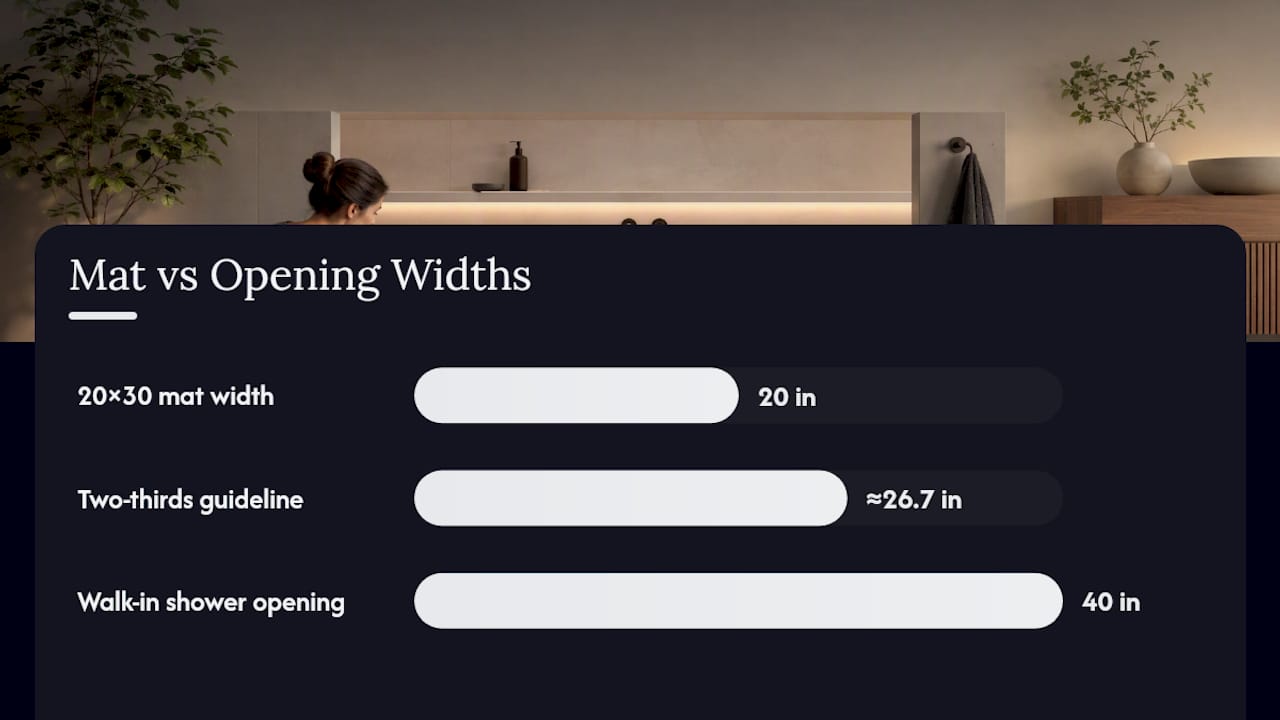
The bigger failure I see in conventional advice is treating size and safety as separate decisions. They’re not. A mat sized correctly but backed with a thin latex coating still slides on wet tile, and a perfectly gripped mat that’s too narrow still leaves a strip of bare, wet floor. Buyers should measure the fixture first, decide on backing second, and treat colour or pattern as the last decision, not the first.
If there’s one thing worth prioritising above all else, it’s the two-thirds rule against your actual fixture width, taken with a tape measure rather than a guess. Everything else, shape, material, runner length, follows from getting that one figure right.
— Cristiano
Find your size, then find your mat at Homable
Homable stocks bath mats across the full range this guide covers, from compact 54 × 54 cm shower mats to larger bath mats and matched pedestal sets, all with clearly listed dimensions and backing details so you’re not guessing from a product photo. That’s the practical advantage here: you’ve already worked out your measurements, and you can filter straight to the size band you need rather than scrolling through mats sized for entirely different bathrooms.

The RIDDER range, available through Homable, covers both the square shower-mat format and the rectangular bath-mat format detailed above, so whichever fixture you measured for, there’s a matching size in stock. Pair a bath mat with complementary bathroom accessories to finish the space once the practical sizing is sorted. Browse the current bath mat range, check the listed centimetre measurements against your own tape measure results, and order the size that matches what you actually measured.
Sources
- How to Choose the Best Size Bath Mat for Your Space
- The 7 best bathroom rugs and bath mats (Wirecutter / The New York Times)
- It’s never too late to think of bath safety