Cart
0
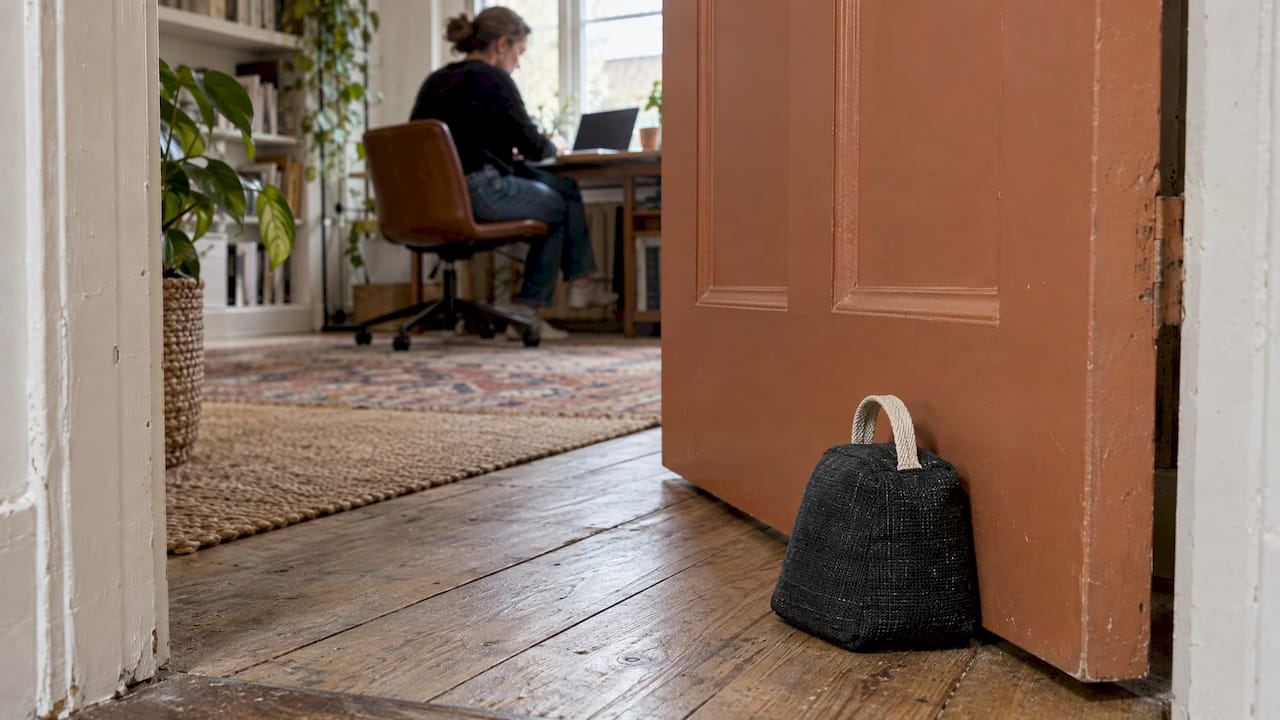
Most doorstops in UK homes cost between £3 and £25 each, and the type you choose sets the range. A plain sprung stop is at the bottom, a wall-mounted or floor-fixed metal stop is in the middle, and a decorative fabric doorstop, the kind that doubles as a piece of home styling, sits at the upper end of that band. This guide explains what drives the price, what each type does well, and how to pick one that suits your door, your floor and your room.
TL;DR
- Typical UK supply costs run from about £3 to £25 per doorstop, depending on type, material and finish, according to a UK trade price guide.
- Fixed stops (sprung, skirting, hinge-pin, floor or wall) are priced by mechanism. Free-standing fabric doorstops are priced by design, size and fabric.
- Fixed stops can add fitting costs if you hire someone. A free-standing doorstop needs no tools and no fixing, so the shelf price is the whole price.
- Match the doorstop to the door: weight, floor type and how often the door is used matter more than the label.
- Our door stoppers collection shows the current price on each product page.
Table of Contents
- How much does a doorstop cost in the UK?
- Doorstop prices by type
- Where decorative fabric doorstops sit
- What makes one doorstop cost more than another
- Fixed or free-standing: which suits your home?
- How to choose a doorstop that fits your door
- Doorstops as gifts
- Doorstop or draught excluder?
- Where to find a decorative doorstop
- FAQ
- Sources
How much does a doorstop cost in the UK?
The honest answer is a range, not a single number. A UK trade guide to fitting door stops puts the supply cost of a doorstop at £3 to £25 each, with material and finish deciding where in that range a particular one lands. That is the cost of the item alone, before anyone fits it.
Two things push the figure up from there. The first is design. A doorstop that has been made to look good, with a soft fabric cover, a printed pattern or an animal shape, costs more than a bare rubber wedge because you are paying for the cover, the filling and the finish as well as the stopping power. The second is installation. A fixed stop has to be screwed into a wall, skirting board or floor, and if you pay someone to do it, labour is on top of the part.
Rather than hunting for a single “average price”, it helps to decide first what kind of doorstop you need. The type narrows the price far more than any brand name does.
Doorstop prices by type
The same UK guide breaks supply cost down by mechanism. These are typical ranges, not quotes, and individual products will sit above or below them.
| Type | Typical supply cost | How it works |
|---|---|---|
| Sprung stop | £2 to £10 | A spring on a short rod fixed to the skirting; it flexes when the door hits it |
| Skirting-mounted stop | £3 to £15 | Fixed to the skirting board at the height the door reaches |
| Hinge-pin stop | £4 to £12 | Fitted on the hinge itself, so nothing is screwed into the wall |
| Floor-mounted stop | £5 to £20 | Fixed into the floor to stop the door edge |
| Wall-mounted stop | £8 to £25 | Fixed to the wall behind the door, often with a rubber buffer |
Source for all ranges: BookaBuilderUK, June 2026.
Those are all fixed stops: they protect the wall from the handle or the door edge, and they stay where they are put. A free-standing doorstop is a different product. It sits on the floor, you move it with your foot or hand, and it holds a door open rather than only protecting the wall. That is the category most people mean when they search for a decorative doorstop, and it is priced differently.

Where decorative fabric doorstops sit
Fabric doorstops are bought as much for how they look as for what they do. They are stuffed or weighted, covered in cotton, velvet-effect fabric or faux fur, and made in shapes from sausage dogs to sleeping cats. Because the price reflects design and materials, they usually sit towards the top of the general £3 to £25 band, and novelty pieces can go beyond it.
A useful reference point comes from the high street. Prima reported in July 2026 on a plush biscuit-shaped doorstop at £18, made of short-pile faux fur and measuring 16 x 26 cm with a 13 cm depth. That gives you a sense of what a novelty fabric doorstop from a major retailer costs, and where the decorative end of the market starts.
At Homable we sell fabric doorstops designed to hold a door as well as to look good in a hallway, such as the Charm duck fabric door stop, the Sausage Dog Fabric Doorstop, the Sleeping Cat Fabric Doorstop in grey, the Grey Fabric Fox Doorstop and the Grey Knot Velvet Effect Doorstop. The current price for each is on its product page, so you always see the figure you will pay at checkout.
What makes one doorstop cost more than another
Four things account for nearly every price difference you will see.
Material and finish
The trade guide above is explicit that supply cost depends on material and finish. In practice that means:
- Plastic and rubber are the cheapest, and functional rather than decorative.
- Metal (brushed steel, black or brass-effect) costs more and suits fixed stops.
- Fabric covers cost more again because they involve cutting, sewing, filling and a weighted base.
- Velvet-effect and faux fur finishes add a soft look suited to bedrooms, nurseries and living rooms.
Size and weight
A bigger doorstop uses more fabric and more filling. The weight matters as much as the size: a light doorstop on a smooth floor can slide, while a heavier one stays put. A 32 cm to 36 cm doorstop, the size of several in our range, is long enough to sit flat against a door and stay put.
Design and shape
A plain bar costs less than a sculpted animal. If the doorstop is going to be seen every day in a hallway, many people treat it as a small decorative object, and a shape or colour that suits the room is worth paying for.
Fitting
Fixed stops involve fitting, and that is where the real extra cost appears. The same guide lists a minimum labour charge of £60 to £120, hourly rates of £30 to £60 and £5 to £15 for specialist fixings if you hire a tradesperson. It also warns that a badly fitted stop can leave chipped plaster or split skirting costing £80 to £200 to repair. A free-standing doorstop avoids all of that: there is nothing to drill, nothing to line up and no wall to mark.

Fixed or free-standing: which suits your home?
For many households the better question is not “which is cheapest?” but “which will I actually use every day?” Here is how the two approaches compare.
| Fixed stop | Free-standing doorstop | |
|---|---|---|
| Purpose | Stops the door hitting the wall | Stops it hitting the wall and holds it open where you want |
| Fitting | Drilling or screwing in | None |
| Position | Fixed | Moves with you |
| Look | Mostly functional | Can match the room |
| Suits renters | Only with permission | Yes, nothing is attached to the property |
The trade guide recommends matching stop type to construction. It suggests hinge-pin or floor stops for plasterboard stud walls, wall-mounted stops for solid brick or block, skirting or wall stops over laminate flooring to avoid drilling, and floor-mounted stops for heavy oak or fire doors. That is useful if you want a fixed stop. If you would rather not drill anything, a free-standing fabric doorstop gives you the holding function without touching the wall or floor, which is why it suits rented homes, nurseries and hallways with a mix of floor types.
How to choose a doorstop that fits your door
Work through these checks before you buy.
- Decide the job. Is it protecting a wall from the handle, or holding a door open so air and people can move through? Fixed stops protect; free-standing ones hold.
- Look at the door. A light internal door is easily held by a weighted fabric doorstop. Very heavy doors need a heavier doorstop or a floor-fixed stop.
- Check the floor. Carpet grips a doorstop, so a soft fabric one sits securely. Laminate, tile and varnished wood are slippery, so choose a heavier, longer doorstop with a base that grips.
- Measure the gap. The gap under the door sets how thick the doorstop can be. Our guide to placing doorstops for UK homes covers the gap and where along the door to put the doorstop.
- Match the room. Colour, texture and shape should suit the room. A grey knot or fox looks at home in a contemporary hallway, while a cat or duck suits a child’s bedroom or a playful kitchen.
- Think of the household. Children and pets are likely to move a doorstop around, so a soft cover with a solid weight is a sensible choice.
Doorstops as gifts
A doorstop is one of the easier gifts to get right. It is practical, it is rarely something people buy for themselves, and a good-looking one suits almost any home. Animal shapes work well for housewarmings, for new parents and for anyone who likes their home to have personality. Because the price sits comfortably within the £3 to £25 band that covers most doorstops, it is also an easy gift to scale to a budget, which is why we group ours with other home accessories.
Doorstop or draught excluder?
Both are long fabric shapes at the foot of a door, and the two are often confused. A doorstop holds the door open or in place. A draught excluder lies along the bottom of a closed door to block air. Some products do both jobs, and we list ours together in one door stoppers and door draught excluders collection, so you can compare shapes and lengths in one place.
If your problem is a door that bangs shut, rather than one that will not stay open, our short guide on how to stop a door slamming in five minutes is aimed at homeowners and renters.
Our view on doorstop prices
People often search for doorstop prices expecting one number, and then find that the range runs from a couple of pounds to the price of a nice lunch. We think the more useful comparison is what the doorstop does for your home across a year. A doorstop is picked up and used many times a day, and it sits in the most visible spot in a hallway or bedroom, so it is worth choosing one you like looking at.
That is why we build our collection around design as well as function: animal shapes, soft velvet-effect finishes and sizes that sit flat against a door. The idea is that a doorstop should protect your walls, hold your door and add something to the room, with no drilling, no fixings and nothing to damage your skirting.
We also like that a free-standing doorstop is easy to give as a gift and easy to swap when your decor changes. If you are choosing for a particular room or a particular door, start with the size and the floor, then pick the shape that makes you smile.
Cristiano
Where to find a decorative doorstop
If you want a doorstop that looks as good as it works, start with our door stoppers collection. It brings together fabric doorstops in animal shapes and soft finishes, and each product page shows the size and the price you pay, with free shipping on orders over £100 and secure checkout. If you are styling a whole room, the Homable home page also leads to our ornaments, rugs, curtains and storage, so a doorstop can be picked to match the rest of the space.
It is a quick way to turn a small, everyday item into part of your decor.
FAQ
How much is a door stop?
Most cost between £3 and £25 each, according to a UK trade price guide. Sprung stops are at the low end and wall-mounted stops at the high end. Decorative fabric doorstops usually sit in the upper part of the range, with the exact price shown on each product page.
What shops sell doorstops?
You can find them at DIY stores, supermarkets, homeware shops and online. Plain functional stops are easy to find in hardware ranges, while decorative fabric doorstops are mostly sold by homeware retailers. Our door stoppers collection is dedicated to the decorative kind, with animal shapes and soft finishes.
Do I need to pay someone to fit a doorstop?
Not for a free-standing one: you simply put it by the door. Fixed stops need screwing in, and a tradesperson’s minimum charge can be £60 to £120 according to the same guide. A free-standing fabric doorstop avoids the fitting cost and any risk of marking the wall or skirting.
Which doorstop is best for a rented home?
A free-standing doorstop, because nothing is fixed to the wall, floor or skirting. Choose a weighted fabric one in a size that sits flat against the door, and check the gap under the door before you buy. Our guide to doorstop placement explains where to position it.
Do fabric doorstops work on all floors?
They hold best on carpet and rugs, where the fabric grips. On smooth laminate, tile or wood, pick a heavier, longer doorstop so it stays where you put it. That is the main reason size and weight matter as much as the design.
Sources
- How to Fit Door Stops in a UK Home Without Damage, BookaBuilderUK
- Next’s £18 custard cream doorstop, Prima