
Cart
0
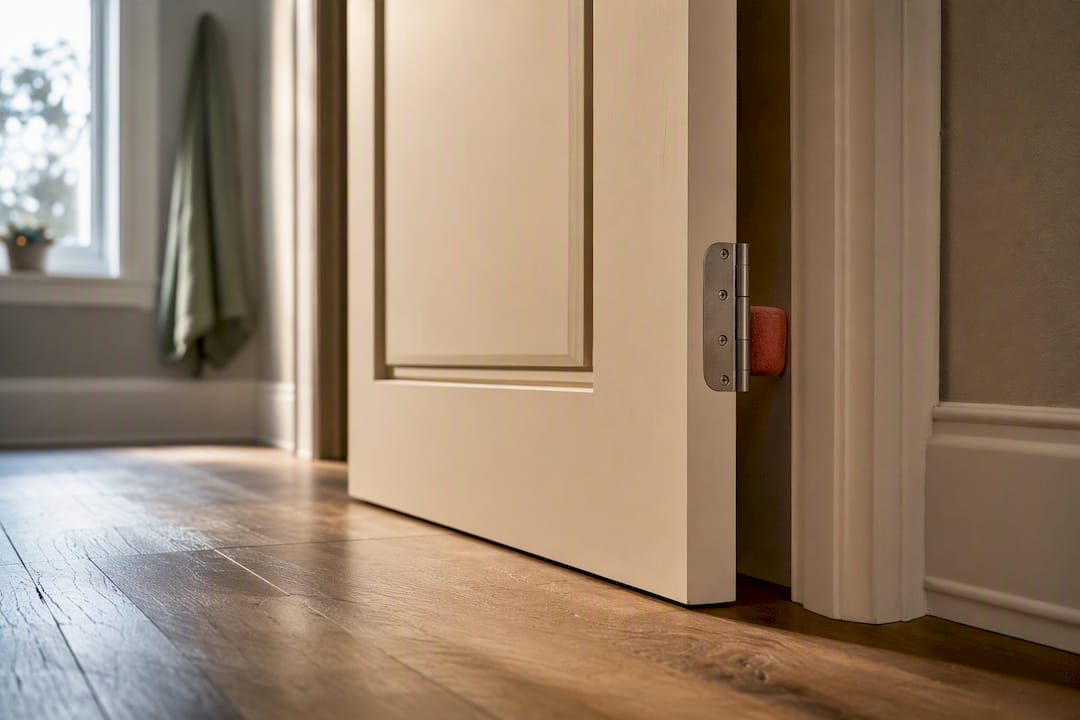
Stick a felt pad or self-adhesive bumper on the door edge and you’ll kill the noise within minutes. That’s the fastest fix. For a permanent solution that also protects fingers, fit a soft-close hinge, door damper, or pneumatic closer, but check your hinges and door alignment first since a warped or misaligned door will keep slamming no matter what hardware you add. A decorative door stop or wedge can be a simple way to hold the door open while you sort out the real cause.
TL;DR:
- Felt pads and silicone bumpers effectively reduce noise for lightweight doors that slam occasionally, without addressing issues like misalignment or drafts.
- House checks such as confirming door plumb, tightening hinges, and assessing air pressure should always be completed before installing dampening hardware to ensure proper function.
- Dampening devices range from simple strike plate inserts to integrated hinges and hydraulic closers, and must match the door’s weight and usage to be effective.
- For households with children, soft-close hinges and finger pinch guards are safer, whereas decorative stops can be a practical aesthetic solution for living areas.
- A misaligned or warped frame, loose hinges, or drafts are common root causes, and hardware fixes may be ineffective if structural issues are not addressed first.
Table of Contents
- Quick, no-tools fixes so you can stop door slamming right now
- Check your hinges, alignment, and draughts before buying anything
- Which hardware actually stops a door slamming for good?
- Stopping finger injuries from slamming doors
- A three-step checklist before you call a fitter
- Cristiano’s view: function first, but style shouldn’t be an afterthought
- Buy tasteful door-stop solutions from an online home decor retailer
- Sources
Quick, no-tools fixes so you can stop door slamming right now
Before you spend a penny on hardware, try the fixes that take five minutes and no drill.
Felt pads work best stuck to the top corner of the door frame, roughly where the door would first touch if it swung shut at speed. Self-adhesive silicone bumpers do a similar job but compress more, so they’re better for heavier internal doors. Both fixes muffle the impact sound rather than stopping the door moving, which matters because they won’t help if the actual problem is a draught pulling the door shut with force.
- Fold a strip of fabric or an old sock over the top of the door as a temporary silencer.
- Wedge the door open with a doorstop, wedge, or even a rolled-up towel until you diagnose the cause.
- Loop a thick rubber band between the two door handles (yours and the frame’s, or between handle and hinge) to slow the swing.
- Stick small foam strips along the door’s leading edge for a cheap dampening layer.
These fixes are genuinely enough for lightweight internal doors that only slam occasionally, in a mild breeze or from a firm push. According to GreenMatch’s guide on stopping door slamming, felt pads, foam strips, and wedges make a real difference to slam noise for exactly this kind of casual, low-force closing.
Pro Tip: If you’ve got young children in the house, skip the rubber band trick. It slows the door but won’t stop a determined toddler push, and a snapped band near small fingers is its own hazard.
Check your hinges, alignment, and draughts before buying anything
Most slamming problems trace back to one of three things: a door that isn’t hanging straight, hinges that have worked loose, or air pressure pulling the door shut. Rule these out before spending on hardware.
- Test for plumb. Hold a spirit level against the door’s edge. If it leans more than a couple of degrees either way, the door or frame has shifted, and no damper will fully fix that until the alignment is corrected, as Bob Vila’s door-slamming guide points out.
- Tighten the hinges. Loose screws let the door drop slightly, changing how it swings and often causing it to swing more freely, and harder, than it should.
- Check the strike plate. If the latch doesn’t align cleanly with the plate, the door has to be pushed harder to close, which teaches everyone in the house to slam it out of habit.
- Run the open-window test. Open a window elsewhere in the house and see if the slamming stops. If it does, you’re dealing with air pressure, not a mechanical fault, and weatherstripping around the door frame will usually solve it.
If the door still slams after all four checks, the problem is almost certainly one that dampening hardware, not further tinkering, will fix.
Which hardware actually stops a door slamming for good?
Once you’ve ruled out alignment and draughts, the choice comes down to how much control you want over the final moments of the door’s swing, and how permanent a fix you’re prepared to install.
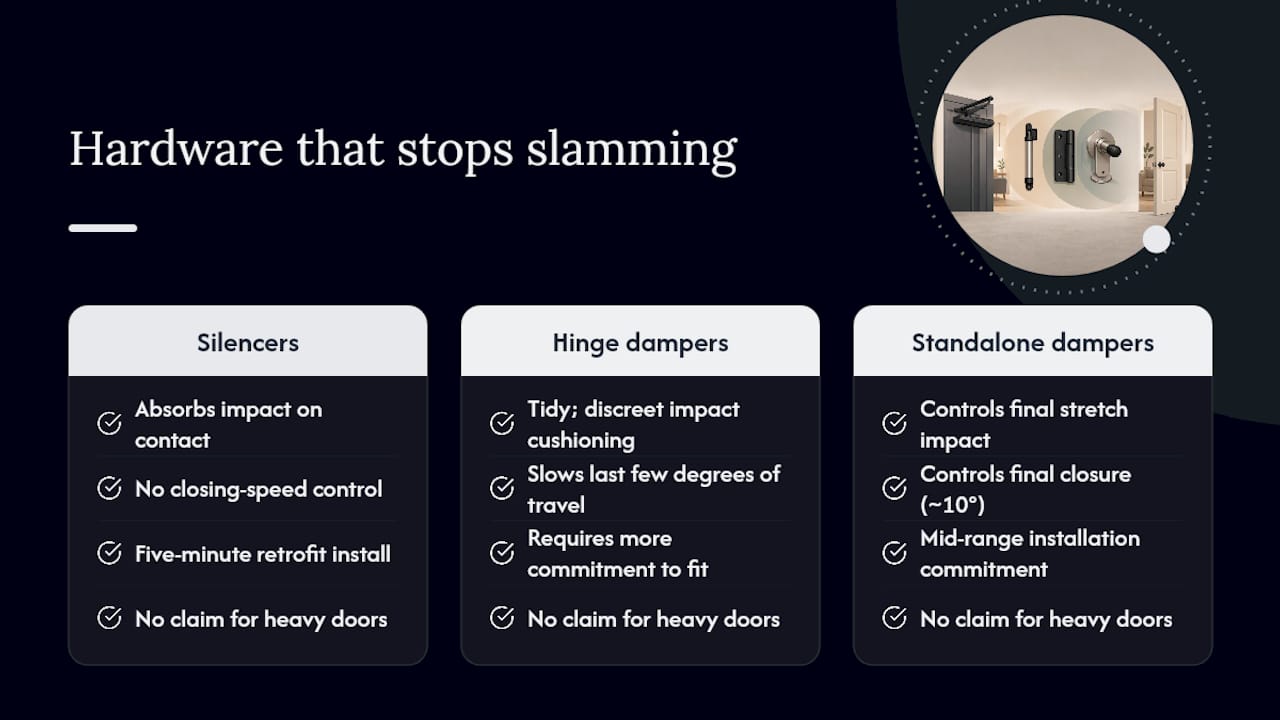
Door silencers and rubber cones sit at the cheapest end. These small cushioned inserts fit into the door frame’s strike plate recess and absorb the impact on contact. Moshun’s guide to stopping door slamming describes them as a simple retrofit for metal frames, and they’re genuinely a five-minute job. They reduce noise well but do nothing to control the speed of the swing itself, so a determined slam will still feel abrupt even if it’s quieter.
Soft-close or hinge-integrated dampers are the tidiest option if you want the fix to disappear visually. These replace or clip onto the existing hinge and slow the door only in its last few degrees of travel, so the door still closes and latches normally, just without the crash. They preserve privacy and function exactly as a normal door would, which makes them well suited to bedrooms and bathrooms.
Standalone door dampers and retaining brakes sit mid-range in price and control specifically the final stretch of closure. Slamproof’s overview of Justor door dampers explains that these devices work in roughly the last ten degrees before the door meets the frame, which is exactly where slamming does its damage.
Pneumatic or hydraulic closers are the heaviest-duty option, built for solid or fire-rated doors that need consistent, controlled closing every single time. They’re more involved to fit and usually the most expensive category, but they’re the right call for a heavy internal door that slams under its own weight.
Renters should look specifically at surface-mounted, removable versions. GEZE’s ActiveStop door control range is one example of hardware designed to leave minimal residue on doors and frames, which matters if you’ll want your deposit back. Owner-occupiers have more freedom to fit hinge-integrated dampers, which need a bit more commitment to install but disappear completely once done.
Stopping finger injuries from slamming doors
Doors that slam hard enough to be loud are also hard enough to hurt. Pinch injuries happen fastest at the hinge side, where small fingers can slip into the gap as a door swings closed.
- Fit foam pinch guards along the hinge edge; the U-shaped foam wraps around the gap so fingers can’t get trapped in it.
- Prioritise bedrooms, bathrooms, and any cupboard doors kids can reach, since these get pushed shut without supervision most often.
- Choose dampers or soft-close hinges over wedges wherever pinch risk is the main concern. A wedge can be kicked away by a curious child; a damper works every single time because it’s built into the door’s mechanism.
- Talk children through why doors shouldn’t be slammed rather than relying on hardware alone. Supervision and a simple house rule catch what devices sometimes miss.
A three-step checklist before you call a fitter
Run through this order and you’ll fix most slamming doors without paying anyone.
- Open a window and watch what happens. If the slamming stops, you’ve found an air-pressure problem, and weatherstripping around the frame is your fix.
- Check plumb with a spirit level, then tighten every hinge screw. Bob Vila’s guide treats this as the essential step before fitting any damping device, because a misaligned door will fight the hardware you install on top of it.
- Fit dampening hardware if steps one and two don’t solve it. A WikiHow breakdown of a dozen anti-slam methods lists everything from felt pads to pneumatic closers, and dampening consistently comes out ahead of blocking wherever quiet latching actually matters.
Call a fitter when the frame itself is warped, when you’re replacing a closer on a fire door, or when hinge screws keep stripping out of soft or damaged wood. Attempting a structural frame repair yourself risks making the door unsafe to close at all.
Cristiano’s view: function first, but style shouldn’t be an afterthought
Here’s what most guides get wrong: they treat a doorstop as a lesser fix compared with a “proper” damper. It isn’t. For most rooms in a normal home, a decorative stop is the right permanent choice, not just a stopgap.
A hidden soft-close hinge wins where privacy or a consistent latch matters, a nursery door, say, or an internal fire door. But for a living room, hallway, or study, a well-chosen stop does the job invisibly well and adds something a damper never will: character. A cast-metal ram or a fabric hedgehog sitting by the skirting board costs less than most hinge kits and needs zero installation.
The trade-off is honest. Visible stops can be moved, kicked, or ignored by a determined child; hidden dampers work every time because they’re built into the mechanism. Choose based on the room, not on which option sounds more “proper”.
— Cristiano
Buy tasteful door-stop solutions from an online home decor retailer
This practical, no-drill solution offers a quieter home option while you work out whether your slamming door needs weatherstripping, a tightened hinge, or a proper damper. Every piece doubles as decor, so you’re not choosing between function and something that actually looks good in your hallway.

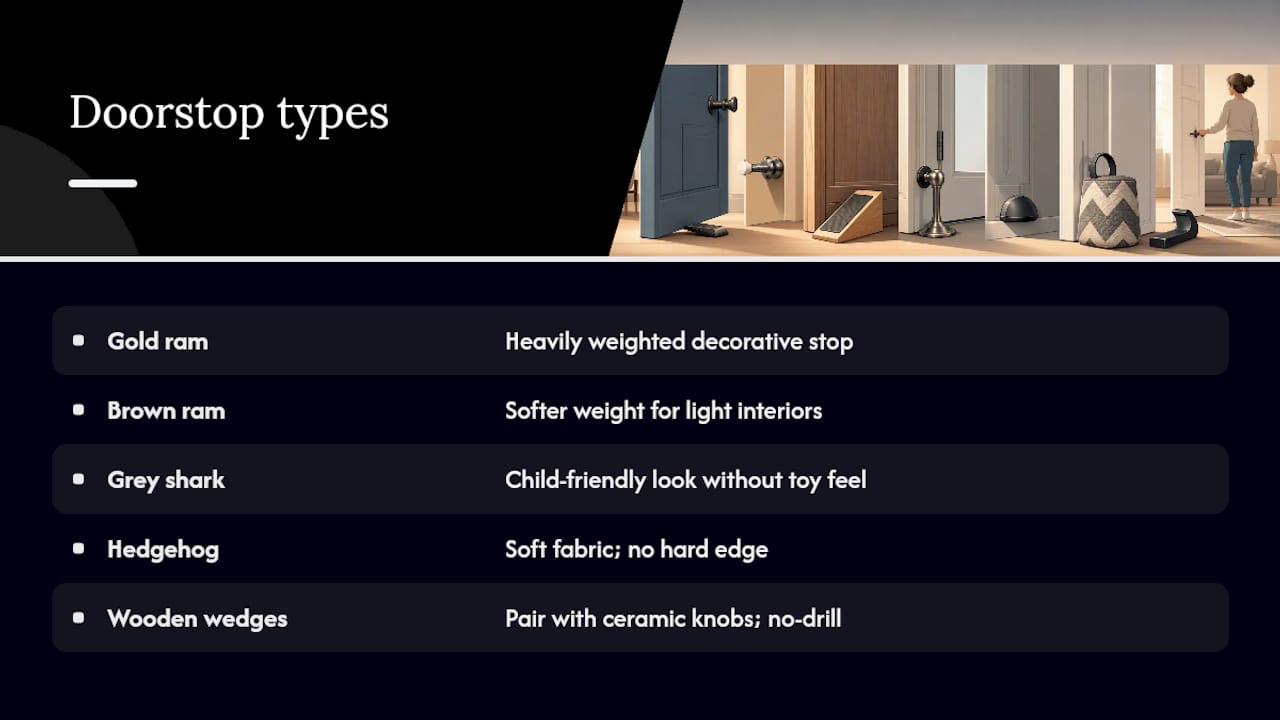
The collection runs from a gold ram design door stop with genuine weight behind it, to a softer brown ram stop for lighter interiors, a grey shark door stop that suits a child’s room without looking like a safety device, and a hedgehog doorstop in soft fabric for rooms where a hard edge doesn’t belong. If you’d rather have a pair that lifts straight out when needed, the wooden door wedges with ceramic knobs work well in rented homes where drilling isn’t an option.
Browse the full Homable door stop range and pick one that suits the room, not just the problem.
Sources
For more on the mechanics behind slamming doors, Bob Vila’s guide to quieting a slamming door covers air pressure and hinge diagnosis in detail. GreenMatch’s breakdown of stop-slam fixes is worth reading for weatherstripping advice, and One Day Doors & Closets’ overview of noise-reducing door options gives a broader look at hardware choices beyond dampers alone.
- Door slamming? 6 ways to quiet it - BobVila
- How to stop door slamming shut — GreenMatch
- How to stop a door from slamming — WikiHow