Cart
0
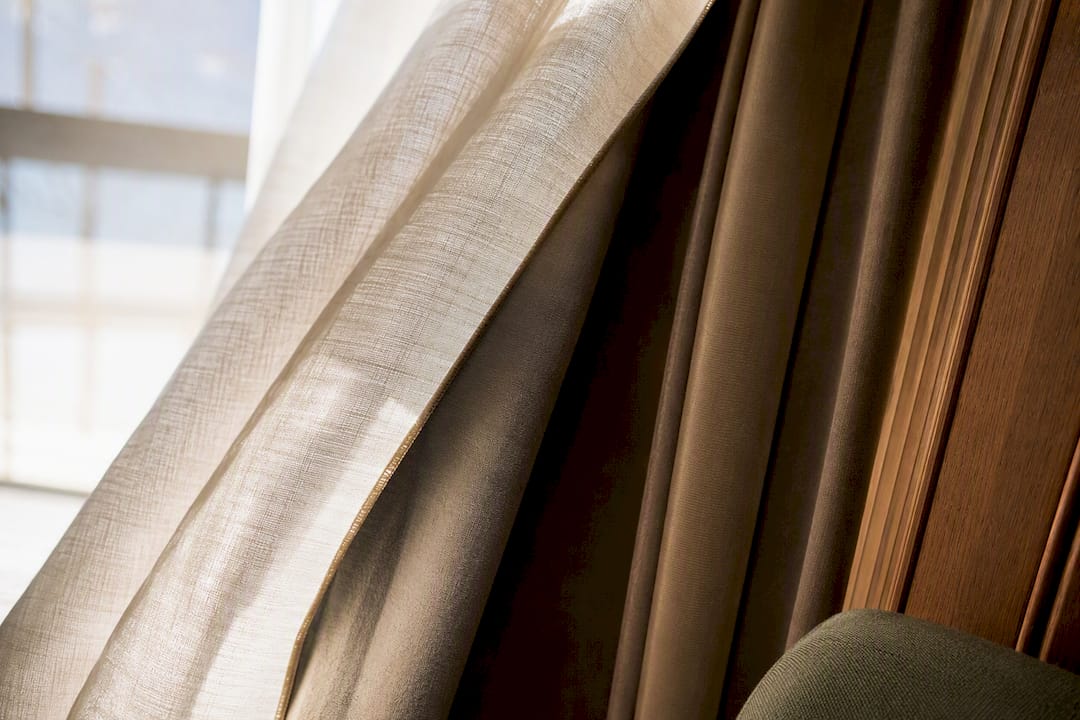
Choose sheer curtains for daylight, softness, and a room that feels open; choose blackout curtains when sleep, privacy after dark, or insulation matter most. Most homes end up needing both, layered on separate tracks, because no single fabric does everything well. The product range and practical fitting notes below cover the trade-offs, from light leaks to energy loss, so you can match the right curtain to the right window rather than guessing.
TL;DR:
- Blackout curtains typically block 95 to 100% of light when properly fitted, but installation gaps can cause significant light leaks.
- Sheer curtains are lightweight and cost less but offer little privacy at night and minimal insulation or noise reduction.
- Layering sheers and blackout panels on separate tracks allows flexible control over daylight, privacy, and temperature.
- Proper measurement and fit are crucial for blackout curtains to perform effectively, especially for oversized or uniquely shaped windows.
- Sheer fabrics rely on loosely woven fibers for diffusion, while blackout fabrics use layered construction with coatings or dense weaves for superior light blocking.
Table of Contents
- Sheer vs blackout curtains: what each one actually is
- Sheer curtains: benefits and limitations
- What are blackout curtains and how do they perform?
- Blackout curtains: benefits and limitations
- Light, privacy, insulation and cost: how do they compare?
- Which curtains suit which room?
- How do you layer sheer and blackout curtains properly?
- What should you check before buying?
- What materials go into sheer versus blackout curtains?
- How do you look after each type?
- What Homable and Cristiano think you should actually do
- Ready to choose your curtains? Here’s where Homable fits in
- Sources
Sheer vs blackout curtains: what each one actually is
Sheer curtains are made from lightweight, translucent fabrics such as voile, organza, lace, or fine polyester weaves. They don’t block light so much as scatter it, which is why a sunlit room with sheers glows rather than dazzles.
That diffusion is the whole point. Sheers soften hard sunlight, blur the sharp lines of a window frame, and make small rooms feel less boxed in. During the day, they offer a degree of privacy because outside light overpowers the view inward. At night, that flips: with lamps on inside and darkness outside, sheers become see-through in the wrong direction.
Common sheer fabrics include:
- Voile: crisp, semi-crisp drape, widely used and affordable
- Organza: slightly stiffer with a subtle sheen
- Lace: decorative, often patterned, less common in modern schemes
- Lightweight polyester blends: durable and easy to wash
Sheer curtains: benefits and limitations
Sheers earn their place for three reasons: they let genuine daylight into a room, they weigh next to nothing on a track, and they cost less than lined alternatives. Cleaning is usually straightforward, since most sheer fabrics tolerate a gentle machine wash.
The trade-offs are just as clear-cut:
- No meaningful privacy once it’s dark and the lights are on inside
- Little to no thermal or acoustic benefit at the window
- Durability varies a lot by fabric weight and weave
Pro Tip: If you like the sheer look but want more evening privacy, hang a lightweight dim-out panel behind them on a second track. You keep the daytime glow and gain a layer you can close after sunset.
What are blackout curtains and how do they perform?
Blackout curtains use a dense weave, a special coating, or a separate lining sewn into the fabric to stop light from passing through. Done properly, they’re built to block around 95 to 100% of incoming light, while lighter “room-darkening” alternatives typically manage closer to 70 to 80%.
That figure is a best-case number, not a guarantee. Gaps at the sides, a track that’s too narrow, or panels that don’t overlap in the middle let light spill in no matter how dense the fabric is.
Blackout curtains tend to suit:
- Bedrooms, especially for shift workers or light sleepers
- Nurseries, where daytime naps depend on darkness
- Home cinema rooms and media spaces
Blackout curtains: benefits and limitations
The obvious win is reliable darkness on demand, but blackout fabric does more than block light. Lined and heavier curtains can improve thermal comfort at a window, cutting some heat loss in winter and heat gain in summer, and the dense weave dampens a modest amount of outside noise.
The costs are real too:
- Heavier fabric can look bulky, especially in small rooms
- Lined panels cost more than basic sheers
- Poor fitting causes light to leak around edges and at the top
Choose a lighter colour and mount the track higher than the frame if you want blackout performance without the room feeling closed in.
Light, privacy, insulation and cost: how do they compare?
Sheer and blackout curtains sit at opposite ends of almost every practical measure, which is why so few homes pick just one.
| Factor | Sheer curtains | Blackout curtains |
|---|---|---|
| Light control | Diffuses, doesn’t block | Blocks most to nearly all light |
| Daytime privacy | Good | Good |
| Night-time privacy | Poor | Strong |
| Thermal effect | Minimal | Noticeable with good fit |
| Noise dampening | Negligible | Modest |
| Maintenance | Easy, often machine washable | Depends on lining, often dry clean |
| Typical cost | Lower | Higher |
Blackout fabrics are generally rated to block 95 to 100% of light, while dimout or room-darkening fabrics sit closer to 70 to 80%.
Labels don’t tell the full story, though. A “blackout” curtain hung on a track two inches narrower than the window, with no overlap in the middle, will leak more light than a well-fitted dimout panel. Fit and installation frequently matter more than the fabric label printed on the packet.
Which curtains suit which room?
Matching curtain type to room isn’t really about taste. It’s about what happens in that room at night and how much light control that activity needs.
- Bedrooms and nurseries: blackout, or a layered sheer-and-blackout setup, for uninterrupted sleep and daytime naps.
- Living and dining rooms: sheers by day for a bright, open feel, with an optional blackout layer if you watch films or host late evenings.
- Home offices: this depends on which way the window faces. A south-facing office often needs a dim-out or blackout panel to kill screen glare; a north-facing one usually copes fine with sheers.
- Kitchens and bathrooms: light-filtering sheers or easy-clean voile suit these rooms best, since ventilation and quick washing matter more than total darkness.
How do you layer sheer and blackout curtains properly?
Layering gives you the daytime glow of sheers and the night-time control of blackout, but only if the hardware is right. Design guides consistently recommend a double rod, or two separate tracks, with the sheer layer mounted closest to the glass and the blackout panel on the room side.
- Fit a double track or two single tracks, one in front of the other.
- Mount both wider than the window frame and a few inches above it, so the blackout panel can extend past the glass on either side.
- Choose panels with enough fullness that they overlap generously at the centre when closed.
- Wrap the leading edge of the blackout curtain around the end of the track (a “return”) to stop light escaping at the sides.
Pro Tip: Ready-made curtains work fine for standard window sizes, but if your window is unusually wide, tall, or bay-shaped, bespoke sizing is worth the extra cost. A blackout panel that’s even an inch short at the bottom lets in a strip of light every single night.
What should you check before buying?
A curtain that looks perfect online can underperform badly if the measurements are off. Before ordering, work through this checklist:
- Measure the width of the window and multiply by 2 to 2.5 for good fullness, not a flat, stretched look.
- Measure the drop from the track to where you want the hem, whether that’s sill, below-sill, or floor length.
- For maximum darkness, curtains should overhang the window frame by several inches on each side.
- Check the heading style: pencil pleat and eyelet both work, but a wave heading sits flatter and closes tighter along the track.
- Look for thermal lining or a dedicated blackout backing if insulation matters, not just a heavier-feeling fabric.
- Ready-made panels suit standard window sizes; bespoke is worth paying for on oversized, bay, or awkwardly shaped windows.
Homable’s curtain size guide walks through exact measurements if you want a step-by-step reference before you order.
What materials go into sheer versus blackout curtains?
The fabric itself does most of the work in this comparison, more than colour or brand ever will. Sheer curtains almost always use open, loosely woven fibres. Voile is the most common: a plain-weave cotton or polyester that lets air and light pass freely. Organza has a tighter, crisper weave with a slight sheen, which gives it a bit more structure than voile without losing translucency. Lace sheers add pattern through the weave itself, though they’re less common in contemporary interiors than plain voile or polyester blends.
Blackout curtains rely on a completely different construction. Rather than one open weave, they’re usually built from three components: a face fabric (often cotton, polyester, or a linen blend for the visible side), a middle layer of foam or acrylic coating, and sometimes a third backing layer. This sandwich construction is what stops light rather than any single fibre type. Cheaper blackout curtains sometimes skip the middle layer and rely on a very tight, heavy weave instead, which blocks less light than a genuinely lined panel.
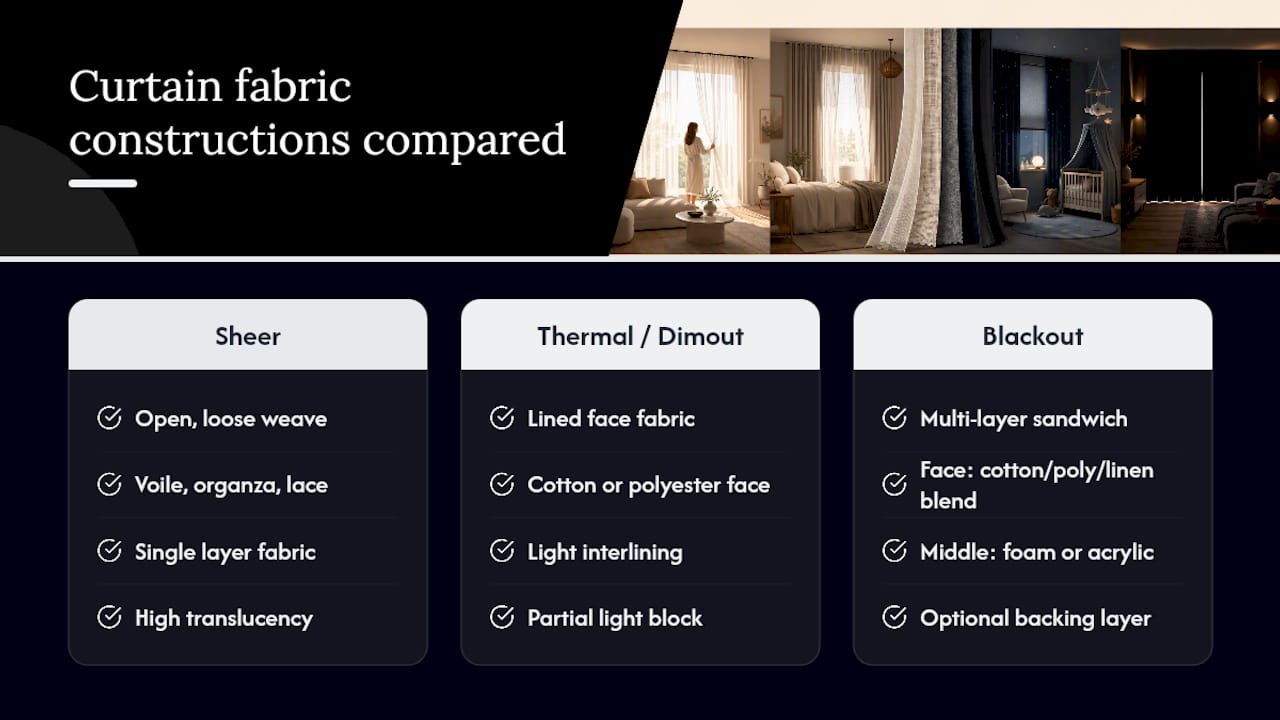
Thermal and dimout curtains sit in between. They typically use a lined cotton or polyester face fabric with a lighter interlining, enough to block a meaningful share of light and add some insulation without the full weight of a true blackout panel. If you’re choosing based on fabric weight alone, be aware that a heavy-feeling curtain isn’t automatically a better light blocker. It’s the construction, not the density, that determines performance.
How do you look after each type?
Sheer curtains are, on the whole, the easier of the two to maintain. Voile and most polyester sheers can go through a gentle machine wash cycle, though lace deserves a hand wash or a delicate bag to protect the pattern. Ironing on a low heat, or steaming while still slightly damp, gets rid of creases without scorching the delicate weave. Because sheers are lightweight, they dry quickly and rarely need dry cleaning.
Blackout curtains need more care, largely because of their lining. Many blackout and thermal panels are marked dry clean only, since the foam or acrylic backing can crack, peel, or shrink if machine washed and tumble dried. Where a blackout curtain is machine washable, use a cool, gentle cycle and skip the tumble dryer entirely, hanging it back on the track to dry in shape instead. Dust builds up faster on heavier fabrics too, so a weekly vacuum with a soft brush attachment, or a light hoover-down when you’re already cleaning the room, keeps them looking fresh between full washes.
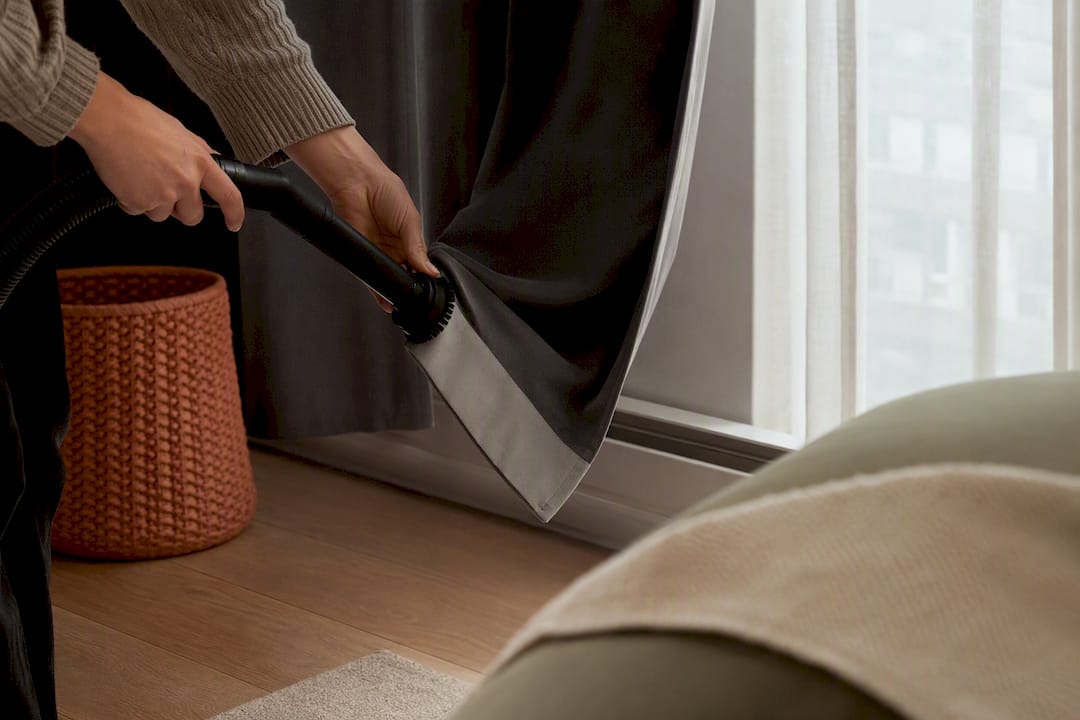
Both types benefit from being taken down and shaken out every few weeks to fight dust build-up, and neither should sit against a damp windowsill for long, since condensation is what actually shortens a curtain’s lifespan more than regular use does.
What Homable and Cristiano think you should actually do
The curtain range is built around one idea: light control should be a decision you make deliberately, not something you discover at 6am when the sun hits your face. Cristiano, who handles a lot of the fitting guidance behind Homable’s product pages, keeps coming back to the same point: most “bad blackout curtains” are actually badly measured ones. Check Homable’s sizing resources before you buy, not after.
— Cristiano
Ready to choose your curtains? Here’s where Homable fits in
Both sides of this comparison are stocked side by side, so you’re not stuck ordering sheers from one shop and blackout panels from another and hoping the tracks match. That matters more than it sounds: a mismatched double-rod setup is the single most common reason layered curtains fail to darken a room properly.

Browse Homable’s curtain collection for sheer, blackout, and thermal-lined options across standard and made-to-measure sizes. If you’re not sure what your window actually needs, Homable’s curtain measurement guide walks through width, drop, and fullness before you commit to a purchase. For a wider look at how curtains change the feel of a room, Homable’s piece on the essential role of curtains is worth a read too. Head to Homable to see current stock and start narrowing down your options.
Sources
- 16 types of window treatments — how to pick a window treatment
- Blackout vs Sheer Curtains Guide | Room-by-room comparison
- Blackout vs. Room Darkening vs. Sheer Curtains
- Window treatments visual guide