
Cart
0
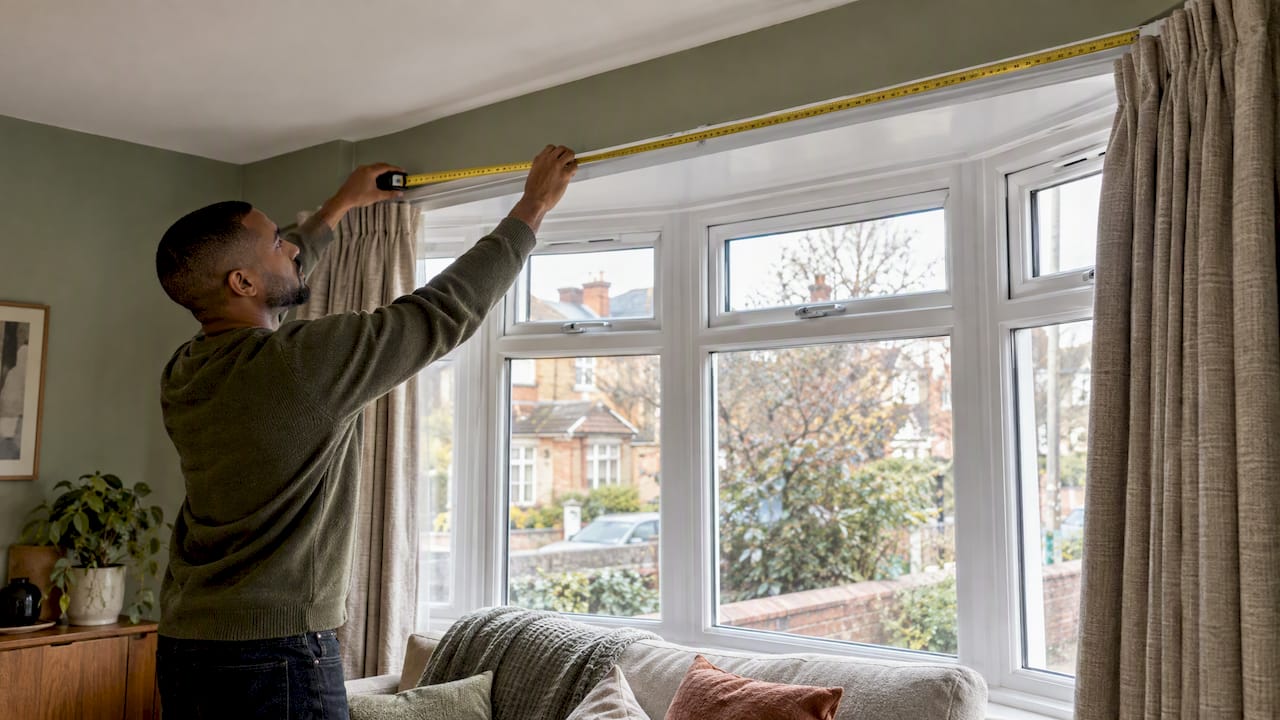
A basic ready-made pair of curtains in the UK can cost roughly £20 to £30. A made-to-measure pair in a good fabric, with lining and a fitted pole, can run to several hundred pounds per window. Where you land depends on five things: size, fabric, lining, heading style and whether someone else hangs them. This guide puts figures on each, shows what is easy to forget when you budget, and explains how to compare two prices that look similar but are not.
TL;DR
- Cheap ready-made pairs start at around £20 for the smallest polyester sizes, with cotton pairs usually starting nearer £30.
- Fabric is the biggest swing: indicative UK costs per window run from £10 to £75 for polyester up to £75 to £1,200 for silk.
- Lining, a pole or track, and fitting are separate costs. Budget for them before you fall for a headline price.
- Measure first. A wrong drop or thin panels cost more than any saving on the pair itself.
- Compare the price per metre of finished width, the lining, and what is in the pack, not the sticker price.
Table of Contents
- What curtains cost in the UK: the short version
- How size changes the price
- Fabric: the widest swing in price
- Ready-made or made to measure?
- The extras that lift the total
- How to measure before you price anything
- How to compare curtain prices fairly
- Our perspective
- Finishing the room at Homable
- FAQ
- Sources
What curtains cost in the UK: the short version
There is no single UK curtain price. There are three broad tiers, and most households fall into the first two.
| Tier | Typical starting point | What you get |
|---|---|---|
| Budget ready-made | About £20 to £30 a pair | Set sizes, polyester or poly-cotton, often unlined or thinly lined |
| Mid-range ready-made | Higher tens to low hundreds of pounds | Heavier fabric, better lining, wider drops, more heading choices |
| Made to measure | Often upwards of £150 a pair at specialist makers | Exact size, chosen fabric and lining, longer lead time |
The budget figures come from a review of affordable curtains, which found most cheap curtains come in set sizes and that prices rise as the size goes up. The made-to-measure tier varies widely by maker, so treat it as a rough floor rather than a rule. Always check the maker’s current price list.
Prices also move. Retailers run sales constantly, so a figure you saw in spring may be different now. Use these numbers to plan a budget, then confirm on the product page.
How size changes the price
Size drives price in two ways. A bigger curtain uses more fabric, and a bigger window usually needs more than one pair or a wider pole.
Most ready-made curtains come in a handful of standard widths and drops. Common widths are around 117 cm, 168 cm and 228 cm per pair, and common drops are around 137 cm, 183 cm and 229 cm, although each retailer sets its own. The smallest sizes sit at the bottom of the price range. Step up to the widest, longest pair and you can easily pay two or three times as much for the same fabric.
Two practical points keep costs down:
- Width matters more than people expect. Curtains look best when they are gathered, not stretched flat across the window. A pair that is only as wide as the window looks thin and lets light round the sides. Our guide to measuring curtains to avoid short drops and thin panels explains how much extra width to allow.
- Drop is cheaper to fix than width. If a ready-made pair is a little too long, you can shorten it. Our walkthrough on how to shorten ready-made curtains covers hem tape, sewing and clips. Too narrow is much harder to put right.
If you are unsure which size to buy, our curtain size guide in millimetres is written for both owned homes and rentals.
A 240 cm window: a worked example
Take a window 240 cm wide, a common question for wide patio-style or bay-front windows. If you want a gathered, full look, you generally want finished curtain width of roughly one and a half to two times the pole or track length. With a pole about 280 cm long, that means somewhere around 420 to 560 cm of finished curtain width. Two pairs of the 228 cm kind would give 456 cm, which fits that range. So for one wide window you are likely buying two pairs, not one, and the budget should double accordingly.
That is the most common reason a curtain bill comes out higher than expected: the first price you see is for one pair, and the window needs two.
Fabric: the widest swing in price
The same size curtain costs very different amounts depending on what it is made of. HomeHow gives indicative UK supply costs per window for each material, and says window size, the number of windows and current pricing all affect the result:
| Fabric | Indicative cost per window |
|---|---|
| Polyester | £10 to £75 |
| Cotton | £15 to £110 |
| Linen | £15 to £220 |
| Velvet | £38 to £550 |
| Silk | £75 to £1,200 |
These come from a UK curtain cost guide dated July 2023, so expect today’s prices to sit somewhat higher or lower depending on the retailer. They are useful for comparing materials against each other, which is what matters most.
What that means in practice:
- Polyester and poly-cotton are the budget workhorses. They are easy to wash, resist fading reasonably well and suit most rooms. Poly-cotton blends are common at the affordable end.
- Cotton costs more but hangs naturally and feels better in living rooms. Cotton pairs tend to start around £30.
- Linen gives a relaxed, textured look. It creases and can shrink, so check care labels.
- Velvet is heavy and warm, so it is useful on draughty doors and in north-facing rooms, but the price climbs quickly.
- Silk is a specialist choice and rarely worth it in a room that gets direct sun.
Not every window dressing is a classic fabric curtain either. Natural materials such as bamboo give a lighter, textured look at a different price point. Browse our bamboo roller blinds and curtains if you want that look for a door opening or a sunroom.
Ready-made or made to measure?
Ready-made is the right choice for most standard windows and most budgets. You can see it, buy it and hang it the same week. Made to measure earns its price in three situations:
- The window is an unusual size, such as a very tall sash, a wide patio opening or a deep bay.
- You want a specific fabric, colour or heading that ready-made ranges do not offer.
- You need curtains to hit the floor or sill precisely, for example in a room with sloping floors.
Made-to-measure curtains also take longer. Lead times of around four weeks are typical at specialist makers, so build that into your plan if you are decorating to a deadline.
For bay windows, price and fitting both change because the pole or track has to follow angles. Our bay window curtain ideas and UK fitting advice shows ten looks and what each demands from the hardware.
The extras that lift the total
The pair itself is often only part of the bill. Look for these before you decide your budget.
Lining
Lining adds weight, helps the curtain hang, blocks more light and reduces heat loss. Blackout lining is the usual choice for bedrooms and nurseries. Some ready-made curtains arrive lined, some with a thin lining, some with none. A made-to-measure maker will price lining as an option, and the better the lining, the higher the cost. If you are choosing between sheer and blackout in different rooms, our guide to sheer vs blackout curtains, room by room helps you decide where the money is worth spending.
Heading style
Heading style changes how much fabric is needed. As a general guide from one UK maker, a pencil pleat or eyelet heading needs about twice the track length in fabric, and a pinch pleat about two and a half times. More fabric means a higher price. Wave fold and ripple fold headings need a specific track and can also cost more. Our piece on curtain trends and the wave fold look explains the effect and the hardware it needs.
Poles and tracks
A pole is decorative, while a track is neat and works well for heavy curtains, bays and wave fold. Either one is an extra cost unless you already have one that fits. Double poles, which hold a sheer and a main curtain, add more. Our double curtain rod ideas shows how high to mount them and what to expect to buy.
Tiebacks and accessories
Tiebacks, hooks, rings and finials are small purchases that add up across several windows. Our guide to curtain tieback placement shows how to mark them in one session.
Fitting
If you would rather not drill into walls, fitting adds labour. According to HomeHow’s UK guide, a professional costs roughly £40 to £70 per hour, about £60 to £90 per window to fit a curtain pole and £100 to £150 per window to fit a curtain rack. MyJobQuote’s UK curtain fitting guide gives a similar picture: labour of £50 to £165 for a single room, and a minimum call-out that often means at least £50 to £80 for one window. Fitting several windows in one visit brings the per-window price down.

These are guides from cost-comparison sites, so get two or three quotes from local fitters. Tell them the wall type, since masonry and tiled walls take longer, and whether the pole or track is supplied.
Our curtain installation workflow is the guide to read first if you are weighing a DIY fit against paying someone.
How to measure before you price anything
A price is only useful if it is for the right size. Measure twice and write the numbers down.
- Decide the hardware first. Fix the pole or track position, because the drop is measured from it. A common rule is to mount it well above the frame so the window looks taller.
- Measure the track or pole length. This is your base width. Multiply by the fullness your heading needs.
- Measure the drop in three places. Floors and ceilings are rarely level, so take the left, middle and right and use the longest. Our curtain length rules explain where to measure and where curtains should finish: sill, below the sill or floor.
- Allow for the heading. Eyelet curtains hang from the pole, while hook-and-ring curtains sit below it.
- Round up to the nearest available size, then plan to shorten rather than stretch.
It also helps to understand how window openings are specified. This explanation of custom window sizes in UK homes shows why measuring the actual opening first, rather than assuming a standard size, avoids expensive surprises. The same logic applies to curtains.
How to compare curtain prices fairly
Two curtains at £40 can be very different products. Check these before you decide which is cheaper.
- Pair or single panel? Some listings price one panel, others a pair. Read the title and the size line.
- Width and drop. Divide the price by the finished width in metres. That gives you a fair price per metre of curtain.
- Lining. Is it lined, and with what? Blackout and thermal linings are worth paying for in bedrooms.
- Fabric weight and composition. A thin polyester that lets light through is not a bargain if you wanted privacy.
- What is in the pack. Tiebacks, hooks and rings are sometimes included and sometimes not.
- Sale pricing. A crossed-out price is not proof of a bargain. Check the current price at two or three shops and judge the curtain on its merits.
- Delivery and returns. Free delivery thresholds change what a cheap pair really costs. Curtains are also easy to get wrong, so check the returns policy.
Our perspective
We see the same pattern with home furnishings generally: people compare the sticker price, then spend more fixing the mismatch. The curtain that looks cheapest is often the one that is too narrow, too short or too thin, and gets replaced within a year.
Our advice is to spend where you notice it. Put the money into width and lining, because those decide whether a curtain looks full and works properly. Save on the heading and the finials, which matter less. Choose a fabric you can wash, because a curtain you cannot clean ends up replaced.
We also think styling a room is a whole-room decision. Curtains, a rug, a few ornaments and some storage work together, and a modest curtain pairs well with good accessories. That is how we curate Homable: practical pieces with a modern look, at prices that leave room in the budget for the rest of the room.
— Cristiano
Finishing the room at Homable
Once the windows are sorted, the rest of the room is where affordable details do the most work. Our range covers ornaments, bamboo rugs, kids’ storage baskets and more, chosen for modern homes. Orders over £100 ship free.

See the full range on the Homable homepage, where categories are grouped by room.
FAQ
How much do curtains cost in the UK?
A basic ready-made pair can cost about £20 to £30, as budget curtain reviews show. Lined, wider or better-fabric pairs cost more, and made-to-measure curtains typically start well above that. Add the cost of a pole or track and any fitting.
What width curtains do I need for a 240 cm window?
Aim for finished curtain width of about one and a half to two times your pole or track length. For a 240 cm window with a pole of around 280 cm, that is roughly 420 to 560 cm in total, which usually means two pairs. Check the pack to see whether the width given is per pair or per panel.
How much do people charge to install curtains?
UK cost guides put fitting a pole at around £50 to £90 per window and a track at roughly £60 to £150 per window, depending on the guide, with a minimum call-out of £50 to £80 common for one window. Bays cost more, and fitting several windows in one visit lowers the per-window price. Get at least two quotes.
Is it cheaper to make curtains or buy them?
Making them yourself can be cheaper in materials, but only if you have the skill and time. Pattern matching and joining fabric widths are harder than they look. For a standard window, a ready-made pair is usually the better value.
Sources
- Best cheap curtains: Affordable window coverings (Expert Reviews)
- Curtain Fitting Cost: How Much Does It Cost to Fit Curtains? (HomeHow)
- Curtain Installation: How Much Do Curtain Fitters Charge? (MyJobQuote)