Cart
0
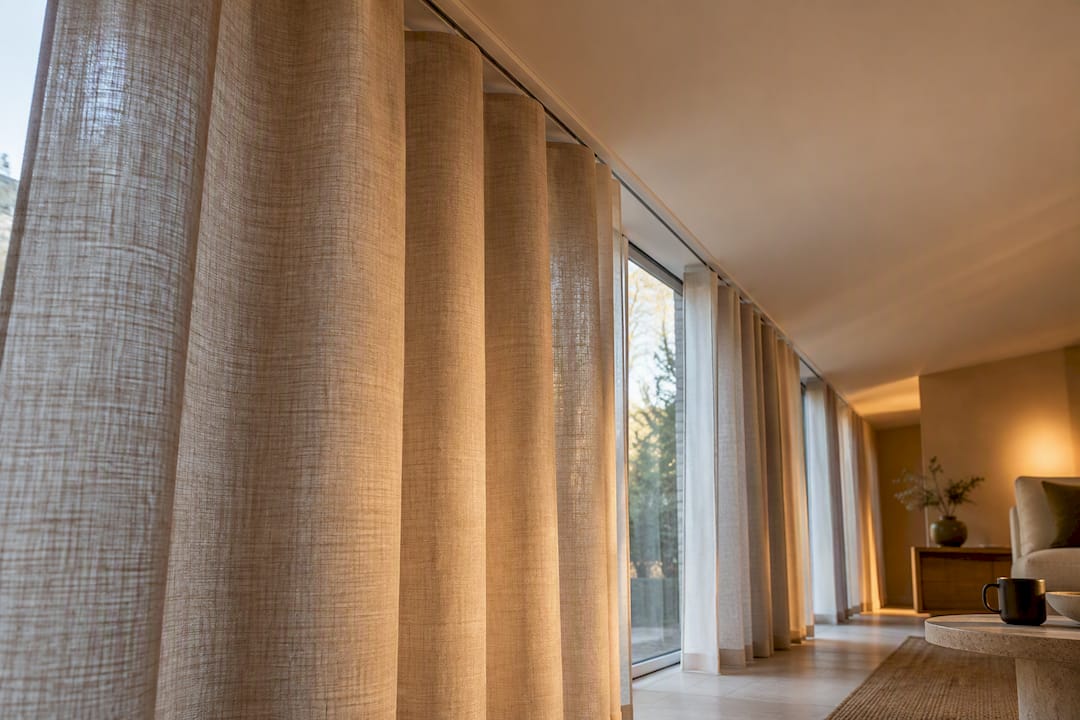
The defining curtain trends 2026 has to offer are wave fold headers, layered sheer-and-drape combinations, and a palette shift from cool grey to earthy neutrals with jewel-tone accents. Get the practical basics right first: correct proportion, tactile natural fabric, and hardware suited to the header you choose. Chase the fabric and the fit before you chase the print.
TL;DR:
- Wave fold curtains require specific tracks and professional fitting to achieve the modern architectural ripple effect, especially for larger or open-plan spaces.
- Earthy neutrals like terracotta, sage, and oat are the dominant palette shift, with jewel tones used sparingly as accents rather than main colors.
- Fabrics should prioritize natural textures such as linen, cotton blends, and velvet used as accents, avoiding shiny synthetics for durability and tactile appeal.
- Hardware trends favor ceiling-mounted tracks, motorization with app control for scheduling, and minimal, functional pelmets that hide hardware without decoration.
- Layered window treatments combining sheers and blackout fabrics remain practical, with a focus on measuring carefully and choosing durable, eco-friendly materials.
Table of Contents
- Top curtain trends to know for 2026
- Curtain colours and palettes for 2026
- Fabrics and textures that define the look
- Headers, hardware and installation trends
- How to style and layer your curtains for daily life
- Who’s behind this guide and where to look next
- Sustainability and eco-friendly curtain trends in 2026
- Smart home integration beyond motorisation
- Emerging patterns and prints for 2026
- Maintenance and care for trending fabrics
- Trend versus timeless: what actually lasts
- Shop the look at Homable
- Sources
- FAQ
Top curtain trends to know for 2026
The biggest shift in curtain trends for 2026 isn’t a colour or a print. It’s a move towards curtains that behave more like architecture and less like an afterthought hung over a rail. Designers are pulling back from stark minimalism towards something softer and more tactile, and that shows up first in the headers.
Wave (ripple) fold leads the pack. The fabric runs in a continuous S-curve along a ceiling-mounted track, with no visible pleats or gaps between panels. It reads modern and architectural, which is why it suits open-plan living rooms and full-height glazing so well. The catch: this look depends entirely on the track. You cannot achieve a genuine ripple fold with basic pinch-pleat hardware. It needs a specific wave-fold track and carriers, sized and fitted correctly, which usually means professional measuring rather than a DIY guess.
Layered sheers plus heavier drapes are now mainstream rather than a luxury flourish. A sheer panel on the front track filters daylight and softens the view in, while a heavier drape behind handles privacy and insulation at night. It’s a “double-duty” setup that gives you flexibility Livingetc highlights as one of the year’s strongest practical trends, letting one window do several jobs depending on the time of day.
Pinch pleats are back, but in a cleaner, more precise form. The updated version uses tighter, more consistent spacing and double-width fabric, avoiding the skimpy, under-filled panels that made pinch pleat feel dated a decade ago. Designers now treat spacing as the detail that makes or breaks the whole header.
Café curtains and short drapes still have a place, mostly in kitchens and bathrooms where full-length fabric is impractical near a sink or hob. Valances and pelmets are having a quieter comeback too, but the fussy, heavily gathered versions are out. What works in 2026 is a restrained, boxed pelmet in a solid fabric, used to hide track hardware rather than to decorate for its own sake.
A few features tie the whole look together:
- Continuous S-curve headers rather than individually gathered pleats
- Layered tracks that separate sheer and blackout or thermal function
- Tailored spacing on pinch pleat, with double or 2.5 times fullness
- Minimal, boxed pelmets used functionally, not decoratively
- Textured, matte fabric over anything with visible sheen
Pro Tip: If you love the ripple-fold look but you’re renting or working to a tight budget, a well-hung pinch pleat with correct fullness gets you 80% of the visual effect without the track investment.
Curtain colours and palettes for 2026
Cool greys and stark white are losing ground fast. Search interest data from Trendalytics shows earthy neutrals overtaking the grey-dominated palettes that ruled the last few years, with terracotta, sage, clay, oat, and warm greige leading the shift.
Here’s how to actually use that palette without redecorating the whole room:
- Anchor with an earthy neutral. Oat, clay, or warm greige works as the main curtain colour in most rooms because it reads calm against both light and dark walls.
- Add jewel tones sparingly. A single emerald or plum panel, or a jewel-toned lining that flashes when the curtain moves, gives you the accent without saturating the whole room.
- Layer tone-on-tone. Match a sheer and a drape in near-identical shades but different textures, linen against a slightly nubbier weave, so the depth comes from texture rather than contrast.
- Adjust for light direction. North-facing rooms lose warmth fast, so lean towards terracotta or clay rather than sage. South-facing rooms with strong natural light can carry deeper, more saturated tones without feeling heavy.
The shift in numbers: search and design forecasts both point the same direction, away from the cool-grey dominance of the past few years and towards warmer, softer neutrals that designers describe as making a home feel good rather than simply look styled.
For inspiration on pairing wall colour with curtain tone, Homable’s stylish colour palette examples are worth a look before you order swatches.
Fabrics and textures that define the look
Texture is doing the heavy lifting in 2026’s curtain trends, and it starts with a rejection of shiny synthetics. Better Homes & Gardens points to natural, tactile fabrics and understated patterning as the dominant material story for the year.
- Linen and linen blends give you the breathable, softly rumpled look designers want, though pure linen creases easily and fades faster in direct sun than a blend.
- Cotton blends and nubby weaves add texture without the maintenance headache of pure linen, and they’re a sensible choice for family rooms that get daily wear.
- Velvet works best as an accent, a single panel, a lining flash, or curtains in a formal dining room or main bedroom, rather than as the fabric for every window in the house.
- Durable, well-made fabric pays off over time. Designers advise spending on the fabric and track you won’t want to replace in two years, and saving trend experiments for cheaper, swappable accessories like tiebacks or trims.
If you’ve got pets, children, or a sun-facing window, ask about fade resistance and washability before committing to a colour, not after.
Headers, hardware and installation trends
Wave fold isn’t a fabric choice, it’s a hardware choice. The continuous S-curve depends on the track geometry, and that curve simply doesn’t happen with generic pinch-pleat rail. If you want the ripple look, budget for the correct wave track and carriers from the outset.
Beyond the header itself, a few hardware shifts define the year:
- Ceiling-mounted or recessed tracks are preferred over visible rods for a clean, architectural finish, particularly with floor-to-ceiling drops.
- Slim matte rods remain the right call for smaller windows or more traditional rooms where a visible rod suits the style.
- Motorisation has moved from a luxury add-on towards something genuinely mainstream, helped by battery and rechargeable retrofit motors that don’t require rewiring. It earns its keep most on high or hard-to-reach windows, main bedrooms, and rooms where you want a scheduled open-close routine.
- Measure floor-to-ceiling, not floor-to-window. Skimping on drop length causes bunching at the base and dragging on carpets, particularly with heavier fabrics.
Pro Tip: Always measure your track width before your fabric width. Ripple fold and full pinch pleat both need considerably more fabric than the window itself, often 2 to 2.5 times the track length, so an undersized order is the single most common ordering mistake.
For the exact numbers, Homable’s curtain size guide walks through measuring in millimetres for both bought-off-the-shelf and made-to-measure orders.
How to style and layer your curtains for daily life
The layering recipe that works in most rooms is simple: a sheer on the front track for daytime privacy and light, with a dim-out or blackout drape behind for evenings. Add a decorative panel or trim as the seasonal or trend-led element you can swap out cheaply.
- Living rooms benefit most from wave fold on a ceiling track, paired with a sheer for daytime softness.
- Bedrooms need the blackout or thermal layer doing real work, so prioritise lining quality here over header style.
- Kitchens usually call for café curtains or short drapes that keep fabric away from hobs and sinks.
- Home offices do well with a mid-weight drape alone, enough to control glare on a screen without full blackout.
In smaller rooms, spend on the track and the main fabric first; trims and tiebacks can wait. Before ordering anything, run through this: measure floor-to-ceiling, choose your heading style, pick blackout or thermal lining if the room needs it, then match the track to that heading. For daytime light control without full blackout, Homable’s guide to sheer versus blackout curtains is a useful next stop.
Who’s behind this guide and where to look next
This guide draws on current design forecasting and practical fitting knowledge from Cristiano, whose background covers home decor trends and the day-to-day realities of ordering and installing window treatments. For the technical side of getting curtains right once you’ve picked a style, Homable’s curtain installation workflow covers measuring, track choice, and common fitting mistakes in more depth than a trends piece can.
If you’re shopping for materials that fit the 2026 look, you can find natural-fibre options including bamboo-style curtains and complementary homewares, alongside trims, rods, and lining accessories to enhance your curtains.
Sustainability and eco-friendly curtain trends in 2026
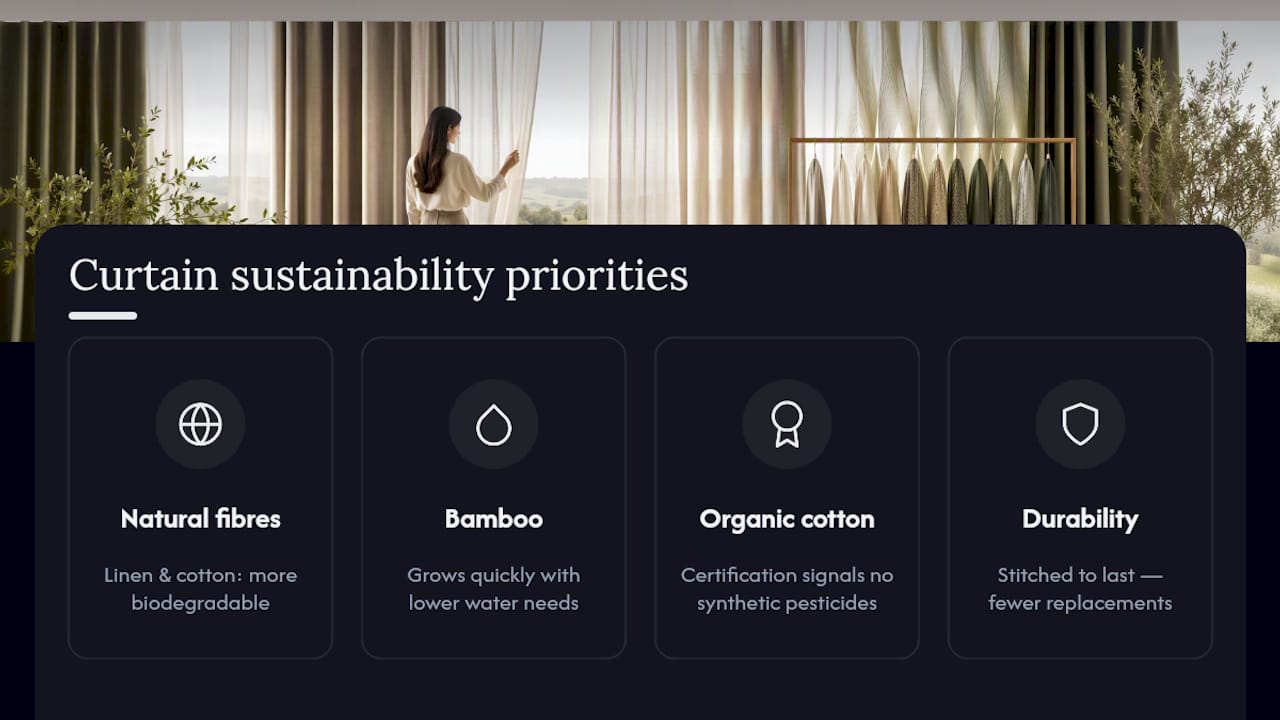
Sustainability has become a genuine buying factor rather than a niche concern. Natural fibres like linen and cotton fit the 2026 aesthetic on looks alone, but they also tend to be more biodegradable and less reliant on petroleum-based processing than fully synthetic alternatives.
Bamboo is worth particular attention. It grows quickly without the water demands of cotton, and bamboo-based curtains and blinds have become more widely available as manufacturers respond to demand for materials that feel natural underfoot and against the hand, not just visually.
Organic cotton certification is increasingly visible on labels too, a signal that the fibre was grown without the synthetic pesticides used in conventional cotton farming. It won’t suit every budget, but it’s worth checking the label if sustainability is a priority alongside style.
Manufacturing practices matter as much as raw material. Look for curtains dyed with lower-impact processes and stitched to last, since a well-made linen or cotton-blend curtain that survives five years of washing does less environmental damage than three cheaper ones replaced in the same period. Durability, in this sense, is its own form of sustainability: the fabric you don’t have to throw away is the greenest option on the shelf.
Smart home integration beyond motorisation
Motorised tracks get most of the attention, but the real shift in 2026 is what sits behind the motor: app-based control and scheduling. Most retrofit and built-in motor systems now pair with a smartphone app, letting you open curtains automatically at sunrise or close them when the room’s temperature climbs in summer.
Scheduling is where the genuine day-to-day value sits. Set a bedroom’s blackout drape to close ten minutes before your alarm and open gradually after it, and you get a soft wake-up cue without buying a separate light system. Living room curtains can be scheduled to close at dusk automatically, useful if you’re often out and want the house to look lived-in.
Integration with wider smart home systems is becoming more common too, so curtains can respond to a voice assistant command or sit inside a broader “evening” or “morning” routine alongside lighting and heating. It’s not essential kit for most homes, but for high or awkward windows where manual operation is genuinely inconvenient, the scheduling function alone often justifies the cost.
Emerging patterns and prints for 2026
Bold, graphic prints are largely sitting this year out. What’s replacing them is subtler: muted botanical motifs, soft abstract textures woven into the fabric itself, and tonal patterning that reads more as texture than print from across a room.
Where pattern does appear, it tends to work with the earthy palette rather than against it, a faint leaf or grass motif in oat or sage, rather than a high-contrast floral. This suits open-plan spaces where a busy pattern would compete with furniture and art rather than sit quietly in the background.
Textural patterning, subtle jacquard weaves, slubbed linen with an uneven surface, or a self-striped cotton, gives you visual interest without needing an actual printed motif at all. It’s a lower-risk way to add character to a room, since a woven texture ages more gracefully than a bold print, which can start to feel dated within a couple of years. If you do want a stronger pattern, keep it to one panel or one room rather than repeating it throughout the house.
Maintenance and care for trending fabrics
Linen looks its best with a slightly relaxed, rumpled texture, so resist the urge to iron it flat. A light steam or a gentle tumble on cool, followed by hanging back on the track while still faintly damp, lets gravity do the smoothing work naturally.
Cotton blends and nubby weaves are generally more forgiving. Most can be machine washed on a cool, gentle cycle, but always check the care label first since a cotton blend with a stiffened lining may need dry cleaning to avoid shrinkage.
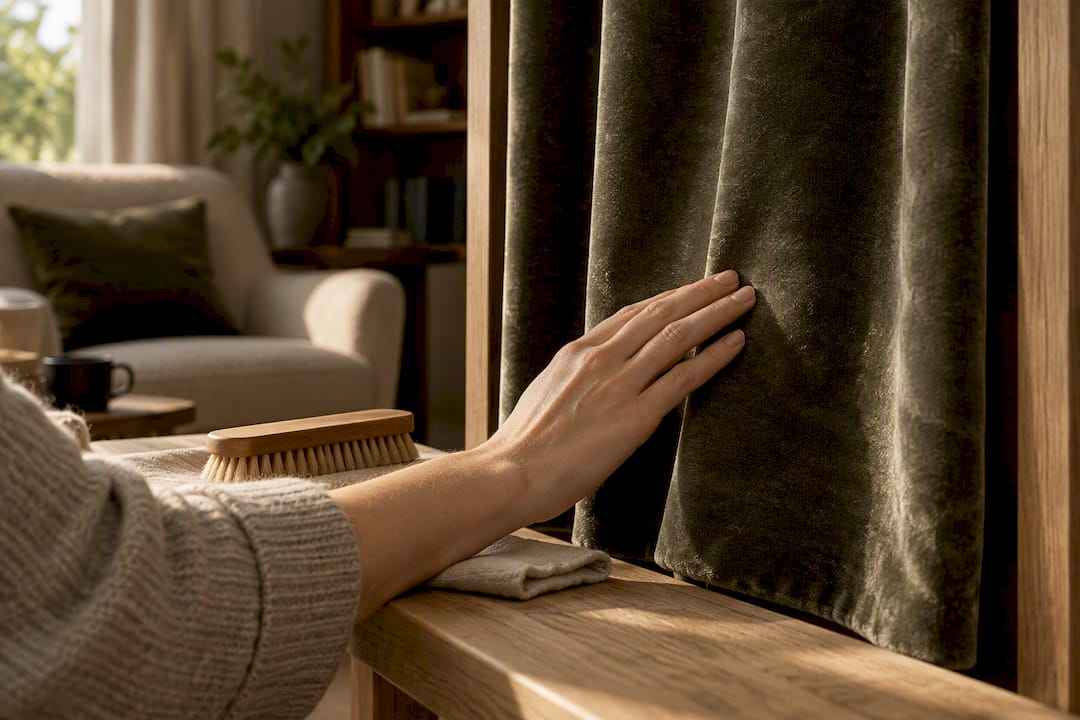
Velvet accent panels need the most careful handling. Avoid direct machine washing altogether. A soft brush used in the direction of the pile removes dust, and professional cleaning is worth the cost for a fabric that’s expensive to replace if it’s damaged.
Across all fabrics, rotate curtains out of direct, harsh sunlight where possible, or fit a sheer layer in front of a heavier drape to reduce UV exposure on the fabric that matters most. Fading is one of the most common complaints with south-facing windows, and it’s largely preventable with that one layering habit. Dust regularly with a vacuum brush attachment rather than letting it build up between washes, since embedded dust accelerates fibre wear far more than most people expect.
Trend versus timeless: what actually lasts
Chase the header, not the print. A wave-fold track or a well-cut pinch pleat will outlive whatever pattern happens to be fashionable this year, so that’s where the money should go first.
Two examples: a family with young children is better off investing in a durable cotton blend in an earthy neutral, saving jewel-tone velvet for cushions that are cheap to swap. A couple in a quiet, light-filled flat can justify a proper wave-fold track and linen drape, since there’s less wear to plan around and the architectural look pays off daily.
Pro Tip: When measuring for a new track, always measure twice at different times of day. Skirting boards and floors are rarely perfectly level, and a track that looks straight in the morning can reveal a slight lean by evening light.
— Cristiano
Shop the look at Homable
Online retailers offer curated ranges of natural-fibre and bamboo-style curtains, plus complementary tea towels, rugs, and storage pieces that fit with earthy palettes.

If ripple fold or layered sheers caught your eye earlier in this guide, browse Homable’s bamboo curtain range to see the texture in person before committing to a full window’s worth of fabric. Sizes like the 90x200cm bamboo curtain suit smaller windows and doorways, while the 100x200cm print option works well as a room divider or larger window treatment. Measure your track, decide on your heading style, and order a sample panel before you commit to a full set, then browse the full range at Homable to see how the rest of the collection pairs with your chosen palette.
Sources
- Curtain trends 2026 | Livingetc
- Fall–Winter 2026 home forecast | Trendalytics
- Window treatment trends 2026 | Good Housekeeping
- Soulful design trends 2026 | Better Homes & Gardens
FAQ
What curtains are in style in 2026?
Wave (ripple) fold headers, layered sheer-plus-drape setups, and updated pinch pleats with tighter spacing are the standout curtain trends for 2026. Fabric-wise, tactile natural weaves like linen and cotton blends dominate over synthetics.
What is the colour of the year for curtains in 2026?
There isn’t a single official “colour of the year”, but earthy neutrals, terracotta, sage, clay, oat, and warm greige, are the dominant palette shift away from the cool greys of recent years. Jewel tones like emerald and plum appear mainly as accents rather than full-room colours.
What are the trendy window coverings for 2026?
Ripple-fold curtains on ceiling tracks, layered sheer and blackout combinations, and restrained pelmets or boxed valances are the standout window treatments this year. Café curtains remain popular for kitchens and bathrooms where full-length fabric is impractical.
Should your curtains be lighter or darker than your walls?
Either can work, but the key is contrast in tone or texture rather than a strict rule. A curtain a shade or two darker than the wall adds depth and grounds a room, while a closely matched tone with a different weave gives a softer, more layered look that suits the 2026 aesthetic.
Do some retailers sell curtains that fit the 2026 trend?
Yes, Homable stocks bamboo-style and natural-fibre curtain options that suit the earthy, textured palette defining 2026, including sizes such as the 100x220cm bamboo print curtain. Current pricing and available sizes are listed on the Homable website.