Cart
0
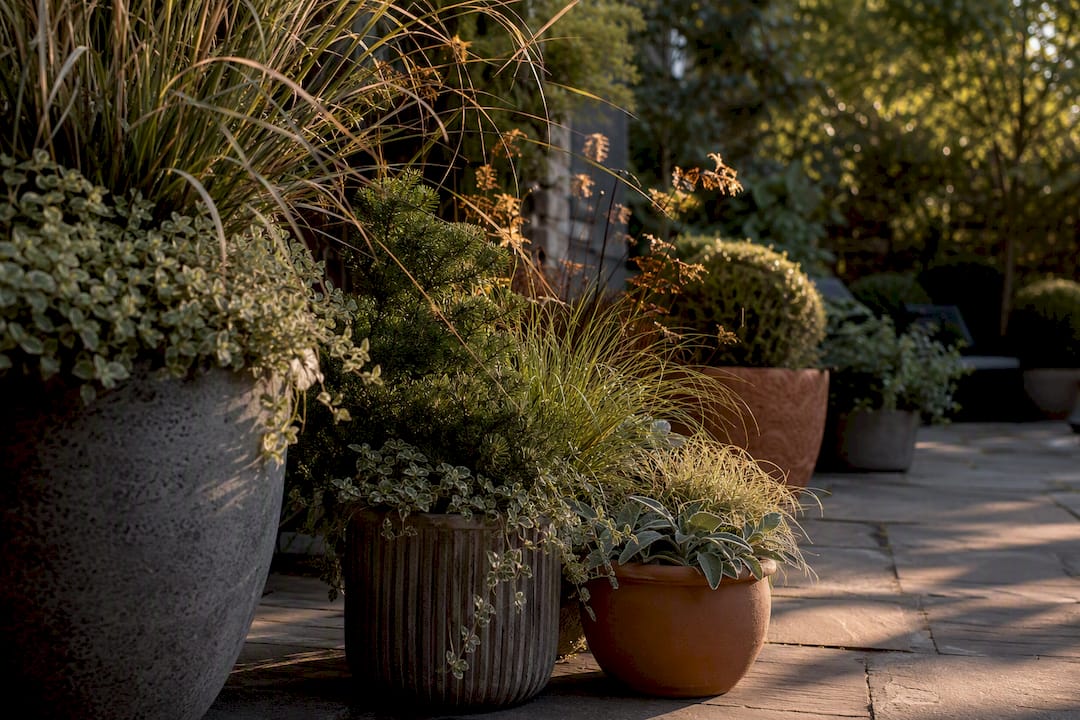
The quickest way to lift outdoor planters is to plant with a thriller, filler and spiller in every pot, and then repeat one material or colour across the group. Use a single large statement planter rather than several small ones, group in odd numbers, and always match plants to the light and water conditions they will actually get. The ideas and rules below show exactly how to put that into practice, from front door pairs to trough screens.
TL;DR:
- Larger, fewer containers with matching materials or finishes outperform numerous small pots in both appearance and plant survival.
- Choosing the right pot size and material for your site conditions, especially for winter insulation and root protection, is critical for plant health.
- Proper drainage, with a layer of grit and free-draining compost, is more important than the material or decorative elements of the planter.
- Grouping planters by finish and varying their heights creates a deliberate look, with odd numbers and clear spacing enhancing visual appeal.
- Seasonal refreshes with bulbs, drought-tolerant annuals, and evergreen foliage help maintain interest throughout the year.
Table of Contents
- Outdoor planter styling ideas you can copy this weekend
- How to choose plants and planters that actually survive
- Getting the grouping, scale and spacing right
- A simple seasonal plan for year-round colour
- What Cristiano gets right about planter styling
- Maintenance and care tips specific to outdoor planters
- How to protect outdoor planters from weather and pests
- Selecting plants for different climates and hardiness zones
- Why most planter advice skips the one thing that actually matters
- Where to find planters and accessories that match your plan
- Sources
- FAQ
Outdoor planter styling ideas you can copy this weekend
Good outdoor planter styling comes down to repeatable formulas rather than luck. The thriller, filler, spiller method gives every pot a tall upright plant for height, a mounding plant for body, and a trailing plant to soften the rim, and it works whether the container is a €15 terracotta pot or a large fibreglass trough. Container gardening experts consistently point to this ratio because it reliably creates balanced, full containers at almost any scale. The ten ideas below apply that formula to real situations.
- A single large statement planter. One oversized glazed ceramic or fibrestone pot by a front door beats three mismatched small ones. Plant a clipped bay or dwarf conifer as the thriller, heuchera or trailing ivy as the filler and spiller, and let the pot’s finish do the rest of the talking.
- A monochrome pot family in varied heights. Choose three or four planters in the same charcoal, terracotta or white finish, but stagger their heights across a run of steps or along a wall. House & Garden’s own container round up makes the case that fewer, larger, well matched pots read as far more intentional than a scattered collection.
- A textural mix rather than a colour mix. Pair the spiky architecture of phormium with the soft haze of ornamental grasses and the glossy leaves of a bay tree, all in matching stone finish planters. Texture carries the design further than flower colour ever does once summer blooms fade.
- A Mediterranean terrace look. Group terracotta pots of varying sizes and plant rosemary, thyme and a dwarf olive as anchors. This suits a sunny, sheltered patio best, since terracotta dries out fast and these plants prefer it that way.
- A tropical cluster for resort appeal. Lightweight fibreglass planters in black or bronze holding banana plants, cordyline and elephant’s ear create a lush, oversized look without the weight problem of ceramic. Ideal for a sheltered courtyard corner that gets afternoon sun.
- Evergreen structure for winter interest. A pair of clipped box balls or standard bay trees either side of an entrance holds its shape through frost and looks sharp in every season. Modern planter styling leans hard on this kind of restrained, repeated planting rather than seasonal colour changes.
- An edible planter near the dining table. A wide, shallow trough of mixed herbs, cherry tomatoes and trailing nasturtium doubles as decoration and dinner ingredients. Keep it within arm’s reach of the table and water it more often than ornamental pots, since edibles are thirstier.
- A trough for screening or railings. Long, narrow troughs planted with box hedging, lavender or trailing petunias soften a fence line or balcony railing without eating into floor space. Space plants roughly 20 to 25 centimetres apart so they knit together by midsummer.
- Seating anchored with a rug and matching planters. Lay down a weatherproof outdoor rug under a bistro set, then flank it with two planters in a finish that echoes the rug’s tone. Outdoor rugs made from recycled PET or polypropylene handle rain and fading far better than indoor materials, and the pairing makes a seating area feel furnished rather than assembled.
- Lighting and finishing touches for evening. Solar stakes tucked among the foliage, a string of fairy lights wound through a trellis planter, or a simple pebble top dress all extend a planter’s appeal after dark. Small styling touches like these are often what separates a pot that looks good in daylight from one that still earns its place at 9pm.
How to choose plants and planters that actually survive
Every planting plan starts with light and water, not looks. A thriller that wants full sun will sulk next to a filler that prefers shade, so check labels before you commit to a combination, however good it looks on the shelf.
Pot size matters more than most people expect. A bistro table on a balcony suits a focal pot around 30 to 45 centimetres across, while a patio seating area needs one or two planters at 45 to 60 centimetres or more to hold enough soil volume and visual weight. Bigger pots also survive winter better, since more soil mass buffers roots against sudden frost.
Material choice comes down to exposure and how much weight you can manage:
- Terracotta breathes well and suits Mediterranean planting, but it can crack in a hard frost and dries out quickly in summer heat.
- Fibreglass or fibrestone is light enough to move, weatherproof, and increasingly made to mimic stone or metal finishes.
- Glazed ceramic looks polished and holds moisture well, but it is heavy and can still crack if water freezes inside it.
- Metal planters suit an industrial or modern look, though dark metal absorbs heat fast in direct summer sun and can stress roots.
For the base of any pot, resist the old habit of piling in broken crocks. A thin layer of grit for drainage plus a genuinely free-draining compost matters far more than what sits underneath. If you are using a decorative cachepot, keep the actual planted pot inside it with proper drainage into a saucer, rather than potting directly into a pot with no hole at all.
Pro Tip: If you are unsure whether a pot drains fast enough, water it and time how long it takes to run through. Anything over a couple of minutes for a modest sized pot usually means the compost mix needs more grit.
Getting the grouping, scale and spacing right
Odd numbered groups of planters look deliberate in a way that pairs and even numbers rarely manage, and the effect gets stronger once you vary height. Aim for a noticeable difference in height between pots in a trio so the eye moves naturally across the group rather than seeing a flat row.
- Stick to one material or finish across a grouped set. Mixing terracotta, glazed ceramic and galvanised steel in the same cluster reads as clutter rather than variety.
- Repeat a colour or finish in two or three separate spots around the garden or patio for rhythm, rather than confining it to a single corner.
- Use tall matching planters in pairs to frame a doorway, and reserve trios of tall, medium and low pots for awkward corners that need softening.
- Leave a genuine 30 centimetres of clearance around any door swing so a planter never becomes an obstacle course for anyone carrying shopping.
Scale rules of thumb: 24 to 30 centimetres in diameter suits a small balcony’s focal pot, while a patio’s main planter benefits from 45 to 60 centimetres to hold its own against furniture and open space. Serene Yards’s guide to modern planter styling makes the point well: repetition of finish, not colour, is what stops a grouped arrangement looking like a collected jumble.
A simple seasonal plan for year-round colour
Outdoor planters do not need a full replant every few months to stay interesting, but a light seasonal refresh keeps them from going stale.
- Spring: swap in bulbs like tulips and daffodils alongside early pansies for a fast colour hit while the rest of the garden wakes up.
- Summer: lean on heat-tolerant annuals such as petunias, geraniums and trailing lobelia, which reward regular deadheading with weeks of extra flowering.
- Autumn: ornamental grasses, chrysanthemums and ornamental kale carry colour and texture well into the cooler months without needing constant attention.
- Winter: evergreen foliage, berried stems and simple twig arrangements with a string of lights keep pots looking considered even when nothing is actively growing.
Watering and feeding should track the season rather than the calendar. Larger pots need watering less often than small ones because they hold more moisture, which also happens to help them survive winter with less fuss. For tender specimens that cannot handle frost, either move the whole pot under cover, lift it onto pot feet to stop it sitting in standing water, or bring it indoors before the first proper cold snap arrives.
What Cristiano gets right about planter styling
Cristiano’s outdoor space styling guide argues that most planter mistakes come from buying the plant before measuring the pot, not the other way round. Homable’s product pages for pieces like the vidaXL balcony planter list exact dimensions and materials, which makes it far easier to match root space to a planting plan before you buy anything green at all.
Maintenance and care tips specific to outdoor planters
Outdoor planters take more punishment than anything grown in open ground, so a short weekly check saves far more time than a rescue mission later. Feel the top few centimetres of compost before watering rather than following a fixed schedule, since a hot spell can dry a small pot out in a single afternoon while a big trough might not need water for days.
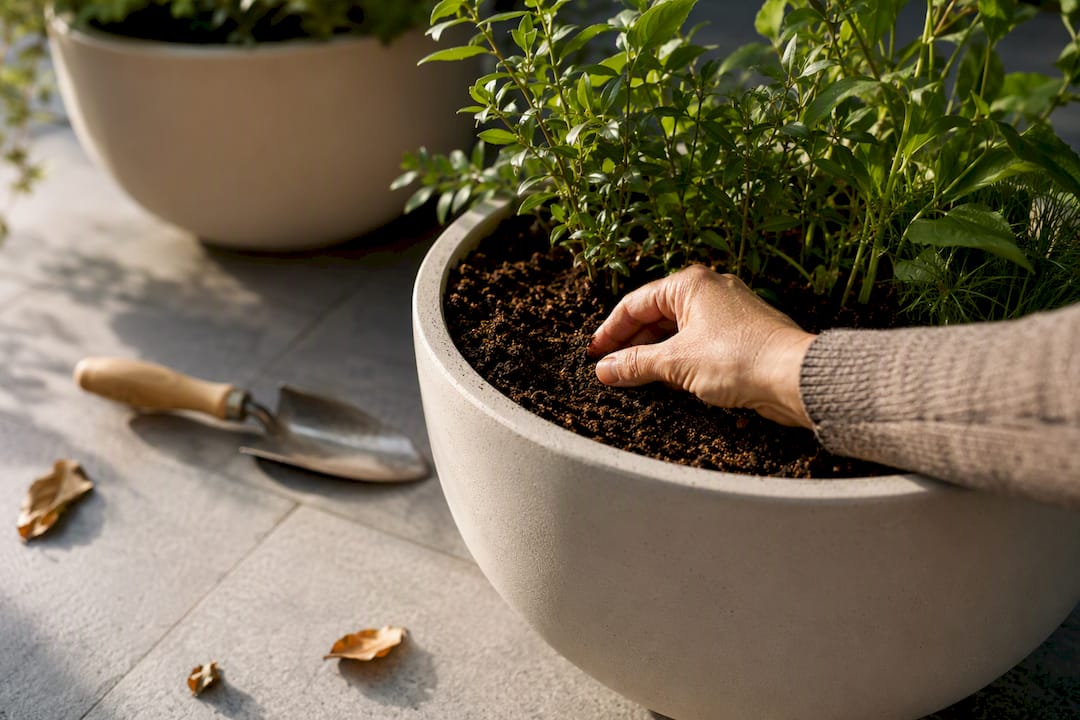
Feed container plants more often than border plants, since regular watering washes nutrients out of the compost faster than in open soil. A balanced liquid feed every couple of weeks through the growing season keeps fillers and spillers from looking tired by midsummer.
Deadhead spent flowers on annuals to keep them blooming, and trim back anything leggy on trailing spillers so they keep a neat line over the pot’s edge rather than sprawling untidily. Check drainage holes periodically, since compost and root growth can gradually block them, leaving roots sitting in water after rain.
Repot or refresh the top layer of compost annually for permanent plantings like box or bay, since nutrients in a fixed volume of soil deplete faster than in the ground. Rotate pots occasionally if one side gets more sun, so growth stays even rather than lopsided towards the light.
How to protect outdoor planters from weather and pests
Frost is the biggest threat to most ceramic and terracotta planters, since water trapped in the material expands as it freezes and can crack the pot from the inside out. Raising pots onto feet or bricks improves drainage and airflow underneath, which reduces the risk considerably during a wet winter.
Wind poses a different problem, particularly for tall, top-heavy planters on balconies or exposed patios. Weighting the base with extra grit or positioning taller pots against a wall reduces the chance of a planter toppling in a storm.
Slugs and snails target soft new growth on fillers and spillers especially. Copper tape around the rim of a pot, crushed eggshell scattered on the surface, or simply choosing tougher foliage like grasses and lavender in exposed spots all reduce damage without heavy intervention.
Vine weevil can be a persistent problem in containers, attacking roots unseen until a plant suddenly wilts despite regular watering. Checking the compost surface for small notches in leaf edges, a telltale adult weevil sign, catches an infestation before it spreads to the whole pot.
Selecting plants for different climates and hardiness zones
Matching plants to your actual climate matters more than following a styling trend that photographed well somewhere warmer. A planting combination built around olive trees and rosemary thrives on a sheltered, sun baked patio but struggles through a damp, exposed winter, where hardier evergreens and ornamental grasses will outperform them every time.
Check a plant’s hardiness rating before committing it to a permanent outdoor container, since pot-grown roots are far more exposed to cold than the same plant grown in open ground. A shrub rated hardy in typical garden soil can still suffer container frost damage because there is less surrounding earth to insulate the roots.
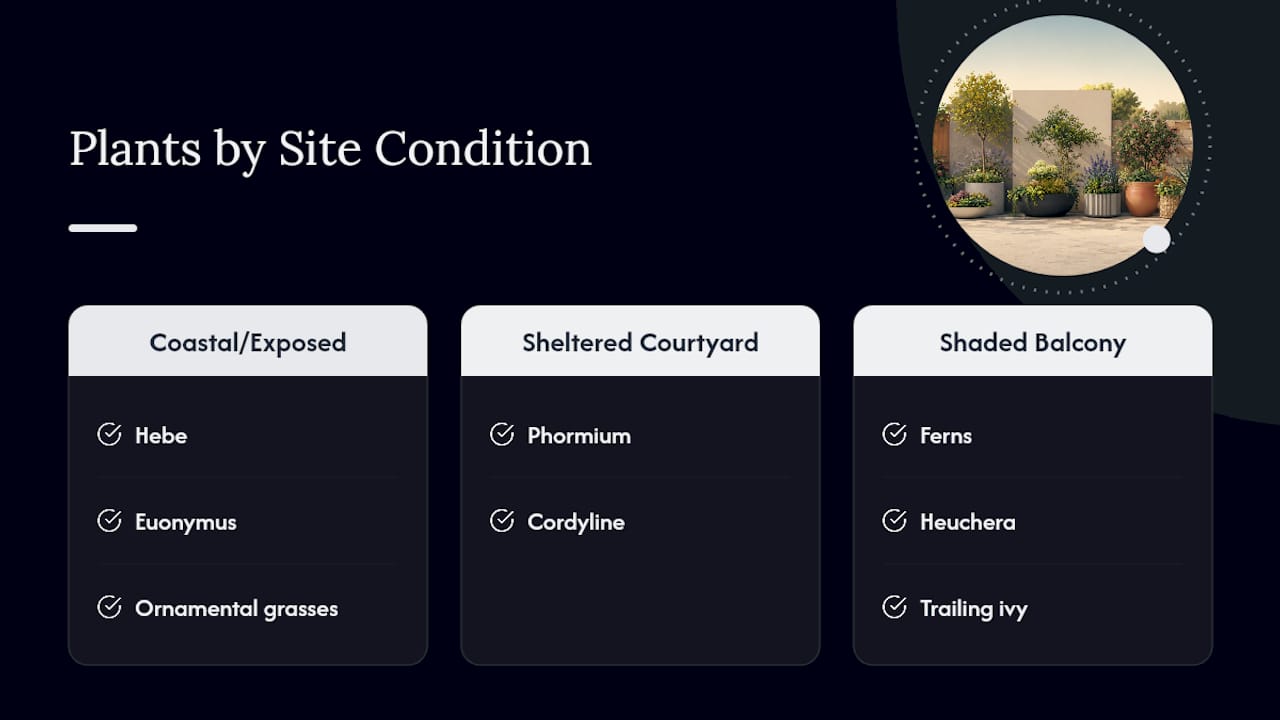
Coastal and exposed sites need wind and salt tolerant choices such as hebe, euonymus or ornamental grasses, while sheltered courtyards can support more tender, architectural planting like phormium or cordyline. Shaded balconies do better with ferns, heuchera and trailing ivy than anything that demands full sun, however attractive the sunnier option looks in a catalogue photo.
Why most planter advice skips the one thing that actually matters
Most guides to outdoor planter styling obsess over which flowers to pair, and treat the pot itself as an afterthought. That gets the order backwards. The container decides how forgiving the whole arrangement will be through a full year of weather, so it deserves the first decision, not the last.
The conventional wisdom to “buy small and let it fill in” is often wrong for containers specifically. A too-small pot punishes you twice: it dries out faster in summer and offers less insulation in winter, which is precisely when most container plants actually die. Bigger, fewer, better chosen pots consistently outperform a scattered collection of small ones, both visually and in terms of what survives to the following spring.
If there is one thing to prioritise first, it is matching pot size and material to your specific site conditions before choosing a single plant. Everything else, including the thriller, filler, spiller formula, works far better once that foundation is right.
— Cristiano
Where to find planters and accessories that match your plan
An outdoor and home accessories range can provide a practical route from styling idea to finished pot, ideally with product pages that list dimensions and materials for easy comparison. That matters most with planters, where getting the size wrong means either a plant that outgrows its home by August or a statement pot that never quite fills.

Before buying, check two things on any product page: the internal diameter against your plant’s mature root spread, and whether the pot has drainage built in or needs a liner. Homable’s galvanised steel garden planter works well as a trough for screening a fence line or edging a patio, and it sits alongside rugs, storage and other outdoor accessories on the main Homable collection, with free shipping on orders over £100. Browse the range, cross-check the dimensions against your space, and order what fits before the next planting season gets away from you.
Sources
- The very best outdoor rugs
- 23 clever container garden ideas for a more versatile outdoor space
- How to style modern outdoor planters – modern planter styling guide
- How to design a gorgeous container garden with the thriller, filler, spiller method
- Outdoor planter box styling ideas: 20 beautiful ways
FAQ
What are the latest trends in garden planters?
Restraint is the biggest trend: fewer, larger planters in a repeated finish rather than a scattered mix of small pots. Modern planter styling also favours sculptural planting, such as clipped box or ornamental grasses, over heavily flowered displays.
What are some creative ideas for outdoor planters?
Try pairing a single oversized statement planter with a thriller, filler, spiller planting scheme, or group three planters of varying height in one material for a corner. A trough along a railing or fence line, softened with trailing plants, is another reliable way to add greenery without losing floor space.
What to put in the bottom of a large outdoor planter?
Skip the old habit of filling the base with broken pots or excessive gravel, since it does little for drainage and just wastes soil depth. A thin layer of grit topped with a genuinely free-draining compost, plus a proper drainage hole, matters far more than what sits underneath.
What are some creative ways to decorate outdoor plant pots?
Group pots by finish rather than plant type, add solar lighting or fairy lights for evening appeal, and anchor a seating area by pairing planters with a weatherproof outdoor rug. A pebble top dress also finishes a pot neatly while helping retain moisture in summer.