Cart
0
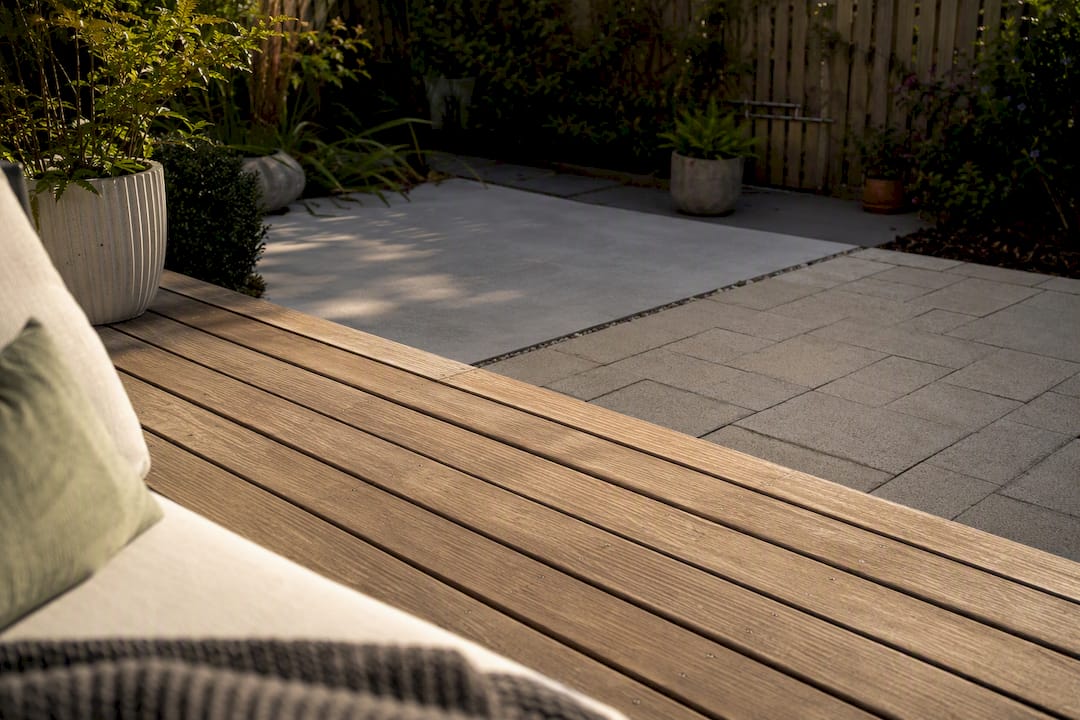
Treat your patio as an outdoor room, not leftover space outside the back door. Pick one focal upgrade first (a large planter, a pergola, or a fire table), then layer in three finishing moves: proper lighting, comfortable seating, and greenery with height. Everything else in patio decor ideas builds outward from that single decision.
TL;DR:
- Using oversized planters creates focal points and privacy, especially on small patios where scattering numerous small pots may look cluttered.
- Layering lighting with ambient, task, and accent fixtures enhances usability and ambiance, with ambient lights being the most impactful for evening transformation.
- Prioritizing one high-impact upgrade, like a pergola or fire feature, significantly elevates the patio’s style without extensive renovation costs.
- Zone and furnish the patio carefully by planning layout, allowing enough space between areas, and choosing multi-functional furniture to maximize small spaces.
- Budget-friendly style updates such as painting furniture, adding outdoor rugs, or string lights can transform a patio within an afternoon without major spending.
Table of Contents
- Quick wins: budget-friendly changes that transform a patio fast
- Zone and furnish: seating, dining and a recovery corner
- Flooring and foundation: pick a surface that suits budget and climate
- Lighting: layer ambient, task and accent for evenings outside
- Plants and planters: greenery as structure and privacy
- Shade, shelter and weatherproofing for changeable weather
- Textiles, colour and styling that make a patio feel like home
- Storage and multifunction solutions to avoid clutter
- Maintenance and materials: keep the patio looking good year after year
- Homable’s approach to finishing a patio properly
- Homable picks to finish the look
- Sources
Quick wins: budget-friendly changes that transform a patio fast
You don’t need a renovation budget to make a patio feel finished. Portable, high-impact pieces do most of the heavy lifting: an outdoor rug, a string of festoon lights, a stack of weatherproof cushions, and an umbrella can change the entire feel of a space in an afternoon, and none of it requires tools. Painting or stencilling tired furniture is one of the most effective low-cost transforms going, according to Architectural Digest, and it works because old furniture usually has good bones, just bad paint.
Try these first, in roughly this order:
-
Paint or stencil an old table and chairs with an outdoor-rated, quick-seal paint.
-
Lay a large outdoor rug to anchor the seating area.
-
Add string lights or lanterns for instant atmosphere after dark.
-
Pile on cushions and throws in a weatherproof fabric.
-
Build a simple pallet coffee table for under the cost of a shop-bought one.
Stick to fabrics labelled outdoor or solution-dyed acrylic, and use masonry or exterior paints designed for weather exposure. Cheap paint on garden furniture peels within a season; the right paint lasts years for a few pounds more.
Zone and furnish: seating, dining and a recovery corner
Designers treat a patio like an indoor room with a floor plan, defining zones before buying a single chair, according to Livingetc. A dining zone needs a table with roughly 36 inches of clearance on all sides for chairs to pull out comfortably. A lounge zone wants low seating angled towards a focal point, not lined up against a wall. A recovery corner, one comfortable chair with a side table, gives you somewhere to sit with a coffee that isn’t the “main” seating area.
Keep walkways between zones at 18 to 24 inches wide wherever the layout allows, so people aren’t squeezing past knees to get through.
- Mark out zones on paper before buying anything.
- Aim to cover 40 to 50% of the patio floor with furniture, no more.
- Choose pieces that fold, stack or nest when space is tight.
- Pick at least one multifunction piece, a bench with storage or a stool that doubles as a side table.
Pro Tip: Sketch your patio to scale on graph paper and cut out paper furniture shapes to test the layout before you carry anything outside. It takes ten minutes and saves you from buying a sofa that blocks the door.
Flooring and foundation: pick a surface that suits budget and climate
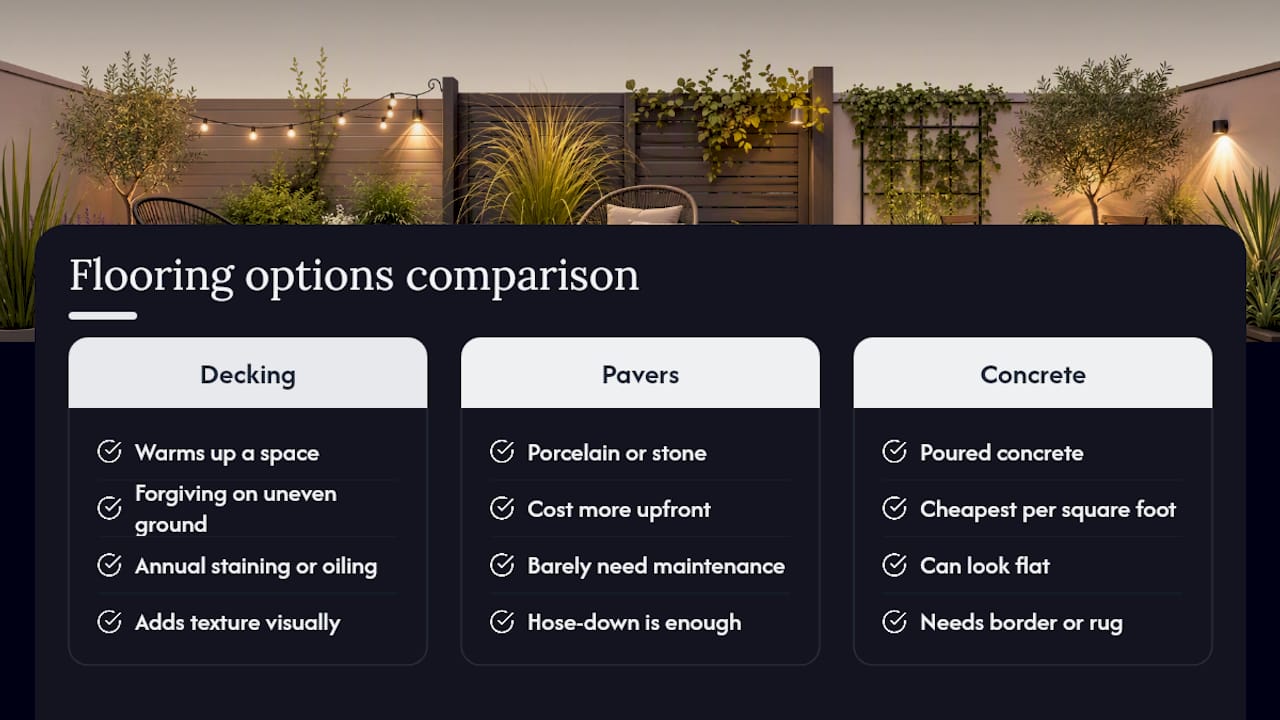
Decking warms up a space and is forgiving on uneven ground, but it needs annual staining or oiling. Porcelain or stone pavers cost more upfront and barely need maintenance beyond a hose down. Poured concrete is the cheapest per square foot but can look flat without a border or a rug to break it up.
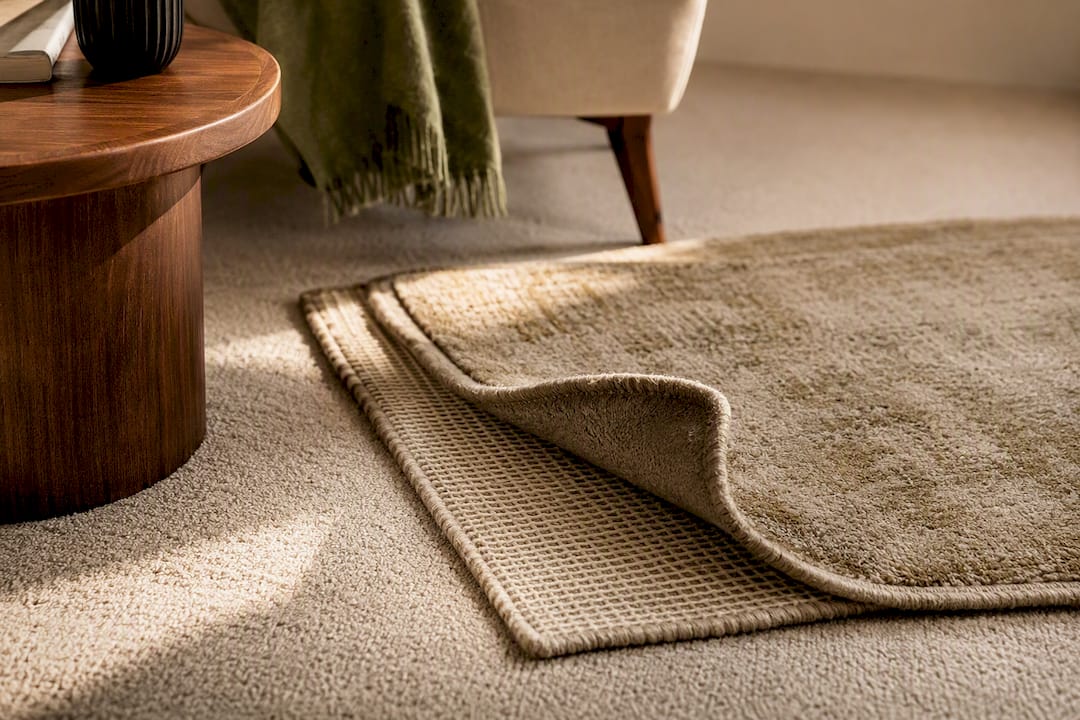
If the existing surface is sound but dull, an outdoor rug laid over pavers or concrete, sometimes called an inlaid hardscape rug, gives you the pattern and colour of an expensive material change for a fraction of the price. For most readers on a budget, the smarter spend isn’t a premium floor at all. It’s one defining upgrade, a pergola, a border of edging pavers, or a fire feature, layered over a perfectly adequate existing surface.
Lighting: layer ambient, task and accent for evenings outside
Good patio lighting works in three layers: ambient light for general glow, task light for reading or cooking, and accent light for drama. String or festoon lights strung overhead give you ambient cover; a pendant hung under a pergola or a lamp on a side table handles task light; small uplighters aimed at a tree or wall provide accent. Layering all three, rather than relying on one bright fixture, is what lets the same patio feel right for both a Sunday lunch and a late glass of wine, according to Martha Stewart.
- Hang string lights at a height that allows adequate clearance for people and ceiling fans, generally recommended to be around 7 feet (about 2.1 metres) above the floor for safety.
- Fit a dimmer on ambient lighting so you can shift from bright dinner light to low evening glow.
- Choose solar or low-voltage options where running mains cable isn’t practical.
- Spend first on ambient lighting. It does the most to change how the space feels after dark.
Plants and planters: greenery as structure and privacy
A handful of large planters beats a scattering of small pots almost every time on a small patio. Oversized containers create scale, enclosure and a clear focal point, whereas dozens of little pots tend to read as clutter, according to GardeningKnowHow. Fewer, bigger elements simply look more considered.
Where floor space is tight, go vertical. A trellis against a fence, a wall-mounted planter system, or a compact living wall gives you greenery and privacy screening without eating into your seating area. Match plants to the light you actually get: lavender and sedums for full sun, ferns and hostas for shade, and low-maintenance evergreens like box or bay if you’d rather not think about watering schedules at all.

Shade, shelter and weatherproofing for changeable weather
A cantilever umbrella suits a dining table and can be moved as the sun tracks across the day. A shade sail covers a wider lounge area with a more architectural look, but it’s usually fixed in place. A pergola is the most permanent and most expensive option, though it can carry lights, climbing plants and a partial roof.
Position shade over whichever zone gets used most, dining if you eat outside often, lounge seating if it’s mainly for relaxing. Renters or anyone on a tighter budget should lean on umbrellas and freestanding sails: nothing to drill, nothing left behind at moving day.
Textiles, colour and styling that make a patio feel like home
Rugs should be large enough to sit under the front legs of your seating, not floating in the middle of the zone looking like an afterthought, a sizing rule that also helps a rug visually anchor the space, per Curated by Hower. Stick to solution-dyed acrylic for cushions and throws; it resists fading and copes with the odd shower far better than standard cotton.
Repeat two or three finishes, a matte black for hardware, a warm timber tone, one accent colour, across cushions, planters and lighting so the space reads as planned rather than assembled piece by piece. Then choose one anchor, a fire table or a single oversized planter, and let everything else support it.
Storage and multifunction solutions to avoid clutter
Loose cushions, tools and umbrella bases pile up fast without somewhere to put them. An outdoor storage chest doubles as extra seating; a bench with a lift-up lid hides cushions overnight; wall-mounted hooks keep watering cans and lanterns off the floor.
- Choose one storage chest or bench rather than several small boxes.
- Mount hooks on a fence or wall, never in a walkway.
- Keep storage pieces out of sightlines from the main seating zone.
Maintenance and materials: keep the patio looking good year after year
Bring cushions and softs inside or under cover once the weather turns, and reseal porous pavers every year or two to stop staining. Solution-dyed fabrics outlast standard cotton by years, so budget replacements for softs, not hard furniture. A quick seasonal check, loose paving, rusted fixings, faded fabric, catches small problems before they become expensive ones.
Homable’s approach to finishing a patio properly
The decorative details, a well-placed lantern, a textured planter, a considered candle holder, are what separate a functional patio from one that actually looks styled. Collections of finishing accents focus on working alongside the layering and zoning principles covered above rather than competing with them.
— Cristiano
Homable picks to finish the look
Once the zoning, lighting and seating are sorted, it’s the small decorative layer that makes a patio look pulled together rather than half done. There are weatherproof cushions, lanterns, planters and decorative accents built for exactly that final styling pass, without the trawl through a dozen different shops.

A piece like the Decorative Silver Flower Candle Holder is a good example of the kind of low-cost, high-impact accent that lifts a dining or lounge zone once the bigger furniture decisions are made. If you’re planning your next styling pass, browse the full range and pick out a few pieces before you finalise your layout.
Worth adding to the list:
- Outdoor lanterns and candle holders for accent lighting
- Statement planters for focal points and privacy
- Weatherproof cushions and throws for seating zones
- Decorative storage pieces to keep loose items out of sight
For more layout thinking before you shop, Homable’s outdoor styling tips walk through the same zoning logic in more detail, and House checklist offers further ideas on getting a high-end look without the high-end spend.
Sources
- Patio decor ideas
- Backyard patio ideas and tricks
- How to design a patio — Livingetc
- Patio ideas — GardeningKnowHow