Cart
0
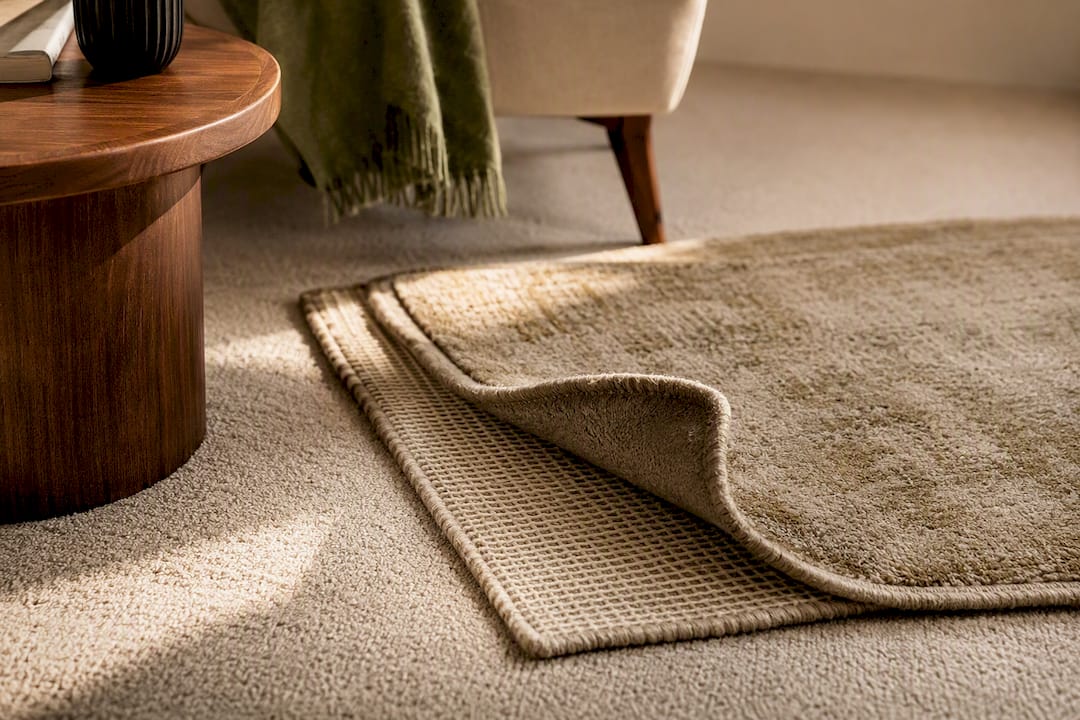
Yes, you can put a rug on carpet, and it’s one of the easiest ways to update a room without ripping anything out. The key condition is choosing a flat or low-pile rug and anchoring it properly with a carpet-rated pad. Skip that step and you’re looking at slipping, bunching, and a genuine trip hazard.
TL;DR:
- Using a flat-weave or low-pile rug with a carpet-rated pad prevents slipping and bunching when layering on carpet.
- Proper sizing ensures the rug anchors the space effectively, with specific measurements for living rooms, dining areas, and bedrooms.
- Avoid high-pile, shag, or ultra-thin rugs, especially in main walkways or humid rooms, to prevent instability and moisture issues.
- Securing rugs with carpet-to-carpet gripper pads or double-sided tape, checked every few months, maintains safety and stability over time.
- Regularly rotating, lifting, and airing the layered rug preserves its appearance and prevents permanent indentations and mold.
Table of Contents
- Why layer a rug on carpet in the first place?
- Which rugs actually lie flat on carpet?
- How do you stop a rug moving on carpet?
- What size rug do you need for each room?
- When is layering a rug on carpet a bad idea?
- How do you look after a rug layered on carpet?
- Homable’s take on rug pads and low-profile choices
- When layering is my go-to styling move
- Where to find rugs and non-slip accessories that actually work
- Sources
Why layer a rug on carpet in the first place?
Layering a rug on carpet solves problems a single floor covering can’t. It’s a common design technique that refreshes a room, defines zones, and protects high-traffic carpet when the setup is done properly, and it costs a fraction of replacing wall-to-wall flooring.
The practical wins usually come first for most homeowners:
- Zoning: a rug marks out a seating area or reading nook in an open-plan space without a single wall going up.
- Concealment: it hides stains, worn patches, or a carpet colour you never chose yourself.
- Warmth and texture: a second layer softens a room and adds tactile interest underfoot.
- Protection: rugs take the brunt of foot traffic in hallways and living rooms, buying your carpet extra years.
There’s a design payoff too. A well-placed rug creates contrast and gives furniture something to anchor to, so a room stops looking like it was furnished in a hurry. Homable’s piece on layering textures for depth and warmth goes further into why this works visually, not just practically.
Which rugs actually lie flat on carpet?
Not every rug behaves itself on top of carpet. Pile height and weave structure decide whether a rug settles into place or fights you every time someone walks across it.
- Flat-weave rugs (kilim, dhurrie). These are the safest bet. Flat-weave and low-pile rugs lie flatter and reduce slipping and bunching far more reliably than anything with a thick pile.
- Low-pile wool or synthetic rugs. Wool holds its shape and resists flattening over time; synthetic low-pile options do the same job at a lower price point.
- Jute, sisal, and seagrass. These natural fibres stay flat well, but they’re rough underfoot, so they work best under a dining table or in low-barefoot zones rather than a bedroom or lounge where people go sockless.
- Avoid high-pile and shag rugs. Two thick piles stacked together create a spongy, unstable surface that shifts underfoot.
- Avoid ultra-light accent mats. Anything too thin or too small will ride up the moment it meets carpet friction, no matter how good the pad underneath is.
Pro Tip: If you want the rug to read as a deliberate feature rather than an accident, pick one with a contrasting colour, pattern, or texture against the carpet beneath. Blending the two together just looks like clutter.
How do you stop a rug moving on carpet?
This is where most layering attempts go wrong. A standard rubber waffle pad made for hard floors won’t grip carpet pile, and it can even leave residue or damage fibres over time. You need a pad built specifically for carpet-on-carpet use.
Here’s what actually works:
- Carpet-to-carpet gripper pads. Open-mesh or hook-style pads are designed to anchor a rug on carpet rather than a hard floor, and they’re the most reliable long-term fix.
- Double-sided rug tape. Effective for smaller rugs or runners, though some tapes can pull carpet fibres and are single-use only.
- Adhesive gripper corners. A lighter-touch option for rugs that only need light securing at the edges.
- Velcro or hook strips. Good for runners in hallways where the rug needs to stay put through constant footfall.
- Furniture anchoring. Placing sofa or table legs on the rug itself adds weight that stops movement without any adhesive at all.
For installation, follow the same order every time: vacuum the carpet underneath, trim the pad about an inch smaller than the rug all round, centre it, unroll the rug on top, press the edges down firmly, and leave it 48 hours before heavy use.
Pro Tip: Check the pad every three to four months. If you need to reposition it, lift slowly from one corner rather than yanking, which protects both the rug backing and the carpet pile underneath.
What size rug do you need for each room?
Sizing is where a lot of layered rugs go wrong even when the material choice is right. A rug that’s too small looks like an afterthought; one that’s the correct size does the anchoring work a room actually needs.
- Living room: the rug should be large enough for at least the front legs of your main seating to rest on it, ideally all four legs on bigger sofas. Homable’s living room rug size guide breaks down exact dimensions by room size.
- Dining room: leave roughly 24 inches of rug beyond the table edge on every side, so chairs stay on the rug even when pulled out.
- Bedroom: extend the rug 18 to 24 inches past the sides of the bed, or use two narrow runners along each side instead of one large piece.
- Hallway and runners: measure for clearance either side of the walkway and always check the rug won’t obstruct a door swing.
- Stairs: don’t layer a loose rug here. It’s one of the few spots where the trip risk outweighs any styling benefit.
When is layering a rug on carpet a bad idea?
Two thick piles stacked on each other create an unstable, spongy surface that shifts and bunches, and this combination also traps moisture, which can encourage mould in humid rooms. Keep layered rugs out of main walkways if your base carpet already has a deep pile.
Poorly ventilated rooms, bathrooms adjacent to bedrooms, or basements with damp issues are worth avoiding altogether. If you can’t lift the rug regularly to let air reach the carpet beneath, don’t put one down in that room.
Households with mobility aids, wheelchairs, or elderly residents should keep layered rugs out of critical paths entirely, since even a well-secured rug adds a slight edge that a walking frame or wheel can catch. And if you’re renting, check your lease or carpet warranty terms before you commit. Some agreements specifically restrict what can go on top of the flooring.
How do you look after a rug layered on carpet?
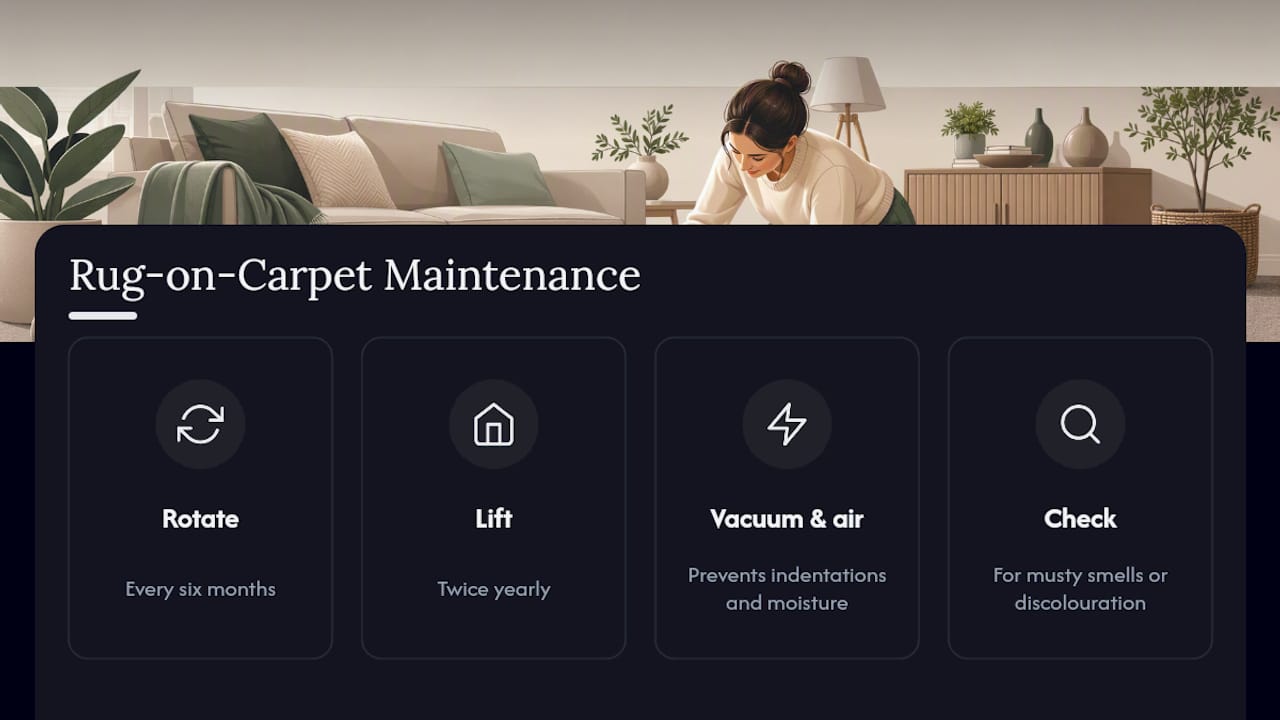
Rotate the rug every six months and lift it twice a year to vacuum and air the carpet underneath, which stops permanent indentations and moisture build-up before they start.
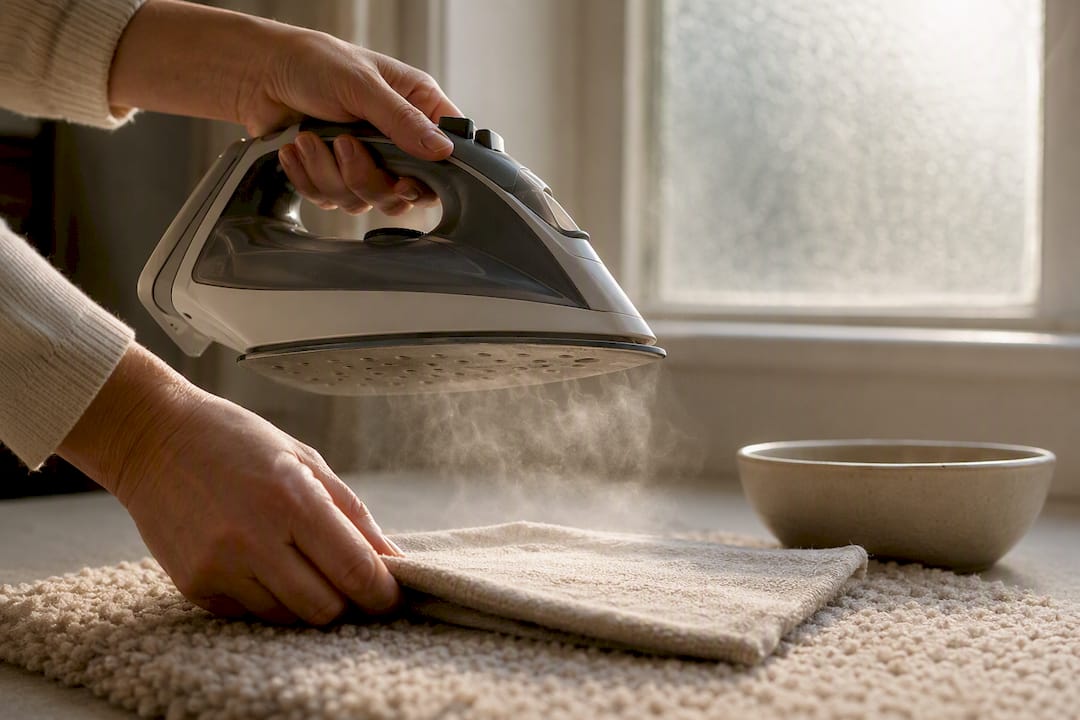
If you already have flattened patches, a steam iron held a few inches above the pile (never touching it directly, and always with a damp towel between iron and rug) will usually lift the fibres back up. For deeper dents in carpet, an ice cube left to melt on the spot and then gently brushed out works surprisingly well.
Be careful cleaning natural fibres like jute or sisal on top of synthetic carpet. Over-wetting either layer risks trapping damp between them, so check underneath periodically for musty smells or discolouration, which usually signal early mould.
Homable’s take on rug pads and low-profile choices
Low-profile rugs and non-slip accessories built for layering are available, so you’re not guessing which pad or weave will actually hold. For more detail on the styling logic behind it, Homable’s guide on what layering means for your interior and its companion piece on living room rug sizing both cover the ground this article can’t fit in full.
When layering is my go-to styling move
Layering earns its place in rentals, in rooms with carpet you didn’t choose, and anywhere you need to zone an open space fast. I reach for flat-weave or low-pile rugs every time, secured with a proper carpet-to-carpet pad rather than tape as a first resort. Get the proportions right and check it twice a year, and it stays a design win rather than a hazard.
— Cristiano
Where to find rugs and non-slip accessories that actually work
Low-profile rugs and non-slip accessories designed for this kind of layering help avoid retrofitting rugs that were not designed to sit on carpet.

The range includes bath and pedestal mat sets like the 2PCS Bath & Pedestal Rug Set, which uses a non-slip, water-absorbent base suited to smaller rooms where grip matters most. Orders over £100 ship free, and standard returns apply if a size or texture doesn’t work once it’s home. If you’re weighing up flooring more broadly before you commit to a rug, this guide to flooring products for London homes is a useful companion read. Otherwise, browse Homable’s current rug and mat collection and measure your space against the sizing rules above before you order.
Sources
- Can You Put a Rug on Carpet? Complete Layering Guide - D and G Flooring
- Putting a Rug on Carpet: How to Layer Without Bunching, Buckling, or Damage - D and G Flooring
- Tips for Using an Area Rug on Carpet - The Spruce
- How to layer rugs on carpet - The Home Depot