Cart
0
TL;DR:
- Layering in interiors involves intentionally combining materials, textures, colors, and objects to create depth and warmth that feel personal and complete. Starting with a strong foundation—flooring, wall color, and primary furniture—is essential before adding layers like textiles, lighting, and accessories in a deliberate sequence. Effective layering, following principles such as the 60-30-10 color rule and contrasting textures, distinguishes well-designed spaces from merely decorated rooms.
Layering in interiors is defined as the deliberate practice of combining materials, textures, colours, patterns, and objects to build visual depth and warmth in a room. Known formally in interior design as compositional layering, this technique goes well beyond placing furniture and hanging a few pictures. A layered room feels finished in a way that a merely decorated room never quite does. The difference is intention. Each element you add responds to what came before it, creating a space that reads as personal, collected, and complete rather than flat or showroom-ready.
What is layering in interiors and why does it matter?
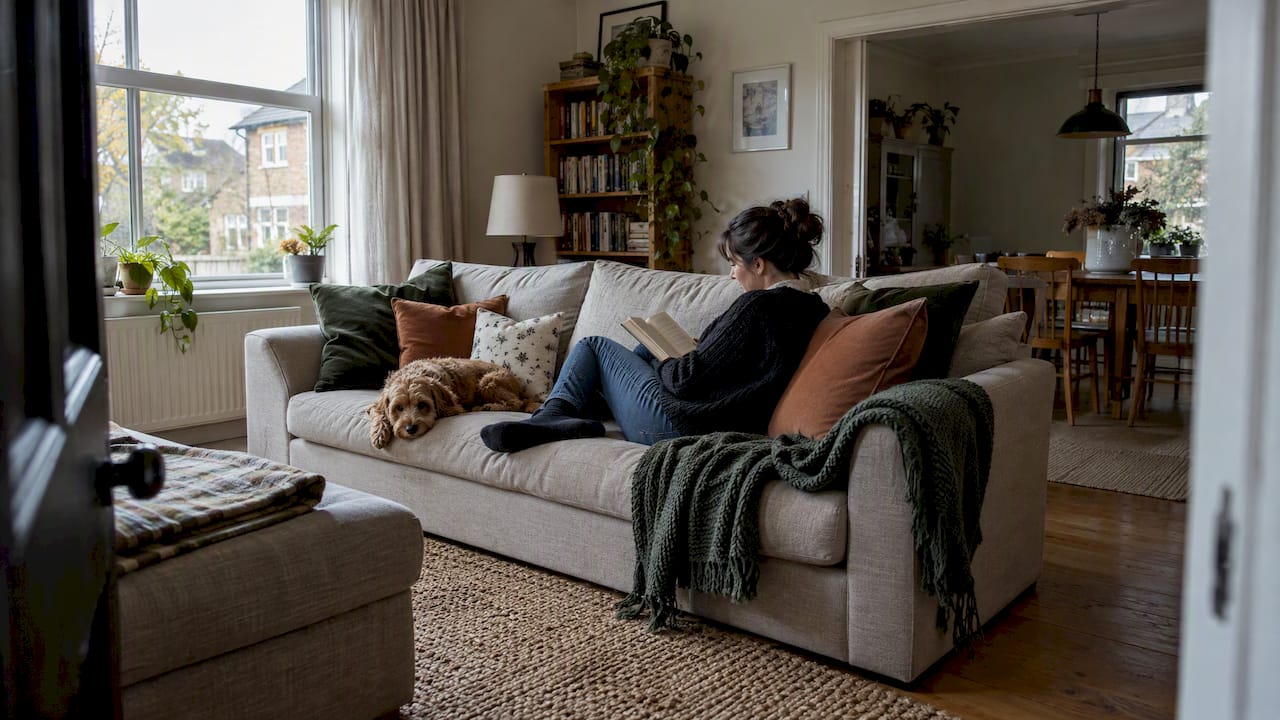
Layering is the process of building a space piece by piece, where every new element enriches the ones already present. The result is a room that feels inhabited rather than assembled. Think of it as the difference between a hotel lobby and a family sitting room. Both may contain quality furniture, but only one carries the weight of real life.
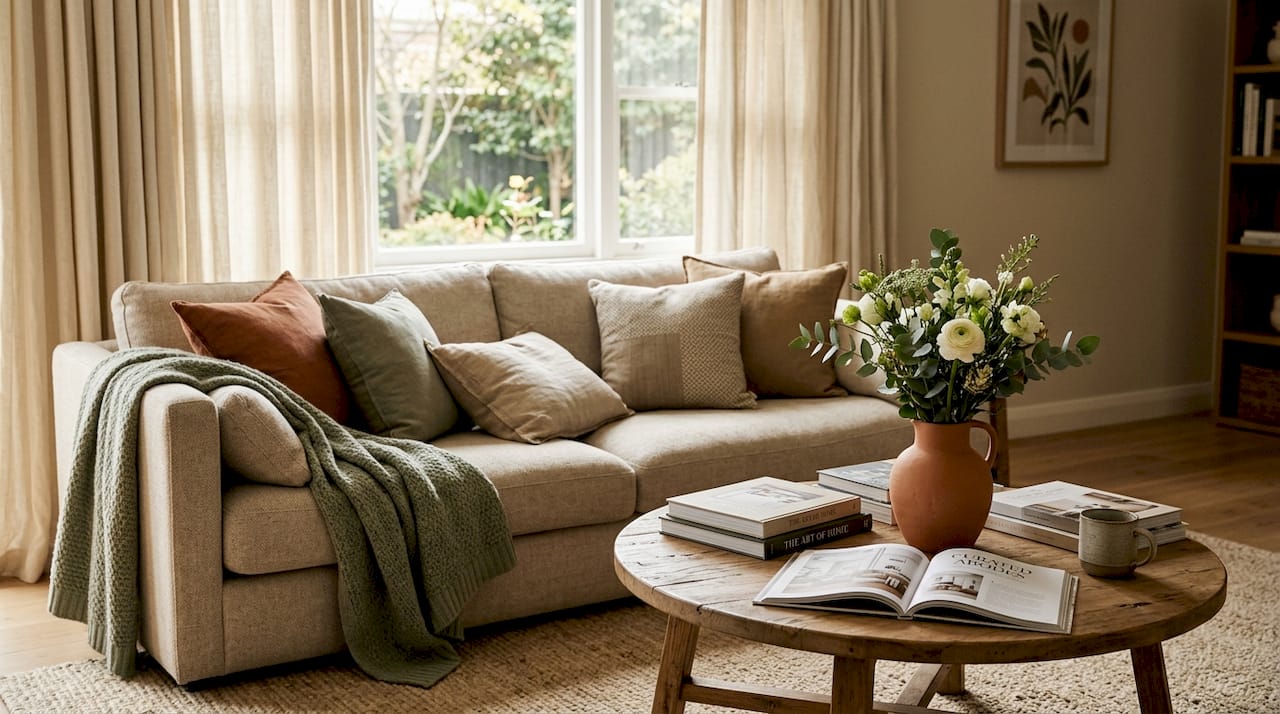
The benefits of layering decor are both visual and functional. Visually, layering creates contrast, depth, and a sense of scale. Functionally, it allows you to introduce storage, comfort, and personality without sacrificing cohesion. Homes that are layered thoughtfully appear collected and personal rather than curated for a catalogue.
Layering also gives you flexibility. Because you build in stages, you can adjust, edit, and refine over time without starting from scratch. That is one reason professional interior designers treat layering as a process rather than a single decision.
What are the foundational layers in interior design?
Every successful layered room begins with a strong foundation: flooring, wall colour, and primary furniture. These elements set the tone, scale, and palette for everything that follows. If the foundation is incoherent, no amount of cushions or artwork will rescue the room.
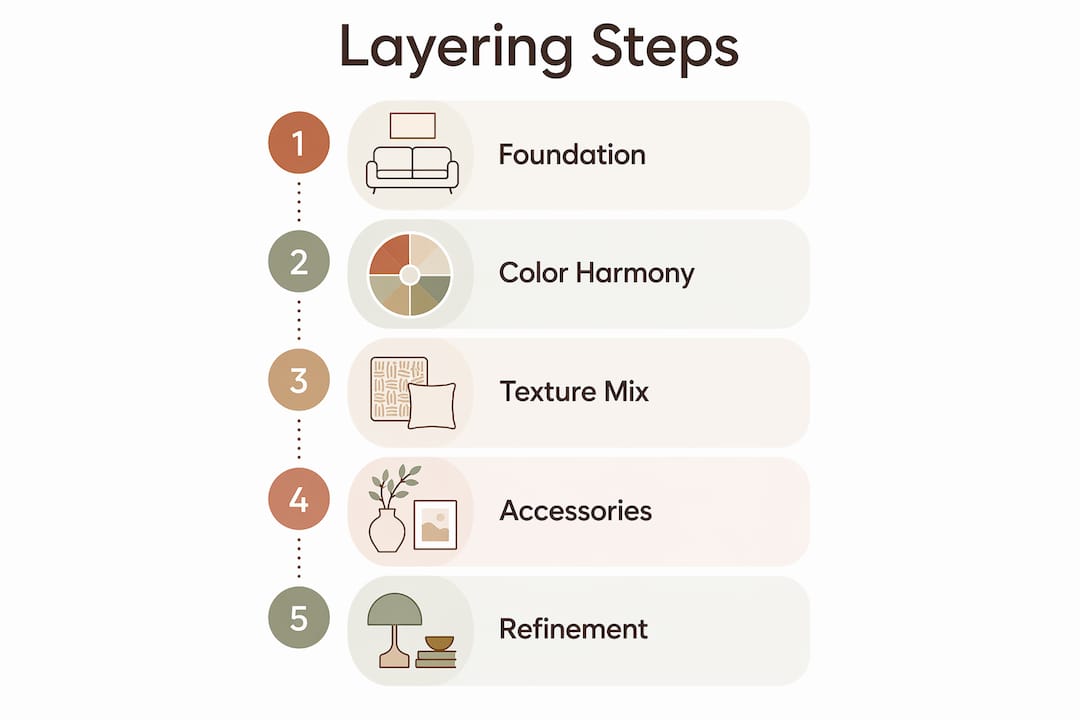
Think of your foundation as the grammar of the space. The walls and floor are your largest surfaces, so they carry the most visual weight. A warm oak floor reads differently from polished concrete, even when the furniture above it is identical. Your main sofa, dining table, or bed frame anchors the room’s proportions and establishes the style register, whether that is relaxed Scandi, layered maximalist, or quiet luxury.
Key foundation elements to get right before adding further layers:
- Flooring: Natural materials such as timber, stone, and sisal read as warm and grounding. Polished or tiled surfaces feel cooler and more formal.
- Wall finish: Paint colour, wallpaper, or limewash each create a distinct backdrop that affects how every subsequent layer reads.
- Primary furniture: The sofa, bed, or dining table sets scale and style. Choose pieces with longevity in mind.
- Architectural framework: Skirting boards, cornicing, and ceiling height all contribute to the room’s character before a single accessory is added.
Pro Tip: Choose your flooring and wall colour before purchasing any furniture. The two largest surfaces in a room will dictate which tones and textures work in the layers above them.
How does layering colour enhance depth and harmony?
Colour is one of the most powerful interior design layering techniques available, and proportion is everything. The 60-30-10 colour rule is the designer-approved framework that keeps a room cohesive rather than overwhelming. It works as follows: 60% of the room uses a dominant colour, typically walls or large upholstered pieces; 30% uses a secondary colour across furniture and soft furnishings; and 10% is reserved for accent colours in small accessories and decorative objects.
This proportion matters because it prevents a space from feeling chaotic while still allowing personality to come through. A common mistake is applying too many accent colours at equal weight, which creates visual noise rather than depth. The 10% accent is intentionally small so that it punches above its visual weight.
Layering colour also means working within a palette at different intensities. A room built around sage green, for example, might use a muted sage on the walls, a deeper forest green on a velvet armchair, and a pale celadon in the cushions. This tonal variation creates movement without introducing competing hues. For inspiration on combining specific palettes, the guide on mixing greens and pinks offers a practical approach to confident colour layering.
Here is a comparison of common colour layering approaches:
| Approach | Best for | Risk to avoid |
|---|---|---|
| Tonal layering (one hue, varied intensity) | Calm, cohesive rooms | Can feel flat without texture contrast |
| Complementary contrast (opposite hues) | Bold, energetic spaces | Overpowering if both colours are saturated |
| Neutral base with accent pops | Versatile, timeless interiors | Accents must be deliberate, not random |
| Analogous palette (adjacent hues) | Harmonious, relaxed rooms | Needs texture variation to avoid monotony |
What role does texture play in layering interiors?
Texture is the layer most homeowners underestimate, and it is the one that gives a room soul. A room with uniform texture feels flat regardless of how carefully the colours have been chosen. Contrast is the operative word: smooth against rough, matte against reflective, woven against polished.
The interplay of textures creates material richness without requiring bold patterns or many colours. A linen sofa, a jute rug, a lacquered side table, and a chunky knit throw occupy the same neutral palette but read as visually complex because each surface behaves differently in light. That is the power of tips for layering textures in interiors: you can achieve depth with restraint.
Practical ways to introduce texture contrast in any room:
- Textiles: Layer a wool or boucle cushion over a linen sofa. Add a velvet throw to a leather armchair.
- Rugs: A large natural fibre rug as a base with a smaller patterned rug on top adds warmth and visual interest at floor level.
- Surfaces: Mix matte painted walls with a gloss-painted door or a polished brass light fitting.
- Natural materials: Introduce rattan, raw wood, or stone to break up upholstered or painted surfaces.
Pro Tip: When shopping for textiles, touch them. A fabric that looks similar to another on screen may feel entirely different in person, and that tactile difference is exactly what layering needs to work.
For a deeper look at how textures transform a room, Homable’s guide on textures in stylish interiors covers the subject with practical room-by-room examples.
How to layer objects and accessories without clutter
Accessories are where layering either succeeds or collapses. The goal is a collected look, not a crowded one. Every item should have a reason for being there, whether that reason is visual, sentimental, or functional. When in doubt, remove rather than add.
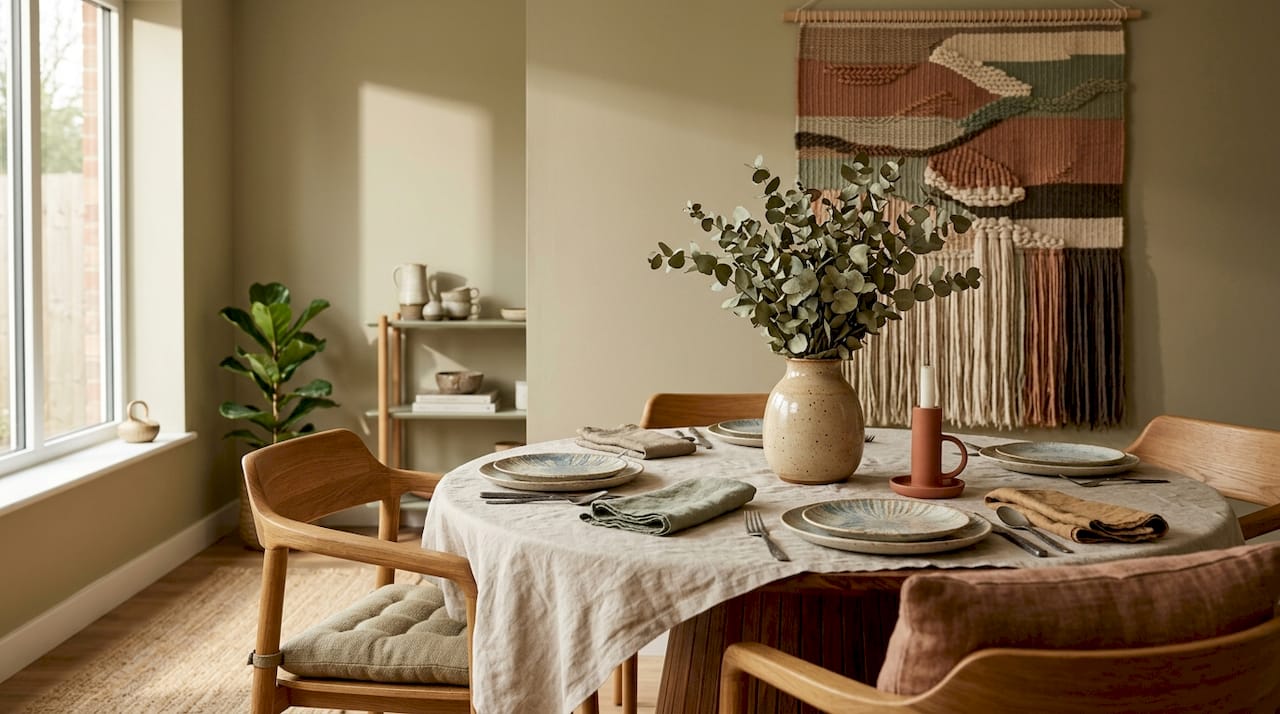
The principles of hierarchy and scale govern how objects read together. A grouping of three objects at varied heights creates more visual interest than three objects of identical size placed in a row. Odd numbers generally work better than even numbers because they resist the eye’s tendency to pair things symmetrically. Mix materials within a grouping: a ceramic vase, a wooden bowl, and a metal candlestick share a surface without competing.
Breathing room is as important as the objects themselves. Restraint and breathing room prevent overcrowding and allow each piece to register. A shelf crammed with objects reads as storage. A shelf with five well-chosen pieces reads as curation.
Practical guidelines for accessory layering:
- Group objects in threes or fives, varying height, material, and scale within each group.
- Leave at least 30% of any surface empty to give the eye somewhere to rest.
- Anchor groupings with one larger piece and build around it with smaller items.
- Edit seasonally. Rotating accessories keeps a room feeling fresh without requiring new purchases.
Pro Tip: Before adding anything new to a surface, remove everything first. Start with the largest piece, then add items one at a time. Stop when the grouping feels balanced, not when the surface feels full.
What practical steps can homeowners use to layer a room?
The sequence in which you layer matters as much as the elements themselves. Starting with the largest fixed pieces and working down to the smallest accessories prevents the common mistake of choosing cushions before you have committed to a sofa colour.
Follow this sequence for any room:
- Fix the foundation. Confirm flooring, wall colour, and architectural details before purchasing furniture.
- Place primary furniture. Position the largest pieces first and check the room’s proportions and flow.
- Add secondary furniture. Side tables, occasional chairs, and storage pieces fill out the room’s function.
- Introduce textiles. Rugs, curtains, cushions, and throws bring softness, colour, and texture.
- Layer lighting. Ambient, task, and accent lighting from multiple heights add dimension and atmosphere. A floor lamp, a table lamp, and overhead lighting working together create far more depth than a single ceiling fixture.
- Place accessories and art. The final layer. Edit as you go and live with the room before committing.
Different layering styles suit different rooms and preferences. The table below outlines the most common approaches:
| Layering style | Characteristics | Best suited to |
|---|---|---|
| Scandi minimal | Neutral palette, natural textures, few accessories | Bedrooms, home offices |
| Maximalist | Rich colour, pattern mixing, high accessory density | Living rooms, studies |
| Quiet luxury | Tonal colour, premium materials, restrained accessories | Bedrooms, reception rooms |
| Eclectic collected | Mixed eras, global influences, personal objects | Living rooms, hallways |
For a full walkthrough of the decorating process, Homable’s step-by-step decorating guide covers room arrangement and accessory placement in practical detail. You can also explore the broader principles of layering in home styling to see how depth and warmth build across different room types.
Key takeaways
Successful layering in interiors requires a cohesive foundation, deliberate colour proportion, contrasting textures, and restrained accessory placement, applied in sequence from the largest elements to the smallest.
| Point | Details |
|---|---|
| Foundation comes first | Flooring, walls, and primary furniture must be cohesive before any further layers are added. |
| Use the 60-30-10 rule | Distribute colour as 60% dominant, 30% secondary, and 10% accent to maintain harmony. |
| Texture contrast is non-negotiable | Mix smooth, rough, matte, and reflective surfaces to create material depth without extra colour. |
| Accessories need editing | Group in odd numbers, vary heights, and leave breathing room to avoid clutter. |
| Layer lighting deliberately | Combine ambient, task, and accent sources at different heights for atmosphere and dimension. |
Why layering is the skill that separates good rooms from great ones
I have seen rooms with expensive furniture that feel cold and rooms furnished on a modest budget that feel genuinely beautiful. The difference is almost always layering. When I look at a room that works, I can trace the logic: a warm floor anchoring everything, a considered palette running through the textiles, a mix of surfaces that catches light differently at different times of day. Nothing is accidental.
The mistake I see most often is people treating accessories as the solution to a room that is not working. They add more objects when the real problem is that the foundation layers are misaligned. A sofa in the wrong tone, a rug that is too small, walls painted a colour that fights the floor. No amount of styling fixes a broken foundation.
The other common error is confusing layering with collecting. Layering is edited and intentional. It means knowing when to stop. The rooms that feel most alive are often the ones with the most breathing room, where each piece has space to register. Experiment with texture before you experiment with colour. A room built on tonal neutrals with strong texture contrast will almost always succeed. A room with bold colour but uniform texture will almost always feel flat.
Start with what you have. Rearrange, remove, and reassess before you buy anything new. Layering is a skill you develop by looking carefully, and the more you practise it, the more instinctive it becomes.
— Cristiano
Build your layered interior with Homable
Homable brings together the furniture, textiles, and accessories you need to put these layering principles into practice. Whether you are grounding a room with a solid wood storage piece that adds natural material depth, or finishing a surface with a woven fabric accent that introduces tactile contrast, every product in the Homable range is chosen with cohesive home styling in mind. Browse the full home decor collection to find pieces that complement your existing layers and bring your interior closer to the finished, personal feel that good layering creates. Free shipping is available on orders over £100.
FAQ
What does layering mean in interior design?
Layering in interior design means combining materials, textures, colours, patterns, and objects in deliberate sequence to create visual depth and a sense of warmth. A layered room feels finished and personal rather than simply decorated.
Where do you start when layering a room?
Start with the largest fixed elements: flooring, wall colour, and primary furniture. These foundation layers set the tone and palette, and every subsequent layer of textiles, lighting, and accessories should respond to them.
What is the 60-30-10 rule in colour layering?
The 60-30-10 rule distributes colour as 60% dominant (walls and large pieces), 30% secondary (furniture and soft furnishings), and 10% accent (small accessories). This proportion keeps a room cohesive and prevents competing colours from creating visual noise.
How do you layer textures without making a room feel busy?
Work within a restrained colour palette and vary the surface quality of each material. Combining linen, jute, lacquered wood, and polished metal creates tactile richness without introducing competing colours or patterns.
How do you avoid clutter when layering accessories?
Group objects in odd numbers, vary their heights and materials, and leave at least 30% of any surface empty. Every accessory should have a clear visual or personal purpose, and editing regularly keeps the layered look intentional rather than accumulated.