Cart
0
TL;DR:
- Eclectic style is a curated interior design approach that intentionally mixes furnishings from different eras, cultures, and styles to create a personal, cohesive space.
- Success relies on deliberate contrast, a unifying element like color or material, and disciplined editing to avoid clutter and chaos.
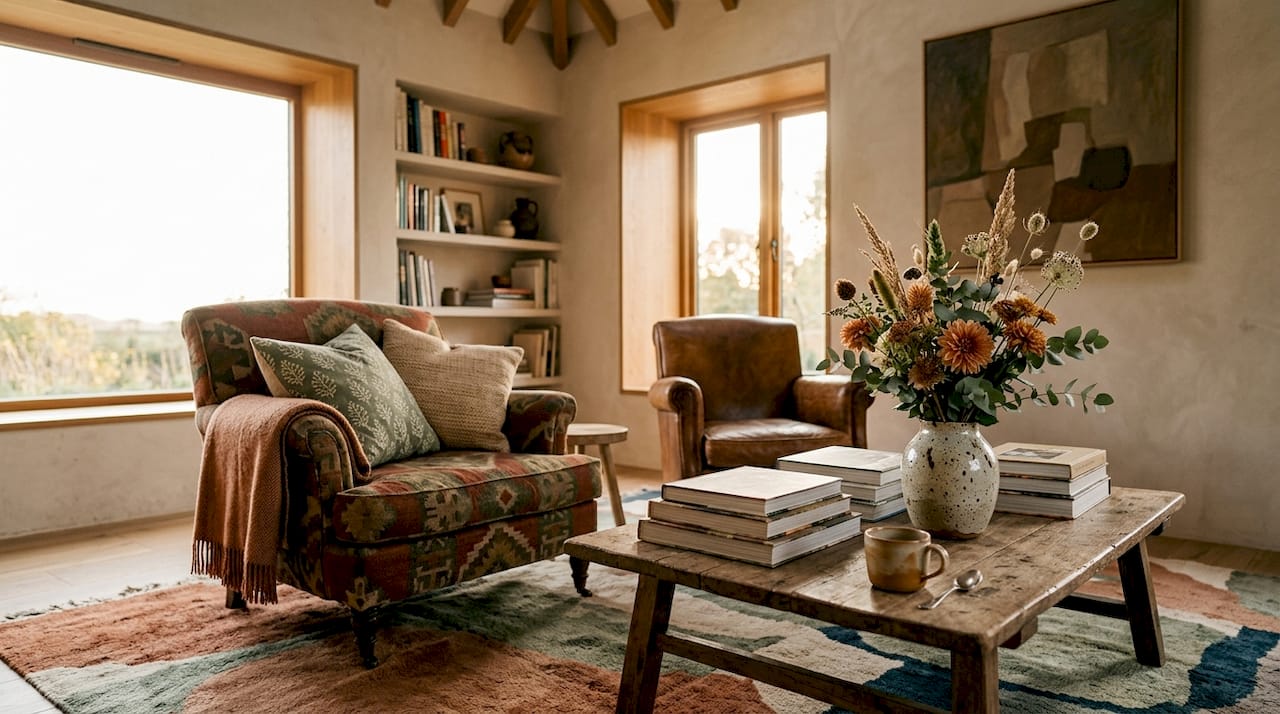
Eclectic style is defined as a curated interior design approach that intentionally mixes furniture, colours, textures, and decorative pieces from different periods, cultures, and styles to create a cohesive and deeply personal living space. The key word is curated. According to The Spruce, eclectic decor is built on purposeful combinations rather than random assembling, which is the distinction most people miss. Artisan Haus describes the core idea as “freedom with intention”, pairing old with new and bold with subtle in a way that tells a story. When done well, eclectic interior design feels gathered over time, not thrown together on a weekend.
What is eclectic style in interior design?
Eclectic style is the practice of drawing from multiple design vocabularies simultaneously without committing to just one. A Victorian chaise longue sits beside a mid-century modern coffee table. A Moroccan rug anchors a room furnished with Scandinavian shelving. The result feels personal because it is personal. No two eclectic rooms look the same, which is precisely the point.
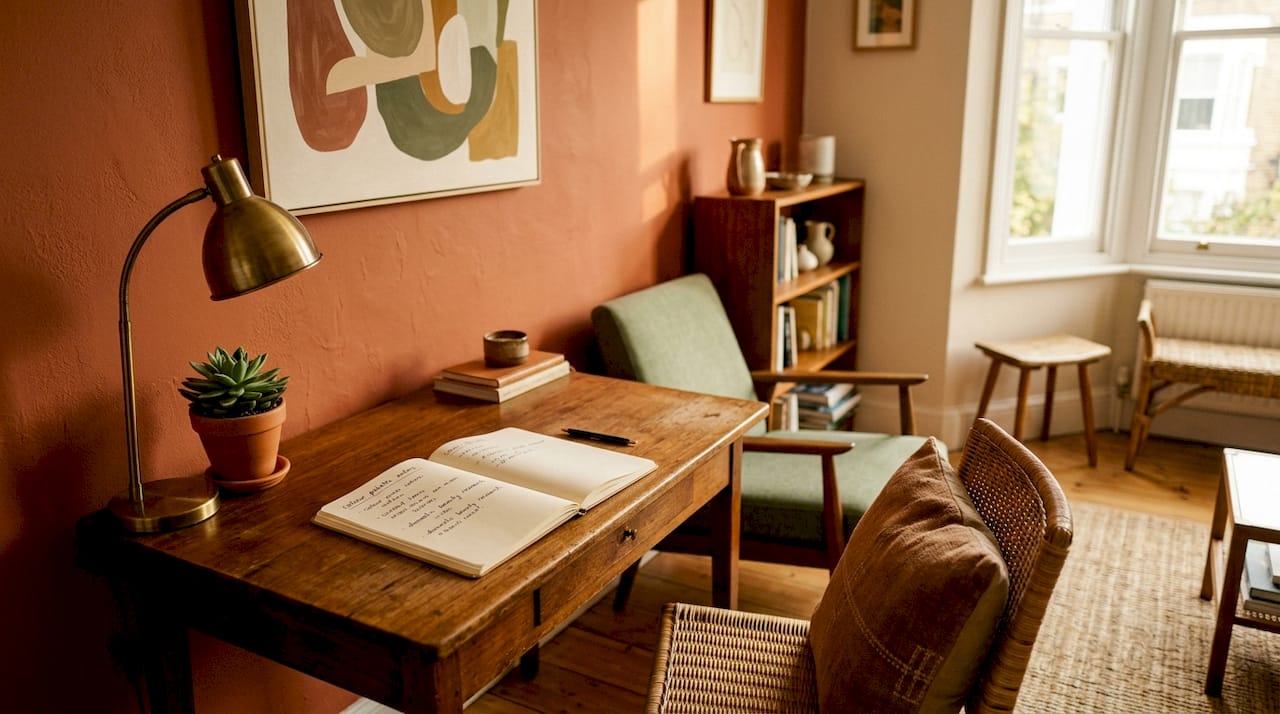
The defining characteristic is intentional contrast held together by a unifying thread. That thread might be a repeated colour, a consistent material finish, or a shared scale across pieces. Without it, the room tips from curated into chaotic. This is why eclectic design rewards patience. You build it gradually, piece by piece, rather than buying a matched suite and calling it done.
2026 design trend coverage from Better Homes & Gardens confirms this shift: eclectic spaces feel gathered over time rather than assembled quickly, reflecting a growing appetite for emotional self-expression in the home. That cultural moment makes eclectic interior design one of the most relevant approaches for homeowners who want their space to reflect who they actually are.
The defining components of eclectic design
A well-executed eclectic room typically includes:
- Mixed eras and origins. Furniture and accessories from different decades and cultures, chosen for quality and character rather than matching sets.
- Layered textures. Velvet cushions against a linen sofa, a jute rug beneath a glass coffee table, raw wood beside polished brass.
- A unifying colour palette. Usually two or three recurring colours that appear across different pieces to create visual rhythm.
- A hero or anchor piece. One statement item, such as a bold artwork, a vintage sideboard, or a patterned rug, that sets the tone for everything else.
- Personal objects. Travel souvenirs, family heirlooms, and handmade pieces that give the room its narrative. As Artisan Haus notes, artefacts from travels should feel harmonious, not random.
- Varied heights and scales. Tall floor lamps beside low seating, stacked books beneath sculptural objects, overlapping artwork frames on a gallery wall.
Pro Tip: Start building your eclectic room around texture before colour. Once you have three or four contrasting textures working together, the colour palette tends to reveal itself naturally. Read more about mixing textures effectively to get the foundations right.
How does eclectic style differ from maximalism?
Eclectic style and maximalism are frequently confused, but they operate on different principles. Understanding the distinction saves you from creating a room that feels overwhelming rather than characterful.
Maximalism is defined by abundance. More patterns, more objects, more colour, more everything. The goal is saturation and visual richness, and restraint is actively avoided. A maximalist room is full by design. Eclectic style, by contrast, prioritises harmony through editing and anchoring. You might have just as many interesting pieces, but you choose carefully which ones earn their place in the room.
Minimalism sits at the opposite end of the spectrum, favouring simplicity, negative space, and a very limited palette. Eclectic design borrows minimalism’s discipline without adopting its austerity. You edit ruthlessly, but you keep the pieces that carry meaning or visual weight.
| Style | Core principle | Approach to variety | Risk if done poorly |
|---|---|---|---|
| Eclectic | Curated contrast with cohesion | Selective mixing across eras and cultures | Looks cluttered or disjointed |
| Maximalist | Abundance and saturation | More of everything, layered densely | Feels overwhelming or chaotic |
| Minimalist | Simplicity and restraint | Very limited objects and palette | Feels cold or impersonal |
| Bohemian | Free-spirited, organic layering | Natural materials, global textiles | Lacks structure or focus |
The 60-30-10 rule is one of the most practical tools for keeping eclectic rooms on the right side of that line. Sixty per cent of the room follows a dominant style or colour, thirty per cent introduces a secondary style, and ten per cent consists of accent pieces that surprise. This proportion prevents any single influence from dominating while keeping the overall composition readable.
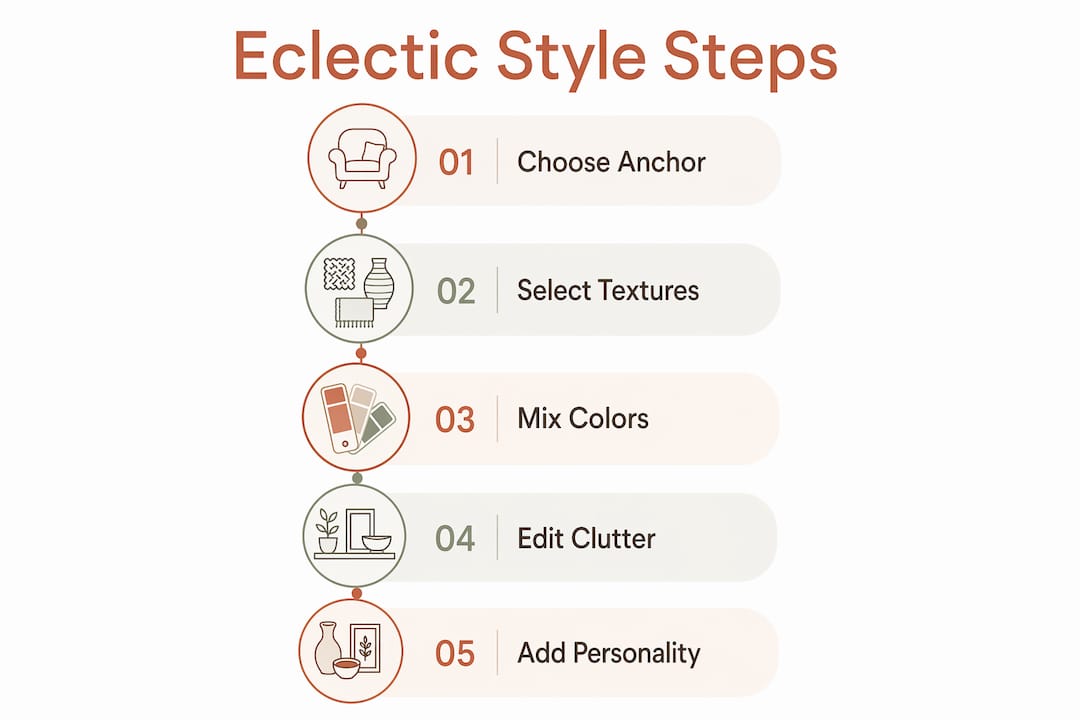
What practical steps help you achieve eclectic style?
The most common mistake people make is collecting statement pieces before establishing an anchor. The room ends up looking like a storage unit for interesting objects rather than a considered interior. Start with the anchor, then build outward.
-
Choose your anchor piece first. This is the item that sets the emotional tone of the room. It might be a large-format artwork, a vintage rug, or a statement sofa in an unexpected colour. Every subsequent decision should be tested against it: does this new piece support or compete with the anchor?
-
Define a colour palette of two to three colours. These colours do not need to appear in equal measure, but they should recur across different elements. A warm terracotta that appears in a cushion, a ceramic vase, and a painting creates the rhythm and intentionality that makes a room feel designed rather than accidental. Homable’s guide to colour palette examples for modern UK homes is a practical starting point.
-
Mix price points deliberately. Eclectic style embraces quality over price, which means a well-preserved vintage find from a car boot sale can sit beside a new designer piece without either looking out of place. A room furnished entirely from one price bracket, high or low, tends to look less interesting than one that mixes both.
-
Layer textures and heights. Varying heights, overlapping artwork, and layering rugs create depth and a lived-in quality that flat, matched interiors cannot replicate. Place a tall plant beside low shelving. Stack books under a sculptural object. Hang frames at different heights rather than in a rigid grid.
-
Edit before you add. Before introducing a new piece, remove something. This discipline keeps the room from tipping into clutter and forces you to make genuine choices about what earns its place.
Pro Tip: Photograph your room on your phone before making any new purchase. Viewing it as a flat image rather than a three-dimensional space reveals imbalances in colour, scale, and texture that are easy to miss in person.
How do you maintain cohesion and avoid clutter?
Cohesion is the mechanism that makes contrast work. Without it, eclectic design collapses into visual noise. The good news is that cohesion does not require matching. It requires repetition.
Successful eclectic interiors use what designers call “repeatable glue”: a small set of repeated colours, materials, or finishes that quietly organise multiple disparate elements. Brass hardware on a vintage cabinet, a new lamp, and a mirror frame creates a thread the eye follows without consciously registering it. The pieces look different, but they feel related.
Practical strategies for maintaining that cohesion include:
- Limit your material palette. Choose two or three materials, such as natural wood, brass, and linen, and let them recur across the room. This creates unity beneath the surface variety.
- Leave breathing room. White space and negative space allow focal pieces to stand out. An overcrowded shelf reads as clutter; the same objects spread across a wall read as a collection.
- Group objects intentionally. Odd-numbered groupings of three or five objects tend to feel more natural than pairs or even numbers. Vary the height within each grouping.
- Rotate accessories seasonally. Swapping out cushions, throws, and smaller decorative objects every few months keeps the room feeling fresh without requiring a full redesign. It also prevents the space from becoming visually static.
- Apply the cohesive home decor principle across rooms. Eclectic style works best when there is a loose visual thread connecting different spaces, even if each room has its own personality.
The discipline of editing is what separates a curated eclectic interior from a cluttered one. If a piece does not contribute to the colour palette, the texture story, or the personal narrative of the room, it does not belong there regardless of how much you like it in isolation.
Key takeaways
Eclectic interior design succeeds when contrast is held together by a clear anchor, a repeated colour or material, and the discipline to edit ruthlessly.
| Point | Details |
|---|---|
| Define your anchor first | Choose a hero piece that sets the room’s tone before adding anything else. |
| Use repeatable glue | Repeat two or three colours or materials across pieces to create quiet cohesion. |
| Apply the 60-30-10 rule | Sixty per cent dominant style, thirty per cent secondary, ten per cent accent keeps balance. |
| Edit before you add | Remove one piece before introducing a new one to prevent visual clutter. |
| Mix price points and eras | Combining vintage finds with new pieces creates the layered, gathered quality eclectic rooms need. |
Why eclectic style rewards patience more than any other approach
I have spent years looking at interiors, and the rooms that genuinely stop me are almost always eclectic. Not because they are the most expensive or the most perfectly composed, but because they feel inhabited. You can sense the decisions behind them.
What I find most people get wrong is the timeline. They want the room finished. Eclectic style resists that impulse. The best eclectic rooms I have seen were built over years, sometimes decades, with pieces added when they were found rather than when they were needed. That unhurried quality is exactly what makes them feel authentic rather than assembled.
The other thing worth saying plainly: eclectic style is not a licence to keep everything. The people who pull it off most convincingly are ruthless editors. They love a lot of things, but they only keep the ones that earn their place. That combination of openness and discipline is harder than it sounds, and it is the real skill the style demands.
If you are starting out, resist the urge to fill the room quickly. Find your anchor, establish your colour thread, and then wait for the right pieces to appear. The room will tell you when it is done.
— Cristiano
Bring your eclectic vision to life with Homable
Eclectic interiors live or die on the quality of their individual pieces, and texture is where the character comes from. At Homable, you will find rugs, cushions, and home accessories chosen for their ability to anchor a room or add that final layer of depth. The Baluchi Cannon Pink Woolen Rug is exactly the kind of hero piece that sets an eclectic room’s tone: bold enough to anchor a space, rich enough in texture to work alongside both vintage and contemporary furniture. Browse Homable’s full collection for pieces that bring personality and cohesion to your home, with free shipping on orders over £100.
FAQ
What is the simplest definition of eclectic style?
Eclectic style is a curated interior design approach that mixes furniture, colours, and accessories from different periods and cultures into a cohesive, personal space. The defining quality is intentional contrast held together by a unifying element such as a repeated colour or material.
How is eclectic different from just having a messy room?
Eclectic design relies on a clear anchor piece, a limited colour palette, and deliberate editing to create cohesion. A messy room lacks those organising principles, which is why the 60-30-10 rule and the discipline of removing pieces before adding new ones are central to the approach.
Can eclectic style work in a small space?
Yes. Eclectic style works well in smaller rooms when you prioritise negative space and limit your material palette to two or three finishes. Overcrowding is the main risk, so editing is even more important in compact interiors. Practical advice on styling small spaces can help you apply eclectic principles without visual noise.
Do I need expensive pieces to achieve eclectic style?
No. Eclectic style actively benefits from mixing price points. A well-preserved vintage piece from a market can sit beside a new item without either looking out of place. The quality of condition matters more than the original cost.
What is the best starting point for an eclectic room?
Start with one anchor piece, whether that is a rug, an artwork, or a statement furniture item, and build your colour palette from it. Everything else in the room should be tested against that anchor before it earns its place.