Cart
0

The best home offices are built in three layers: bones (desk, chair, storage), atmosphere (lighting, rugs, colour), and personality (art, plants, meaningful objects). Get those layers right and the space practically runs itself. Skip one and you end up with a beautiful room that hurts your back, or a perfectly ergonomic setup that feels like a car park. The good news is that none of this requires a full renovation or a designer’s budget.
Here is what actually moves the needle:
- Furniture first. A chair with real lumbar support and a desk deep enough to fit a monitor, laptop, and coffee comfortably before you buy a single candle.
- Colour sets the mood. Soft neutrals, muted greens, and warm earthy tones sustain focus across a full workday in a way that bright, saturated walls simply cannot.
- Three light sources, not one. Ambient overhead, a warm task lamp, and a third accent source to kill the shadows.
- Storage before display. Closed storage for cables, files, and chargers; open shelving only for things worth looking at.
- Personality last. One plant, a piece of art you genuinely like, and a few objects with a story. That order matters.
How colour and wall decor shape your workspace mood
Colour psychology is the single most powerful environmental variable in a home office, and the 2026 trends reflect that. Soft neutrals, muted greens, gentle blues, and warm earthy tones like clay and sand are leading precisely because they sustain calm focus without tipping into monotony. High-saturation colours are stimulating in short bursts but genuinely fatiguing over a full workday.
The practical rule: reserve bold colour for small accents, not walls. A terracotta cushion on your chair, a sage green ceramic on the shelf, a warm amber lamp base. These bring life to a neutral room without the visual noise that makes concentration harder after lunch.
For wall treatments, a single accent wall in a muted, textured finish does more than paint alone. Plaster-effect paint, limewash, or even a large canvas gives the room depth and gives your video call background an intentional, considered look.
- Keep main walls in warm whites, soft greige, or muted sage.
- Use accent walls for texture rather than strong colour.
- Bring bolder tones in through accessories, not paint.
- Match the wall palette to adjacent rooms for design continuity — a jarring style shift between rooms creates low-level psychological discomfort.
- A pinboard or gallery wall works well when frames are consistent and spacing is generous.
Pro Tip: Test paint colours in your specific room’s light before committing. A muted sage can read grey in a north-facing room and warm green in a south-facing one.
How to set up ergonomics and layout for real comfort
Function before decor, every time. The S.E.T.U.P. sequence — Select location, Ergonomics, Three-layer lighting, Upgrade storage, Personalise — exists precisely because people buy the attractive accessories first and then realise the chair destroys their back by 3pm.
Desk depth is where most people go wrong. A 24-inch desktop feels cramped the moment you add a monitor, a laptop, and a coffee. The sweet spot is 28–30 inches; if you use two screens or write longhand, push to 32. Width matters less because you spread sideways before you run out of front-to-back space.
For the chair, spend more than feels comfortable. Ergonomic chairs with genuine lumbar mechanisms now come in warm neutral upholstery that reads residential rather than corporate. Mesh cools well but tends to look like office equipment in a home setting; fabric in a warm neutral splits the difference.
- Position the desk perpendicular to the window for natural light without screen glare and a controllable video call background.
- Chair must offer adjustable height, real lumbar support, and arms that move in at least two directions.
- Organise the desk into three zones: work (laptop, monitor, notebook), grab (daily tools in a tray), drop (a single spot for incoming paper).
- Cable management is high-impact and low-effort: cable trays, clips, or sleeves under the desk take thirty minutes and pay back for years.
- In small or shared spaces, a wall-mounted shelf above the desk adds vertical storage without eating floor area.
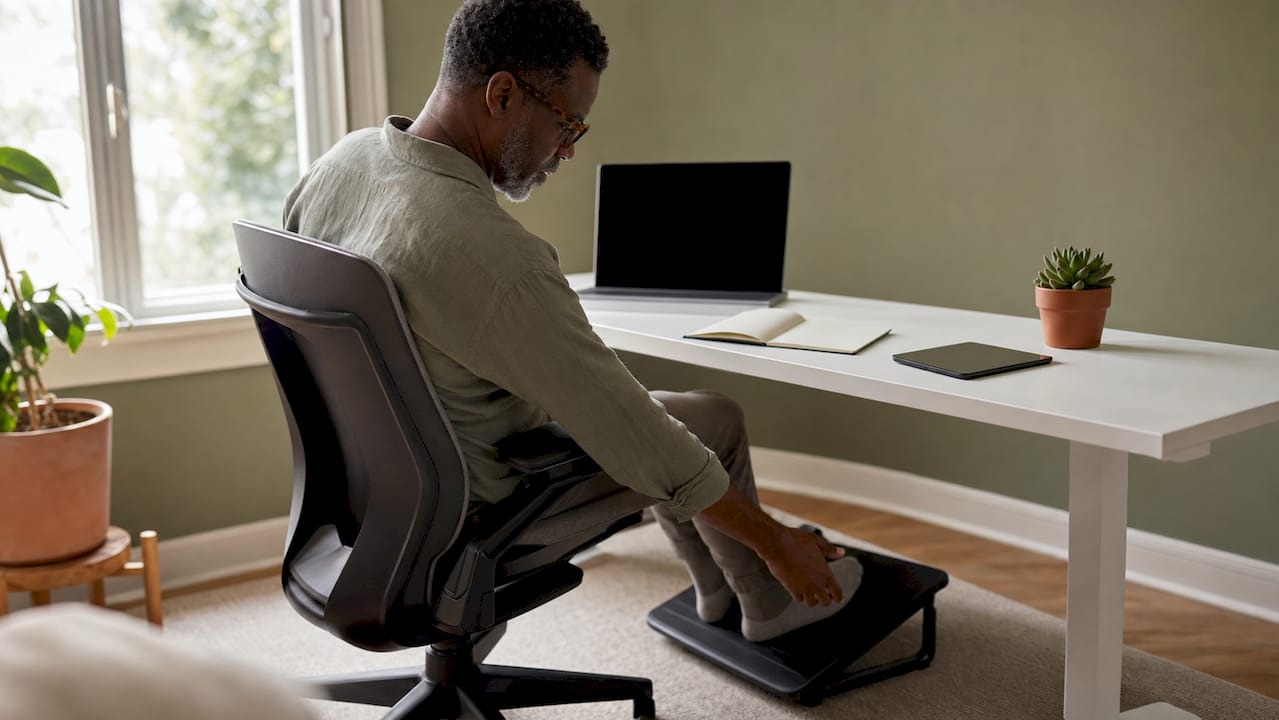
Pro Tip: If your feet dangle from your chair, a footrest or a firm box under the desk corrects posture without buying a new chair.
Lighting your home office without eye strain or flat shadows
Layered lighting is the fix for the flat, fatiguing look that a single overhead fixture creates. Three sources: ambient overhead, a task lamp at the desk, and a third accent source somewhere else in the room. That third layer is the one people skip and the one that makes a room feel finished versus slightly off.
Colour temperature matters more than brightness. Mixing a warm desk lamp with a cool overhead makes the room read as unfinished. Use bulbs in the 2700–3000 Kelvin range across every fixture for a cohesive, residential feel. For focused task work, some people prefer a slightly cooler 4000K desk lamp, but keep everything else warm.
For desk lamps specifically, look for an adjustable arm, a shade that directs light onto the work surface rather than into your eyes, and a warm bulb in that 2700–3000K range. Sheer curtains or light-filtering blinds handle harsh midday sun without blocking the daylight that keeps you alert.
- Ambient: ceiling fixture or floor lamp for general room light.
- Task: desk lamp with adjustable arm, positioned so your writing hand does not cast a shadow.
- Accent: a small table lamp on a credenza, a wall sconce, or a shelf light to balance shadows.
- For video calls, sit facing toward a window or at a slight angle; avoid strong backlighting.
- Dimmable bulbs let you shift the room from focused daytime work to a calmer evening mode without changing anything physical.
Using rugs and dividers to zone your workspace
Even in a shared room, a rug physically defines the workspace and signals to your brain that this is a work zone. Low-pile area rugs anchor the desk without adding visual noise, and they do a quiet job on acoustics too: hard floors bounce sound, and a rug under the desk noticeably reduces echo on calls.
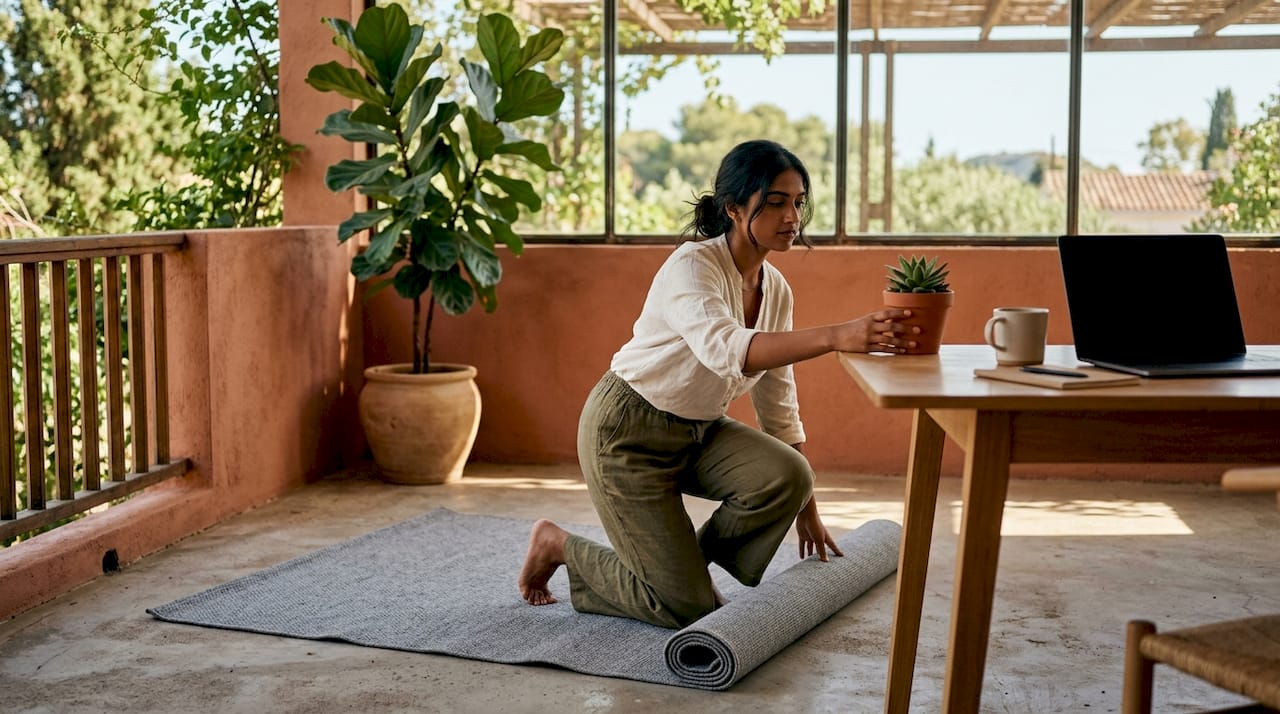
Choose neutral tones or subtle patterns. A rug that competes with the desk for attention defeats the purpose. Natural fibre options like bamboo or jute add warmth and texture while keeping the palette grounded. Homable’s rectangular bamboo rugs are a practical choice here: natural material, clean lines, and a size that anchors a standard desk setup without overwhelming a smaller room.
For shared or open-plan spaces, compact room dividers create separation without closing in the room. Storage units positioned behind the desk serve double duty: they act as a visual barrier and provide the closed storage that shared rooms need.
- Use a low-pile rug in a neutral or subtle pattern to anchor the desk area.
- Natural fibre rugs improve acoustics and add texture without visual clutter.
- Compact dividers or tall shelving units create a work zone boundary in open-plan rooms.
- A low credenza behind the desk provides closed storage and a visual backdrop.
- Match the rug’s tone to the room’s existing palette for style continuity across the home.
Pro Tip: In a bedroom office, a rug that sits only under the desk area creates a clear psychological boundary between work and rest, even when both happen in the same room.
Personalising your workspace without creating clutter
Personality comes last in the layering sequence, and that order is deliberate. A well-chosen plant, a piece of art you actually like, and two or three objects with a story do more for a workspace than a shelf full of decorative items that collectively say nothing.
The minimalist display principle works here: one large piece of art rather than several small ones, matching frames for a cohesive gallery wall, and generous spacing between pieces so the wall breathes. For plants, one is enough. A snake plant or a ZZ plant handles low light and minimal care without drama.
Non-office elements earn their place when they serve the room’s atmosphere. A linen cushion on the chair, a warm lamp base in terracotta, a ceramic bowl for keys or small items. These make the room feel like part of the home rather than a corporate outpost.
- One plant, positioned where it receives enough light, is more effective than several competing for attention.
- Curated art: one large piece or a small gallery wall with consistent framing.
- Meaningful objects on open shelves; anything plastic or purely functional belongs behind a door.
- Accessories that match the room’s palette keep the space feeling considered rather than assembled.
- A scent diffuser with rosemary or citrus can reinforce a focus association over time.
Budget-friendly ways to refresh your home office
Decorating a home office on a budget is mostly about sequencing: fix the things that affect how you feel first, then add the things that affect how the room looks. A £20 cable management kit and a decent desk lamp will do more for your daily experience than a new print on the wall.
IKEA remains the go-to for affordable, functional pieces that do not look cheap: the KALLAX shelving unit works as both storage and a room divider, and the ALEX drawer unit fits under most desks to add closed storage without extra floor space. Pair these with a few well-chosen accessories and the room reads as considered rather than budget-assembled.
Paint is the highest-return investment in any room. A single tin of muted sage or warm white transforms the atmosphere for under £40. Combine that with a secondhand lamp, a low-cost natural fibre rug, and a plant, and you have the bones of a genuinely pleasant workspace without spending significantly.
- Prioritise cable management and a good lamp before decorative accessories.
- IKEA’s KALLAX and ALEX units offer closed storage at accessible price points.
- A single tin of muted paint delivers the highest visual return per pound spent.
- Secondhand shops and online marketplaces are reliable sources for lamps, frames, and small furniture.
- Swap out a desk mat, plant, or small accessory seasonally to keep the space feeling fresh without buying new furniture.
How to improve acoustics and reduce noise in a home office
Hard surfaces reflect sound. A room with bare floors, a glass desk, and uncurtained windows will sound tinny on every call regardless of microphone quality. The fix is layered soft material: a natural fibre rug under the desk, lined curtains in linen or a similar fabric, an upholstered chair, and a throw across the back of it together cut most of the echo.
Curtains do two jobs simultaneously: they soften daylight and absorb sound. Light-filtering options in natural materials like bamboo or linen handle both without making the room feel heavy. Homable’s bamboo curtains filter light naturally and add texture that bare windows simply cannot provide.
For shared homes or open-plan spaces, acoustic panels are worth considering. Fabric-wrapped panels mounted on the wall behind the desk absorb sound without requiring structural changes. They also function as a clean, professional video call backdrop.
- A natural fibre rug under the desk is the single most effective acoustic upgrade in a small room.
- Lined linen or wool curtains absorb sound and control glare simultaneously.
- An upholstered chair contributes meaningfully to reducing echo on calls.
- Fabric wall panels provide acoustic treatment and a tidy video background.
- Avoid rooms with only hard surfaces: glass, bare wood, and uncurtained windows compound each other’s echo.
Key takeaways
A well-designed home office layers furniture, atmosphere, and personality in that order, with ergonomics and lighting as the non-negotiable foundation.
| Point | Details |
|---|---|
| Layer the design in three stages | Build bones (desk, chair, storage) first, then atmosphere (lighting, rugs, colour), then personality (art, plants, objects). |
| Colour affects focus all day | Soft neutrals, muted greens, and warm earthy tones sustain concentration; high-saturation wall colours cause fatigue. |
| Three light sources, not one | Ambient overhead, a warm task lamp at 2700–3000K, and a third accent source prevent flat shadows and eye strain. |
| Rugs zone and quieten the space | A low-pile natural fibre rug anchors the desk area, signals a work boundary, and reduces echo on calls. |
| Desk depth at 28–30 inches | A desk shallower than 28 inches feels cramped with a monitor, laptop, and everyday items on the surface. |
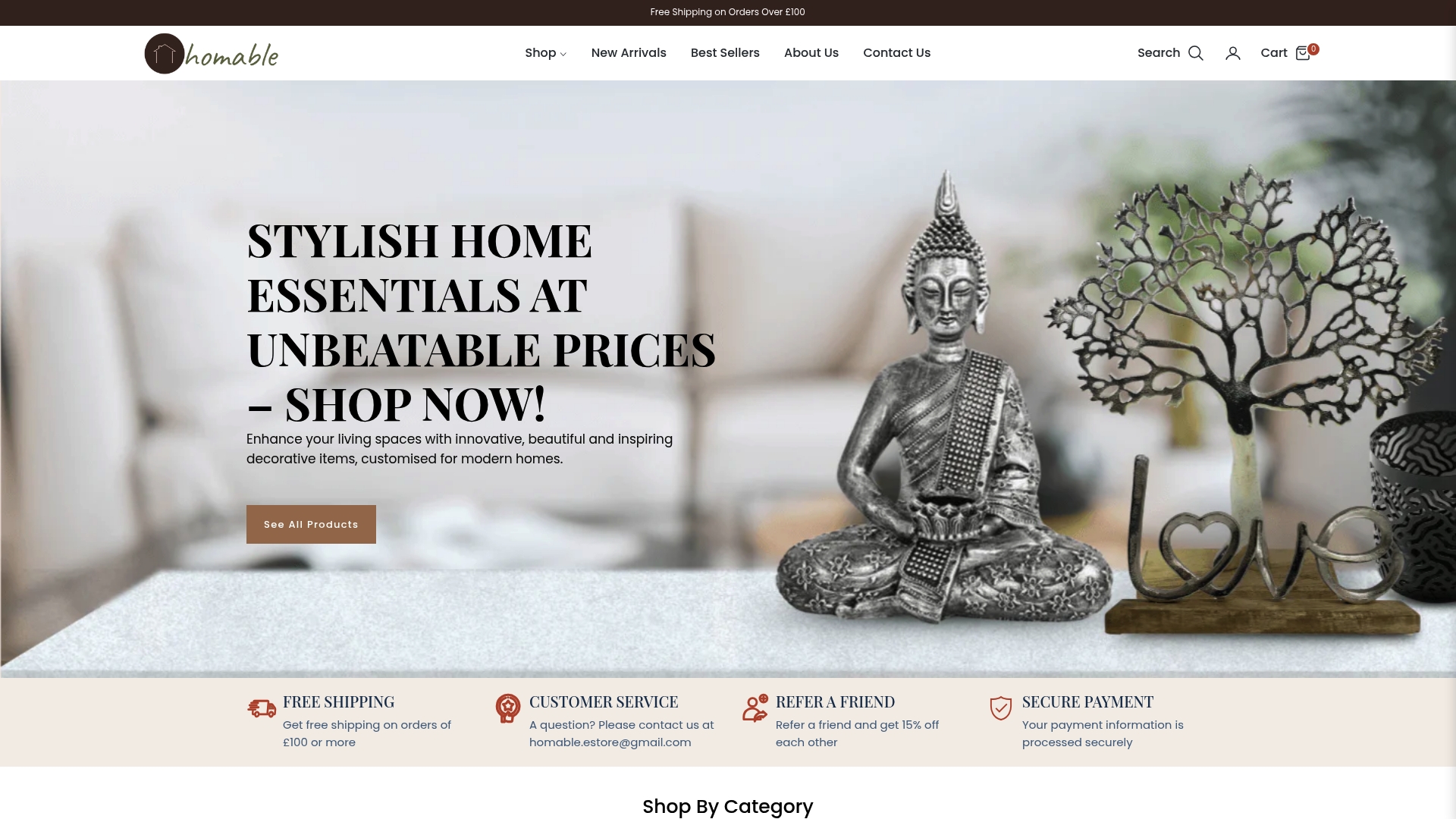
Homable stocks a curated range of rugs, curtains, and home accessories designed to bring exactly this kind of considered, layered look to your workspace. From natural bamboo rugs that anchor a desk zone and soften acoustics, to light-filtering curtains and storage-friendly accessories, everything ships free on orders over £100. Browse the full home office setup guide on Homable for a room-by-room checklist that takes you from bare walls to a workspace you actually want to sit in.