Cart
0

Choosing the right colours for your home goes beyond decoration and can genuinely shape how you feel in each room. For homeowners across the UK looking to modernise their spaces, understanding the science behind colour psychology offers a practical way to create interiors that actively improve mood and wellbeing. Backed by over a century of research, the systematic link between colour families and emotion means your choice of paint or furnishings can become a powerful tool for emotional communication and everyday comfort.
Table of Contents
- Defining Colour Psychology and Its Core Concepts
- Major Colour Families and Their Emotional Effects
- How Colour Influences Living Spaces
- Applying Colour Psychology to Interior Design
- Common Mistakes and How to Avoid Them
Key Takeaways
| Point | Details |
|---|---|
| Understanding Colour Psychology | Colours significantly affect emotions and behaviours, with specific hues triggering unique psychological responses. |
| Emotional Effects of Colour Families | Warm colours promote energy and sociability, while cool colours encourage calmness and restoration. |
| Importance of Strategic Colour Selection | Colour choices should align with the intended function and atmosphere of a space to enhance well-being. |
| Common Mistakes in Colour Application | Avoid emotional misalignment and overcrowding of colours by adhering to balance rules for visual harmony. |
Defining Colour Psychology and Its Core Concepts
Colour psychology is a fascinating scientific discipline that explores how colours profoundly influence human emotions, perceptions, and behaviours. Systematic research into colour associations reveals complex connections between visual stimuli and psychological responses, demonstrating that colours are far more than passive visual experiences.
At its core, colour psychology investigates how different hues trigger specific emotional and cognitive reactions. The field integrates insights from multiple disciplines including:
- Neuroscience
- Evolutionary biology
- Cultural studies
- Psychological research
Researchers have discovered that colour perception involves intricate mechanisms beyond simple visual processing. Interdisciplinary studies of colour perception demonstrate that our emotional and cognitive responses to colours are deeply rooted in biological, psychological, and cultural contexts.
Key concepts in colour psychology include understanding how specific colour characteristics influence human experience:
- Valence: The emotional positivity or negativity associated with a colour
- Arousal: The level of excitement or calmness induced by a particular hue
- Lightness: How bright or dark a colour appears
- Saturation: The intensity and purity of a colour
- Hue: The specific wavelength that defines a colour’s fundamental character
Colours communicate emotions systematically, with consistent associations across different cultural contexts.
Pro tip: Experiment with colour combinations in your living spaces to understand their subtle psychological impacts and create environments that genuinely reflect your desired emotional atmosphere.
Major Colour Families and Their Emotional Effects
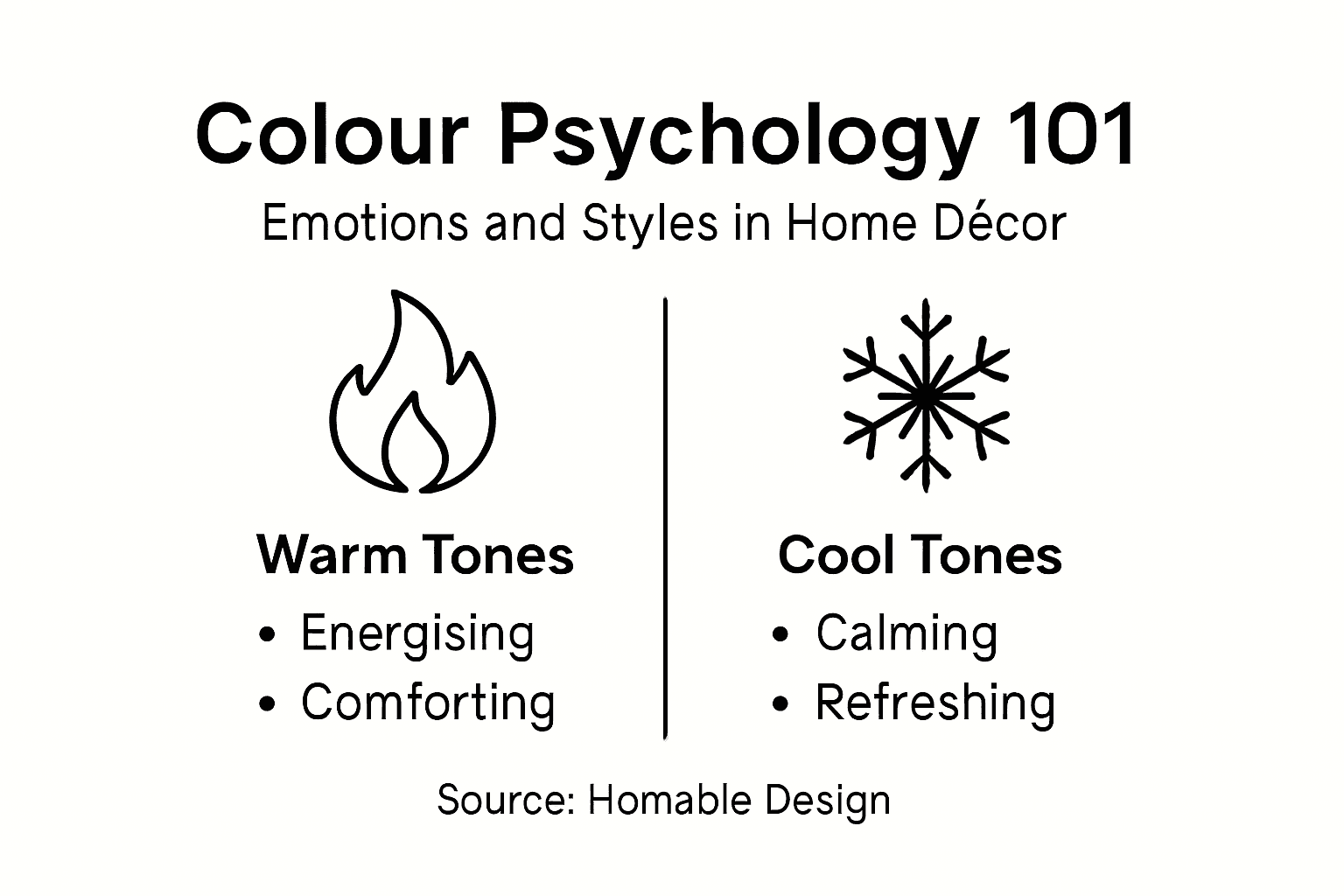
Warm colours like red, orange, and yellow possess remarkable psychological power, capable of dramatically influencing human emotions and perceptions. Systematic colour emotion research reveals that these vibrant hues consistently trigger high-arousal emotional responses across diverse cultural contexts.
Each colour family communicates distinct psychological messages:
- Red: Associated with passion, excitement, and intensity
- Orange: Linked to energy, enthusiasm, and warmth
- Yellow: Connected to optimism, happiness, and mental stimulation
- Blue: Represents calmness, stability, and tranquillity
- Green: Symbolises harmony, growth, and natural balance
- Purple: Evokes creativity, luxury, and spiritual depth
The emotional impact of colours extends beyond mere visual perception. Global colour psychology studies demonstrate that our psychological responses are deeply rooted in biological and cultural conditioning, with certain colour characteristics consistently evoking specific emotional states.
Interestingly, the psychological effects of colours are not uniform but depend on nuanced factors like lightness, saturation, and contextual positioning. Cool colours such as blue and green typically induce low-arousal positive emotions like peacefulness, while warm colours generate high-energy emotional experiences.
Here’s a quick reference summarising the psychological qualities of major colour families in interior design:
| Colour Family | Typical Emotional Impact | Common Uses in Homes |
|---|---|---|
| Warm (Red, Orange, Yellow) | Energetic, uplifting, sociable | Living rooms, kitchens |
| Cool (Blue, Green) | Calming, stabilising, restorative | Bedrooms, bathrooms |
| Neutral (White, Beige, Grey) | Balanced, versatile, understated | Hallways, offices |
| Deep (Purple, Burgundy) | Luxurious, creative, introspective | Studies, reading nooks |
Colour families communicate emotions systematically, offering a universal language of psychological experience.
Pro tip: Experiment with strategic colour combinations in your living spaces, understanding that each hue carries its own emotional signature and can subtly influence mood and perception.
How Colour Influences Living Spaces
Colour is a powerful design element that transforms living spaces far beyond mere aesthetic appeal. Interior design research demonstrates that strategic colour application can profoundly impact psychological well-being, spatial perception, and emotional experience within a home.
The psychological influence of colour in living spaces manifests through several key mechanisms:
- Spatial Perception: Colours can visually expand or contract room dimensions
- Emotional Regulation: Different hues trigger specific psychological responses
- Atmospheric Creation: Colour schemes establish unique environmental moods
- Personal Expression: Colour choices reflect individual personality and taste
- Functional Zoning: Strategic colour use can define different areas within a space
Architectural studies on spatial perception reveal that light and cool colours make rooms appear larger and more open, while dark and warm colours create intimate, cosy environments. This visual manipulation allows homeowners to dramatically transform their living spaces without structural modifications.
Beyond visual tricks, colours communicate complex emotional languages. A soft blue bedroom might induce tranquillity, while a vibrant yellow kitchen can stimulate energy and conversation. Understanding these subtle psychological nuances enables deliberate, meaningful interior design that supports occupants’ emotional and functional needs.
Colour is not just decoration; it’s a fundamental language of spatial experience and emotional communication.
Pro tip: Create mood boards with colour swatches before committing to a design, allowing you to visualise how different colour combinations interact and influence your living space.
Applying Colour Psychology to Interior Design
Interior design requires a nuanced understanding of how colours interact with human psychology, transforming spaces from mere physical environments into emotional landscapes. Colour psychology research reveals that intentional colour selection can profoundly influence occupant mood, behaviour, and overall well-being.
The strategic application of colour psychology involves several critical considerations:
- Room Function: Different spaces demand unique colour approaches
- Emotional Intention: Selecting hues that support desired psychological states
- Personal Context: Considering individual preferences and cultural backgrounds
- Lighting Conditions: Understanding how natural and artificial light interact with colours
- Psychological Impact: Matching colour characteristics to specific emotional outcomes
Designing with psychological colour principles requires a holistic approach that goes beyond aesthetic preferences. Designers must carefully balance colour saturation, brightness, and contextual elements to create environments that genuinely support human experience.
Practical colour application means understanding subtle psychological nuances. A home office might benefit from energising blues and greens that promote concentration, while a bedroom could use soft, muted tones that encourage relaxation and restfulness. The key is creating intentional colour narratives that speak directly to the emotional needs of the space’s inhabitants.
Colour is not merely a visual element, but a powerful psychological tool that shapes human experience.
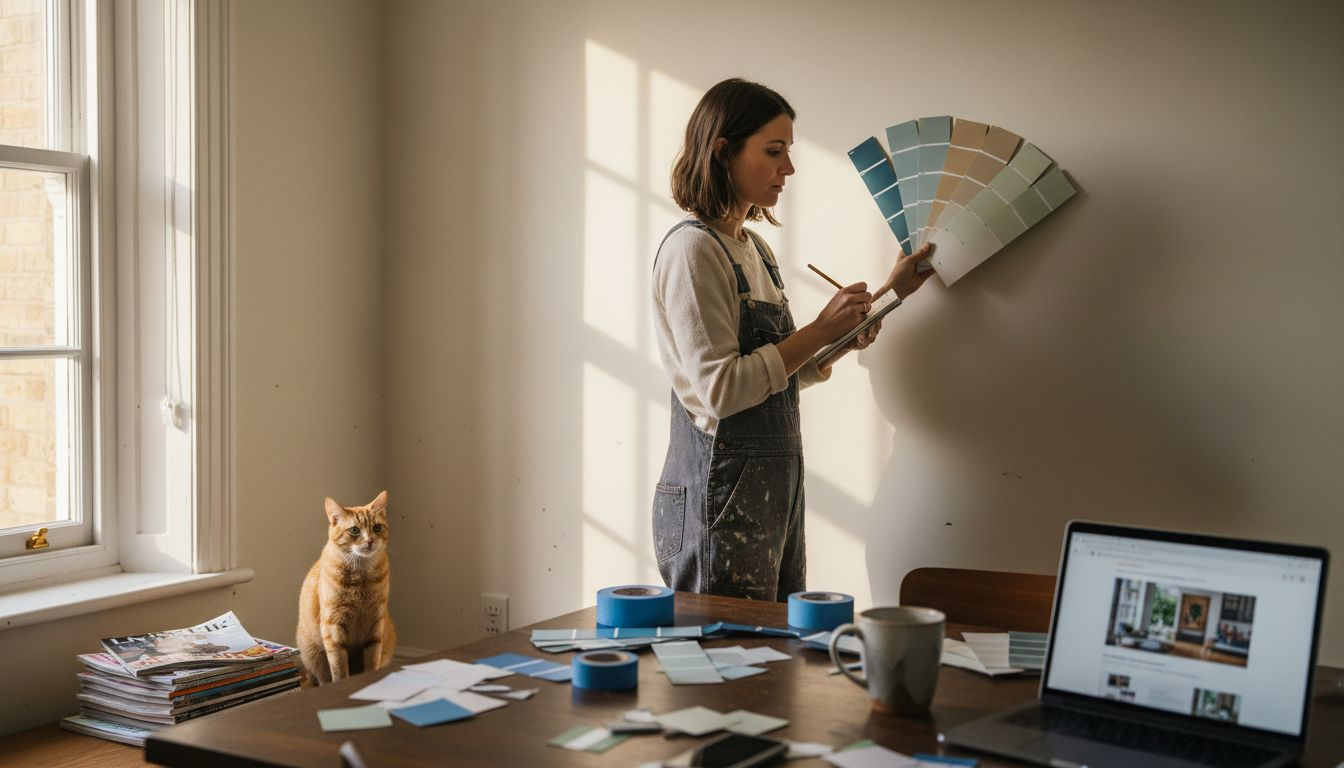
Pro tip: Test colour combinations using large paint swatches or removable samples, observing how they interact with your specific lighting and furniture before making a final commitment.
Common Mistakes and How to Avoid Them
Colour selection in interior design is a delicate art that requires careful consideration and strategic thinking. Colour application research highlights numerous common pitfalls that can inadvertently create psychologically uncomfortable or visually jarring living spaces.
The most prevalent mistakes in colour psychology and interior design include:
- Emotional Misalignment: Choosing colours that contradict the room’s intended psychological purpose
- Overcrowding: Using too many competing colours that create visual chaos
- Ignoring Lighting: Failing to consider how natural and artificial light impacts colour perception
- Cultural Insensitivity: Disregarding cultural colour associations and symbolism
- Lack of Balance: Not adhering to proper colour proportion principles
Navigating these challenges requires a nuanced understanding of colour dynamics. Many homeowners mistakenly select colours based purely on aesthetic preference, overlooking the profound psychological implications. A vibrant red might seem appealing, but in a bedroom, it could potentially disrupt sleep and create unnecessary psychological tension.
Professional designers recommend following the 60-30-10 rule: 60% dominant colour, 30% secondary colour, and 10% accent colour. This approach ensures visual harmony and prevents the overwhelming sensory experience that can result from poorly planned colour schemes.
The table below highlights key mistakes to avoid and professional strategies for successful colour selection:
| Common Mistake | Potential Effect | Pro Designer Tip |
|---|---|---|
| Emotional misfit | Uncomfortable moods | Match colours to room function |
| Overuse of colour | Visual overload, chaos | Use the 60-30-10 balance rule |
| Ignoring lighting | Colour distortion and imbalance | Always test in actual light |
| Disregarding culture | Unintended negative associations | Research cultural meaning |
| Poor proportion | Lack of harmony | Plan colour distribution ahead |
Colour is a powerful language that communicates emotion, and every shade tells a story.
Pro tip: Always test paint colours using large swatches in different lighting conditions, observing how they interact with your specific space throughout the day before making a final decision.
Transform Your Living Space with Colour Psychology and Homable
Understanding colour psychology reveals how hues influence our moods and the atmosphere in our homes. Struggling with emotional misalignment or unsure how to balance warm and cool tones to create the perfect environment is common. Using key concepts like valence, arousal, and saturation can help you make intentional colour choices that support your lifestyle and wellbeing. Homable.co.uk offers a curated range of stylish and affordable home accessories designed to complement your colour narratives and enhance the psychological impact of your interiors.
Discover how you can effortlessly bring harmony and emotional balance to your living spaces with Homable’s versatile collection. Whether you want to energize your living room or create a calm sanctuary in your bedroom, browse our trusted selection at Homable and explore practical decor solutions that align with colour psychology principles. Start crafting spaces that truly reflect your mood and style today.
Frequently Asked Questions
What is colour psychology in home décor?
Colour psychology in home décor is the study of how colours affect human emotions and behaviours, influencing the mood and atmosphere of living spaces through carefully chosen colour palettes.
How can I choose colours that enhance the mood of a room?
To enhance the mood of a room, consider the room’s function and the emotional response you wish to evoke. For example, use calm colours like blue for bedrooms to promote relaxation, while vibrant colours like yellow can energise social spaces like kitchens and living rooms.
What are the common mistakes to avoid in colour selection?
Common mistakes include emotional misalignment, where colours do not fit the room’s purpose; overcrowding with too many competing colours; ignoring lighting conditions; and failing to consider cultural implications of colours. It’s essential to plan colour distribution thoughtfully and adhere to the 60-30-10 rule.
How does lighting affect colour perception in home décor?
Lighting can significantly alter how colours are perceived. Natural and artificial light can change a colour’s appearance and effectiveness in creating the desired emotional atmosphere. Always test paint samples in different lighting conditions to see how they interact within the space.