Cart
0

TL;DR:
- Functional home decor combines practicality with style, serving daily needs without sacrificing design.
- Assessing lifestyle needs and space use is essential for choosing effective, multi-purpose fixtures.
- British homes benefit from flexible, durable solutions that adapt to unique layouts and everyday life.
Most British homeowners assume they must choose between a beautiful room and a practical one. That assumption is wrong, and it costs people time, money, and a great deal of frustration. Functional home decor is not about stripping out personality or filling your living room with clinical storage units. It is about selecting pieces that earn their place every single day, looking good while doing it. Whether you live in a compact London flat or a rambling Victorian terrace, assessing lifestyle needs first before buying anything is the single most effective change you can make to your home.
Table of Contents
- What defines functional home decor?
- How to assess your home’s functional needs
- Essential elements for functional home decor
- Blending style and function: practical tips for British homes
- Our perspective: why British homes demand a flexible approach to functional decor
- Enhance your home with functional decor solutions
- Frequently asked questions
Key Takeaways
| Point | Details |
|---|---|
| Function meets style | Functional decor combines everyday practicality with lasting British style. |
| Assess first, choose smart | Start with your lifestyle needs to select decor that truly works for your home. |
| Storage is design | Innovative storage solutions double as attractive features in any room. |
| Blend for best results | Layering classic style and multi-use furniture creates spaces you love and live in. |
What defines functional home decor?
Functional home decor refers to items and layouts that serve genuine everyday needs while also contributing to the overall look and feel of a room. It is not the opposite of decorative. It is the smarter version of it. A beautifully woven basket that hides toys, a wall-mounted shelf that displays books and frees up floor space, a storage ottoman that doubles as a coffee table: these are all functional decor done well.
The contrast with purely decorative pieces is straightforward. A ceramic figurine on a shelf has one job: to look nice. A stylish tray on that same shelf can corral remote controls, candles, and keys while looking equally attractive. Neither is wrong, but only one pulls its weight in a busy household.
Experts note that functional organisation prioritises short movement paths, point-of-use storage, and visibility. In plain terms: the things you use most often should be closest to where you use them, easy to see, and easy to grab. That principle alone can transform a chaotic kitchen or an overwhelmed hallway.
Here are the core attributes that define truly functional decor:
- Multi-use: The item performs more than one role (seating plus storage, display plus organisation)
- Easy access: Frequently used items are reachable without rummaging
- Visual harmony: The piece fits the room’s colour palette and style without clashing
- Open layouts: Furniture placement supports natural movement through the space
- Resilience: Materials and finishes that tolerate real daily life
A common misconception is that functional means sacrificing comfort or style. In reality, exploring the balance between style vs utility decor shows that the two reinforce each other when chosen thoughtfully.
| Decor type | Primary purpose | Everyday value |
|---|---|---|
| Storage ottoman | Seating and storage | High |
| Sofa bed | Seating and sleeping | High |
| Wall-mounted shelf | Display and storage | High |
| Ceramic figurine | Visual appeal | Low |
| Decorative mirror | Visual appeal and light | Medium |
“The best rooms are not the ones that look untouched. They are the ones that look lived-in and still beautiful.”
Pro Tip: Before buying any new piece, ask yourself: does this item do at least two things well? If the answer is no, it may be worth reconsidering, especially in a smaller British home where every square metre counts.
Understanding the interior design workflow behind functional spaces can also help you make more confident decisions when planning a room from scratch.
How to assess your home’s functional needs
Knowing what functional decor is matters far less than knowing what your home actually needs. This is where most people skip a step and end up with stylish purchases that do not solve real problems.
Start by walking through each room and listing the activities that happen there. A living room might host TV watching, reading, homework, and video calls. A hallway might be a drop zone for bags, coats, shoes, and post. Writing this down takes ten minutes and immediately reveals where your current setup is failing you.
Assessing lifestyle needs including room activities and time spent in each space is the essential first step before selecting any new furniture or storage. It sounds obvious, but skipping it is exactly why so many beautifully styled rooms remain frustrating to live in.
Here is a simple process to follow:
- List every activity that takes place in the room, from the obvious to the overlooked
- Map your movement paths: Where do you walk most often? Where do you always seem to bump into something?
- Identify clutter hotspots: The corner where bags pile up, the drawer that will not close, the surface that attracts everything
- Note what you reach for daily: These items need the most accessible storage
- Document what you avoid using: If a storage solution is inconvenient, you will not use it
Once you have this picture, budget allocation becomes much clearer. Spend most on the pieces you use most. A sofa in a family living room deserves a higher investment than a side table in a guest bedroom. For compact UK homes and flats, this discipline is especially important because there is simply no room for pieces that do not contribute.
| Room | Common pain point | Functional fix |
|---|---|---|
| Hallway | Clutter by the door | Bench with shoe storage |
| Living room | Nowhere to put remotes | Stylish tray or side table drawer |
| Bedroom | Clothes on chairs | Ottoman or blanket box |
| Kitchen | Cluttered worktops | Wall-mounted magnetic rack |
Pro Tip: Photograph your clutter hotspots before shopping. Looking at a photo rather than the actual space makes it easier to see the problem objectively and choose the right solution.
If you are working with a small or awkwardly shaped space, a dedicated guide to organising small spaces can give you a structured approach that saves both money and frustration.
Essential elements for functional home decor
Once you know your priorities, choosing the right solutions becomes far more straightforward. There are a handful of elements that consistently deliver on both form and function in British homes.
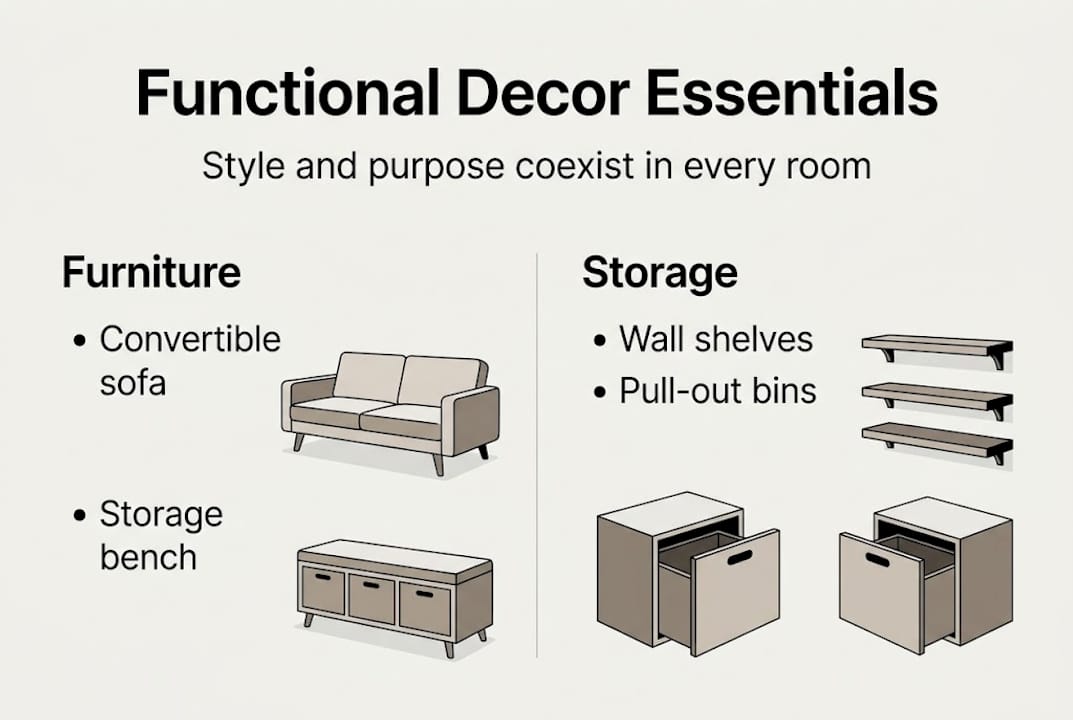
Multi-functional furniture is the foundation. Convertible sofas are essential for small UK homes, and flexible storage is a close second. Storage ottomans serve as footrests, extra seating, and hidden compartments all at once. Sofa beds transform a sitting room into a guest room without requiring a dedicated spare bedroom.
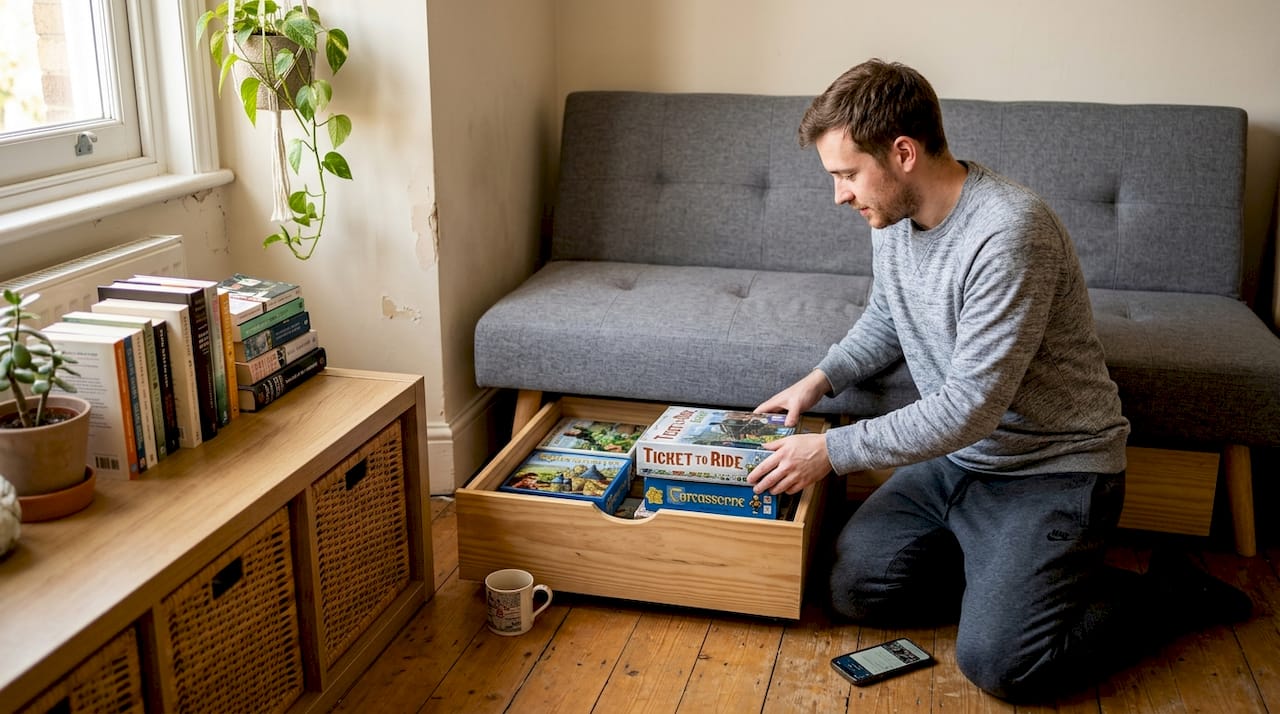
Smart storage is the next layer. Wall-mounted shelves keep floor space open, which makes any room feel larger. Pull-out drawers in kitchen islands or under-bed frames use space that would otherwise go to waste. The key is visibility: if you cannot see what is stored, you will not use it consistently.
Layered lighting is often overlooked but makes an enormous difference. A single overhead light creates a flat, functional atmosphere at best. Combining ambient lighting (the main source), task lighting (for reading or cooking), and accent lighting (for mood and display) gives you a room that adapts to different activities throughout the day.
British homes have a particular affinity for natural materials. Sisal flooring, linen cushions, wool throws, and solid wood furniture all age gracefully and tolerate daily wear far better than cheaper alternatives. British living room ideas consistently feature these materials because they balance warmth, durability, and classic appeal.
- Storage ottomans: Seating, footrest, and hidden storage in one
- Wall shelves: Display without sacrificing floor space
- Baskets and boxes: Stylish containment for everyday clutter
- Sofa beds: Guest accommodation without a dedicated room
- Layered lighting: Adaptable atmosphere for any activity
Pro Tip: Choose storage solutions in neutral tones or natural textures so they blend into the room rather than demanding attention. A linen basket or rattan box does the same job as a plastic bin but looks intentional.
For a structured approach to choosing the right pieces, a step by step storage guide can walk you through the process room by room. You can also browse modern storage solutions for inspiration tailored to contemporary British interiors.
Blending style and function: practical tips for British homes
Knowing the elements is one thing. Putting them together in a way that feels cohesive and genuinely British is another. The good news is that British interior style has always leaned towards layered, lived-in rooms that prioritise comfort alongside beauty.
Blending both style and function is optimal because beauty itself can be functional for mood and wellbeing. A room that makes you feel calm and happy is performing a genuine function, even if nothing in it has a drawer.
Here are practical ways to bring this together:
- Use stylish baskets and woven boxes to contain clutter on open shelves without hiding the shelf entirely
- Group decorative accessories in odd numbers on trays so they look curated rather than scattered, and the tray itself becomes a containment tool
- Choose open layouts that allow natural light to move through the room, a classic British approach that makes smaller spaces feel generous
- Let comfort guide material choices: velvet, wool, and linen feel luxurious and last well with regular use
- Adapt for compact urban living by choosing furniture with legs rather than floor-level pieces, which creates visual breathing room
“Style without function is decoration. Function without style is furniture. The goal is always both.”
British decor touches such as patterned cushions, botanical prints, and quality throws add personality without adding clutter, provided each piece has a clear place to live when not in use.
Pro Tip: Before adding any decorative item, decide where it will be stored when the room needs to be tidied. If there is no answer, the item will become clutter.
For more ideas on bringing this balance to life, the guide on design and function at home offers practical frameworks, and affordable UK style tips shows how to achieve the look without overspending.
Our perspective: why British homes demand a flexible approach to functional decor
Most advice on functional home decor originates from the United States or mainland Europe, where homes tend to be larger, newer, and built to different proportions. That advice rarely translates cleanly to a Victorian terrace with a narrow hallway, a 1930s semi with oddly placed alcoves, or a modern city flat where the living room is also the dining room and the home office.
British homes require flexibility above all else. The layouts are eccentric, the room sizes are modest, and real life, including children, pets, and the inevitable accumulation of things, does not pause for aesthetic considerations. Conventional rigid systems simply do not hold up.
What actually works is a combination of high-quality basics that can absorb daily wear, flexible storage that adapts as your household changes, and personal touches that make the space feel genuinely yours. The stylish storage solutions that endure are the ones chosen for a specific real problem, not because they looked good in a showroom.
Functional decor in a British home is not a design project. It is an ongoing, practical relationship with your space.
Enhance your home with functional decor solutions
If this guide has sparked ideas for your own space, the next step is finding pieces that genuinely deliver on both style and practicality. At Homable, we have curated a range of home accessories designed with exactly this balance in mind, from decorative accents that add warmth to storage solutions that quietly manage the everyday.
For a finishing touch that adds character without clutter, the stars wooden base ornament is a beautiful example of decorative simplicity done well. If you are looking to add comfort and practicality to your bathroom, the soft non-slip bath rug set combines safety, absorbency, and style in one practical purchase. Free shipping on orders over £100 makes it easy to refresh more than one room at a time.
Frequently asked questions
What makes decor functional?
Functional decor serves an everyday purpose while contributing to the room’s overall design, so it earns its place visually and practically at the same time.
How do I start making my home more functional?
Begin by listing daily activities in each room, then select multi-functional furniture and storage solutions that directly address the routines and clutter patterns you have identified.
Can functional decor still look stylish?
Absolutely. Layered textiles and natural materials that are characteristic of British interiors support both visual appeal and everyday utility without any compromise.
What are the best functional furniture choices for small UK homes?
Multi-functional pieces such as convertible sofas, wall-mounted shelves, and storage ottomans are the most effective choices for compact British spaces where every item needs to earn its keep.
Recommended
- Why Prioritise Design and Function at Home – Homable
- Modern Home Styling Steps for a Stunning Look – Homable
- What Is Functional Décor? 70% Blend Style & Utility – Homable
- Purpose of Room-Specific Decor: Enhancing Style and Function – Homable
- Definieer je persoonlijke interieurstijl: 7 stappen naar een authentie | VAN ICE