Cart
0
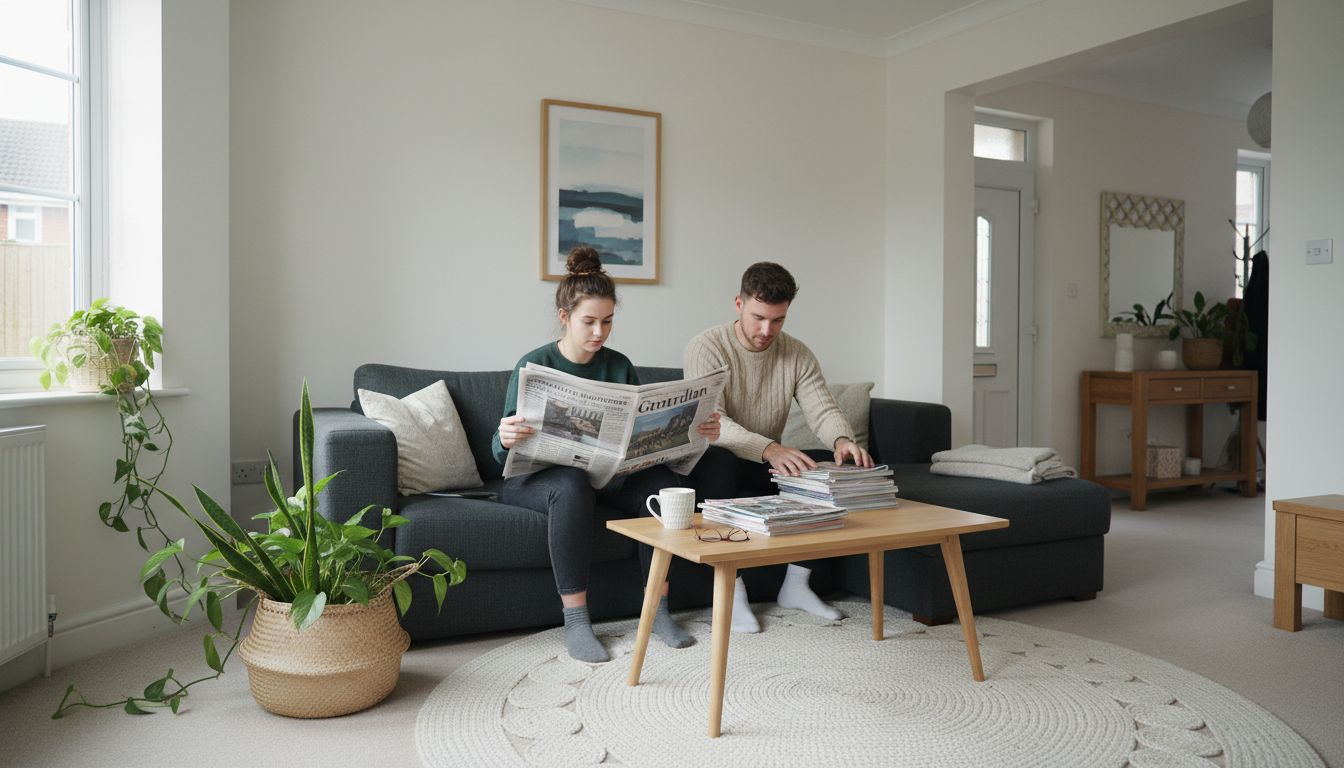
Many UK homeowners believe modern home styling demands expensive custom furniture and results in cold, sterile spaces. Yet affordable modern furniture sales grew 30% year-over-year in the UK from 2023 to 2025, proving stylish modern interiors are accessible. This guide clarifies what modern home styling truly means and shows you practical, budget-conscious ways to create functional, beautiful spaces.
Table of Contents
- Introduction To Modern Home Styling
- Core Principles Of Modern Home Styling
- Material And Colour Selection For Modern Interiors
- Practicality And Functionality In Modern Decor Choices
- Common Misconceptions About Modern Style
- Comparison With Traditional And Contemporary Decor Styles
- Step-By-Step Implementation For Modern Styling
- Conclusion: Enhancing Your Home With Modern Style
- Enhance Your Modern Home With Homable’s Solutions
- Frequently Asked Questions
Key takeaways
| Point | Details |
|---|---|
| Modern style combines minimalism, functionality, and affordability | It prioritises clean lines, practical furniture, and neutral palettes without requiring large budgets. |
| Natural materials and neutral colours define modern interiors | Wood, metal, white, grey, and beige create bright, versatile spaces. |
| Functional decor enhances daily living | LED lighting, modular storage, and indoor plants improve usability and atmosphere. |
| Modern differs from traditional and contemporary styles | Modern is fixed minimalist, traditional is ornate, contemporary evolves flexibly. |
| Implementation follows clear steps | Declutter, apply neutral palette, choose functional furniture, then add warmth. |
Introduction to modern home styling
Modern home styling blends minimalism, functionality, and affordability to create spaces that look good and work well. It emerged from 20th-century design movements emphasising simplicity and practicality. For UK homeowners, smaller living spaces and rising property costs make efficient, stylish design essential.
This approach removes unnecessary clutter, uses clean lines, and selects furniture serving multiple purposes. Affordable modern furniture sales grew 30% year-over-year in the UK from 2023 to 2025, reflecting strong demand for accessible modern solutions. UK housing trends favour compact homes requiring smart storage and flexible layouts.
Adopting modern styling principles delivers clear benefits:
- Maximised space through decluttering and functional furniture
- Improved natural light via neutral colours and strategic layouts
- Lower maintenance with simple, durable materials
- Budget flexibility through accessible product ranges
- Enhanced daily comfort from practical, purposeful design
Exploring modern design trends home decor helps you understand current directions shaping UK interiors. Modern styling suits renters and homeowners alike, offering adaptable solutions that fit various budgets and spaces.
Core principles of modern home styling
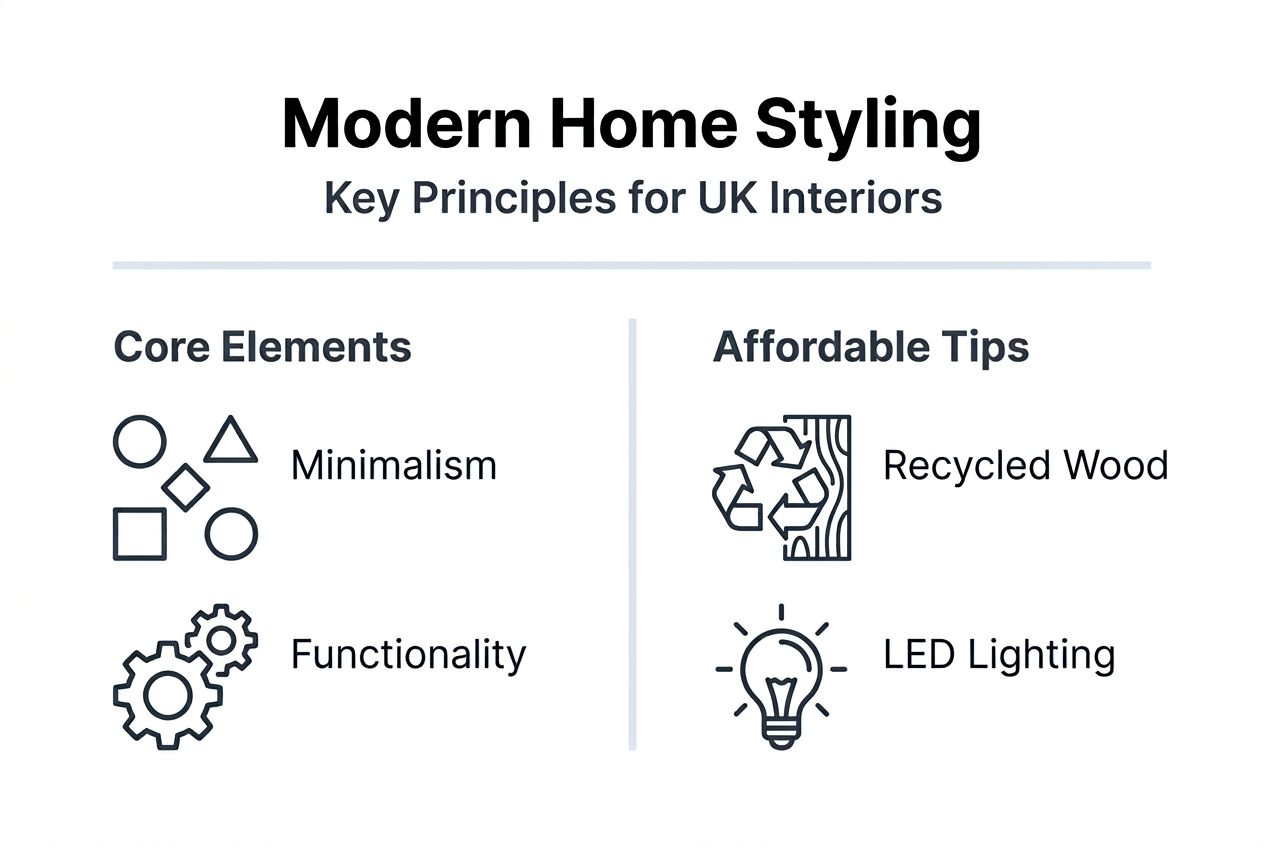
Modern home styling rests on three essential principles that define its character and appeal.
Minimalism reduces visual clutter and physical excess. You keep only items serving clear purposes or bringing genuine joy. This creates open, breathable spaces where each piece stands out. In UK homes with limited square footage, minimalism prevents rooms feeling cramped or chaotic.
Functional layouts prioritise usability over decoration. Furniture should serve multiple roles: sofas with storage, tables that extend, shelving that displays and organises. Pathways remain clear, rooms flow logically, and daily activities happen smoothly. Understanding what is functional decor blend style utility clarifies how form and function merge.
Neutral colour palettes form modern styling’s visual foundation. White, grey, beige, and soft earth tones dominate walls, large furniture, and flooring. Neutral colour palettes create versatility and enhance brightness in living spaces. These colours reflect light, making rooms feel larger and airier. They also provide flexible backdrops for accent pieces or seasonal updates.
Key elements supporting these principles include:
- Clean lines without ornate detailing
- Open floor plans connecting spaces visually
- Strategic negative space preventing overcrowding
- Quality over quantity in furniture selection
- Consistent material choices throughout rooms
Pro Tip: Balance minimalism with personal touches like family photos, small art pieces, or textured throws. This prevents spaces feeling sterile whilst maintaining modern aesthetic principles.
These principles work together, creating interiors that breathe, function efficiently, and remain timeless. They adapt to individual preferences whilst maintaining cohesive modern character.
Material and colour selection for modern interiors
Choosing appropriate materials and colours ensures your modern interior achieves the right balance of style, durability, and affordability.
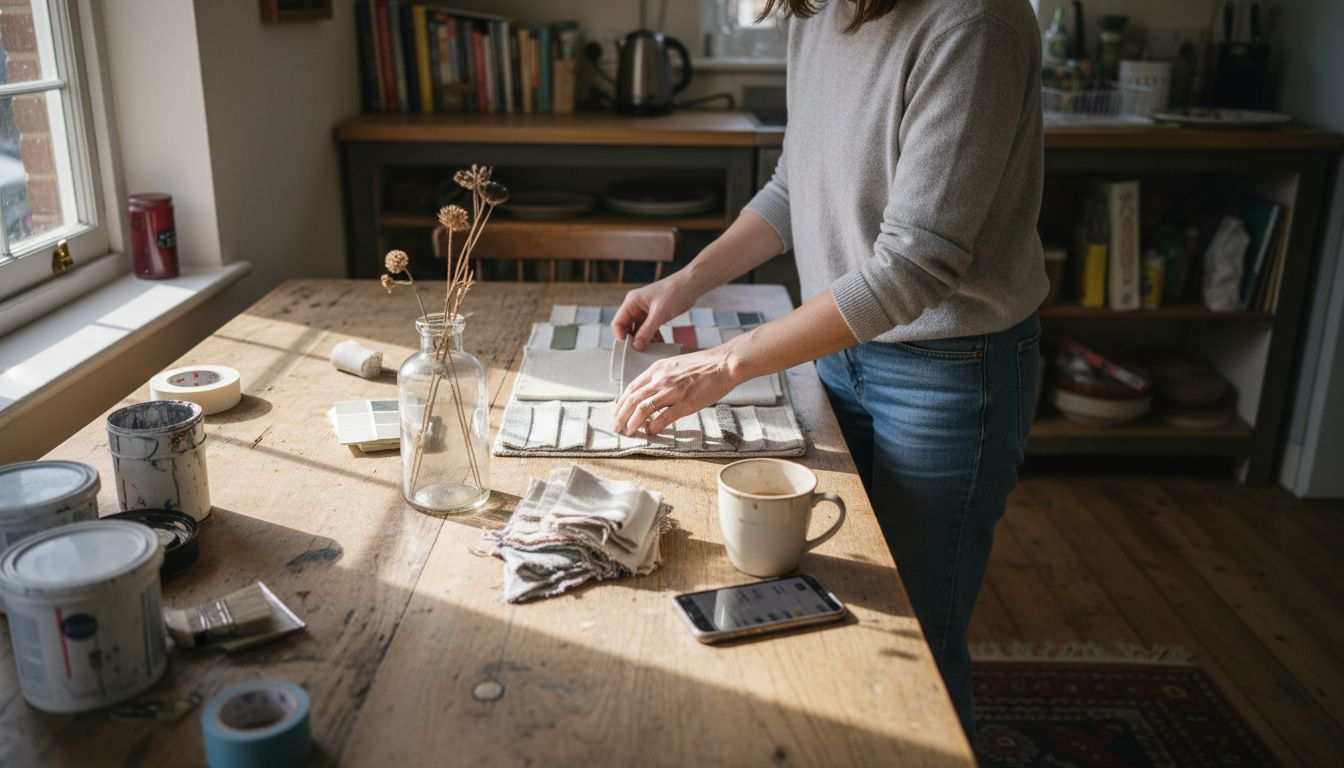
Natural materials dominate modern design. Wood brings warmth and texture, appearing in flooring, furniture frames, and accent pieces. Metal adds industrial edge through lighting fixtures, table legs, and shelving brackets. Glass creates openness in tables, partitions, and cabinet doors. Use of natural materials in modern interiors in the UK rose 40% between 2020 and 2025.
Sustainable materials gain prominence as environmental awareness grows. Reclaimed wood, bamboo, recycled metal, and eco-friendly fabrics appeal to conscious consumers. These options often cost less than premium virgin materials whilst offering unique character and reducing environmental impact.
Neutral colour palettes remain central to modern styling. White walls maximise light reflection and create blank canvases. Grey offers sophistication in various tones from charcoal to soft dove. Beige and cream add warmth without overwhelming spaces. These colours enhance perceived room size and light levels, crucial in UK homes with limited natural light during winter months.
Budget-friendly sourcing strategies include:
- High street retailers offering affordable modern furniture ranges
- Online marketplaces with competitive pricing and home delivery
- DIY projects using reclaimed materials for custom pieces
- Seasonal sales targeting key modern style items
- Mixing investment pieces with budget accents strategically
Accent colours work best in small doses. Incorporate them through cushions, artwork, or single statement pieces rather than large furniture or walls. This maintains neutral foundation whilst adding personality and allows easy updates as tastes change.
Texture becomes more important in neutral schemes. Mix smooth and rough surfaces, soft and hard materials, matte and glossy finishes. This creates visual interest without relying on colour variation.
Practicality and functionality in modern decor choices
Modern home styling emphasises elements that enhance daily living whilst contributing to overall aesthetic.
Energy-efficient LED lighting transforms modern interiors. LED lighting can save up to 75% energy compared to traditional bulbs, reducing electricity bills significantly. LEDs offer excellent colour rendering, various colour temperatures, and long lifespans. Layer different lighting types: ambient ceiling lights, task lighting for work areas, accent lighting highlighting features.
Modular storage solutions maximise space efficiency. Wall-mounted shelving keeps floors clear and creates vertical storage. Multi-compartment organisers inside cupboards prevent clutter accumulation. Under-bed storage utilises wasted space. Furniture with built-in storage, like ottomans or bed frames with drawers, serves dual purposes without occupying extra floor space.
Indoor plants bring life to modern interiors. They improve air quality by filtering toxins and producing oxygen. Plants add natural colour, organic shapes, and visual warmth that soften hard modern lines. Low-maintenance varieties like snake plants, pothos, or peace lilies suit busy households. Group plants at different heights for dynamic displays.
Practical modern choices include:
- Wipeable, stain-resistant fabrics for upholstery and curtains
- Durable flooring like engineered wood or quality vinyl
- Easy-clean surfaces in kitchens and bathrooms
- Cordless window treatments for safety and clean lines
- Furniture on legs allowing easier floor cleaning underneath
Exploring how to prioritise design and function home solutions helps you make smarter purchasing decisions. Consider maintenance requirements, durability, and long-term value alongside immediate aesthetics.
Pro Tip: Layer lighting at different heights and add textured fabrics like linen or wool to create cosy modern spaces that feel inviting rather than clinical.
Functionality should never compromise style. The best modern pieces look beautiful whilst serving clear practical purposes, justifying their presence in limited UK living spaces.
Common misconceptions about modern style
Several misunderstandings prevent UK homeowners from confidently embracing modern home styling.
-
Modern style requires expensive custom furniture. Mass-produced modern furniture from high street retailers costs far less than bespoke pieces. Many affordable brands offer clean-lined, minimalist designs meeting modern aesthetic standards. Mixing budget and investment pieces strategically creates cohesive looks without overspending.
-
Modern interiors feel cold and uninviting. Neutral palettes and minimalism can create warmth when executed properly. Natural wood tones, soft textiles, layered lighting, and personal touches prevent sterile atmospheres. The key lies in balancing simplicity with carefully chosen warm elements.
-
Minimalism means empty, boring spaces. True minimalism focuses on intentionality, not emptiness. Each item serves a purpose or brings joy. Well-chosen pieces displayed with breathing room create more visual impact than cluttered arrangements. Negative space itself becomes a design element.
-
You must replace everything at once. Modern styling happens gradually. Start with decluttering and paint, then replace key furniture pieces over time. This spreads costs and allows learning what works in your space before committing to major purchases.
-
Modern style suits only new-build properties. Modern principles adapt to any property type, including period homes. Juxtaposing modern furniture with traditional architecture creates interesting contrasts. Focus on portable elements like furniture, lighting, and accessories rather than permanent structural changes.
-
Neutral colours make all rooms look identical. Varying tones, textures, materials, and lighting creates distinctiveness within neutral schemes. A warm beige living room feels different from a cool grey bedroom despite both being neutral.
Avoiding these misconceptions helps you approach modern styling confidently, making informed choices that suit your budget, space, and lifestyle.
Comparison with traditional and contemporary decor styles
Understanding how modern style differs from traditional and contemporary approaches clarifies design decisions.
| Aspect | Modern | Traditional | Contemporary |
|---|---|---|---|
| Time period | Mid-20th century fixed aesthetic | Pre-20th century classical styles | Current evolving trends |
| Colour palette | Neutral whites, greys, beiges | Rich jewel tones, deep woods | Varies widely, trend-driven |
| Furniture lines | Clean, simple, geometric | Ornate, curved, detailed carvings | Mixed, follows current fashion |
| Materials | Natural wood, metal, glass | Heavy wood, rich fabrics, antiques | Innovative, experimental, mixed |
| Ornamentation | Minimal, functional only | Elaborate mouldings, patterns | Selective, artistic statements |
| Layout approach | Open, flowing spaces | Defined, formal room purposes | Flexible, lifestyle-focused |
Modern style maintains consistent principles regardless of current trends. It emerged from specific design movements and retains their core values. Traditional style references historical periods with ornate detailing, rich colours, and formal arrangements. Contemporary style evolves continuously, incorporating latest trends, materials, and cultural influences.
UK design preferences show increasing modern adoption. Smaller homes favour modern’s space efficiency. Younger homeowners prefer minimalist aesthetics and lower maintenance. However, traditional style remains popular in period properties and amongst those valuing classic elegance.
Contemporary home styling modern life explores how evolving contemporary approaches differ from fixed modern principles. Some homeowners blend elements, creating transitional styles mixing modern simplicity with traditional warmth or contemporary flexibility.
Choosing between styles depends on personal preference, property characteristics, budget, and lifestyle needs. Modern styling offers timelessness, affordability, and practicality that suit many UK households.
Step-by-step implementation for modern styling
Follow this practical sequence to transform your UK home with modern styling principles.
-
Declutter ruthlessly. Remove items serving no clear purpose or bringing no joy. Clear surfaces, reduce visible possessions, and organise remaining items in closed storage. This creates the clean foundation modern style requires and costs nothing beyond time investment.
-
Apply neutral paint palette. Repaint walls in white, soft grey, or warm beige. This immediately modernises spaces, enhances light, and provides versatile backdrops. Paint represents affordable transformation with dramatic impact.
-
Replace or reposition key furniture pieces. Prioritise functional items like storage solutions, seating serving multiple purposes, and pieces with clean lines. Arrange furniture creating clear pathways and open sightlines rather than pushing everything against walls.
-
Upgrade lighting strategically. Install LED bulbs throughout, add task lighting where needed, and consider statement pendant lights or floor lamps as focal points. Good lighting transforms atmosphere and functionality simultaneously.
-
Add warmth through textures and accents. Introduce soft textiles like cushions, throws, or rugs in natural fabrics. Display few carefully chosen decorative items. Incorporate indoor plants for organic warmth and colour.
-
Refine and adjust over time. Live with changes before making additional purchases. Notice what works and what needs improvement. Modern styling develops gradually, allowing budget spreading and learning from experience.
Understanding the modern interior design workflow uk homes provides detailed guidance for each phase. The 7 step home decorating checklist for UK homes offers room-specific application advice.
Affordable product options exist at every step. High street retailers stock modern furniture ranges at accessible prices. Online marketplaces offer competitive deals with home delivery. Second-hand shops and online resale platforms provide budget-friendly vintage modern pieces with character.
The modern home styling steps guide breaks down implementation further, addressing common challenges UK homeowners face during transitions.
Remember, modern styling suits renters and homeowners equally. Focus on portable elements requiring no permanent alterations, allowing flexibility and budget control.
Conclusion: enhancing your home with modern style
Modern home styling combines minimalism, functionality, and affordability, creating beautiful, practical spaces accessible to UK homeowners at various budget levels. You now understand core principles like neutral palettes, natural materials, and functional furniture. You can distinguish modern from traditional and contemporary styles, avoiding common misconceptions.
Implementing modern styling happens gradually through decluttering, strategic painting, thoughtful furniture selection, and careful accent placement. Small changes accumulate into significant transformations. Confidence comes from understanding principles rather than copying specific looks.
Homable.co.uk offers extensive modern decor products and styling advice supporting your journey. Whether starting fresh or refining existing spaces, modern principles provide timeless frameworks that adapt to your evolving needs and preferences. Your home deserves styling that looks good, works well, and fits your budget.
Enhance your modern home with Homable’s solutions
Ready to transform your living space with modern styling principles? Homable.co.uk offers carefully curated collections of affordable modern home decor products perfect for UK homeowners. From minimalist furniture and functional storage solutions to stylish lighting and natural accessories, we provide everything needed to create beautiful, practical interiors.
Our team understands UK homes’ unique challenges and opportunities. We’ve selected products balancing design quality with affordability, helping you achieve modern aesthetics without overspending. Explore our modern collections today and discover how simple changes create dramatic improvements. Visit our modern home styling steps guide for additional implementation support.
Frequently asked questions
What is modern home styling?
Modern home styling is a design approach emphasising minimalism, functionality, and clean lines rooted in mid-20th century design movements. It uses neutral colour palettes, natural materials like wood and metal, and furniture serving clear purposes. Modern style differs from contemporary by maintaining fixed aesthetic principles rather than following evolving trends.
How can I create a modern style on a budget?
Start by decluttering and painting walls in neutral colours like white or grey, which costs little but transforms spaces dramatically. Purchase affordable mass-produced minimalist furniture from high street retailers rather than custom pieces. Focus on few quality items rather than many cheap decorations, and incorporate DIY projects using reclaimed materials.
What materials and colours suit modern interiors?
Natural materials like wood, metal, and glass define modern interiors, with sustainable options like bamboo and reclaimed wood gaining popularity. Neutral colour palettes featuring white, grey, and beige dominate walls and large furniture, enhancing light and creating versatile backdrops. These choices reflect light effectively, crucial for UK homes with limited natural light.
How does modern styling differ from contemporary or traditional styles?
Modern style represents a fixed mid-20th century aesthetic with consistent minimalist principles, clean lines, and neutral palettes. Contemporary style evolves continuously, incorporating current trends and experimental materials. Traditional style references historical periods with ornate detailing, rich colours, and formal arrangements. Modern offers timelessness, contemporary provides flexibility, and traditional delivers classic elegance.