Cart
0

TL;DR:
- % of homeowners underuse their outdoor spaces despite having them.
- Design should start with the home’s architecture and character to create cohesive outdoor environments.
- Prioritizing comfort and usability is essential for encouraging frequent outdoor use and enjoyment.
Most homeowners have a garden, balcony, or patio sitting right outside their door, yet 77% of consumers admit they underuse it. The gap between a space that looks good in a catalogue and one you actually want to spend time in comes down to two things: comfort and intention. Whether you have a sprawling garden or a modest terrace, the principles for transforming it are the same. This guide walks you through a clear, expert-backed process, from reading your home’s architectural cues to layering textures, zoning for usability, and adding finishing touches that make every season feel fresh.
Table of Contents
- Start with structure: Let your home’s architecture guide your style
- Layer materials and textures for depth and warmth outdoors
- Zoning and vignettes: Design for comfort and versatility
- Finishing touches: Accessories, lighting, and seasonal flair
- An expert perspective: Why comfort must come before style outdoors
- Shop stylish essentials for your outdoor space
- Frequently asked questions
Key Takeaways
| Point | Details |
|---|---|
| Foundation first | Style your outdoor space by starting with your home’s architecture and materials. |
| Layer for depth | Mix textures and finishes to create inviting, dimensional outdoor environments. |
| Zone intentionally | Divide your outdoors into comfortable vignettes and functional areas for maximum usability. |
| Prioritise comfort | Always choose weatherproof comfort elements before adding accessories and accents. |
| Seasonal flexibility | Use lighting and swap textiles/plants to refresh your space across seasons. |
Start with structure: Let your home’s architecture guide your style
Before you buy a single cushion or plant pot, step back and look at your home as a whole. The materials, proportions, and period of your property are powerful style signals that most people ignore. A red-brick Victorian terrace speaks a very different visual language from a rendered 1970s bungalow or a contemporary glass-fronted new-build. Each one has its own palette and character waiting to be echoed outdoors.
Designers recommend starting with the architectural “bones” of the space before selecting any furnishings or accessories. This means looking at your existing materials, noting the dominant tones, and letting those guide your choices rather than following a trend that clashes with your home’s personality.
Here is a simple way to read your home’s style signals:
- Brick or stone: Warm terracotta, slate grey, and earthy greens tend to feel cohesive. Natural wood and wrought iron complement these tones well.
- Render or painted surfaces: You have more freedom here. Crisp whites, charcoal, and bold accent colours can all work depending on the finish.
- Timber-framed or cladded homes: Lean into natural materials outdoors. Teak, rattan, and linen-effect textiles feel harmonious rather than jarring.
- Contemporary builds: Clean lines, minimal ornamentation, and a restrained palette of two or three colours tend to look most polished.
Pro Tip: Take a photograph of your home’s exterior from the street. Use it as a reference when shopping for outdoor furniture or accessories. Colours and materials that feel obvious in a shop can look completely wrong against your actual facade.
This approach also prevents the common mistake of buying pieces that look lovely in isolation but feel disconnected once placed outside your specific home. Following modern home styling steps helps you build from a coherent foundation rather than starting over every season. Think of your home’s exterior as the frame. Everything you place in the outdoor space should feel like it belongs inside that frame, not fighting against it.
Once you recognise the importance of your home’s character, the next step is to layer materials and textures for depth and warmth.
Layer materials and textures for depth and warmth outdoors
A well-styled outdoor space rarely relies on a single material or finish. The spaces that feel genuinely inviting are those where different textures work together, creating visual richness without looking cluttered. Think of a terrace with a stone-effect floor, a weathered teak table, woven rattan chairs, and a jute rug underfoot. Each element is distinct, but together they build something that feels considered and warm.
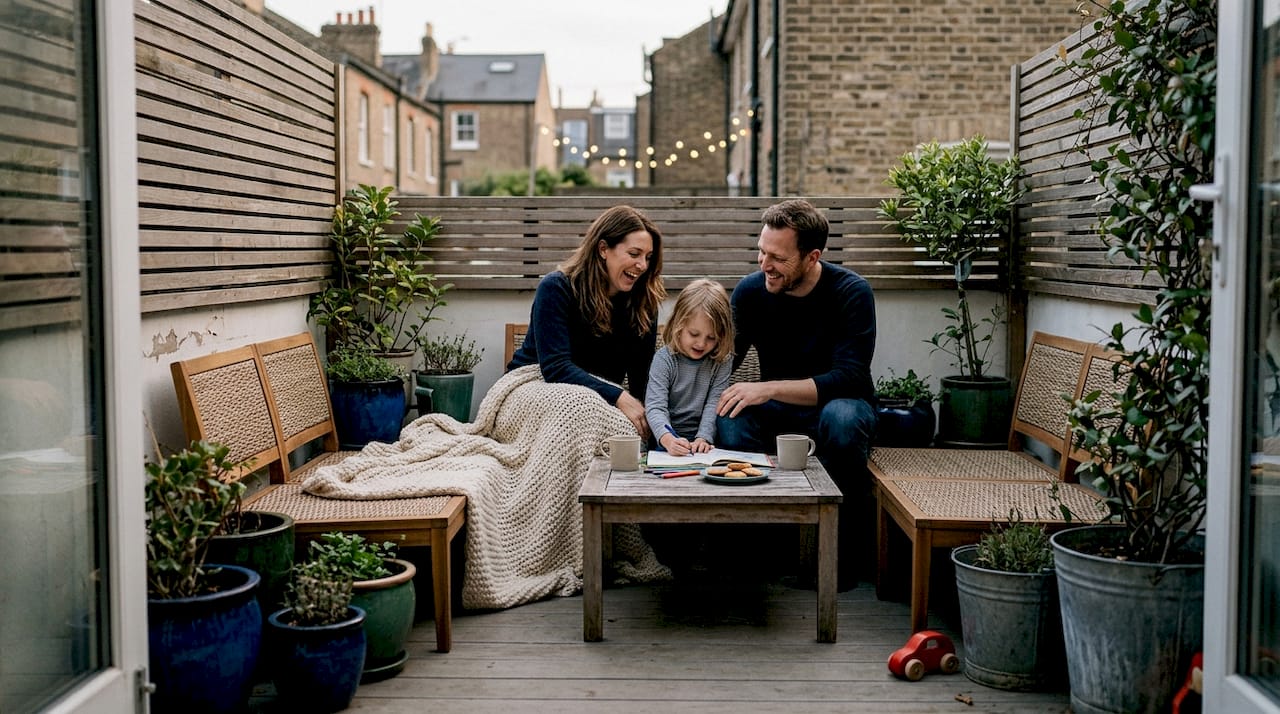
Layered materials and mixed textures are what give outdoor décor genuine depth, rather than the flat, showroom look that fades quickly. The key is to vary the weight and finish of your materials so that each layer adds something different.
Here are the core texture categories to consider:
- Hard surfaces: Stone, concrete, brick, or composite decking provide the base layer. These set the tone for everything above them.
- Natural fibres: Woven rugs, jute, or sisal add warmth underfoot and soften hard surfaces considerably.
- Soft furnishings: Outdoor cushions, throws, and bolsters introduce colour and tactile comfort. Choose weatherproof versions that can stay outside without fading.
- Organic elements: Planters, driftwood, and terracotta pots bring an irregular, natural quality that man-made materials alone cannot replicate.
| Material type | Best used for | Durability outdoors |
|---|---|---|
| Teak wood | Tables, benches, loungers | Excellent with oiling |
| Rattan or wicker | Chairs, side tables | Good in sheltered spots |
| Powder-coated steel | Frames, legs, accents | Excellent |
| Outdoor fabric | Cushions, throws, rugs | Good; store in winter |
| Terracotta | Planters, decorative pots | Moderate; frost risk |
Pro Tip: When you layer textures outdoors, follow the rule of three. Choose one dominant material, one secondary texture, and one accent. More than three competing textures can feel chaotic rather than curated.
Staggering furniture groupings also helps create depth and style rather than lining everything up against a wall. Pull seating away from the perimeter, angle a chair slightly, or place a side table at a diagonal. These small shifts make a space feel lived-in and intentional. The role of texture in outdoor design is often underestimated, but it is what separates a space that photographs well from one that genuinely feels good to be in. You can also layer textiles in the same way you would indoors, building up comfort and personality through thoughtful choices.
After establishing texture and depth, it is essential to plan zones that suit comfort and usability, making the space more inviting and functional.
Zoning and vignettes: Design for comfort and versatility
One of the most effective things you can do for an outdoor space is give each area a clear purpose. Without intention, even a generously sized garden can feel vague and uninviting. Zoning simply means identifying what you want to do in the space and arranging furniture and accessories to support those activities.
Using zoning increases relaxation and social outcomes for homeowners who spend time outdoors. When a space has a clear dining area, a separate lounging spot, and perhaps a quiet reading corner, people naturally use it more and feel more at ease within it.
Here is a step-by-step approach to zoning any outdoor space:
- List your primary activities. Dining, lounging, entertaining, gardening, and play are the most common. Prioritise two or three based on how you actually live.
- Map out your space. Sketch a rough plan, even on paper. Identify where natural shade falls, where the view is best, and where foot traffic naturally flows.
- Assign zones to areas. Place dining near the kitchen door for practicality. Position lounging where afternoon sun or shade falls. Tuck a quiet reading nook into a corner.
- Define each zone visually. An outdoor rug, a change in flooring material, or a low planter can all act as a boundary without needing walls or screens.
- Create vignettes within zones. A small side table, a lantern, and a potted plant grouped together form a vignette that makes the zone feel complete rather than sparse.
“The best outdoor spaces are not the largest ones. They are the ones where every corner has been thought about.” This idea applies equally to a rooftop terrace and a suburban patio.
| Space type | Recommended zones | Key furniture pieces |
|---|---|---|
| Small balcony | Lounging, container garden | Two chairs, side table, planter |
| Medium patio | Dining, lounging | Table set, sofa group, rug |
| Large garden | Dining, lounging, play, garden | Multiple seating groups, pergola |
For compact areas, decorating small spaces with focused, intentional groupings works far better than filling every corner. The tips for styling small spaces are surprisingly similar indoors and out: edit ruthlessly, choose dual-purpose pieces, and let negative space breathe. You can also apply the same logic used to optimise room layout indoors to your outdoor arrangement.
With smart zoning in place, adding finishing touches and seasonal accents can further elevate both style and usability.
Finishing touches: Accessories, lighting, and seasonal flair
Once your structure, textures, and zones are in place, accessories and lighting are what bring the space to life. This is the layer most people start with, which is why so many outdoor spaces feel like a collection of nice things rather than a coherent, inviting environment.
Grace Fuller Marroquin advises thinking about colour relationships across seasons when selecting accessories, so that swapping a few textiles or plants can shift the mood without requiring a complete overhaul. This is a practical and cost-effective approach that keeps your outdoor space feeling fresh year-round.
For accessories, keep these principles in mind:
- Weather resistance first. Every accessory you choose for a permanent outdoor position should be rated for outdoor use. Fading, rust, and mould are avoidable if you buy correctly from the start.
- Scale matters. Oversized planters and statement lanterns read well outdoors. Small accessories that work indoors often look lost in an open-air setting.
- Group in odd numbers. Three planters of varying heights, or a cluster of five candles, feel more natural than pairs or even rows.
- Edit seasonally. Keep a core set of permanent pieces and rotate cushion covers, throws, and plants with the seasons. Warm amber tones and evergreen foliage suit autumn and winter. Bright linens and flowering plants lift spring and summer.
Lighting is one of the most underused tools in outdoor styling. A well-lit garden or terrace extends usability well into the evening and creates atmosphere that no accessory can replicate. String lights overhead add warmth and define the space visually. Uplighting on trees or architectural features adds drama. Lanterns at ground level or on tables provide intimate, moveable light sources that work for both dining and relaxing.
Pro Tip: Solar-powered string lights have improved enormously in recent years. They are a low-effort, cost-free way to add evening ambience without running cables or increasing your electricity bill.
The step-by-step accessory styling approach applies outdoors just as it does inside. Start with the largest pieces, then work down to the smallest accents. Following a clear decorating workflow prevents the impulse-buying trap that leaves spaces feeling unfinished.
Having explored these essential tips, it is time to consider what most guides overlook in outdoor space styling today.
An expert perspective: Why comfort must come before style outdoors
Here is something most outdoor styling guides will not tell you directly: a beautiful space that is uncomfortable will not be used. Full stop. You can spend months curating the perfect palette and sourcing artisan planters, but if the seating is too low, the sun is blinding at 4pm, or there is nowhere to rest a drink, people will drift back inside within minutes.
Many homeowners prioritise durability, comfort, and usability over style when making outdoor purchase decisions. That instinct is correct. Shade, supportive seating, and weatherproof textiles are not compromises. They are the foundation on which everything else is built.
The conventional approach to outdoor styling tends to start with a mood board and work backwards. We think that is the wrong order. Start with how you want to feel in the space, then ask what physical conditions need to be met to feel that way, and only then consider how to make those conditions look beautiful. Knowing how to use textures in design to add warmth and softness is part of that comfort-first thinking. Style built atop genuine comfort lasts. Style layered over an unusable space is just decoration.
Shop stylish essentials for your outdoor space
If you are ready to put these ideas into practice, the right products make all the difference. At Homable, we have curated a range of outdoor-ready accessories, textiles, and decorative pieces that balance durability with genuine style.

From weather-resistant rugs and statement planters to lanterns and cushion covers designed for outdoor use, our collections are chosen with both comfort and aesthetics in mind. Browse our outdoor essentials to find pieces that complement your home’s character and suit your lifestyle. We also offer expert styling blogs to guide your decisions at every stage, and free shipping on all orders over £100, so transforming your outdoor space is both straightforward and affordable.
Frequently asked questions
What is the first step to styling an outdoor space?
Designers recommend starting with the architectural bones of the space and your home’s existing materials, then building all décor choices around those foundational elements.
How can I make a small balcony feel intentional and usable?
Focus on mini-vignettes and one or two clearly defined zones rather than scattering many separate items. Zoning and vignettes keep compact spaces purposeful and easy to use.
Are weatherproof fabrics important for outdoor styling?
Absolutely. Durable, weatherproof textiles provide the base for both comfort and style, and practicality and durability are consistently cited as the top priorities for lasting outdoor choices.
What percentage of people underutilise their outdoor spaces?
77% of consumers underuse their outdoor space, with only 23% reporting they use it as much as they would like, according to ICFA and Wakefield Research.
Recommended
- Modern Home Styling Steps for a Stunning Look – Homable
- 7 Practical Tips for Styling Small Spaces Stylishly – Homable
- Step by Step Home Accessory Styling for Modern Spaces – Homable
- 7 Essential Tips for Stylish Home Accessories – Homable
- 7 Essential Pool Deck Renovation Tips For Florida Homes
- Spring cleanup tips for Calgary homeowners to refresh yard