Cart
0

Choosing how to layer textures can leave even the most stylish British home feeling either warm and inviting or flat and uninspiring. The difference lies in understanding how surface qualities—like rough stone, smooth silk, and plush velvet—combine to create depth and emotional impact. By focusing on texture as a sensory experience, you gain tools for crafting interiors that look sophisticated and feel rich, all while maintaining a balanced and authentic atmosphere.
Table of Contents
- What Texture Means In Interior Design
- Texture Types And How They Interact
- Layering Techniques For Modern Spaces
- Benefits Of Layered Textures At Home
- Mistakes To Avoid When Layering Textures
Key Takeaways
| Point | Details |
|---|---|
| Understanding Texture | Texture influences the emotional and sensory experiences of a space, going beyond visual aesthetics. |
| Layering Techniques | Effective layering of textures creates depth and sophistication, enhancing personal character in interiors. |
| Common Mistakes | Avoid overcrowding and colour disharmony, as they can lead to chaotic and visually overwhelming designs. |
| Balanced Combinations | Strive for a mix of soft and hard surfaces for a harmonious visual narrative while layering textures. |
What Texture Means in Interior Design
Texture in interior design represents more than just a visual element - it’s a sensory experience that transforms spaces from flat and lifeless into dynamic, engaging environments. Texture introduces depth and emotional resonance through its complex interactions with light, materials, and human perception.
At its core, texture is the surface quality of an object that can be perceived through touch or visual understanding. It encompasses both tactile and visual characteristics, creating layers of complexity within a design scheme. Interior designers use texture to enhance aesthetic appeal by manipulating how different surfaces interact and communicate with one another.
Texture types can be broadly categorised into several key classifications:
- Visual Texture: Perceived through sight, creating an illusion of depth or surface quality
- Tactile Texture: Experienced through physical touch, providing genuine sensory information
- Natural Textures: Derived from organic materials like wood, stone, and fabrics
- Synthetic Textures: Manufactured surfaces with engineered visual and tactile properties
By understanding these texture variations, designers can craft spaces that feel intentional and emotionally resonant. Texture works silently yet powerfully, transforming ordinary rooms into extraordinary experiences that engage multiple senses simultaneously.
The following table summarises how visual and tactile textures contribute to interior design outcomes:
| Texture Type | Perception Mode | Effect on Atmosphere | Example Application |
|---|---|---|---|
| Visual Texture | Observed by sight | Creates depth and interest | Feature wallpaper |
| Tactile Texture | Felt by touch | Adds comfort and warmth | Velvet cushions or rugs |
| Natural Texture | Both sight and touch | Brings organic authenticity | Wooden beams or linen drapes |
| Synthetic Texture | Both sight and touch | Offers precision and variety | Polished metal or acrylic |
Texture is the language through which design communicates its authenticity and emotional depth.
Pro tip: When combining textures, aim for a balanced mix of soft and hard surfaces to create visual intrigue and prevent any single element from dominating the design narrative.
Texture Types and How They Interact
Interior design textures create sophisticated sensory experiences by blending different surface qualities and visual characteristics. Texture interactions transform living spaces from mundane environments into dynamic, emotionally engaging settings that stimulate multiple senses simultaneously.
Texture fundamentally exists in two primary categories: tactile texture and visual texture. Tactile textures are physically experienced through touch, revealing qualities like smoothness, roughness, softness, and hardness. Visual textures create perceptual depth through patterns, illusions, and optical interactions that suggest surface complexity without physical variation.
These texture types interact through several fascinating mechanisms:
- Contrast: Combining opposing textures like rough stone with smooth silk
- Layering: Introducing multiple texture scales and materials
- Complementarity: Pairing textures that enhance each other’s visual qualities
- Emotional Resonance: Creating sensory experiences that evoke specific feelings
Understanding texture interaction requires nuanced design consideration. Designers must balance texture elements to prevent overwhelming or underwhelming visual compositions, ensuring each surface contributes meaningfully to the overall aesthetic narrative.
Texture is not just seen or touched - it is experienced through a complex sensory dialogue.
Pro tip: Experiment with texture combinations by placing fabric swatches and material samples together, observing how they interact and complement each other before final design implementation.
Layering Techniques for Modern Spaces
Modern interior design embraces layering as a sophisticated strategy for creating depth, visual interest, and emotional resonance within living spaces. Layering techniques transform ordinary rooms by introducing complexity and nuanced sensory experiences that go far beyond simple decoration.
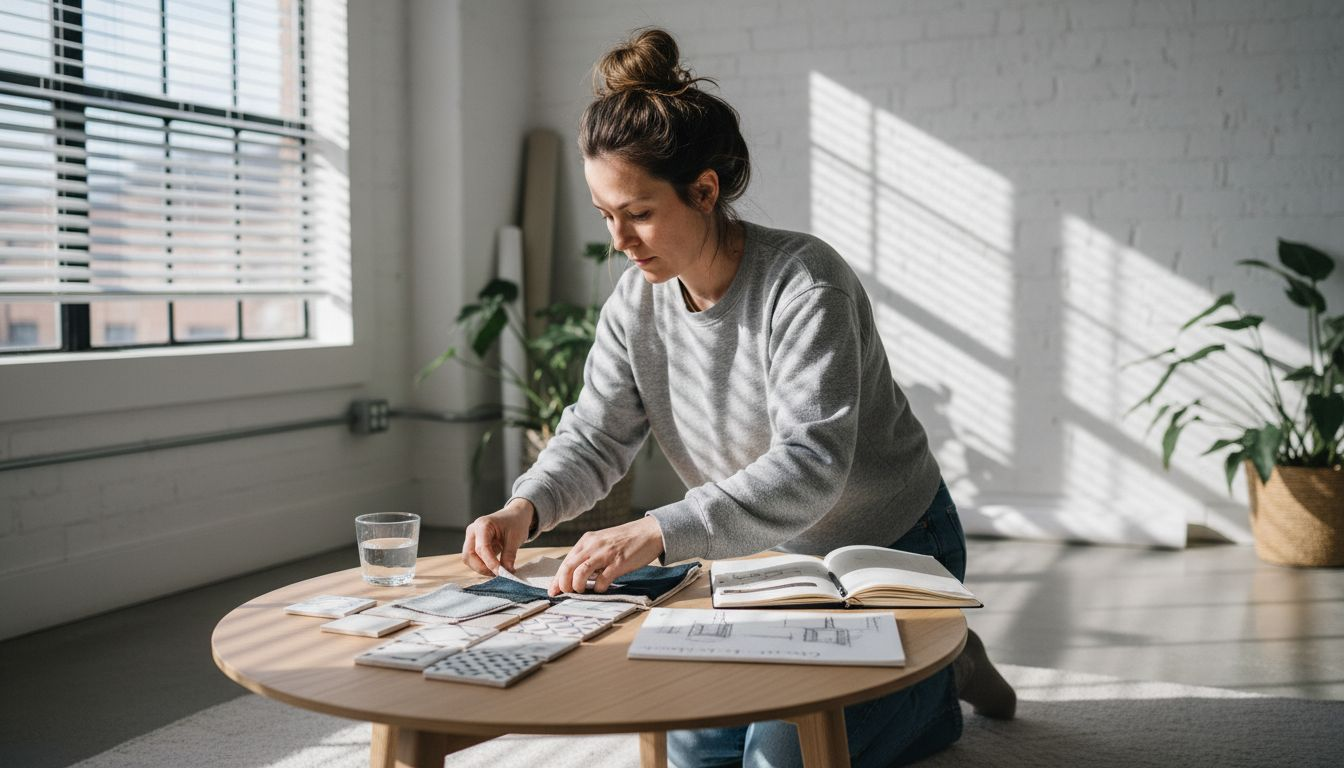
At its core, texture layering involves strategically combining different materials, surfaces, and visual elements to build a rich, multidimensional environment. Effective design balances scale and contrast by mixing textures that complement and challenge each other, creating visual rhythm and tactile intrigue.
Key layering strategies for modern interiors include:
- Foundational Neutrals: Using neutral large pieces as design anchors
- Textural Contrast: Pairing soft fabrics with hard surfaces
- Scale Variation: Introducing different pattern and texture sizes
- Colour Harmonisation: Maintaining a cohesive colour palette
- Accessory Integration: Thoughtfully curating decorative elements
Successful layering requires a delicate balance between complexity and coherence. Designers must carefully orchestrate visual elements to create spaces that feel intentional, sophisticated, and deeply personal.
Layering is an art of subtle conversation between materials, colours, and textures.
Pro tip: Start with a neutral base and gradually introduce textural elements, allowing each layer to build upon the previous one without overwhelming the overall design composition.
Benefits of Layered Textures at Home
Layered textures transform living spaces from ordinary environments into dynamic, emotionally rich experiences that engage multiple senses. Texture layering creates profound spatial experiences by introducing depth, complexity, and personal character to home interiors.
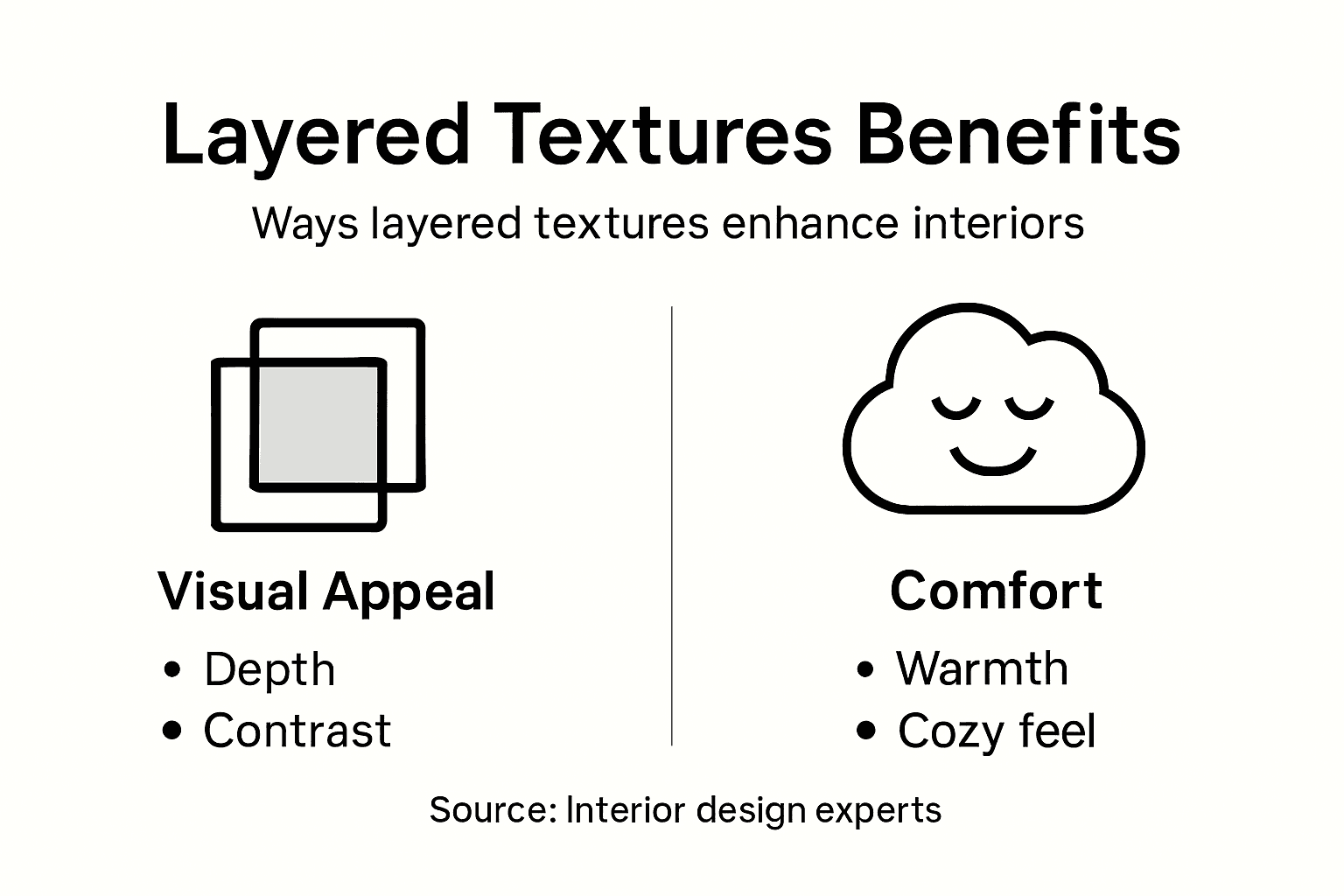
The psychological impact of textural layering extends far beyond aesthetic appeal. Thoughtful texture combinations enhance comfort and warmth by creating multi-sensory environments that feel simultaneously sophisticated and inviting. These nuanced design approaches allow homeowners to craft spaces that reflect personal style while promoting emotional well-being.
Key benefits of incorporating layered textures include:
- Emotional Depth: Creating spaces that feel lived-in and authentic
- Visual Interest: Breaking monotony through strategic texture variation
- Sensory Engagement: Inviting touch and tactile exploration
- Acoustic Comfort: Softening sound through textural elements
- Mood Enhancement: Introducing warmth and sophistication
Understanding texture layering requires more than visual consideration. It demands a holistic approach that balances materials, considers spatial relationships, and responds to individual emotional needs.
Texture transforms spaces from mere physical environments into narratives of personal experience.
Pro tip: Start your texture layering journey by collecting fabric swatches, material samples, and small decorative objects, experimenting with combinations that create intrigue and emotional resonance.
Mistakes to Avoid When Layering Textures
Texture layering is an intricate design technique that requires nuanced understanding and careful execution. Common layering mistakes can quickly derail interior aesthetics, transforming potentially elegant spaces into chaotic and visually overwhelming environments.
Understanding these potential pitfalls is crucial for creating harmonious interiors. Designers emphasise intentionality over volume when approaching texture combinations, recognising that thoughtful curation matters more than quantity.
Key mistakes to avoid when layering textures include:
- Overcrowding: Adding too many competing textures
- Colour Disharmony: Mixing incompatible colour palettes
- Scale Imbalance: Neglecting proportion and visual weight
- Random Accessorising: Placing decorative elements without strategic consideration
- Lighting Oversight: Failing to understand how light impacts texture perception
Successful texture layering demands a holistic approach that considers spatial dynamics, emotional resonance, and design cohesion. Each textural element should contribute meaningfully to the overall narrative of the space.
Below is a quick reference outlining common pitfalls and their impact when layering textures:
| Mistake | Why It Occurs | Result in Space |
|---|---|---|
| Overcrowding | Too many diverse textures | Cluttered or chaotic look |
| Colour disharmony | Incompatible palette choices | Visual discomfort |
| Scale imbalance | Ignoring size relationships | Awkward visual weight |
| Incoherent accessorising | Random object placement | Loss of design focus |
| Lighting oversight | Not considering light effects | Diminished texture impact |
Texture layering is an art of subtle dialogue, not a competition of competing elements.
Pro tip: Create a mood board with fabric swatches and material samples, arranging them together to assess how textures interact before making final design decisions.
Elevate Your Home with Layered Textures for Depth and Warmth
Layering textures is a powerful design technique that adds emotional depth and visual interest while transforming your living space into a warm and inviting retreat. Many struggle with balancing contrasting surfaces or creating a cohesive look that feels both sophisticated and comfortable. At Homable, we understand the challenge of mixing tactile and visual textures without overwhelming your interiors.
Discover our curated selection of stylish rugs, cushions, curtains, and home accessories designed to help you master the art of texture layering. Each piece is chosen to complement a variety of materials and finishes so you can build welcoming, sensory-rich spaces with confidence. Start creating a home that speaks your personal style and enjoy the benefits of layered textures today by exploring Homable.co.uk. Your next step to depth and warmth is just a click away.
Frequently Asked Questions
What are the main benefits of layering textures in interior design?
Layering textures adds emotional depth, visual interest, sensory engagement, acoustic comfort, and mood enhancement to living spaces. It transforms ordinary environments into dynamic experiences that reflect personal style.
How do I effectively combine different textures in my design?
Start with a neutral base and gradually introduce different textural elements. Aim for a balanced mix of soft and hard surfaces, consider scale variations, and ensure colour harmony to create a cohesive look.
What common mistakes should I avoid when layering textures?
Avoid overcrowding with too many competing textures, ensure your colour palette is harmonious, pay attention to scale balance, be strategic with accessories, and consider the impact of lighting on texture perception.
How does texture layering affect the overall mood of a space?
Effective texture layering creates a sophisticated atmosphere by introducing warmth and complexity. It enhances the emotional resonance of the space, making it feel more inviting and comfortable.