Cart
0

Every home has its own quirks, and finding the right balance between style and function starts with a thoughtful look at how you actually use your space. Whether your living room feels cluttered or your storage never quite fits your needs, understanding these everyday challenges is the foundation for affordable transformation. This guide shares practical ways to assess, plan, and enhance each room, helping you achieve a more organised and stylish home that reflects your personal taste. Strategic assessment and intentional planning set the stage for beautiful, lasting results.
Table of Contents
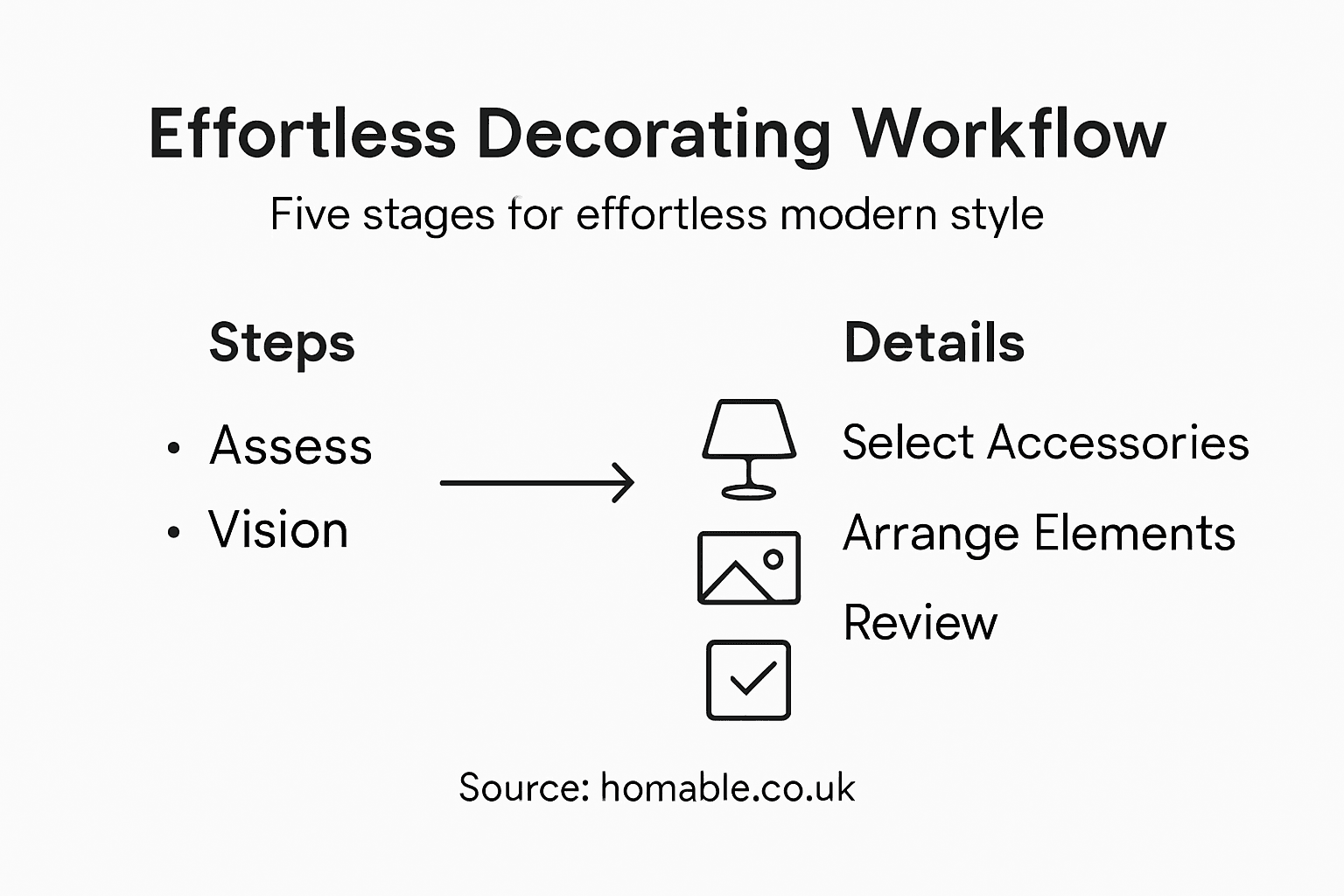
- Stage 1: Assess Your Space And Needs
- Stage 2: Define Your Modern Decor Vision
- Stage 3: Select Stylish And Functional Accessories
- Stage 4: Arrange Decor Elements For Cohesion
- Stage 5: Review And Refine Your Final Look
Quick Summary
| Essential Insight | Explanation |
|---|---|
| 1. Assess Your Space Thoroughly | Conduct a detailed walkthrough to identify functional gaps and design potential in each room. Document your findings for future reference. |
| 2. Create a Clear Decor Vision | Develop a mood board reflecting your personal style, ensuring it balances aesthetics with practicality to guide your decorating decisions. |
| 3. Choose Functional Accessories | Select accessories that enhance both the functionality and visual appeal of your rooms, prioritising pieces with multiple benefits. |
| 4. Arrange for Visual Cohesion | Group decor elements thoughtfully to create a harmonious flow. Vary heights and use odd-numbered clusters for visual interest. |
| 5. Review and Refine Your Design | Critically assess your space with fresh eyes, make necessary adjustments, and seek feedback to ensure a polished final look. |
Stage 1: Assess Your Space and Needs
Transforming your home begins with a strategic assessment of your current living environment. This crucial first step helps you understand exactly what you need to create a stylish and functional space that truly reflects your personal aesthetic.
Start by performing a comprehensive walkthrough of your home, viewing each room with fresh eyes. Whole house energy assessments recommend examining how you currently use each space and identifying areas that feel cluttered, inefficient, or uninspiring. Take photographs and make detailed notes about the room’s current layout, noting problematic zones where furniture placement feels awkward or storage seems inadequate. Consider how natural light flows, where furniture interrupts movement, and which areas feel underutilised.
Your assessment should focus on both practical functionality and aesthetic potential. Measure each room precisely and sketch a rough floor plan, marking dimensions and current furniture placement. Pay attention to traffic flow patterns and potential bottlenecks where movement feels restricted. Consider your lifestyle needs realistic storage requirements and how you actually inhabit each space rather than how you might idealise it. Look for opportunities to create multipurpose zones that maximise utility without compromising style.
Practical Advice: Photograph your rooms from multiple angles and review the images objectively to identify design opportunities you might miss during an in-person walkthrough.
Stage 2: Define Your Modern Decor Vision
Crafting a compelling modern decor vision transforms your home from a simple living space into a personalised sanctuary that reflects your unique style and personality. This stage involves distilling your design aspirations into a clear and actionable plan that will guide all your future decorating decisions.

Design process strategies emphasise the importance of establishing a comprehensive vision before making any specific choices. Begin by collecting visual inspiration from design magazines, Pinterest boards, Instagram accounts, and home decor websites. Create a mood board that captures your aesthetic preferences highlighting colours, textures, furniture styles, and overall atmosphere you want to achieve. Consider how different elements might interact and what emotional response you want your space to evoke.
Think deeply about your lifestyle and functional requirements alongside aesthetic desires. Modern decor is not just about looking good but creating spaces that work seamlessly with how you actually live. Consider factors like whether you need multipurpose areas, require storage solutions, or have specific comfort preferences. Your vision should balance visual appeal with practical functionality, ensuring that each design choice serves both an aesthetic and practical purpose.
Practical Advice: Use digital design tools or apps to visualise your decor concept before purchasing any items to help refine your vision and prevent costly mistakes.
Stage 3: Select Stylish and Functional Accessories
Accessorising your home is an art form that balances aesthetic appeal with practical utility. This stage transforms your space from merely decorated to truly personalised and purposeful, ensuring every item serves both visual and functional objectives.
Intentional design selection requires a thoughtful approach to choosing accessories that complement your existing decor vision. Begin by identifying key functional needs specific to each room. In the living room, this might mean selecting stylish storage solutions like decorative baskets or ottomans with hidden compartments. For the bedroom, consider bedside tables with integrated charging stations or artwork that doubles as acoustic sound absorption panels.
Prioritise accessories that enhance your space’s functionality while maintaining a cohesive aesthetic. Look for pieces that offer multiple benefits such as minimalist lighting fixtures with adjustable brightness, decorative mirrors that create visual depth and reflect natural light, or ceramic vases that provide storage and sculptural interest. Pay attention to scale and proportion ensuring accessories harmonise with existing furniture and do not overwhelm the space. Energy efficient accessories like smart thermostats or LED lighting can simultaneously improve your home’s aesthetic and reduce energy consumption.
Practical Advice: Photograph your accessories before purchasing and digitally place them in your room to assess their visual impact and functional fit.
The table below compares common home accessories by function and aesthetic impact:
| Accessory Type | Functional Benefit | Aesthetic Effect |
|---|---|---|
| Decorative baskets | Concealed storage | Texture and warmth |
| LED lighting | Energy efficiency | Modern ambience |
| Mirrors | Space maximisation | Light reflection |
| Multi-functional furniture | Space saving | Sleek simplicity |
Stage 4: Arrange Decor Elements for Cohesion
Creating a harmonious interior design requires more than simply collecting beautiful pieces. Your goal is to orchestrate a visual symphony where each element communicates and supports the others, transforming your space into a carefully curated environment that feels both intentional and effortless.
Cohesive design strategies rely on understanding the visual dialogue between different decor elements. Start by establishing a clear visual language through consistent colour palettes or repeated design motifs. This might mean selecting accessories that share similar tonal qualities or geometric shapes. For instance, if you have round ceramic vases in your living room, consider complementary round mirrors or circular wall art that echoes those curves. Pay attention to visual weight distribution ensuring larger pieces are balanced by smaller decorative elements to prevent any area from feeling overwhelmed.
Consider the flow and movement within your space as you arrange accessories. Strategic design placement involves creating invisible pathways that guide the eye naturally through the room. Group accessories in clusters of odd numbers three or five which create more dynamic and interesting arrangements than even numbered groupings. Vary the heights of your decor pieces to add visual interest and depth ensuring each item has breathing room to be appreciated individually while contributing to the overall composition.
Practical Advice: Use painter’s tape to outline potential furniture and accessory placements on your floor before physically moving items to visualise the spatial arrangement.
Stage 5: Review and Refine Your Final Look
The final stage of home decorating transforms your initial vision into a polished, personalised space that truly reflects your style and meets your functional needs. This critical review process ensures your design moves from good to exceptional by critically examining every design choice with an objective eye.
Design refinement techniques involve stepping back and assessing your space from multiple perspectives. Photograph your room from different angles and view these images critically. Look for areas where the colour palette feels disjointed, where accessories seem randomly placed, or where furniture arrangement interrupts natural movement. Compare your current setup against your original design vision asking yourself whether each element genuinely contributes to the overall aesthetic and functionality you initially envisioned.
Consider conducting a systematic design evaluation by temporarily removing some accessories to understand how each piece impacts the overall composition. This might reveal opportunities to streamline your design or highlight areas needing more visual balance. Pay attention to negative space just as much as the decorated areas ensuring your room feels breathable and intentional. Be prepared to make subtle adjustments such as rotating artwork, repositioning furniture, or replacing accessories that do not quite harmonise with the rest of the space.
Practical Advice: Invite a trusted friend with a keen eye for design to provide honest feedback about your space offering an external perspective you might have missed.
Here is a concise summary of the key actions required at each home decorating stage:
| Stage | Main Focus | Essential Action | Common Outcome |
|---|---|---|---|
| Assessment | Evaluate rooms and needs | Measure and document spaces | Identify functionality gaps |
| Vision | Define decor direction | Build a mood board | Clear style roadmap |
| Accessories | Choose functional items | Select purposeful accents | Enhanced utility and look |
| Cohesion | Arrange for harmony | Group, balance, repeat motifs | Visual flow and unity |
| Review | Refine final result | Adjust and seek feedback | Polished, personalised space |
Elevate Your Modern Home Decorating Journey with Homable.co.uk
Embarking on the modern home decorating workflow outlined in this article often highlights challenges like achieving cohesive design, selecting accessories that blend style with functionality, and refining a personalised space without overwhelm. If you seek stylish yet practical solutions to fill the gaps identified during your assessment or need to bring your clear decor vision to life, Homable.co.uk offers a curated collection tailored for modern home aesthetics. With products designed to enhance room functionality and visual appeal, you can effortlessly transform your space with confidence.
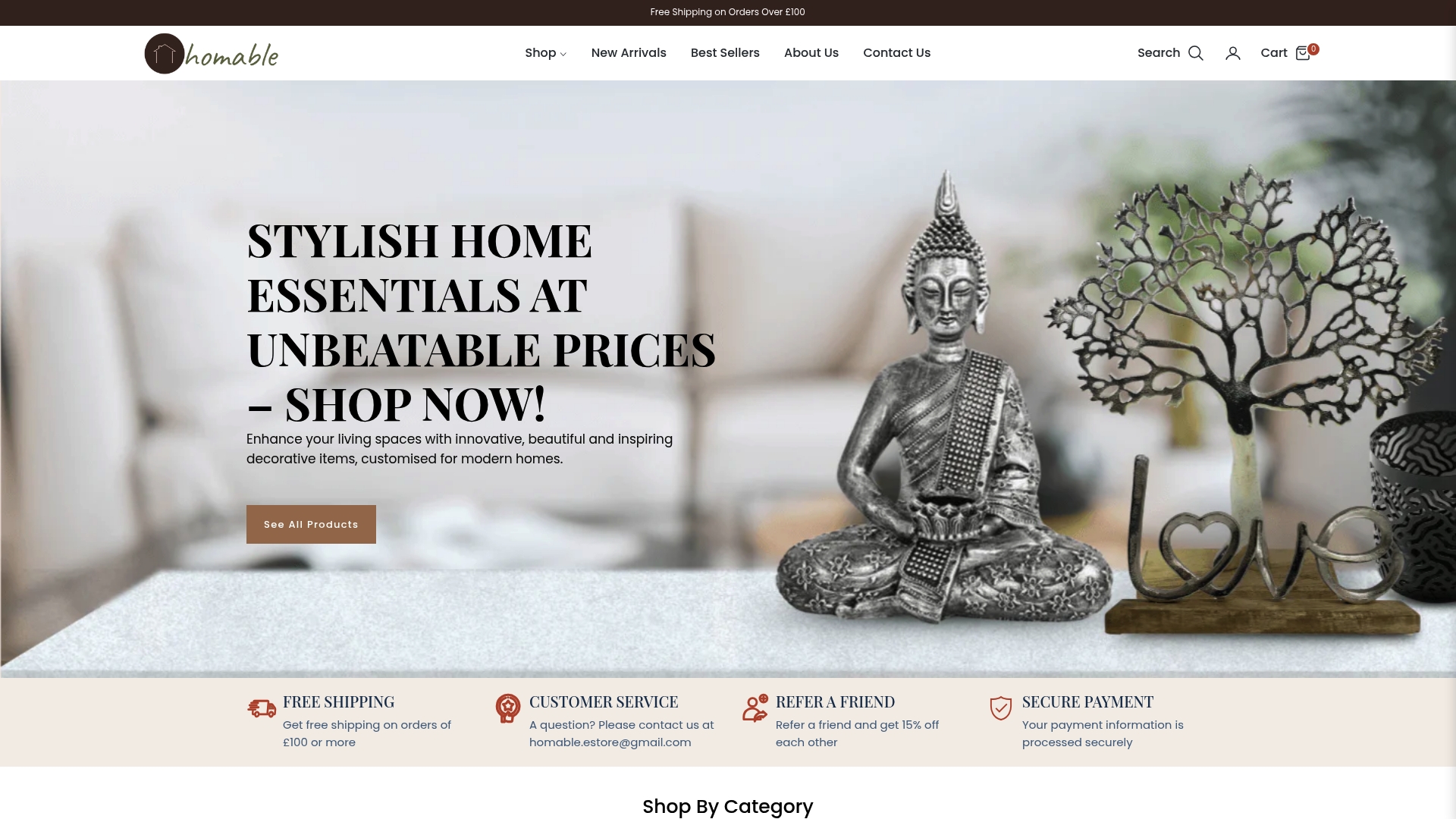
Discover our range of thoughtfully designed home accessories that help you create harmony through balance and purpose. Act now to access innovative, affordable decor items that support each stage of your decorating process. Visit Homable Home Decor and explore options that bring your modern decor vision to reality today. Start styling your sanctuary with ease at Homable.co.uk.
Frequently Asked Questions
What steps should I take to assess my home for modern decorating?
Start with a thorough walkthrough of each room, taking note of areas that feel cluttered or underutilised. Measure the rooms and sketch a rough floor plan, paying attention to traffic flow and functionality to identify any gaps in your space.
How do I create a modern decor vision that reflects my personal style?
Begin by collecting visual inspiration from various sources like design magazines and social media platforms. Create a mood board that showcases your preferred colours, textures, and furniture styles to define your design direction and guide your choices.
What types of accessories should I choose for both style and functionality?
Select accessories that serve a purpose while enhancing your decor, such as decorative baskets for storage or multi-functional furniture. Focus on pieces that blend into your aesthetic while meeting practical needs, ensuring everything contributes to the overall design.
How can I arrange decor elements to achieve a cohesive look?
Establish a consistent visual language using similar colour palettes and shapes across your decor pieces. Group accessories in odd numbers and vary their heights for a dynamic arrangement that fosters visual interest while maintaining balance.
What should I do during the final review of my decorated space?
Critically assess your space by photographing it from different angles to identify any disjointed elements or clutter. Make adjustments as needed, such as repositioning furniture or accessing feedback from a friend to refine your overall design and achieve a polished finish.
Recommended
- What Is Interior Styling and Its Impact on Homes – Homable
- Why Personalise Your Space – Boost Comfort and Expression – Homable
- Step by Step Home Accessory Styling for Modern Spaces – Homable
- Curated Home Decor: How Thoughtful Design Transforms Living Spaces – Homable
- Creating a Cozy Living Room: Personalization That Comforts – FunLifeNow