Cart
0
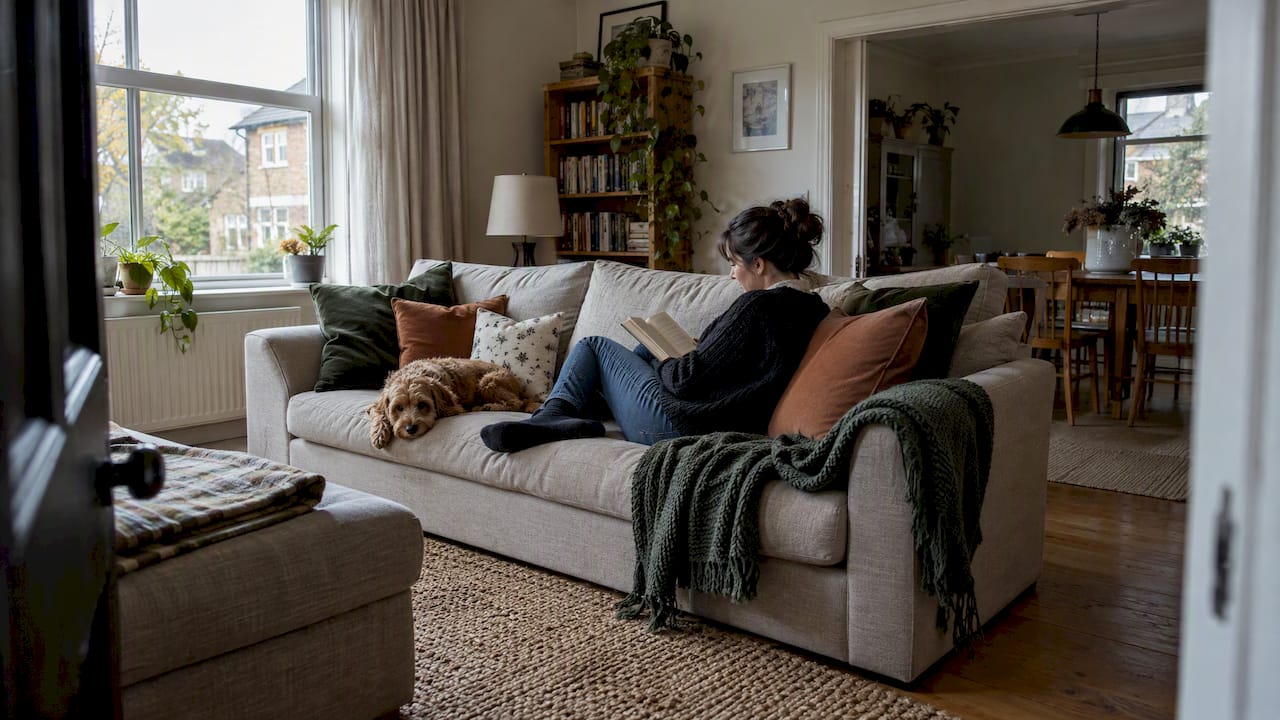
Many UK homeowners believe layering textiles means piling on fabrics until rooms feel cluttered and overwhelming. That misconception creates hesitation and confusion about how to achieve cozy, stylish interiors. Proper textile layering is actually a strategic balance of texture, color, and pattern that brings warmth, depth, and acoustic softness to your home. Understanding the role of texture in home styling and why layer textures in design empowers you to transform your space with confidence and clarity.
Table of Contents
- Introduction To Layering Textiles In Home Interiors
- Benefits Of Layering Textiles
- Material Selection For Effective Textile Layering
- Design Principles For Layering Textiles
- Common Misconceptions And Layering Mistakes
- Practical Applications And Seasonal Layering Advice
- Conclusion: Transforming Your Home With Layered Textiles
- Elevate Your Home Style With Homable’s Textile Collection
- Frequently Asked Questions About Layering Textiles
Key Takeaways
| Point | Details |
|---|---|
| Warmth and acoustic softness | Layering textiles adds up to 30% perceived warmth and reduces echo by 20%. |
| Natural materials suit UK climate | Wool, cotton, and sheepskin regulate temperature and add tactile contrast. |
| Balanced ratio avoids clutter | Use a 60-30-10 texture and color balance to maintain harmony. |
| Odd numbers create appeal | Grouping cushions in odd numbers increases visual appeal by 20%. |
| Seasonal adjustments sustain comfort | Swapping textiles seasonally improves thermal comfort by up to 15%. |
Introduction to Layering Textiles in Home Interiors
Layering textiles means combining different fabrics across your furniture, floors, and walls to create warmth, texture, and visual interest. You move beyond single throws or cushions to intentional, balanced arrangements that work together. This approach suits UK homes perfectly, addressing our damp, cool climate while adding depth and personality to rooms.
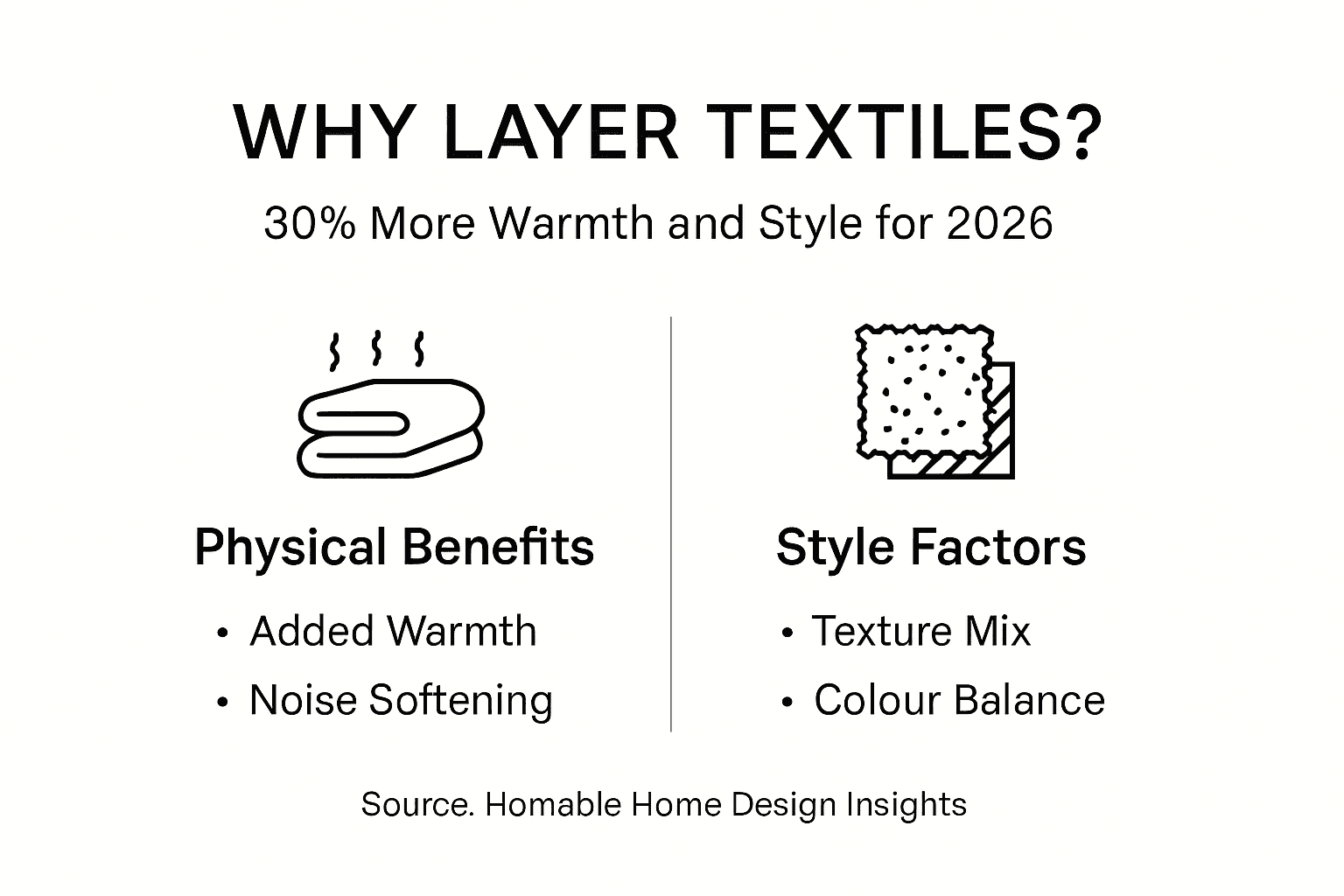
The core benefits include enhanced warmth, improved comfort, and richer style. Homes with layered textiles reported a 20-30% increase in perceived warmth by occupants during colder months. You also gain acoustic softness as fabrics absorb sound, creating quieter, calmer spaces. Layering provides a practical solution to cold floors and hard surfaces common in modern UK interiors.
Key reasons to layer textiles:
- Creates inviting, cozy atmospheres that feel lived in and welcoming
- Adds visual depth through contrasting textures and subtle pattern play
- Improves physical comfort by softening hard furniture and cold surfaces
- Balances diverse furniture styles into cohesive, harmonious rooms
- Offers flexibility to refresh your space seasonally without major renovations
Understanding this foundation helps you apply modern interior design workflow principles with confidence. You start seeing textiles as layered elements rather than isolated accessories, unlocking creative combinations that elevate your home’s warmth and character.
Benefits of Layering Textiles
Layering textiles delivers tangible physical and emotional benefits that transform how your home feels and functions. The warmth improvement alone justifies the effort, with layered fabrics trapping air and insulating rooms against UK’s chilly weather. This creates pockets of coziness that central heating alone cannot replicate.
Acoustic comfort represents another major advantage. Hard surfaces like wood floors, plaster walls, and glass windows bounce sound around, creating echo and harshness. Effective textile layering can reduce room echo by up to 15-20%, improving acoustic comfort significantly. Rugs, curtains, and upholstered pieces absorb sound waves, making conversations clearer and spaces more peaceful.
Visual balance emerges when you combine different textures and weights thoughtfully. Interiors featuring layered textiles score 15-25% higher on perceived cohesion and balance surveys. Mixing smooth linens with chunky knits or sleek leather with soft wool creates contrast that feels intentional rather than random. This harmony makes rooms look professionally styled without hiring a decorator.
Key benefits include:
- Enhanced warmth and thermal comfort during colder months
- Reduced echo and improved sound quality throughout your home
- Greater visual depth through texture and material contrast
- Increased perceived value and sophistication of your interiors
- Emotional warmth and psychological comfort from soft, tactile surfaces
Understanding the role of texture in home styling helps you prioritize which textiles to layer first. Focus on areas where you spend the most time, like living rooms and bedrooms, to maximize the comfort and style impact immediately.
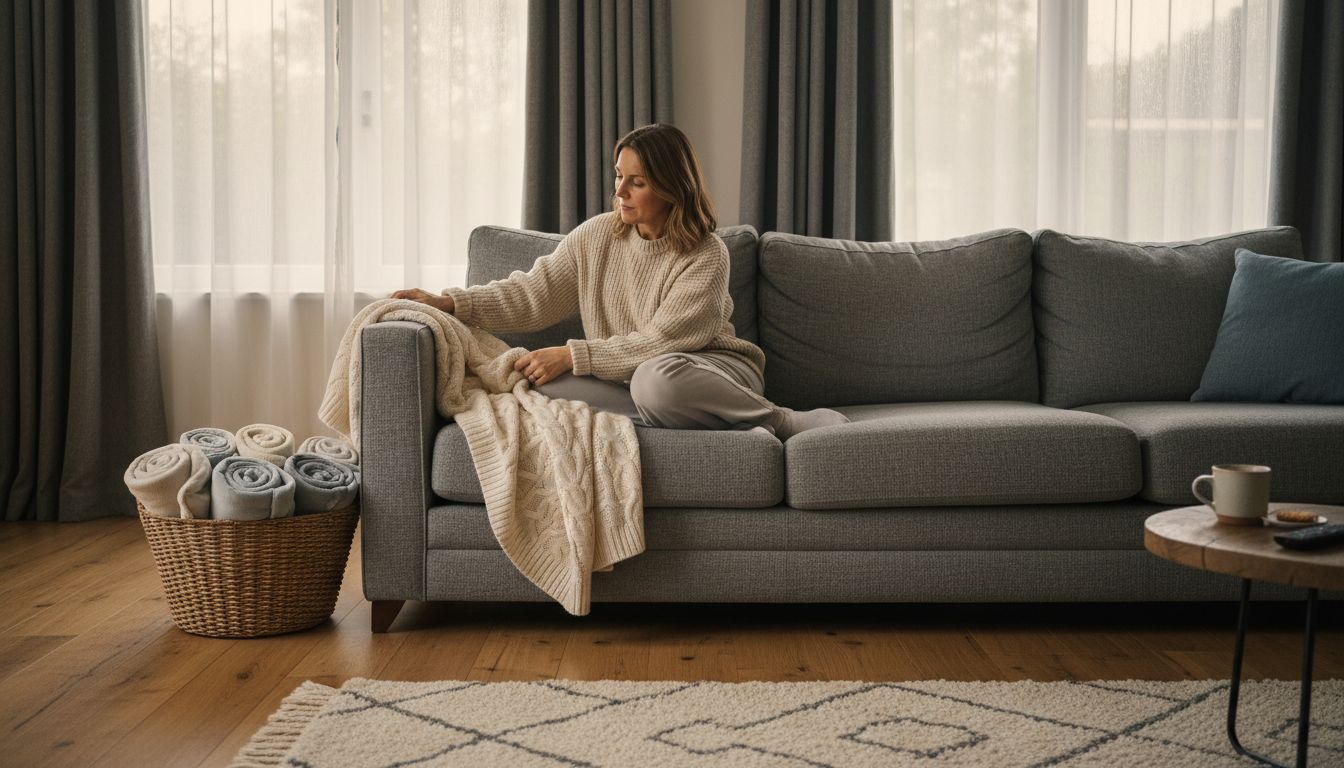
Material Selection for Effective Textile Layering
Choosing the right materials makes or breaks your layering success. Natural materials such as wool, cotton, and sheepskin regulate indoor temperature and add tactile contrast that synthetic fabrics struggle to match. These fibers breathe, wick moisture, and age gracefully, making them ideal for UK’s variable climate.
Wool excels at insulation and moisture management, perfect for throws and cushions in living areas. Cotton offers versatility and easy care, working well for lighter layers and seasonal swaps. Sheepskin brings luxurious softness and natural temperature regulation, elevating bedrooms and reading nooks. Linen provides crispness and cooling properties for warmer months.
| Material Type | Pros | Cons | Best Use |
|---|---|---|---|
| Natural fibers | Breathable, durable, tactile warmth, regulates temperature | Higher cost, requires specific care | Base layers, year round comfort |
| Synthetic blends | Affordable, easy care, stain resistant, consistent color | Less breathable, can feel flat, static buildup | Accent pieces, high traffic areas |
| Mixed weaves | Balanced performance, varied textures, cost effective | Variable quality, care complexity | Transitional layers, pattern mixing |
Texture impacts both how fabrics feel and how they catch light. Smooth surfaces like silk or sateen reflect light, creating sheen and elegance. Rough textures like boucle or jute absorb light, adding depth and grounding weight. Mixing these contrasts creates dynamic interiors that shift throughout the day.
Heritage knit patterns add emotional and visual warmth, connecting homes to cultural memory and craftsmanship. Traditional Fair Isle, Aran, or cable knits bring storytelling elements that mass produced textiles cannot replicate. These patterns work especially well in transitional spaces where you want character without overwhelming color.
Key material considerations:
- Prioritize natural fibers for base layers that touch skin frequently
- Mix fiber types to balance cost, care requirements, and performance
- Choose heavier weaves for winter, lighter weaves for summer transitions
- Test fabric drape and hand feel before committing to large purchases
- Consider colorfastness and fade resistance for sun exposed areas
Pro Tip: Before buying textiles, rub samples between your fingers to assess breathability and softness. Quality fabrics feel substantial without stiffness, and natural fibers warm quickly under your touch. Check care labels to ensure maintenance fits your lifestyle, as stylish home accessories should enhance comfort, not create chores.
Design Principles for Layering Textiles
Effective layering follows specific design principles that prevent clutter while maximizing style impact. Texture often has more impact than color, with a 60-30-10 texture balance creating visual interest that feels intentional. Apply 60% smooth or base textures, 30% medium textures, and 10% accent or statement textures to maintain harmony.
This ratio works for colors too. Choose a dominant neutral or base color for 60% of textiles, a complementary color for 30%, and a bold accent for the remaining 10%. This prevents visual chaos while giving you creative freedom. Neutrals like grey, beige, or cream provide grounding, while accent colors inject personality without overwhelming.
Odd number grouping of pillows and cushions increases visual appeal by 20% compared to even numbers. Three or five cushions look more organic and less rigid than two or four. This principle extends to throws, rugs, and decorative objects. Our brains process odd numbers as more natural and less forced.
Pattern mixing requires discipline. Limit patterns to two or three within a cohesive color palette to avoid competing focal points. Use one large scale pattern as the anchor, one medium scale for transition, and one small scale for detail. Stripes, florals, and geometrics can coexist if they share common colors or visual weight.
Key design principles:
- Base layers should be largest and most neutral, like rugs or curtains
- Middle layers add texture contrast, such as throws or upholstery
- Accent layers provide color pops and pattern interest through cushions
- Maintain visual breathing room by leaving some surfaces unadorned
- Repeat textures or colors across the room to create cohesion
Understanding the role of colour in design helps you select textiles that work together rather than fight for attention. Start with one hero textile you love, then build around it by pulling accent colors and complementary textures from that piece.
Pro Tip: Before purchasing new textiles, lay out your existing pieces and take a photo. Assess whether you need more smooth textures, rough textures, or color balance. This prevents impulse buys that disrupt your layering harmony and ensures each addition serves a clear purpose.
Common Misconceptions and Layering Mistakes
Many homeowners assume effective layering means adding as many textiles as possible until every surface is covered. This creates clutter and visual fatigue rather than cozy sophistication. Layering too many textiles and patterns can clutter a space; effective layering involves 60% base, 30% complementary, 10% accent colors or textures to maintain balance.
Another mistake involves mixing too many conflicting patterns without a unifying element. Three bold patterns in different color families create chaos, not character. Success comes from limiting patterns and ensuring they share at least two common colors or similar visual weight. This creates conversation between pieces rather than competition.
Some believe layering is not just for cold climates; seasonal adjustments keep style and comfort year round. Failing to swap textiles seasonally leaves homes feeling stuffy in summer or cold in winter. Lightweight linens and cottons replace heavy wools as temperatures rise, maintaining comfort without sacrificing layered style.
Common failure points and corrections:
- Overloading surfaces with too many cushions makes seating uncomfortable and unusable
- Ignoring scale leads to tiny cushions on large sofas or oversized throws on small chairs
- Skipping base layers means accent pieces lack grounding and float visually
- Using only one texture type, even in varied colors, feels flat and monotonous
- Neglecting negative space creates visual clutter that undermines cozy intentions
“Effective textile layering is not about quantity but strategic placement and balance. Each piece should serve a functional or visual purpose, creating harmony rather than competing for attention.” Interior design principles emphasize restraint and intentionality over excess.
Following a home decorating checklist helps you avoid these pitfalls by establishing a clear plan before adding textiles. Start with foundational pieces like rugs and curtains, then build layers systematically rather than randomly accumulating accessories.
Practical Applications and Seasonal Layering Advice
Translating textile layering knowledge into action requires room specific strategies and seasonal adjustments suited to UK’s climate. Adjusting textiles seasonally improves thermal comfort by up to 15% while maintaining aesthetic appeal throughout the year.
For living rooms, start with a large area rug as your base layer. Add a sofa throw in complementary texture, then layer cushions in odd numbers using the 60-30-10 color rule. Include one statement cushion with pattern or bold color as your 10% accent. Rotate throws and cushions seasonally, swapping wool for linen as weather warms.
Bedrooms benefit from layered bedding that adjusts easily. Begin with quality cotton sheets, add a lightweight blanket, then finish with a duvet or coverlet. Place a throw at the foot of the bed for extra warmth and visual interest. Swap heavy duvets for lighter quilts in summer, maintaining the layered look without excess heat.
| Season | Recommended Textiles | Key Benefits |
|---|---|---|
| Winter | Wool throws, velvet cushions, sheepskin rugs, flannel | Maximum warmth, rich textures, cozy ambiance |
| Spring | Cotton blends, light knits, linen accents | Transitional comfort, fresh feel, easy care |
| Summer | Linen throws, cotton cushions, jute rugs | Breathability, cooling effect, relaxed style |
| Autumn | Medium weight wool, corduroy, mixed weaves | Moderate warmth, textural depth, earthy tones |
Dining rooms often get overlooked but benefit from layered table linens and chair cushions. Use placemats over a table runner for special occasions, or layer a throw over dining chair backs to soften hard seating. These small touches add warmth without interfering with function.
Step by step room layering process:
- Assess your base elements like flooring, wall color, and existing furniture
- Add foundational textiles such as rugs, curtains, or large upholstered pieces
- Introduce middle layer textures through throws, smaller cushions, or blankets
- Place accent textiles strategically using the 60-30-10 rule for balance
- Step back and evaluate, removing anything that feels excessive or out of place
Key room specific strategies:
- Living rooms need durable, high traffic textiles that withstand daily use
- Bedrooms prioritize soft, breathable fabrics for comfort and sleep quality
- Dining areas require easy clean textiles that handle spills gracefully
- Entryways benefit from hardy, textured rugs that welcome without showing wear
- Home offices need acoustic textiles like curtains or rugs to reduce echo during calls
Pro Tip: Refresh your layering by rotating accessories seasonally rather than buying entirely new sets. Store winter wools during summer and summer linens during winter. This approach sustains visual interest, reduces cost, and keeps your home feeling current. Follow bedroom styling tips and stylish home accessories tips for room specific guidance, and use a home decorating checklist to track your progress systematically.
Conclusion: Transforming Your Home with Layered Textiles
Layering textiles is a strategic, accessible way to enhance warmth, style, and comfort in your UK home. You now understand how to balance textures, colors, and materials using the 60-30-10 rule and odd number groupings. Seasonal adjustments keep your space comfortable year round, while avoiding common mistakes ensures your efforts create harmony rather than clutter.
The principles covered empower you to experiment confidently with throws, cushions, rugs, and linens. Start small with one room, applying the step by step process to build layers that feel intentional and inviting. Each textile you add should serve a clear purpose, contributing to your home’s overall aesthetic and functional comfort.
Personalize your approach by choosing materials and patterns that reflect your taste and lifestyle. Natural fibers suit UK’s climate beautifully, offering durability and timeless appeal. Homable.co.uk provides quality textiles and accessories designed to layer seamlessly, supporting your styling journey with products that balance innovation, affordability, and modern aesthetics. Transform your interiors today by applying these layering techniques with confidence and creativity.
Elevate Your Home Style with Homable’s Textile Collection
Ready to bring layered textile warmth and style into your home? Homable.co.uk offers a curated collection of throws, cushions, rugs, and linens designed specifically for UK homes seeking modern, functional elegance. Our products feature natural materials and versatile designs that layer beautifully, whether you’re refreshing a living room or creating a cozy bedroom retreat.

Explore quality textiles that balance texture, color, and durability to suit your lifestyle. From heritage inspired knits to contemporary linens, each piece supports effective layering principles covered in this guide. Our collection emphasizes UK climate suitability, ensuring comfort across seasons without sacrificing style.
Discover practical styling guidance through our modern home styling steps guide and stylish home accessories tips for layering. Stay current with trends by exploring our best home decor items 2026 selection, designed to complement your layered textile approach.
Frequently Asked Questions About Layering Textiles
What is the best way to start layering textiles in my home?
Begin with a large foundational piece like an area rug or curtains to anchor your space. Add a throw to your sofa or bed, then introduce cushions in odd numbers using complementary textures and the 60-30-10 color rule for balance.
How can I mix patterns without making the room look chaotic?
Limit patterns to two or three within a cohesive color palette, using one large scale pattern, one medium, and one small. Ensure patterns share at least two common colors and vary visual weight to create conversation rather than competition.
Which textiles work best for UK winters and summers?
Winter calls for wool throws, velvet cushions, and sheepskin rugs for maximum warmth and texture. Summer benefits from linen throws, cotton cushions, and jute rugs that offer breathability and cooling without sacrificing layered style.
How many textile pieces should I layer for optimal effect?
Use the 60-30-10 ratio for balance, focusing on three to five layered elements per space. Start with one base layer like a rug, add one or two middle layers such as throws, then finish with two to three accent cushions or small textiles.
Can layering textiles improve my room’s acoustics?
Yes, textiles absorb sound waves and reduce echo by up to 20%, making conversations clearer and spaces more peaceful. Rugs, curtains, and upholstered pieces work especially well for improving acoustic comfort in rooms with hard surfaces. Apply bedroom styling tips to maximize both comfort and sound quality in sleeping spaces.