Cart
0
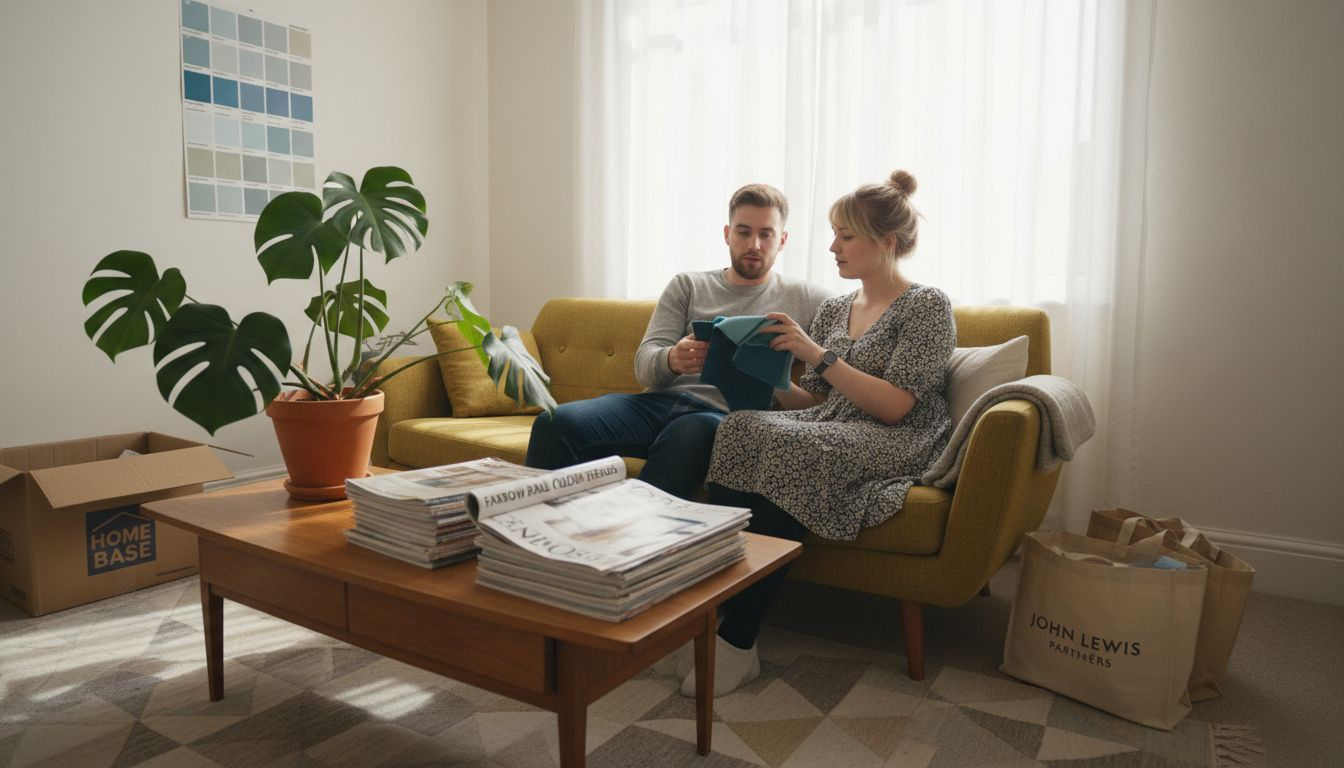
63% of UK homeowners’ decisions on home accessories are shaped by current styling trends. This statistic highlights just how powerfully trends influence what we choose for our homes. Yet many homeowners struggle to navigate the endless stream of new styles, unsure whether to follow every trend or ignore them entirely. This guide cuts through confusion, showing you how to leverage trends affordably while staying true to your personal style. You’ll discover practical methods to integrate trends that elevate your space without breaking the bank.
Table of Contents
- Understanding Home Styling Trends
- How Trends Affect Consumer Behavior and Style Choices
- Common Misconceptions About Home Styling Trends
- Framework for Selecting and Integrating Trends
- Sustainability and Ethical Considerations in Trend Driven Accessories
- Role of Digital Platforms in Shaping Home Styling Trends
- Practical Examples of Trend Adoption in UK Homes
- Bridging Trends and Personal Style for Lasting Satisfaction
- Explore Stylish, Trend Aligned Accessories for Your Home
- Frequently Asked Questions About Trends in Home Styling
Key Takeaways
| Point | Details |
|---|---|
| Trend influence | Trends shape 63% of UK home accessory purchases among homeowners. |
| Selective adoption | Choosing trends thoughtfully boosts satisfaction by 35% and reduces waste. |
| Sustainability growth | Demand for sustainable accessories has risen 40% in the UK market. |
| Digital acceleration | Social media speeds trend spread 50% faster among homeowners aged 25 to 40. |
| Decision framework | Evaluate trends using longevity, compatibility, and budget criteria. |
Understanding Home Styling Trends
Home styling trends represent aesthetic directions that gain widespread popularity across residential interiors. These patterns emerge from cultural shifts, design innovations, and social influences that collectively shape what feels modern and appealing. A trend might involve colour palettes, material choices, furniture styles, or accessory types that resonate with homeowners during a particular period.
Trends develop through multiple channels. Design professionals introduce innovations at trade shows and through publications. Influencers and social media amplify these ideas, making them accessible to millions. Cultural moments, such as sustainability movements or wellness priorities, also drive trend emergence. When enough homeowners adopt similar styles, a trend solidifies and becomes recognizable across UK homes.
Several factors accelerate trend adoption. Media coverage creates awareness, while celebrity homes and television shows provide visual inspiration. The accessibility of affordable accessories allows quick implementation. Social validation through platforms like Instagram and Pinterest reinforces choices, creating momentum. Design trends in 2026 reflect these dynamics, showing how cultural and technological forces shape interior preferences.
Common sources fueling home styling trends include:
- Design magazines and online publications featuring curated interiors
- Social media influencers showcasing their styled spaces and purchases
- Retail displays and seasonal collections from home decor brands
- Cultural movements emphasizing values like sustainability or minimalism
- Television programmes and streaming content depicting aspirational homes
Understanding these mechanisms helps you recognize which trends align with your values versus which simply create noise. A home decorating checklist can structure your approach, ensuring trends serve your goals rather than dictate them.
How Trends Affect Consumer Behavior and Style Choices
Trends exert significant psychological influence on homeowners’ purchasing decisions. 63% of UK homeowners report trends significantly affect their purchase behavior, demonstrating their powerful role in shaping what we buy and display. This influence stems from several psychological drivers.
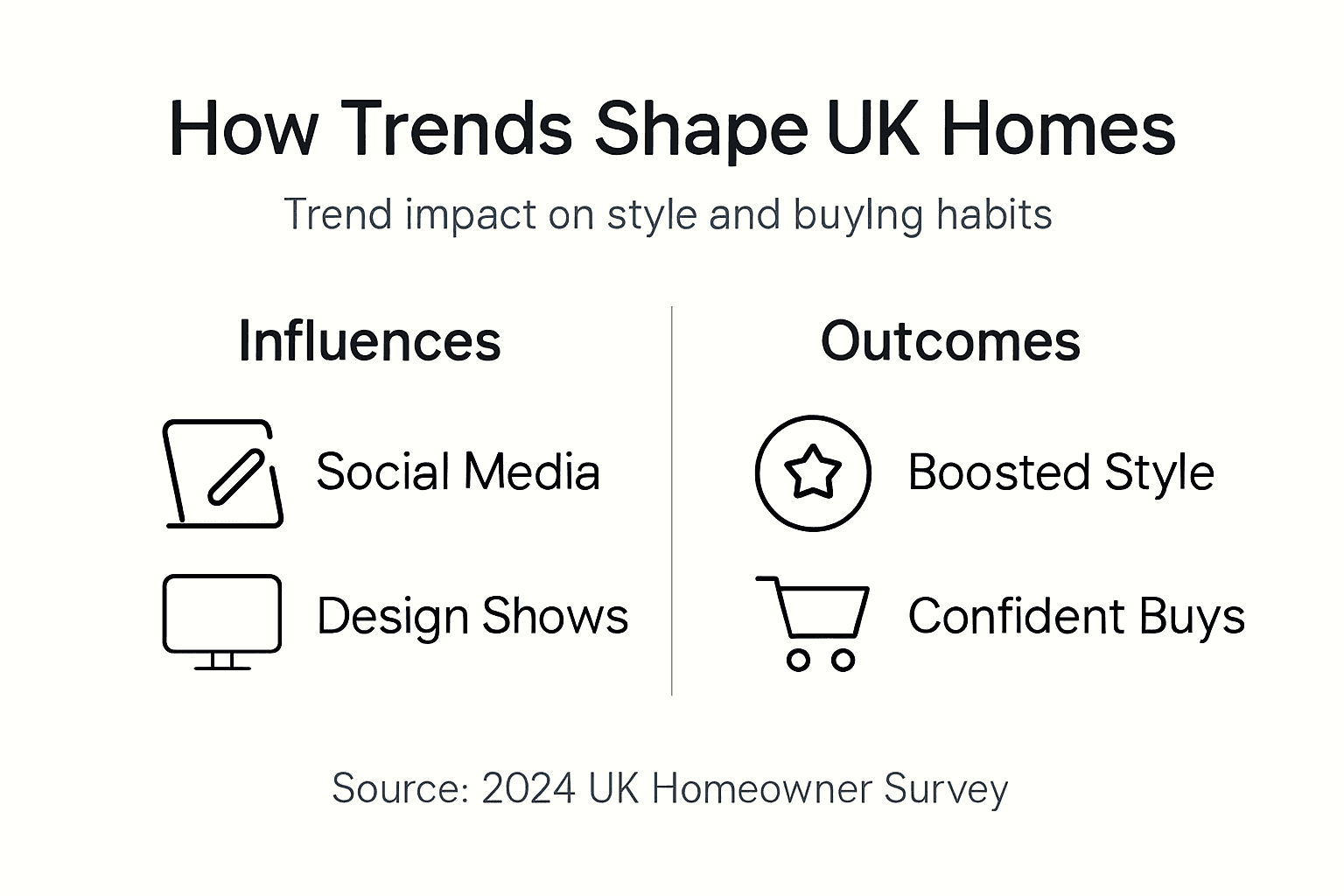
Social signaling plays a major role. Displaying trendy accessories communicates that you’re current, tasteful, and engaged with contemporary culture. This social validation satisfies fundamental human needs for belonging and status. When friends compliment a new mirror or cushion set, it reinforces the choice and encourages further trend adoption.
Trends also affect perceived home value. Spaces incorporating current styles often feel fresher and more desirable, whether for personal satisfaction or resale considerations. This perception can motivate updates even when existing decor remains functional. The emotional reward of a refreshed space drives repeated engagement with new trends.
Key behavioral impacts include:
- Increased willingness to replace functional items simply for aesthetic updates
- Higher spending on accessories when they align with trending styles
- Greater attention to design details and coordination across rooms
- More frequent browsing of home decor content and retail sites
- Stronger emotional responses to spaces perceived as on trend versus outdated
Pro Tip: Balance trend adoption with personal preference by selecting one or two trending elements per room while keeping foundational pieces neutral and timeless. This approach prevents your home from feeling like a showroom while still enjoying fresh, contemporary touches.
The influence of trends on purchase behavior extends beyond simple aesthetics. Homeowners often experience satisfaction when their spaces reflect current sensibilities, creating environments that feel aligned with their self image. Understanding the role of colour in design reveals how even small trend driven choices can transform mood and perception.
Common Misconceptions About Home Styling Trends
Several myths about home styling trends lead homeowners into costly mistakes or styling paralysis. Clearing these misconceptions helps you engage with trends confidently and selectively.
-
Myth: You must follow every trend to maintain a stylish home. Reality: Selective adoption of trends based on personal style and budget increases satisfaction by 35% compared to exhaustive trend chasing. Discerning homeowners choose trends that genuinely resonate, creating spaces that feel authentic rather than formulaic.
-
Myth: Implementing trends always requires substantial financial investment. Reality: Many trending styles can be adopted affordably through strategic accessory updates, DIY projects, or budget friendly retailers. Small changes like new cushion covers, updated lighting, or rearranged decor can capture a trend’s essence without major expenditure.
-
Myth: Following trends means sacrificing personal style and individuality. Reality: The most successful interiors blend trending elements with personal touches, creating unique spaces that feel both current and authentic. Trends should enhance your existing style, not erase it.
-
Myth: Trends change so rapidly that investment is wasted. Reality: Understanding trend longevity helps identify lasting styles versus fleeting fads. Classic trends like natural materials or warm neutrals persist for years, while hyper specific patterns may fade quickly.
Pro Tip: Embrace DIY approaches and upcycling to adopt trends affordably. Painting existing furniture, updating hardware, or creating custom art allows trend participation without purchasing entirely new pieces. This method saves money while expressing creativity.
Recognizing these common misconceptions about trends empowers smarter decisions. Instead of feeling pressured to constantly update everything, you can selectively integrate trends that genuinely improve your space. This balanced approach maintains style relevance without financial strain or loss of personal identity.
Framework for Selecting and Integrating Trends
Navigating the abundance of home styling trends requires a clear decision framework. Evaluating trends through three key criteria ensures choices align with your lifestyle, budget, and long term satisfaction.
Trend longevity asks: Will this style remain appealing for several years or fade within months? Durable trends like natural textures or quality craftsmanship offer better value than hyper specific patterns. Longevity protects your investment and reduces styling fatigue.
Style compatibility examines: Does this trend harmonize with my existing decor and personal aesthetic? Forcing incompatible trends creates visual discord. Successful integration feels natural, enhancing rather than clashing with your current space.
Budget feasibility considers: Can I adopt this trend within my financial comfort zone? Affordable implementation through accessories, DIY, or phased updates makes trends accessible without overspending. This trend selection framework prevents regrettable purchases.
| Approach | Satisfaction | Cost | Style Coherence |
|---|---|---|---|
| Selective trend adoption | High (35% boost) | Moderate | Strong personal identity |
| Exhaustive trend following | Variable | High | Risk of showroom feel |
| Ignoring all trends | Moderate | Low | May feel dated |
| No strategy | Low | Variable | Inconsistent aesthetic |
Applying this framework involves specific steps:
- Research emerging trends through design publications and social media
- Assess each trend against longevity, compatibility, and budget criteria
- Identify small scale implementations like accessories or textiles
- Test trends in limited areas before broader commitment
- Review results after several weeks to confirm satisfaction
Incremental integration prevents overwhelming changes. Start with affordable accessories like cushions, throws, or decorative objects that reflect trending colours or materials. If the trend proves satisfying, expand to larger elements. This phased approach minimizes risk while keeping your space dynamic and current.
Sustainability and Ethical Considerations in Trend Driven Accessories
Sustainability has become a defining trend itself, reshaping which home accessories UK homeowners choose. 40% increase in demand for sustainable home styling accessories in the UK reflects growing awareness of environmental and ethical impacts. This shift aligns affordability with responsibility.
Sustainable accessories offer multiple advantages. Durable materials and quality construction mean items last longer, reducing replacement frequency and overall spending. Ethically manufactured products support fair labor practices, appealing to socially conscious homeowners. Many sustainable options now match or undercut conventional alternatives in price, making responsible choices accessible.
Current trending sustainable accessories include:
- Natural fiber textiles like organic cotton, linen, or jute in cushions and throws
- Reclaimed wood decorative items and storage solutions
- Ceramic and glass pieces from local artisans using eco friendly processes
- Vintage or secondhand accessories offering unique character and reduced waste
- Multi functional designs that maximize utility and minimize clutter
Integrating sustainability doesn’t require sacrificing style. Many trending aesthetics, such as natural minimalism or biophilic design, inherently prioritize sustainable materials. This convergence makes ethical choices feel current rather than compromising.
The benefits extend beyond environmental impact. Sustainable accessories often feature timeless designs that transcend fleeting trends, offering longer style relevance. Quality craftsmanship delivers superior aesthetics and durability. Supporting ethical manufacturing creates positive social impact while curating a home that reflects your values.
Balancing sustainability with trend participation means selecting trending styles executed through responsible materials and production. Look for sustainable home accessories that capture current aesthetics while meeting environmental and ethical standards. This approach keeps your space stylish and aligned with modern values.
Role of Digital Platforms in Shaping Home Styling Trends
Social media has fundamentally transformed how home styling trends emerge and spread. Social media accelerates trend diffusion 50% faster among UK homeowners aged 25 to 40 compared to traditional channels. This acceleration creates both opportunities and challenges for homeowners navigating style choices.
Platforms like Instagram, Pinterest, and TikTok function as visual trend engines. Influencers showcase styled spaces, retailers promote new collections, and homeowners share their own projects, creating constant inspiration streams. Algorithms amplify popular aesthetics, rapidly building momentum around specific styles, colours, or accessories.
Popular digital trend sources include:
- Interior design influencers with curated feeds showcasing aspirational spaces
- Home decor retailers using social commerce to highlight new products
- DIY and upcycling accounts demonstrating accessible trend implementation
- Hashtag communities aggregating specific styles or room types
- Video tutorials providing step by step styling guidance
This digital acceleration carries risks. Trends can feel overwhelming in their volume and pace. The pressure to constantly update may lead to impulsive purchases or styling fatigue. Images often present idealized spaces, creating unrealistic expectations about what’s achievable or necessary.
Staying selective requires conscious digital consumption. Follow accounts aligned with your actual style and budget rather than aspirational extremes. Recognize that social media showcases curated highlights, not daily reality. Use platforms for inspiration rather than prescriptive instruction.
The impact of social media on trends means homeowners must develop filtering skills. Not every trending style deserves implementation. Applying the longevity, compatibility, and budget framework helps separate genuine improvements from fleeting digital fads. This discernment allows you to benefit from digital inspiration while avoiding its pitfalls.
Practical Examples of Trend Adoption in UK Homes
Real world applications demonstrate how selective trend integration creates stylish, affordable results. Case studies show 30% aesthetic improvement with minimal cost increase through balanced trend integration among UK homeowners using strategic approaches.
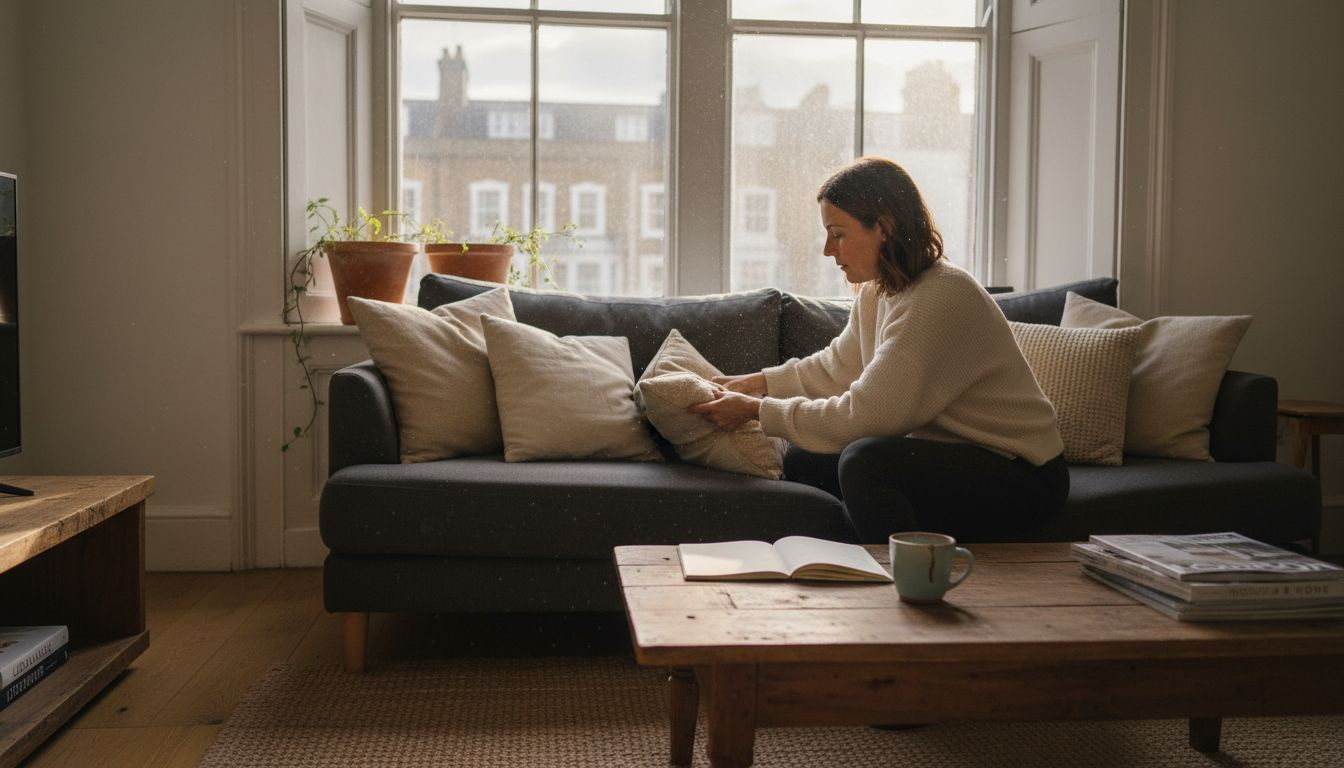
One London homeowner refreshed a living room by adopting trending warm neutrals and natural textures. Instead of replacing furniture, she added terracotta cushions, a jute rug, and ceramic vases. Total investment stayed under £200, yet the space felt completely transformed. This selective accessory update captured trending aesthetics affordably.
A Manchester couple embraced biophilic design trends through plants and botanical prints. They purchased affordable planters and created DIY botanical art using framed pressed flowers. The natural elements aligned with trending wellness aesthetics while remaining budget conscious. Their phased approach allowed experimentation without major commitment.
| Strategy | Average Cost | Aesthetic Impact | Implementation Time |
|---|---|---|---|
| Full room refresh | £800 to £1500 | High but risky | 2 to 4 weeks |
| Selective accessories | £150 to £300 | High with lower risk | 1 to 2 weeks |
| DIY trend elements | £50 to £150 | Moderate to high | 2 to 5 days |
| Single statement piece | £100 to £400 | Focused impact | 1 day |
A Birmingham homeowner illustrated compatibility importance. Initially attracted to maximalist patterns, she realized they clashed with her minimalist furniture. Instead, she incorporated trending metallic accents through smaller accessories like picture frames and candle holders. This adaptation honored both the trend and her existing style.
Key lessons from these real world trend integration examples include:
- Start small with accessories before committing to larger changes
- Prioritize trends that genuinely resonate with your lifestyle
- Use DIY and creativity to capture trend essence affordably
- Allow time to assess results before expanding implementation
- Blend trending elements with existing decor for authentic results
These practical demonstrations show that effective trend adoption doesn’t require complete overhauls or substantial budgets. Strategic, selective integration delivers meaningful aesthetic improvements while maintaining financial and stylistic comfort.
Bridging Trends and Personal Style for Lasting Satisfaction
The most successful home styling merges trending elements with authentic personal expression. Personalizing trends increases lasting satisfaction by 25% among homeowners compared to rigid trend following. This balance creates spaces that feel both current and genuinely yours.
Personalization begins with self awareness. Identify which colours, textures, and styles consistently appeal to you regardless of trends. These preferences form your style foundation. Trends should complement this base rather than replace it. A homeowner who loves traditional elegance might adopt trending natural materials through classic forms rather than ultra modern designs.
Strategies for authentic trend integration include:
- Using trending colours in small doses against neutral foundations
- Selecting trending accessories that serve functional needs you already have
- Adapting trend aesthetics to match your existing furniture scale and style
- Mixing trending pieces with sentimental or vintage items for depth
- Choosing quality over quantity, investing in fewer trend pieces you truly love
Pro Tip: Anchor rooms with statement pieces in your personal style, then layer trending accessories for freshness. A beloved sofa or inherited table grounds the space while updated cushions, throws, or art capture current aesthetics. This approach prevents trend dominated spaces that lack soul.
Maintaining style over time requires flexibility. As trends evolve, reassess which elements still serve your space and which feel outdated or misaligned. Replace only what no longer contributes satisfaction. This selective editing keeps your home dynamic without constant upheaval.
Bridging trends with personal style also means permission to ignore trends that don’t resonate. Not every popular style will suit your taste, lifestyle, or space. Confident homeowners curate rather than collect, building interiors that reflect individual identity while acknowledging contemporary aesthetics. This balance delivers both style relevance and enduring personal satisfaction.
Explore Stylish, Trend Aligned Accessories for Your Home
Now that you understand how to evaluate and integrate trends strategically, you can confidently refresh your space. Homable offers curated collections combining contemporary style with affordability, perfect for UK homeowners seeking accessible trend participation.
Explore best home decor items for 2026 featuring sustainable materials, trending colours, and versatile designs that adapt to various interior styles. These carefully selected accessories allow easy implementation of the frameworks discussed throughout this guide.
Whether you’re drawn to natural textures, warm neutrals, or statement metallics, Homable’s range provides affordable options that capture current aesthetics without compromising quality. Our modern home styling steps guide walks you through applying these principles room by room.
For additional inspiration, review our modern home accessories tips to see how small changes create significant visual impact. Start with one room, apply the longevity, compatibility, and budget framework, and watch your space transform through selective, confident trend integration.
Frequently Asked Questions About Trends in Home Styling
What is the main benefit of following home styling trends selectively?
Selective trend adoption increases satisfaction by 35% while preventing overspending and styling fatigue. It allows you to refresh your space with elements that genuinely enhance your lifestyle rather than chasing every new style. This approach balances contemporary aesthetics with personal authenticity.
How can I adopt trends affordably without overspending?
Focus on accessories like cushions, throws, art, and small decorative items that capture trending aesthetics at lower price points. DIY projects and upcycling existing pieces also allow trend participation within tight budgets. Strategic updates deliver visual impact without full room renovations.
Why is sustainability important in choosing home accessories today?
Sustainable accessories align with growing environmental awareness while often providing superior durability and timeless design. The 40% demand increase reflects homeowners’ desire to make ethical choices that also offer long term value. Many sustainable options now match conventional prices, making responsibility accessible.
How do social media trends differ from traditional trend cycles?
Social media accelerates trend diffusion by 50% among younger homeowners, creating faster emergence and evolution. Digital platforms offer constant visual inspiration but also increase pressure to frequently update. Traditional cycles moved more slowly through design publications and retail seasons, allowing longer trend lifespans.
Can blending personal style with trends create a timeless look?
Absolutely. Personalizing trends by adapting them to your existing aesthetic creates spaces that feel both current and authentically yours. This balance prevents dated looks while maintaining individuality. Quality foundational pieces in your preferred style, updated with selective trending accessories, deliver enduring satisfaction that purely trend driven spaces cannot match.