Cart
0

Maximising the look and function of an urban home often starts with a single challenge—making every square metre count. Without a clear method for assessing your space and creating functional zones, even stylish rooms can end up feeling cramped or inefficient. This guide draws on research-backed strategies to help you measure accurately, define purposeful areas, and choose furniture that fits the demands of modern city living.
Table of Contents
- Step 1: Assess Existing Room Dimensions And Constraints
- Step 2: Identify Functional Zones For Everyday Activities
- Step 3: Select Suitable Furniture And Decor To Match Needs
- Step 4: Arrange Key Pieces To Maximise Flow And Space
- Step 5: Evaluate Layout For Comfort And Practicality
Quick Summary
| Essential Insight | Clarification |
|---|---|
| 1. Accurate measurements are crucial | Measure wall lengths, ceiling height, and placements of windows and doors to ensure effective planning of your room layout. |
| 2. Define functional zones strategically | Identify specific areas for activities like work, relaxation, and entertainment to improve flow and usability in your space. |
| 3. Choose multipurpose furniture wisely | Select furniture that offers multiple functionalities to maximise space efficiency while maintaining comfort and style. |
| 4. Arrange furniture for clear pathways | Position key pieces to allow natural movement and ensure accessibility throughout various functional zones in the room. |
| 5. Regularly evaluate your layout’s comfort | Test the arrangement over a week to identify friction points and adjust for optimal comfort and practicality in daily use. |
Step 1: Assess existing room dimensions and constraints
Before transforming your space, you’ll need to thoroughly understand its current layout and limitations. This crucial first step involves precise measurement and comprehensive evaluation of your room’s physical characteristics and potential constraints.
Start by gathering essential measuring tools: a laser distance metre, digital calliper, and metal measuring tape. Accurate measurements are critical for planning an optimised room layout. Facility Guidelines Institute provides comprehensive guidelines for systematically assessing spatial dimensions and architectural constraints.
Prepare a detailed room diagram by measuring and recording these key elements:
- Wall lengths from corner to corner
- Ceiling height at multiple points
- Window and door positions
- Electrical outlet locations
- Structural obstacles like support columns or built-in features
Document each measurement precisely, noting both metric and imperial units. Consider creating a digital or hand-drawn sketch that includes all measurements, which will serve as your primary planning reference.
Precise measurements are the foundation of intelligent room design.
Tip: Take measurements at different times of day to account for potential lighting variations that might impact your perception of space.
Pro tip: Always measure twice and record measurements immediately to prevent errors and ensure accuracy.
Step 2: Identify functional zones for everyday activities
Transforming your room into an efficient living space requires strategically defining areas that support different daily activities. Occupational research highlights the importance of creating purposeful spatial zones that enhance your lifestyle and productivity.
Begin by mentally mapping out the primary functions your room needs to accommodate. These might include:
- Work and study area
- Relaxation zone
- Entertainment space
- Storage sections
- Personal grooming corner
Consider how these zones will interact and flow together. The key is creating seamless transitions between different functional areas without making the space feel fragmented. Think about traffic patterns and ensure each zone has enough breathing room to feel distinct yet integrated.
A well-designed room supports multiple activities without feeling cluttered or overwhelming.
Pay attention to natural light, electrical outlet placement, and existing architectural features when defining these zones. Some areas might require specific positioning to maximise functionality and comfort.
Here is a summary comparing key room functional zones and important considerations for each:
| Functional Zone | Ideal Placement | Special Considerations |
|---|---|---|
| Work and study area | Near windows for daylight | Access to sockets and low noise levels |
| Relaxation zone | Away from main paths | Comfortable seating and soft lighting |
| Entertainment space | Close to power and TV aerial points | Sufficient viewing distance and acoustics |
| Storage sections | Along underused walls | Vertical units maximise floor area |
| Personal grooming area | Near natural light or mirror | Adequate lighting and privacy |
Tip: Use area rugs, furniture placement, or subtle room dividers to visually define different functional zones without installing permanent barriers.
Pro tip: Sketch your proposed zones on paper before moving furniture to visualise how different areas will interact and flow.
Step 3: Select suitable furniture and decor to match needs
Choosing furniture isn’t just about filling space - it’s about creating an environment that supports your lifestyle and enhances your room’s functionality. Ergonomic furniture selection principles are crucial for ensuring comfort and supporting your daily activities.
Consider these key factors when selecting furniture and decor:
- Proportional sizing relative to your room dimensions
- Multipurpose furniture that maximises space efficiency
- Complementary colour schemes
- Comfort and ergonomic support
- Quality and durability of materials
Focus on pieces that serve multiple functions while maintaining aesthetic harmony. A sleek sofa with built-in storage, an extendable dining table, or a desk that doubles as a console can transform your space’s utility without sacrificing style.
Furniture should enhance your lifestyle, not complicate it.
Pay attention to the visual weight and balance of your selections. Lighter-coloured furniture can make smaller rooms feel more spacious, while darker pieces can anchor larger spaces and create visual depth.
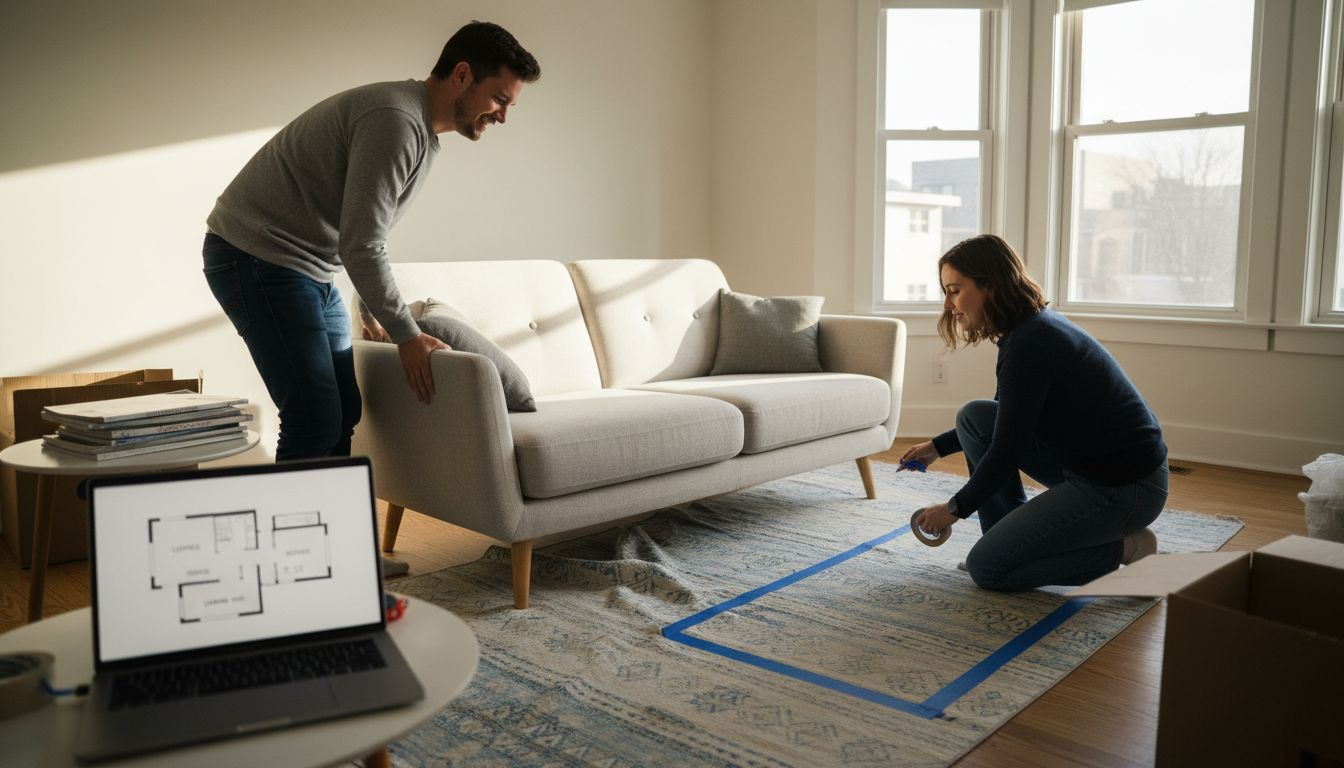
Tip: Always measure your space and existing furniture before making new purchases to ensure proper fit and proportion.
Pro tip: Create a mood board with fabric swatches, paint samples, and furniture cut-outs to visualise how different pieces will work together before making final selections.
Step 4: Arrange key pieces to maximise flow and space
Transforming your room’s layout requires strategic placement that enhances both visual appeal and functional movement. Furniture arrangement principles are critical for creating a harmonious and efficient living space that feels natural and intuitive.
Implement these key strategies for optimal furniture placement:
- Create clear walking pathways
- Establish a primary focal point
- Balance visual weight across the room
- Allow breathing space between furniture pieces
- Consider natural traffic flow
Start by positioning your largest piece of furniture first - typically a sofa or bed - which will anchor the room and determine subsequent placements. Think about how you move through the space and ensure that furniture placement doesn’t obstruct natural walking routes or create awkward navigation challenges.
Effective room layout is about creating invisible pathways that guide movement effortlessly.
Utilise the triangulation principle when arranging furniture, which means creating imaginary lines between key pieces to establish a sense of connection and balance. This approach helps prevent your room from feeling disjointed or randomly assembled.
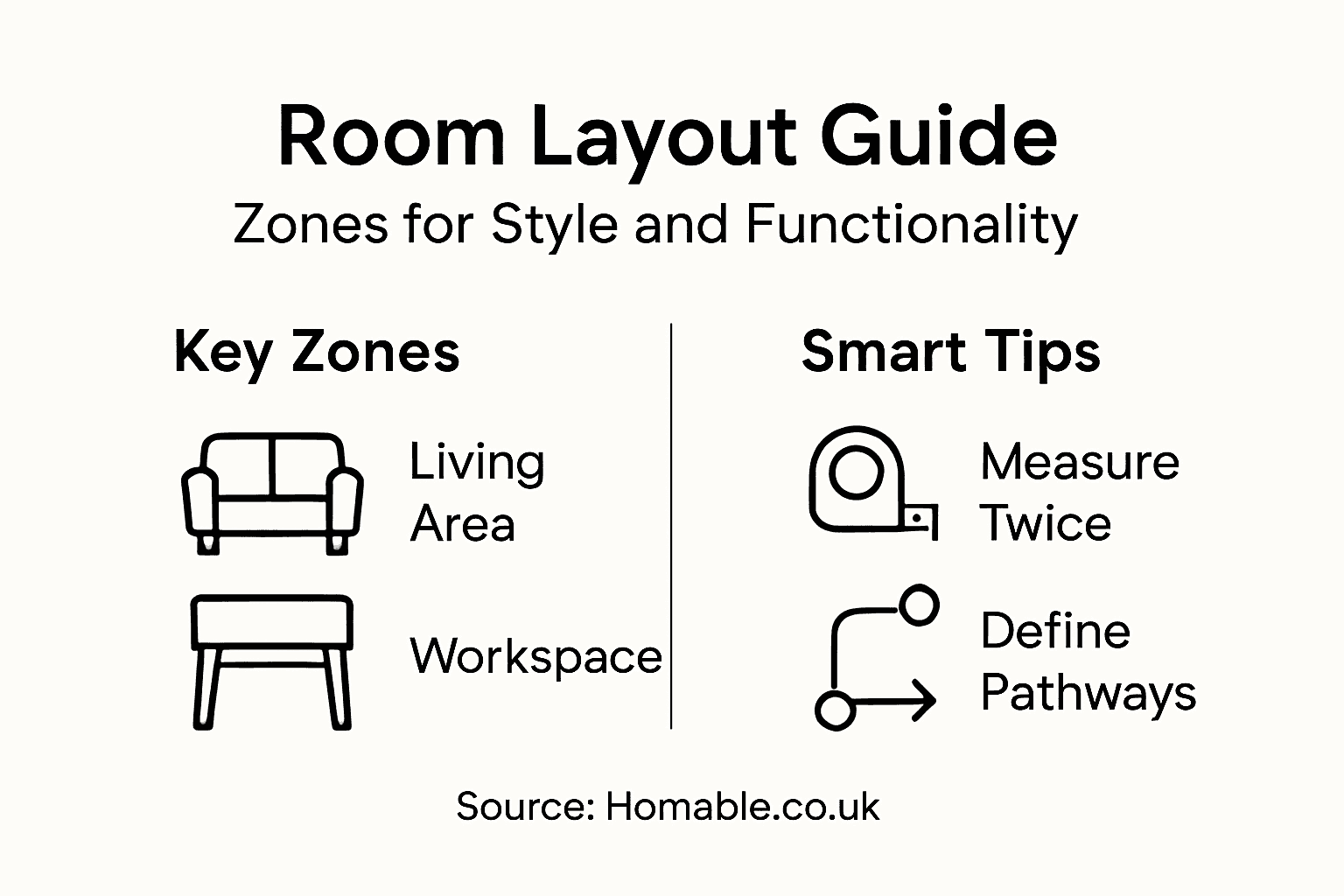
Tip: Use painter’s tape on the floor to outline furniture placement before physically moving pieces, helping you visualise the potential layout.
Pro tip: Take photographs of your proposed arrangement to objectively assess the room’s visual balance and flow before finalising the layout.
Step 5: Evaluate layout for comfort and practicality
A thoughtful room layout goes beyond aesthetic appeal - it’s about creating a space that genuinely supports your daily life and well-being. Design evaluation techniques provide crucial insights into assessing how effectively your space functions.
Consider these critical evaluation criteria:
- Ergonomic comfort of furniture placement
- Natural light accessibility
- Ease of movement between zones
- Flexibility for different activities
- Storage and organisation efficiency
Start by sitting in each key furniture piece and experiencing the room from multiple perspectives. Notice how natural light falls, whether electrical outlets are conveniently positioned, and if you can move between functional zones without feeling cramped or restricted.
Comfort is not just about softness, but about how seamlessly a space supports your lifestyle.
Pay attention to subtle friction points in your layout. If you find yourself constantly manoeuvring around furniture or struggling to reach essential items, it’s a clear sign that your current arrangement needs refinement.
The following table outlines common room layout mistakes and ways to address them:
| Mistake | Description | How to Correct |
|---|---|---|
| Overcrowding with furniture | Too many large pieces reduce movement space | Select multipurpose items |
| Blocking natural light | Furniture obstructs windows or light sources | Arrange to keep windows clear |
| Ignoring traffic flow | Pathways blocked, causing awkward navigation | Define clear walking lines |
| Neglecting outlet placement | Furniture hides or blocks socket access | Check access during arrangement |
| Poor zone definition | Activities lack dedicated spaces | Use rugs or dividers to demarcate |
Tip: Use a critical eye and be prepared to make incremental adjustments rather than expecting a perfect layout immediately.
Pro tip: Spend a full week living with your new layout before making final decisions, as daily use will reveal nuances no initial assessment can predict.
Elevate Your Room Layout with Stylish and Practical Home Solutions
Optimising your room layout for style and functionality takes more than just good intentions. The challenge lies in balancing well-defined functional zones with furniture that fits perfectly and enhances your lifestyle. This article highlights key pain points such as measuring space accurately, creating seamless traffic flow, and selecting multipurpose furniture that supports daily activities. Now is the perfect moment to bring those insights to life with curated home decor and storage options designed to make your layout both beautiful and practical.
Discover how Homable.co.uk can help you overcome common layout frustrations by offering affordable, design-forward pieces that transform any space. From smart storage solutions that declutter without crowding to elegant rugs and curtains that define zones, our collection supports your vision of a balanced and inviting home. Do not wait to enhance your living space - explore our range today and start creating a room that works hard for comfort and style. Visit Homable now and take the first step towards your ideal room layout.
Frequently Asked Questions
How do I accurately measure my room dimensions for layout planning?
To accurately measure your room dimensions, gather tools like a laser distance metre and a metal measuring tape. Measure wall lengths, ceiling height, and the positions of doors and windows, then document these dimensions in both metric and imperial units.
What are functional zones, and how do I define them in my room?
Functional zones are specific areas allocated for different activities, such as work, relaxation, and storage. Identify the primary functions you need in your room and mentally map out these areas, ensuring that the zones flow together smoothly for better comfort and utility.
How can I choose furniture that enhances both style and functionality?
To choose furniture that enhances both style and functionality, look for proportional sizing and multipurpose pieces that complement your room’s design. For example, select a sofa with built-in storage to maximise space efficiency without compromising aesthetics.
What strategies can I use to arrange furniture for optimal flow?
To arrange furniture for optimal flow, create clear walking pathways and establish a primary focal point. Start by positioning your largest piece first, then arrange other items around it while ensuring there’s enough space for easy movement between different areas.
How do I evaluate if my room layout is comfortable and practical?
To evaluate your room layout, sit in your key furniture pieces and assess natural light accessibility and ease of movement between zones. Make adjustments as needed, focusing on ergonomic comfort and ensuring that your layout supports your daily activities effectively.
What are common mistakes to avoid when optimising room layout?
Common mistakes to avoid include overcrowding with furniture and blocking natural light sources. Address these issues by selecting multipurpose items to free up space and arranging your furniture to keep windows clear for maximum light.