Cart
0

Redecorating a city flat or compact terrace can quickly turn confusing when every guide mentions balance, rhythm, or colour theory without clear explanations. For urban homeowners, mastering home styling terminology is more than keeping up with trends, it is a tool for unlocking stylish, comfortable spaces that match your personality and daily needs. This guide breaks down the language professionals use so you can tackle decor decisions confidently, collaborate with experts, and transform your British home into a true reflection of who you are.
Table of Contents
- What Is Home Styling Terminology?
- Key Design Styles And Their Features
- Principles Shaping Modern Home Styling
- Types Of Materials, Textures And Finishes
- Common Home Accessories And Their Roles
- Avoiding Misunderstandings In Styling Terms
Key Takeaways
| Point | Details |
|---|---|
| Understanding Home Styling | Home styling blends creativity with strategic design to personalise living spaces, emphasising thoughtful arrangement of elements. |
| Importance of Design Terminology | Familiarity with design terminology enhances communication with professionals and aids in executing personal styling projects. |
| Exploration of Design Styles | Recognising diverse design styles allows for cohesive, intentional living spaces that reflect individual preferences. |
| Effective Use of Accessories | Home accessories serve functional and aesthetic roles, transforming spaces and allowing for personal storytelling through design. |
What Is Home Styling Terminology?
Home styling represents an intricate art form blending creativity and strategic design principles to transform living spaces. At its core, home styling involves thoughtful arrangement of furniture, colours, materials, and accessories to create personalised environments that reflect individual taste and functional needs.
Professional home styling goes beyond mere decoration, encompassing a comprehensive approach to spatial design. The terminology surrounding this discipline serves as a sophisticated language enabling designers, homeowners, and professionals to communicate precise design intentions. These specialised terms cover various critical aspects:
- Spatial Planning: Understanding room layout and flow
- Colour Theory: Harmonising colour palettes and psychological impacts
- Textural Elements: Combining different materials and surfaces
- Functional Aesthetics: Balancing visual appeal with practical requirements
Interior design professionals use a comprehensive glossary of key concepts that allow precise communication about design elements. This specialised vocabulary helps translate abstract design ideas into tangible, executable plans, ensuring that creative visions can be accurately shared and implemented.
Design Terminology serves multiple crucial functions in home styling, acting as a shared language that bridges imagination and execution. By understanding these terms, homeowners gain deeper insight into design processes and can more effectively collaborate with professionals or undertake personal styling projects.
Pro tip: Invest time in learning basic home styling terminology to communicate more effectively with designers and make more confident decor decisions.
Key Design Styles and Their Features
Home styling encompasses a diverse range of design approaches, each with distinct aesthetic philosophies and visual characteristics. Interior design styles in 2023 reflect both contemporary trends and timeless design principles, offering homeowners multiple creative pathways to express their personal taste.
Understanding various design styles helps create cohesive and intentional living spaces. Here are some prominent design styles with their defining features:
- Minimalist Style: Clean lines, neutral colours, functional simplicity
- Scandinavian Design: Light spaces, natural materials, understated elegance
- Industrial Style: Exposed brick, metal accents, raw architectural elements
- Bohemian Style: Eclectic patterns, vibrant colours, global-inspired accessories
- Mid-Century Modern: Sleek furniture, geometric shapes, organic curves
Contemporary interior design guides highlight how each style communicates a unique narrative about personal aesthetic preferences. These styles are not rigid categories but flexible frameworks that can be mixed, adapted, and personalised to suit individual spaces and personalities.
The key to successful home styling lies in understanding the core principles of different design approaches and selecting elements that resonate with your personal taste and lifestyle. Modern design philosophies emphasise not just visual appeal, but also functionality, comfort, and emotional connection to living spaces.
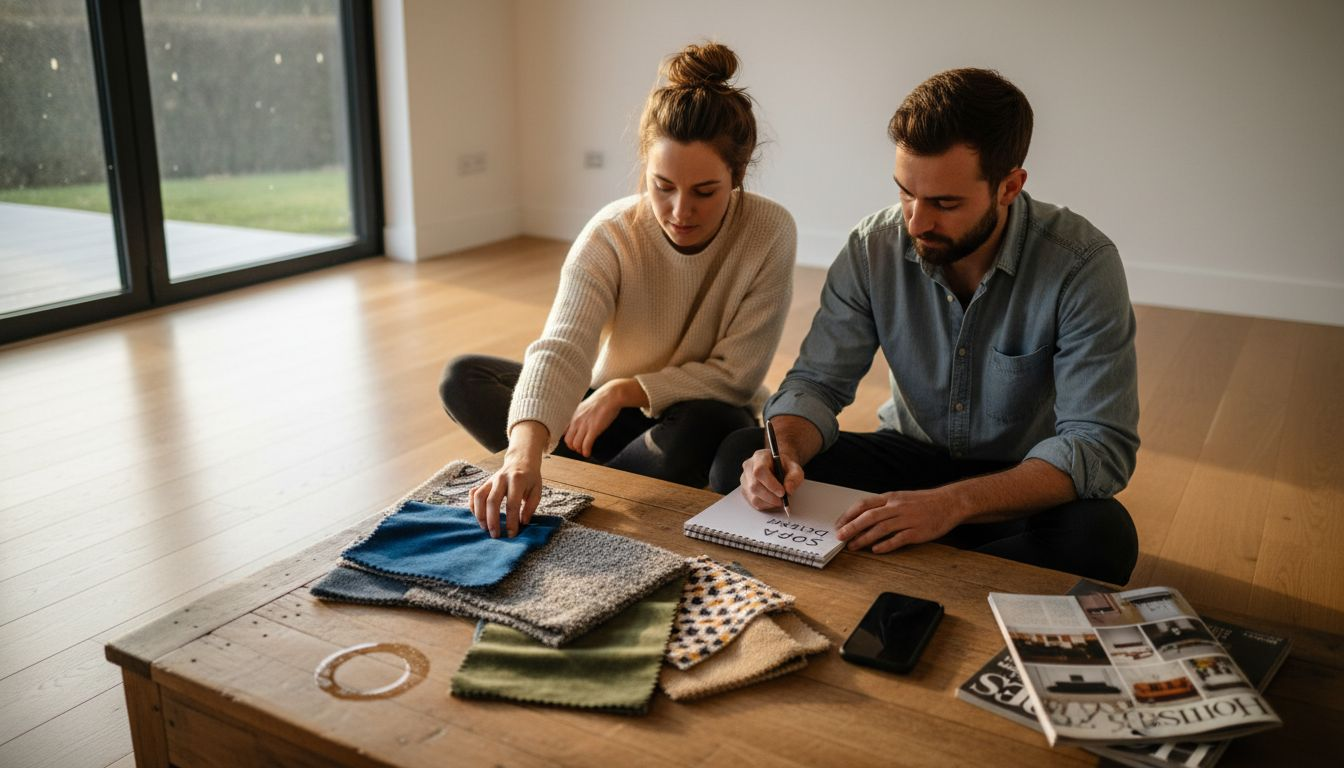
Pro tip: Before committing to a design style, create a mood board combining elements from different styles to discover your unique aesthetic preferences.
Principles Shaping Modern Home Styling
Modern home styling transcends mere decoration, emerging as a sophisticated discipline that balances aesthetic appeal with functional intelligence. Home design principles create sophisticated frameworks that transform living spaces into personalised, efficient environments that reflect individual personalities and lifestyle needs.
The core principles guiding contemporary home styling encompass several critical elements:
- Balance: Creating visual equilibrium through symmetrical or asymmetrical arrangements
- Harmony: Ensuring cohesive relationships between design elements
- Rhythm: Establishing visual flow through repeated patterns or colours
- Emphasis: Designing focal points that draw attention and create visual interest
- Proportion: Maintaining appropriate scale relationships between furniture and spaces
Effective home design strategies emphasise the intricate relationship between architectural elements and personal expression. These principles are not rigid rules but flexible guidelines that allow homeowners to craft spaces that are simultaneously functional, comfortable, and aesthetically compelling.
Contemporary home styling recognises that design is a deeply personal journey. It’s about creating environments that not only look beautiful but also support daily living, reflect individual narratives, and adapt to changing lifestyle requirements. The most successful design approaches blend technical understanding with emotional intelligence, transforming living spaces into authentic expressions of personal identity.
To help visualise how design principles interact in home styling, consider the following comparison table:
| Principle | Impact on Space | Common Challenge |
|---|---|---|
| Balance | Creates visual stability | Achieving symmetry in irregular rooms |
| Harmony | Unifies design elements | Avoiding monotony while coordinating |
| Rhythm | Guides visual movement | Maintaining flow without confusion |
| Emphasis | Highlights focal points | Choosing the right feature to emphasise |
| Proportion | Ensures comfortable scale | Matching large items with compact layouts |
Pro tip: Experiment with design principles by taking photographs of your space and analysing them objectively, identifying areas where balance, rhythm, or emphasis could be improved.
Types of Materials, Textures and Finishes
Modern home styling has evolved beyond traditional material selections, embracing a sophisticated approach that balances aesthetic appeal with technological innovation. Innovative home interior materials now incorporate smart technologies and sustainable design principles, transforming how we perceive and interact with our living spaces.
The contemporary material landscape encompasses a diverse range of textures and finishes that offer both visual and functional dimensions:
- Natural Materials: Wood, stone, cotton, wool, providing organic warmth
- Synthetic Materials: Engineered composites, performance fabrics, advanced polymers
- Smart Materials: Responsive surfaces with temperature or light-adaptive properties
- Sustainable Finishes: Recycled, eco-friendly materials with reduced environmental impact
- Textural Variations: Matte, glossy, rough, smooth, creating visual and tactile depth
Each material and finish tells a unique story, contributing to the overall narrative of a living space. The selection process involves considering multiple factors such as durability, maintenance requirements, aesthetic compatibility, and environmental sustainability. Contemporary design philosophy emphasises creating holistic environments that reflect personal style while meeting practical lifestyle needs.
Textures and finishes are no longer just decorative elements but integral components of intelligent design. They communicate aesthetic preferences, support functional requirements, and create sensory experiences that transform ordinary spaces into extraordinary living environments.
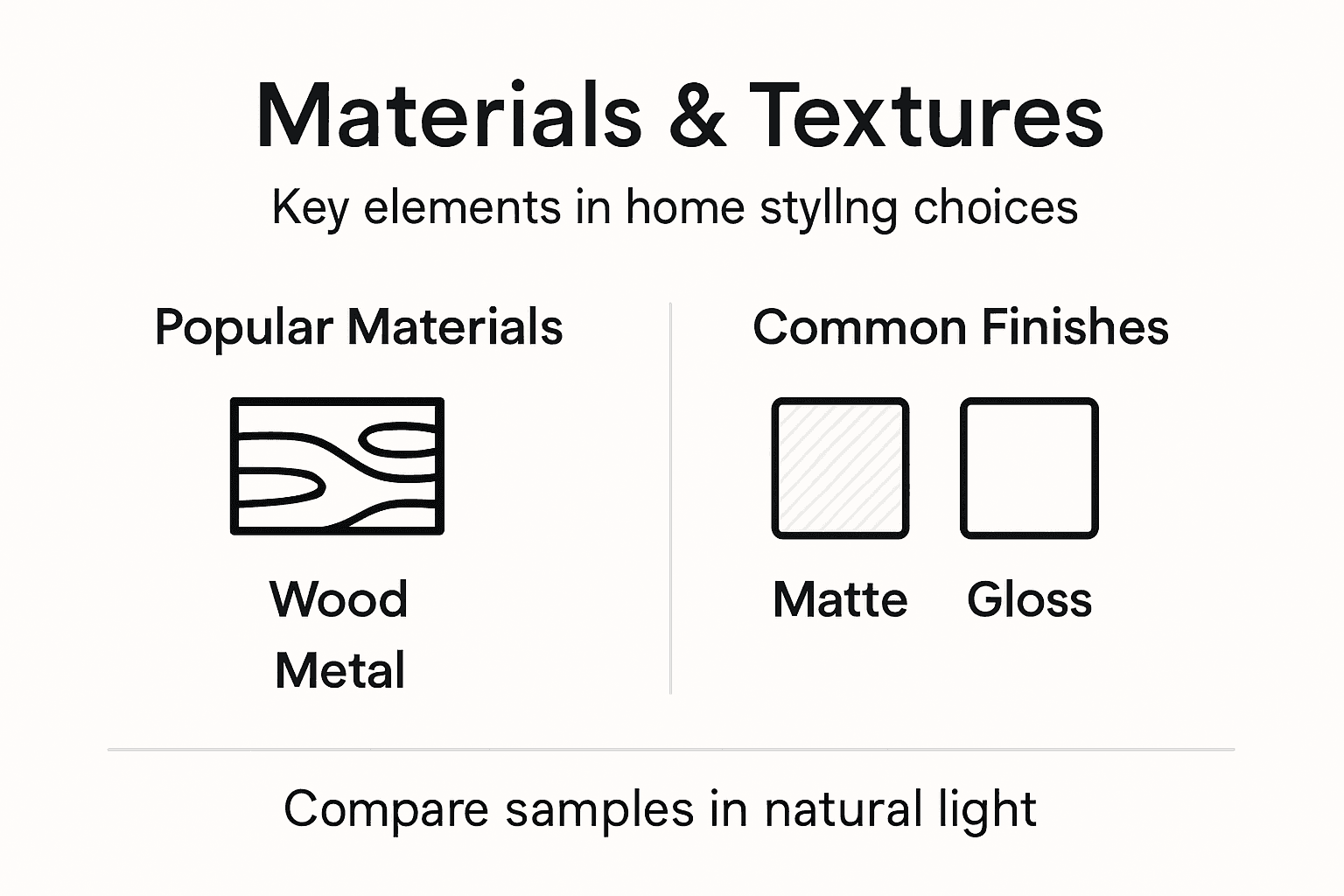
This summary table shows how different materials and finishes affect both aesthetics and usability:
| Material Type | Visual Effect | Practical Consideration |
|---|---|---|
| Natural | Warm and inviting | May require regular upkeep |
| Synthetic | Modern and varied | Offers durability and easy care |
| Smart | Futuristic and adaptable | Often costly, needs specialist installation |
| Sustainable | Eco-friendly and earthy | Sometimes limited design options |
| Textural Variation | Adds depth and interest | Can complicate maintenance routines |
Pro tip: Always touch and examine material samples in natural light to truly understand their texture, colour variations, and how they interact with your specific space.
Common Home Accessories and Their Roles
Home accessories are far more than mere decorative elements, serving as powerful storytellers that transform living spaces into personalised environments. Home accessories reflect individual narratives through carefully curated items that communicate personal style, memories, and aesthetic sensibilities.
The contemporary home accessory landscape encompasses multiple functional and decorative categories:
- Functional Accessories: Clocks, lamps, storage solutions
- Decorative Elements: Artwork, sculptures, ornamental pieces
- Comfort Enhancers: Throw pillows, blankets, area rugs
- Atmospheric Creators: Candles, diffusers, houseplants
- Spatial Transformers: Mirrors, wall hangings, decorative screens
Key home accessories go beyond simple decoration, playing crucial roles in defining spatial character and emotional ambience. Each carefully selected piece contributes to the overall sensory experience, balancing practical utility with aesthetic expression.
Modern home styling recognises accessories as dynamic design elements that evolve with personal taste and lifestyle changes. They are not static decorations but adaptive components that can dramatically shift a room’s mood, functionality, and visual narrative through strategic placement and thoughtful selection.
Pro tip: Rotate your home accessories seasonally to keep your space feeling fresh and prevent visual fatigue, allowing different pieces to tell your evolving design story.
Avoiding Misunderstandings in Styling Terms
Communication in home styling requires precision and clarity to prevent potential misinterpretations that could derail design projects. Clear communication in styling terminology demands a systematic approach that eliminates ambiguity and ensures all parties share a common understanding of design concepts.
Common areas where misunderstandings frequently arise include:
- Colour Terminology: Differentiating between hues, tones, and shades
- Design Style Definitions: Understanding nuanced variations between similar styles
- Material Descriptions: Precise characterisation of textures and finishes
- Spatial Terminology: Accurate descriptions of room layouts and architectural elements
- Decorative Technique Descriptions: Clarifying specific design methodologies
Academic writing principles emphasise the importance of using formal, discipline-specific vocabulary that maintains objectivity and reduces potential confusion. Professional designers must develop a shared language that transcends individual interpretations, ensuring that creative visions can be accurately translated into tangible design outcomes.
Effective communication in home styling involves more than just technical accuracy; it requires empathy, active listening, and the ability to translate complex design concepts into accessible language. By developing a nuanced understanding of design terminology, homeowners and designers can collaborate more effectively, transforming abstract ideas into cohesive, beautifully realised spaces.
Pro tip: Create a personal design terminology glossary to track and understand specific terms, helping you communicate more precisely with designers and professionals.
Elevate Your Home Styling with Confidence and Clarity
Understanding home styling terminology is essential to transforming your living space into a reflection of your personal taste while ensuring functionality and harmony. This article highlights the challenge of navigating complex design language and making informed choices about colour, texture, and spatial arrangements. If you have ever struggled to translate design ideas into reality or felt overwhelmed by style options like Minimalist, Industrial, or Scandinavian, you are not alone.
At Homable.co.uk, we bridge the gap between inspiration and implementation by offering a carefully curated selection of affordable and stylish home accessories designed to complement your chosen aesthetic. From elegant curtains and cosy rugs to practical storage solutions and unique ornaments, every product supports the principles of balance, harmony and emphasis discussed here.
Take the next confident step in your home styling journey today. Explore our collections and discover how the right accessories can visually enhance your space, bringing rhythm and proportion to life. Start shopping now at Homable.co.uk and make your design vision a stunning reality. Visit our best sellers and new arrivals to find pieces that speak to your unique style and lifestyle needs.
Frequently Asked Questions
What is home styling terminology?
Home styling terminology refers to the specialised language used in the home styling discipline, encompassing terms that describe design principles, styles, materials, and functions, facilitating effective communication among designers and homeowners.
Why is understanding colour theory important in home styling?
Understanding colour theory allows individuals to create harmonious colour palettes and appreciate the psychological effects colours can have in living spaces, ultimately enhancing the overall aesthetic and emotional ambience of a home.
How do design principles influence home styling?
Design principles such as balance, harmony, rhythm, emphasis, and proportion shape the way spaces are organised and visually experienced, enabling homeowners to create environments that are not only appealing but also functional and comfortable.
What role do materials and textures play in home styling?
Materials and textures are crucial in home styling as they impact both the visual aesthetic and practical usability of a space. Different materials can create warmth, durability, and sustainability, while textures add depth and interest, enhancing the sensory experience of a home.
Recommended
- What Is Interior Styling and Its Impact on Homes – Homable
- Why Modern Design Trends Shape Stylish Homes – Homable
- Role of Colour in Design – Enhancing Modern Interiors – Homable
- Modern Home Decorating Workflow for Effortless Style – Homable
- Stylishly Choose Window Coverings for a Stunning 2025!
- Custom Window Treatments - Transform Your Living Space with Style & Functionality