Cart
0
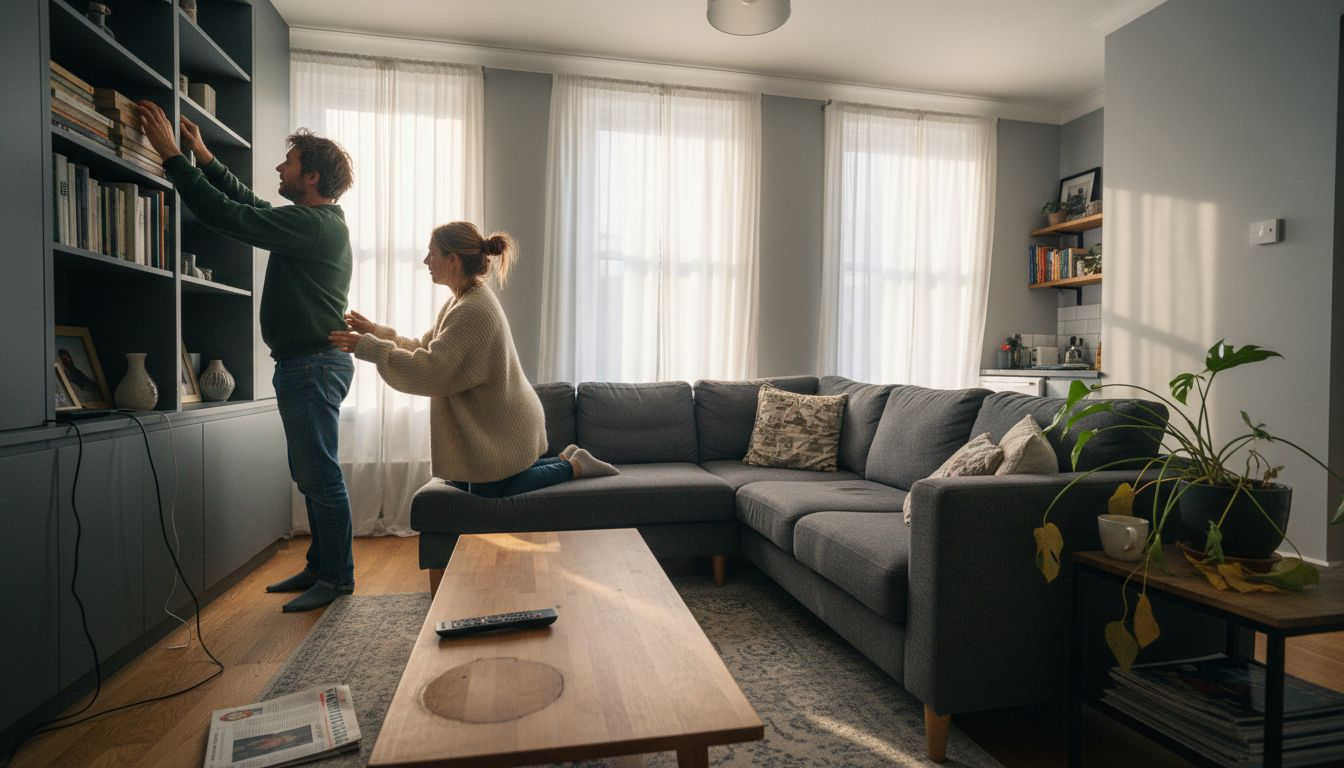
Finding that sweet spot between style and practicality often feels like a challenge for many British homeowners. Sleek interiors may catch your eye, but it’s the clever use of space and multi-purpose features that truly make daily life easier. Adopting a philosophy that prioritises both efficiency and visual harmony, functional design turns ordinary rooms into intelligent environments that adapt to your evolving lifestyle. Discover fresh ideas for combining elegance and utility so your home works beautifully for you and your family.
Table of Contents
- Core Meaning Of Functional Design In Homes
- Distinguishing Features And Essential Principles
- Types Of Functional Home Design Solutions
- Blending Function With Style: Real-World Examples
- Common Mistakes When Prioritising Aesthetics
Key Takeaways
| Point | Details |
|---|---|
| Emphasis on Functionality | Functional design prioritises practical utility alongside aesthetic appeal to create intelligent living spaces. |
| Adaptive Strategies | Implementing flexible layouts, smart storage, and multi-purpose furniture enhances usability and comfort in the home. |
| Integration of Natural Elements | Maximising natural light and ventilation contributes to a healthier living environment and overall well-being. |
| Avoid Aesthetic Pitfalls | Homeowners should balance visual appeal with practicality to prevent design mistakes that compromise daily living. |
Core Meaning of Functional Design in Homes
Functional design represents a sophisticated approach to creating living spaces that seamlessly blend aesthetic appeal with practical utility. At its core, this design philosophy transforms homes from mere physical structures into intelligent environments that actively support and enhance daily living. Principles of functional home design centre on creating spaces that are not just visually pleasing, but fundamentally responsive to residents’ specific lifestyle needs.
The fundamental premise of functional design is understanding that every architectural element and interior choice should serve a deliberate purpose. This means moving beyond traditional decorative considerations to craft spaces that optimise efficiency, comfort, and usability. Spatial arrangement, material selection, and integrated solutions become critical components in developing homes that genuinely work for their inhabitants. Form and function relationship demonstrates how aesthetic elements can be strategically combined with practical design to create environments that are both beautiful and highly functional.
Practical implementation of functional design involves several key strategies. These include:
- Minimising unnecessary clutter
- Creating flexible living spaces
- Integrating smart storage solutions
- Prioritising natural light and ventilation
- Selecting multi-purpose furniture
By embracing these principles, homeowners can transform their living spaces into dynamic, adaptable environments that respond intuitively to changing personal and family requirements. The goal is not just visual appeal, but creating intelligent spaces that actively improve quality of life.
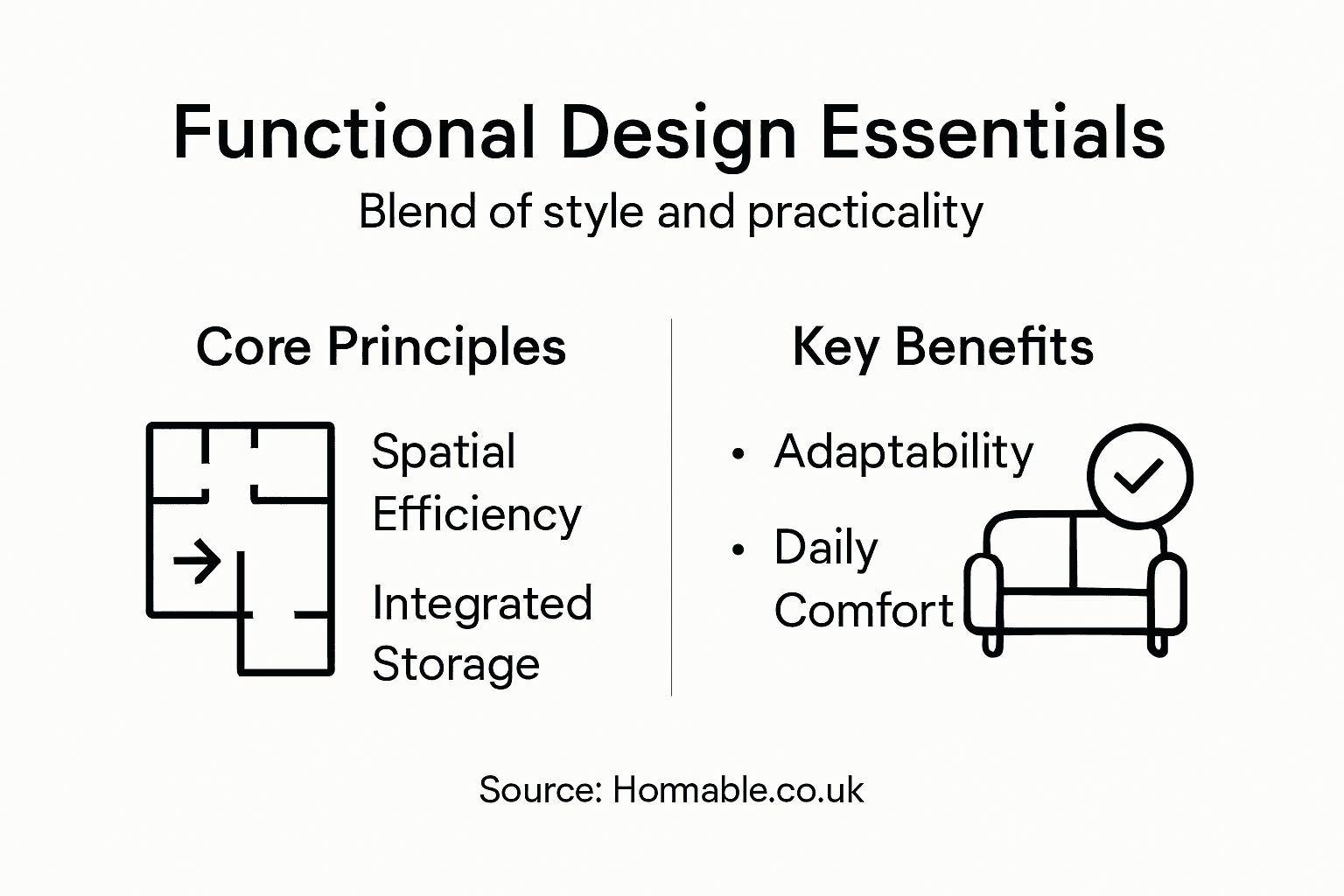
To clarify the practical advantages of functional design, here’s how key strategies in implementation address common household needs:
| Strategy | Main Benefit | Everyday Impact |
|---|---|---|
| Flexible layouts | Adapts to evolving lifestyles | Easy room reconfiguration |
| Smart storage solutions | Reduces clutter | Frees up usable space |
| Multi-purpose furniture | Maximises utility | Performs several roles |
| Enhanced light & airflow | Boosts comfort and wellbeing | Bright, fresh living areas |
| Material optimisation | Improved durability | Less maintenance required |
Pro tip: When considering functional design, always prioritise your specific lifestyle needs over generic trends, ensuring your home’s layout and furnishings genuinely support your daily routines.
Distinguishing Features and Essential Principles
Functional design emerges as a sophisticated approach that transcends traditional interior styling, focusing on creating living spaces that are not merely aesthetically pleasing but fundamentally intelligent and responsive. Principles of residential layout centre on developing environments that seamlessly adapt to inhabitants’ evolving lifestyle requirements while maintaining elegant simplicity.
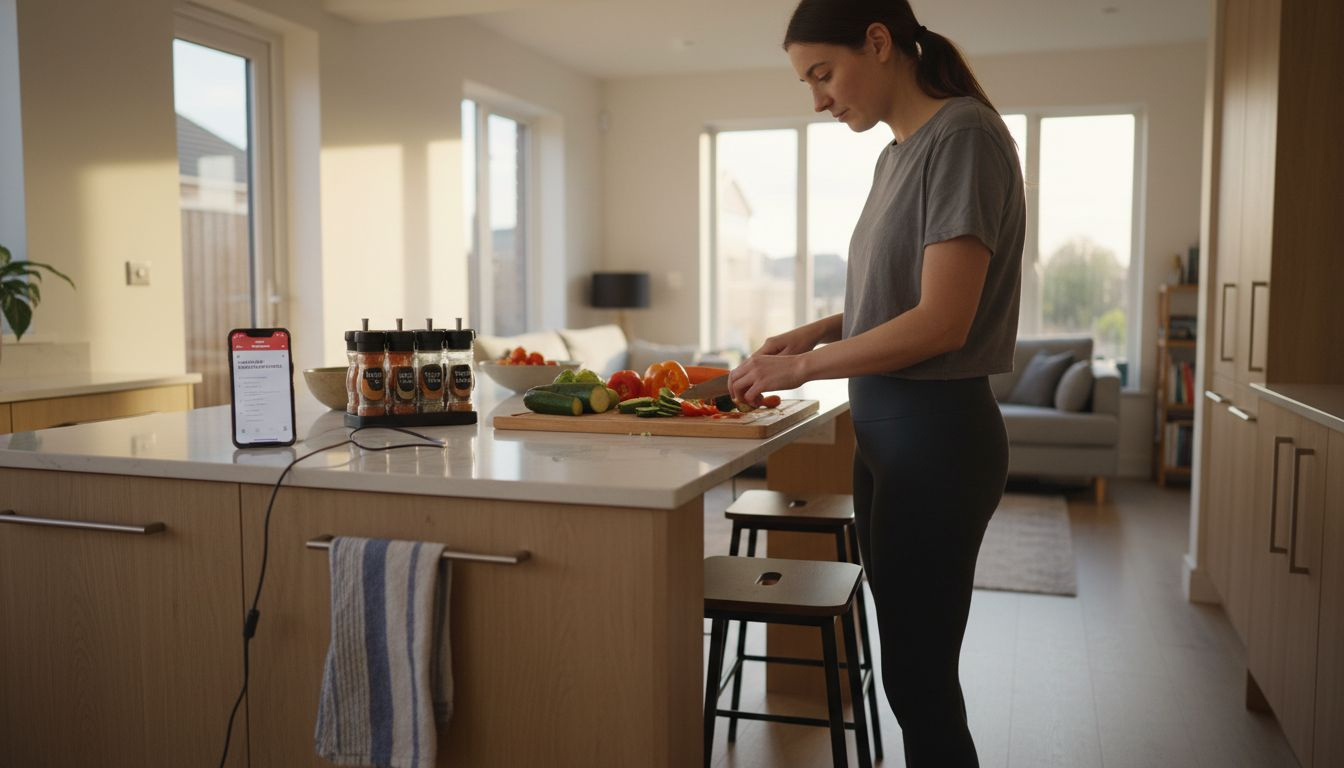
The essential principles of functional design are characterised by several distinctive features. Spatial efficiency stands as a cornerstone, where every square metre is strategically utilised to maximise utility without compromising visual appeal. Home design principles emphasise creating fluid, interconnected spaces that facilitate smooth movement and support multiple activities within a cohesive environment. This approach involves thoughtful zoning, where different areas are designed to serve specific purposes while maintaining an overarching sense of harmony.
Key distinguishing features of functional design include:
- Minimalist aesthetic with purposeful elements
- Flexible, multi-functional spaces
- Integrated smart storage solutions
- Emphasis on natural light and ventilation
- Ergonomic furniture and layout configurations
- Materials selected for durability and practicality
By embracing these principles, homeowners can transform their living spaces into dynamic, adaptable environments that respond intuitively to changing personal and familial needs. The ultimate goal transcends mere decoration, focusing instead on creating intelligent, responsive spaces that genuinely enhance daily living experiences.
For a quick overview, the table below compares functional design principles with traditional home design approaches:
| Criterion | Functional Design Approach | Traditional Design Approach |
|---|---|---|
| Space usage | Maximises every area | May leave areas underused |
| Aesthetic philosophy | Prioritises purposeful elegance | Focuses primarily on visual appeal |
| Adaptability | Highly responsive to change | Seldom adapts post-construction |
| Storage solutions | Integrated and discreet | Often neglected or external |
| User comfort | Central consideration | May be secondary to style |
Pro tip: When implementing functional design, conduct a thorough analysis of your daily routines and movements to identify precise spatial requirements and potential optimisation opportunities.
Types of Functional Home Design Solutions
Functional home design encompasses a diverse range of innovative solutions tailored to meet contemporary lifestyle demands. Modular housing strategies represent a cutting-edge approach that prioritises adaptability, spatial efficiency, and personalisation. These design solutions transform living spaces into dynamic environments that can evolve alongside inhabitants’ changing needs, offering unprecedented flexibility in home configuration.
One prominent category of functional design solutions focuses on universal accessibility. Smart home modification strategies demonstrate how design can create inclusive environments that support residents across different life stages. This approach involves thoughtful adaptations that enable seamless living for individuals with varying mobility requirements, integrating technologies and design elements that promote independence and comfort.
Key types of functional home design solutions include:
- Modular prefabricated housing systems
- Adaptable living spaces with flexible configurations
- Smart technology integration
- Universal design principles
- Minimally invasive retrofit solutions
- Multi-generational living accommodations
- Ergonomic spatial planning
- Energy-efficient design strategies
These solutions go beyond mere aesthetic considerations, focusing on creating intelligent living environments that respond dynamically to inhabitants’ evolving lifestyle needs. By embracing innovative design approaches, homeowners can transform their living spaces into highly responsive, efficient, and personalised environments that genuinely enhance daily living experiences.
Pro tip: When exploring functional design solutions, prioritise adaptability and future-proofing, considering how your living space might need to accommodate changing personal circumstances.
Blending Function With Style: Real-World Examples
The art of functional design transforms living spaces by seamlessly integrating practicality with aesthetic sophistication. Home design strategies demonstrate how thoughtful spatial planning can create environments that are both visually stunning and incredibly efficient. This approach goes beyond simple decoration, focusing on creating living spaces that genuinely support and enhance daily life.
Real-world examples of functional design reveal numerous ingenious solutions that address contemporary lifestyle challenges. Multi-purpose furniture stands as a prime illustration, with pieces that adapt to changing needs while maintaining visual elegance. Modern home design trends showcase innovative approaches such as:
- Convertible sofas with hidden storage
- Dining tables that expand for entertaining
- Wall-mounted desks that fold away when not in use
- Kitchen islands with integrated appliance storage
- Modular shelving systems that reconfigure easily
- Ottomans with internal compartments
- Window seats with built-in storage
These design solutions demonstrate that functionality need not compromise style. By carefully selecting pieces that serve multiple purposes, homeowners can create spaces that are both beautiful and incredibly practical. The key lies in choosing items that seamlessly blend aesthetic appeal with intelligent design, transforming living areas into responsive, efficient environments that truly support modern lifestyles.
Pro tip: When selecting multi-functional furniture, prioritise pieces with clean lines and neutral colours to maintain design flexibility and visual harmony.
Common Mistakes When Prioritising Aesthetics
Aesthetics can be a treacherous terrain when designing functional living spaces, often leading homeowners down a path of visually appealing but impractical environments. Common design errors reveal that prioritising looks over utility can create spaces that appear stunning in photographs but fail miserably in everyday living scenarios. The fundamental challenge lies in recognising that true design excellence emerges from a harmonious balance between visual appeal and practical functionality.
The most prevalent aesthetic-driven mistakes frequently stem from a misguided approach to interior design. Design pitfalls demonstrate how homeowners can inadvertently compromise their living experience by selecting pieces that look impressive but offer minimal practical value. These errors typically manifest in several key areas:
- Choosing furniture that’s visually striking but uncomfortable
- Selecting materials that look good but are difficult to maintain
- Ignoring spatial flow for the sake of dramatic design elements
- Investing in trendy pieces that quickly become dated
- Neglecting storage solutions in favour of minimalist aesthetics
- Overlooking lighting functionality for decorative fixtures
- Prioritising decorative elements over ergonomic considerations
Navigating the delicate balance between style and function requires a nuanced approach. Successful design demands critical evaluation of each element, considering not just how something looks, but how it genuinely supports daily living. By shifting perspective from pure aesthetics to holistic functionality, homeowners can create spaces that are both visually compelling and genuinely liveable.
Pro tip: Always test furniture and design elements in person, sitting on chairs, opening drawers, and experiencing how they truly function before making a purchase.
Elevate Your Living Space with Functional Design Solutions
Struggling to balance style and practicality in your home can be overwhelming. The article highlights the importance of creating intelligent, adaptable environments that truly support everyday life through functional design. Whether it is minimising clutter, incorporating smart storage, or selecting multi-purpose furniture, the goal is to transform your home into a space where beauty meets utility.
At Homable.co.uk, we understand these challenges and offer a broad range of stylish yet practical home accessories designed to enhance the functionality of your space. From integrated storage solutions to elegant décor that complements flexible living, each piece is carefully curated to address the core principles of functional home design. Discover our selection to find high-quality, affordable items that not only look great but also improve your daily living.
Ready to experience the perfect blend of form and function in your home today Explore our collection now and take the first step towards a more organised, comfortable, and stylish living environment with Homable.co.uk. Don’t wait to make your home truly work for you.
Frequently Asked Questions
What is functional design in homes?
Functional design in homes is an approach that combines aesthetic appeal with practical utility, creating living spaces that support and enhance daily living by optimising efficiency, comfort, and usability.
Why is functional design important?
Functional design is important because it transforms homes into intelligent environments that cater to the specific lifestyle needs of residents, ensuring that every element serves a purpose and enhances quality of life.
What are key principles of functional home design?
Key principles of functional home design include spatial efficiency, flexibility, integrated storage solutions, emphasis on natural light, and the selection of durable materials, all focused on creating adaptable and comfortable living environments.
How can I implement functional design in my home?
You can implement functional design in your home by minimising clutter, creating flexible spaces, integrating smart storage, prioritising natural light and ventilation, and selecting multi-purpose furniture that meets your lifestyle needs.