Cart
0

Living in a compact flat in London or Manchester often means every square foot has to work harder. The challenge of keeping a small space stylish, tidy, and genuinely practical is something many British urban homeowners face daily. By focusing on decluttering both physical and digital spaces to support productivity and well-being, you can transform your home into a calming retreat that suits your lifestyle, with smart zones and storage promoting lasting order and comfort.
Table of Contents
- Step 1: Assess Needs And Declutter Thoroughly
- Step 2: Plan Zones And Select Smart Storage
- Step 3: Arrange Items For Maximum Accessibility
- Step 4: Verify Functionality And Refine Layout
Quick Summary
| Key Insight | Explanation |
|---|---|
| 1. Assess and declutter wisely | Evaluate each item based on usage and sentimental value to free up space. |
| 2. Create functional zones | Designate specific areas in your home for different activities to maintain order. |
| 3. Prioritise accessible storage | Organise frequently used items within easy reach to enhance efficiency in daily tasks. |
| 4. Refine layout based on use | Test your space for practical functionality and adjust as needed based on your habits. |
| 5. Maintain regular reviews | Conduct monthly checks to prevent clutter from accumulating again and ensure efficient use of space. |
Step 1: Assess Needs and Declutter Thoroughly
Before you move a single item into your compact living space, you need to understand what you actually use and what’s simply taking up room. This assessment stage is where most people get it right or wrong, and it sets the tone for everything that follows.
Start by examining your current possessions with an honest eye. Walk through each room and ask yourself straightforward questions about what you own. What do you use regularly? What brings you genuine joy or serves a practical purpose? What have you kept “just in case” but haven’t touched in twelve months? This inventory process doesn’t need to be complicated.
Research shows that cluttered environments drain mental energy and increase stress levels, making it harder to focus on what matters. When you’re working with limited square footage, clutter becomes even more costly because it consumes precious space that could work harder for you.
Here’s where to focus your decluttering effort:
- Sentimental items you haven’t displayed or used in two years
- Duplicate tools or gadgets serving the same purpose
- Clothing that no longer fits or matches your current lifestyle
- Broken items you’ve been meaning to repair but haven’t
- Gifts that don’t align with your taste or needs
Be ruthless but practical. In small spaces, keeping something “maybe someday” is a luxury you cannot afford. Every item competes for valuable real estate, so each possession should earn its place.
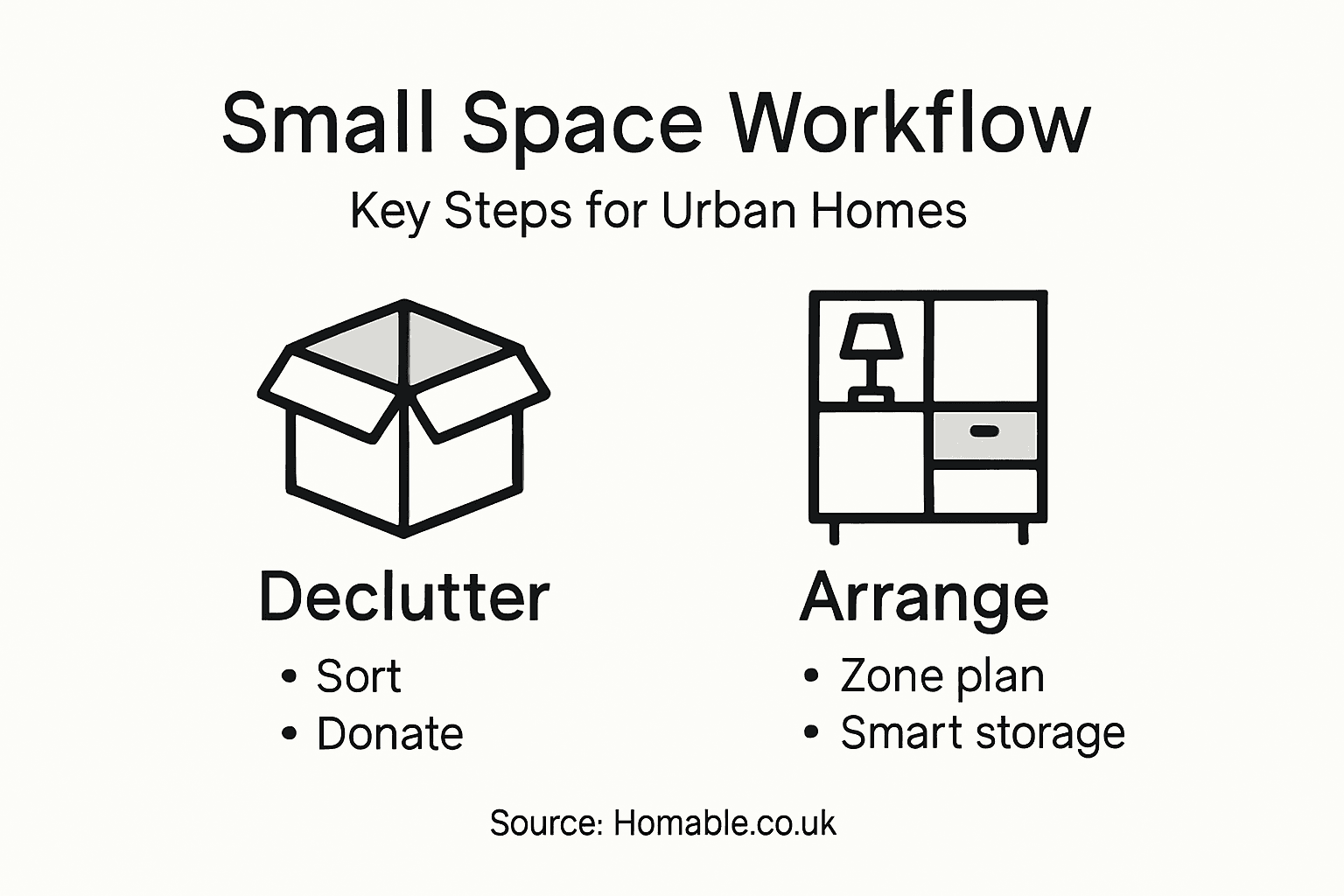
Once you’ve identified what to keep, create three piles: donate, sell, and discard. This separation makes the process feel more manageable and less wasteful. Donating items to local charities or selling them online gives your things a second life whilst freeing up your space.
Here’s a summary of how key decluttering decisions impact small space living:
| Decision Area | Effect on Space Efficiency | Effect on Well-being |
|---|---|---|
| Sentimental item review | Reduces emotional clutter | Preserves memories digitally |
| Discarding duplicates | Maximises available storage | Simplifies daily choices |
| Selling unused items | Generates extra funds | Creates a sense of accomplishment |
| Donating to charity | Supports local communities | Promotes positive emotional impact |
| Keeping only essentials | Frees up living area | Less visual and mental stress |
Your assessment isn’t just about removing clutter—it’s about understanding your genuine needs so you can design a space that actually works for how you live.
Pro tip: Photograph sentimental items before donating them. This preserves the memory without the physical clutter, and digital storage takes up infinitely more room than physical possession.
Step 2: Plan Zones and Select Smart Storage
Now that you’ve decluttered, it’s time to create a spatial blueprint for your small home. Zoning transforms a cramped flat into a functional space where every area serves a clear purpose.
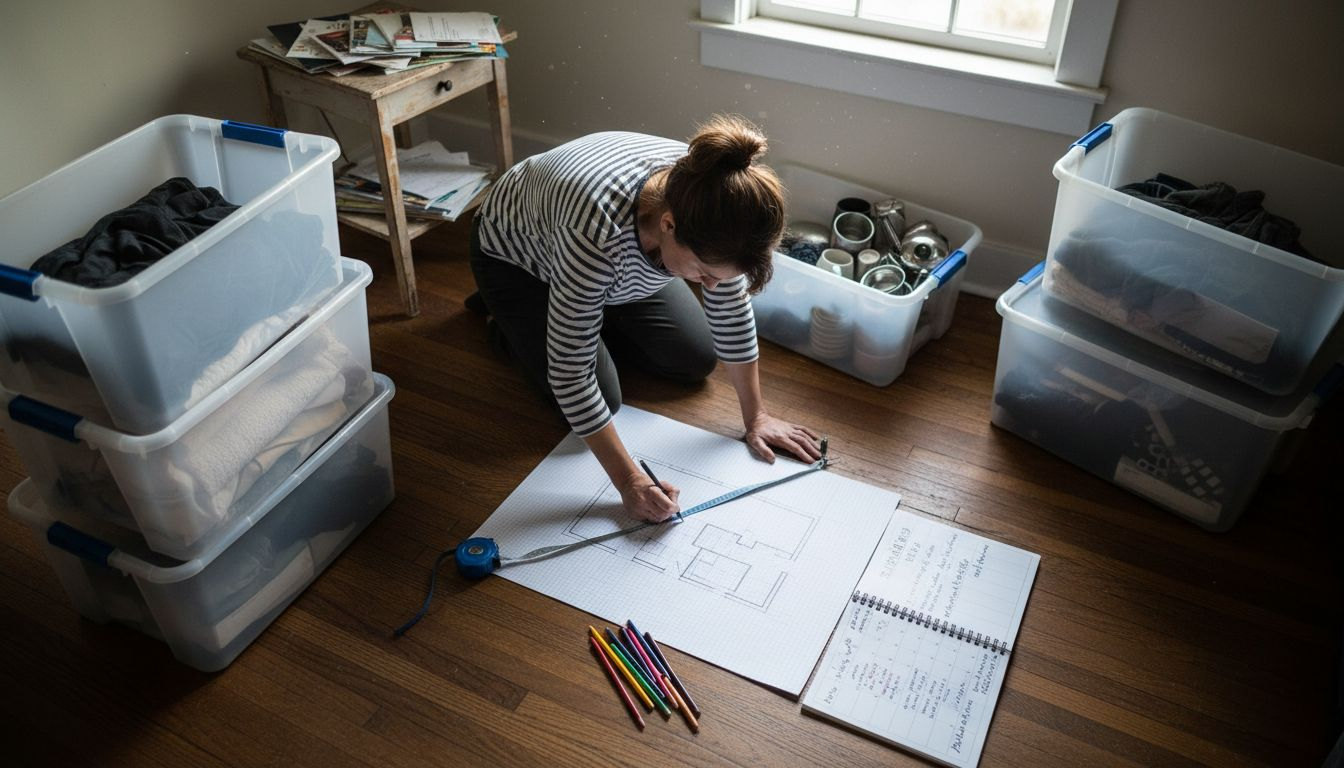
Think of your home as distinct neighbourhoods, not one continuous space. Your bedroom isn’t just where you sleep—it might also be your office, dressing room, and reading nook. Your living area could host relaxation, entertaining, and dining. The key is designating specific zones so activities don’t bleed into one another and create visual chaos.
Start by mapping your room on paper. Sketch where light comes in, where traffic naturally flows, and what wall space you have available. Then assign functions to different areas. A corner near the window might become your work zone. An alcove could transform into a reading spot. This intentional planning prevents you from randomly placing furniture and wasting valuable square footage.
Creating distinct zones with smart storage keeps items grouped by usage, making everything easier to find and maintain. Once you’ve identified your zones, choose storage solutions that fit each area’s needs.
Consider these storage approaches for small spaces:
- Vertical shelving maximises wall space without consuming floor room
- Multi-purpose furniture like ottomans with hidden storage serves dual functions
- Modular units adapt as your needs change
- Labelled containers make it obvious what belongs where
- Under-bed storage transforms wasted space into functional capacity
Zoning helps maintain order by giving everything a designated home. When items have a specific place, tidiness becomes automatic rather than exhausting.
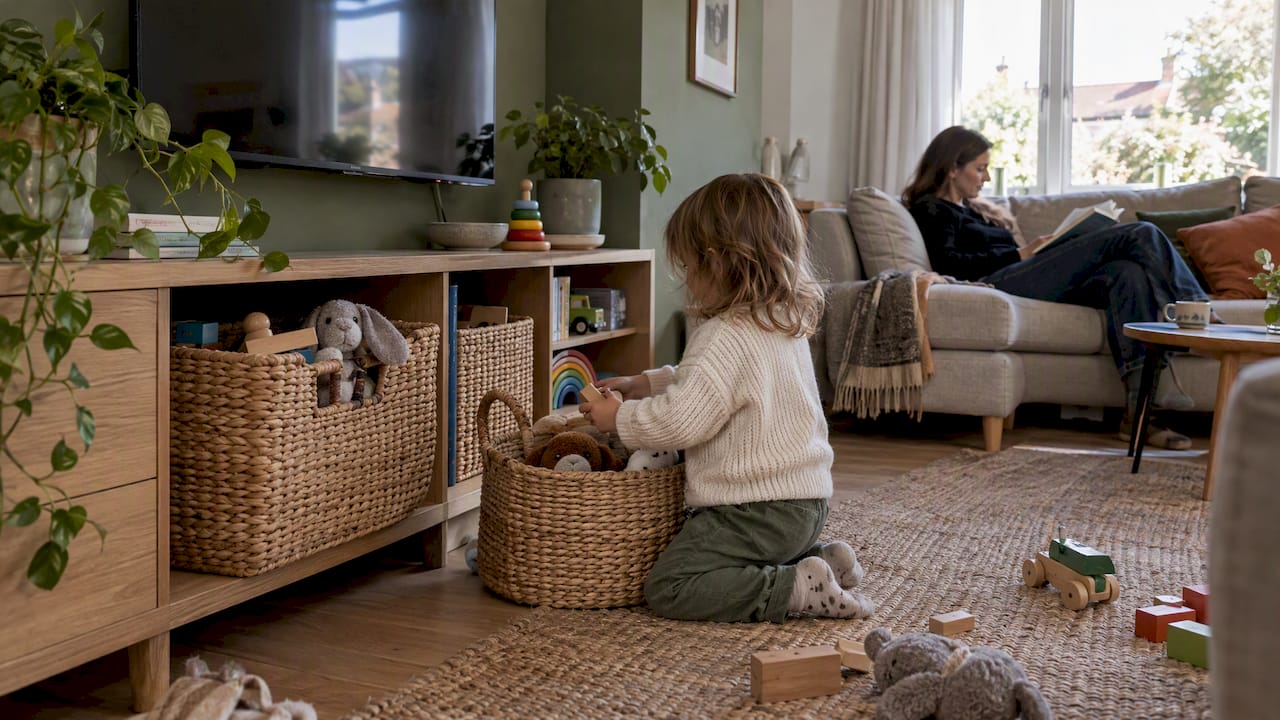
Choose storage that matches your zone’s purpose. Office areas need filing solutions and desk organisation. Bedrooms benefit from under-bed drawers and wall-mounted shelves. Living spaces work better with attractive baskets and modular seating that stores items inside.
To help select the right storage for any zone, use this quick comparison:
| Zone | Most Suitable Storage | Key Benefit |
|---|---|---|
| Bedroom | Under-bed drawers, shelves | Maximises hidden storage |
| Living area | Modular seating, baskets | Blends storage with aesthetics |
| Home office | Filing units, desk organisers | Maintains paperwork order |
| Kitchen | Vertical shelving, racks | Increases vertical capacity |
| Hallway/Entryway | Shoe benches, labelled trays | Keeps daily items accessible |
Smart storage isn’t about buying more containers—it’s about choosing solutions that work harder than standard furniture.
Pro tip: Invest in clear containers rather than opaque ones so you can see what’s inside without opening everything, saving time when you’re hunting for specific items in a compact space.
Step 3: Arrange Items for Maximum Accessibility
Accessibility is about creating an efficient system where you spend less time hunting for things and more time enjoying your space. When items are properly arranged, your daily routine becomes smoother and your small flat feels larger.
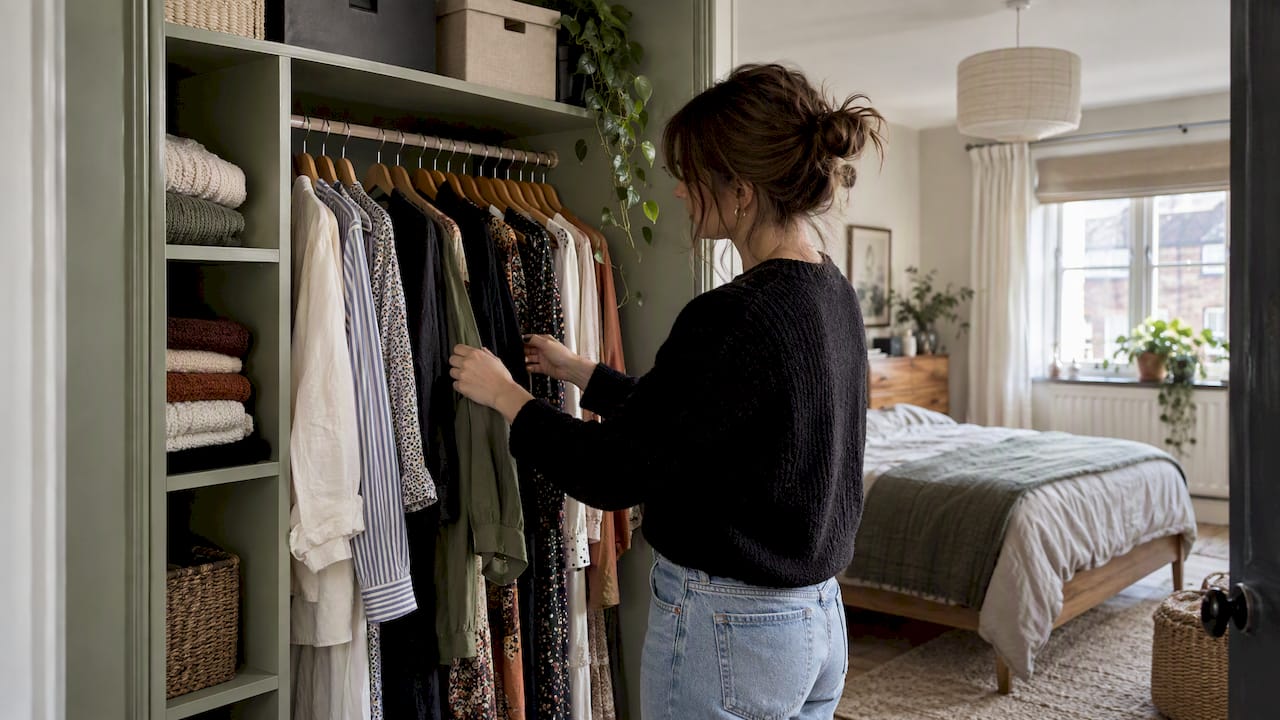
Start with the zone of comfort principle. Your most frequently used items belong in the easiest-to-reach spots, typically between waist and eye level. Kitchen utensils you use daily should sit in the nearest drawer, not tucked away in a high cupboard. Your everyday work supplies belong on your desk surface or in the closest shelf, not three drawers down.
Arranging items by frequency of use reduces the time you waste searching and makes movement around your space feel natural. Think about your typical day—which items do you reach for first thing? Which ones sit untouched for weeks?
Organise your belongings into these accessibility tiers:
- Daily use goes at arm’s reach on shelves, in drawers, or on surfaces
- Weekly use sits slightly higher or further back
- Occasional use moves to upper shelves or storage areas
- Seasonal items live in out-of-the-way spots like under beds or top cupboards
Grouping similar items together is equally important. Keep all writing supplies in one spot, all cleaning products in another, all hobby materials together. When you know where categories live, you’ll find what you need instantly rather than hunting through scattered locations.
Labelling takes this further. A simple label on a shelf edge or container tells you exactly what goes where, making it easier to maintain order and helping guests return items to their proper homes. This system prevents the frustrating cycle of things migrating to random locations.
Consider the stylish storage solutions that work with your design aesthetic whilst keeping frequently accessed items visible and within reach.
When everything has a home and a logical arrangement, organisation becomes effortless rather than a constant battle.
Pro tip: Create a “transition zone” near your door or main living area for items you use several times weekly—your phone charger, keys, current reading material—so they’re accessible without cluttering permanent storage.
Step 4: Verify Functionality and Refine Layout
Your layout looks good on paper, but real life is messier. The true test comes when you actually live in the space for a week or two. This verification phase reveals what works and what needs adjusting.
Start by using your space normally. Go about your typical week without overthinking. Notice where friction points emerge. Do you stub your toe on that storage bin every morning? Does grabbing your coffee mug require an obstacle course? Are items you thought would be accessible actually buried behind other things?
Testing your layout ensures ease of movement and accessibility. Pay close attention to your natural patterns. Where do you naturally stand when getting dressed? Which path do you instinctively walk through your flat? Which items do you reach for repeatedly?
Observe these practical signals during your testing week:
- Traffic flow tells you if furniture placement blocks natural movement
- Reach patterns show whether your daily items are truly accessible
- Unused zones indicate areas that don’t match how you actually live
- Hidden items reveal storage that’s too deep or obscured
- Frustration moments highlight where the system breaks down
After a week, make small adjustments based on what you’ve learned. Move a shelf if you’re constantly straining to reach items. Relocate a basket if it sits perpetually in your way. Swap the position of two storage zones if one gets used far more than anticipated.
Refinement is ongoing, not one-time. Your needs change seasonally and with life shifts. Schedule a monthly review to spot any creeping clutter or shifting habits. Every few months, reassess whether your current arrangement still serves you or if another tweak would improve things.
Real functionality comes from listening to how you actually live, not forcing yourself into a system that looks perfect but feels awkward.
Small spaces demand this flexibility because every inch matters. What works brilliantly in January might need tweaking come summer when you need different seasonal items accessible.
Pro tip: Use your phone camera to photograph your space from different angles, then review the photos after a week of living in it—you’ll spot awkward arrangements and wasted space you might otherwise miss.
Transform Your Small Space with Stylish and Practical Solutions
Struggling to unlock the full potential of your compact urban home can be overwhelming. The article highlights common challenges such as managing clutter, creating clear zones, and choosing smart storage that truly fits your lifestyle. If you want to bring calm and order to your space while maintaining a stylish look, you need storage and home accessories designed to work hard and look amazing.
At Homable.co.uk, we offer curated storage solutions and modern home accessories that help you organise efficiently without sacrificing style. Choose from multi-purpose furniture, vertical shelving, and clever organisers that fit perfectly into your zones to improve accessibility and maximise every inch of your home. Explore our curated collections to find affordable quality items that turn your small space into a sanctuary. Act now to enjoy free shipping on orders over £100 and start mastering your home organisation today.
Frequently Asked Questions
How do I start decluttering my small space effectively?
Begin by assessing what you truly need and use regularly. Walk through each room and categorise your belongings into three piles: donate, sell, or discard. Aim to complete this assessment within one weekend to create a solid foundation for your organising project.
What is the best way to create zones in my small living area?
Create distinct zones by sketching out your space on paper and assigning specific functions to each area, such as work, relaxation, and dining. Use visual cues, like rugs or furniture placement, to define each zone clearly and enhance functionality. Tie it all together by planning this layout before rearranging anything.
How can I organise items for maximum accessibility in my small home?
Arrange your most frequently used items within easy reach, ideally at waist or eye level. Group similar items together and consider implementing labelled storage solutions to make everything easy to find, keeping in mind that daily items should occupy the most accessible spots.
What should I do if my initial layout doesn’t work for my lifestyle?
Live in your space for a week and take note of any friction points, such as items that are hard to reach or cluttered paths. After this observation period, make small adjustments based on your habits to improve flow and accessibility. Aim to refine your layout at least every few months to adapt to changing needs.
How can I maintain organisation in my small space over time?
Schedule monthly reviews to assess potential clutter and ensure that your current organisation system still serves your lifestyle. Make a habit of reassessing the functionality of your layout and adjusting it as necessary. By setting aside just 15 minutes each month to check in, you can significantly reduce clutter and keep your space organised.