Cart
0
TL;DR:
- Proper table styling creates a welcoming atmosphere and enhances room cohesion.
- Using layered accessories with varied heights and textures adds visual depth.
- Keep arrangements functional and personal, prioritizing warmth over complexity.
Your dining table is the heart of your home, yet so many sit bare and uninspiring, doing nothing for the room around them. A cluttered surface or an empty one sends the same message: no one has thought about this space. The good news is that a simple, step by step approach to table styling can completely shift the mood of your dining area, making it feel intentional, welcoming, and genuinely beautiful. Whether you are working with a compact kitchen table or a grand dining room centrepiece, the techniques in this guide will help you style any surface with confidence and modern flair.
Table of Contents
- Why table styling matters for modern interiors
- Gathering your essential table styling materials
- Step by step table styling: Setting your foundation
- Building your layers: Arranging accessories and feature pieces
- Troubleshooting and perfecting your table styling
- Our take on modern table styling: What works and what doesn’t
- Bring your styling vision home with Homable
- Frequently asked questions
Key Takeaways
| Point | Details |
|---|---|
| Start with a clear base | A clean, empty table is essential for successful styling and makes every detail stand out. |
| Mix heights and textures | Layering different materials and varying the heights of accessories create a visually interesting focal point. |
| Edit and adjust | Fine-tuning your arrangement prevents overcrowding and allows your chosen elements to shine. |
| Prioritise function with style | Select accessories that are both attractive and usable for everyday dining. |
Why table styling matters for modern interiors
It is easy to underestimate how much a dining table shapes the feel of a room. It sits at eye level, it is large, and it draws attention the moment anyone walks in. When it is styled well, everything else in the space feels more considered. When it is not, even the most expensive furniture can look flat.
A well-styled table can serve as a visual anchor in contemporary homes, grounding the room and giving the eye somewhere to rest. This is not just about aesthetics. Research into environmental psychology shows that tidy, intentionally arranged spaces reduce mental clutter and help people feel more at ease. Your dining table is not just furniture. It is a daily experience.
Modern interior design treats every surface as an opportunity. A home decorating guide will consistently point to the dining table as one of the highest-impact areas to address. The trends in 2026 lean towards organic textures, warm metallics, and purposeful minimalism, all of which translate beautifully to table styling.
Here is why table styling deserves your time and attention:
- It creates an immediate first impression for guests
- It reinforces your chosen interior colour palette
- It makes everyday meals feel more special
- It gives you a creative outlet without major renovation costs
- It can be refreshed seasonally for very little spend
“The dining table is the one surface in a home that is both functional and deeply personal. Style it with intention and it will transform the entire room.”
Following modern styling steps does not require a designer budget. It requires a clear process, the right materials, and a little confidence.
Gathering your essential table styling materials
Before you start arranging anything, you need the right building blocks. Rushing into styling without the proper materials leads to a look that feels incomplete or mismatched. Choosing the right materials ensures a polished and cohesive look, so it pays to spend a little time gathering your essentials first.
Here are the core materials for modern table styling:
- Table runner or linen cloth: Your visual base. Choose textured linen, woven cotton, or a metallic runner for a contemporary feel.
- Candleholders or taper candles: Instant warmth and height variation.
- A central vase or vessel: Even a single stem adds life and softness.
- Decorative objects: Think sculptural bowls, small trays, or a statement ornament.
- Tableware: Plates, napkins, and glassware that complement your colour palette.
| Material | Suggested use | Modern style tip |
|---|---|---|
| Linen runner | Visual base layer | Opt for natural, undyed tones |
| Glass vase | Centrepiece focal point | Single stem for a clean look |
| Metallic candleholder | Height and warmth | Brushed brass or matte black |
| Ceramic bowl | Functional decor | Group with smaller objects |
| Woven placemat | Texture and definition | Layer under tableware |
For those decorating small spaces, choosing compact, multi-purpose accessories is especially important. A small tray, for example, can hold candles and a vase together, keeping the arrangement tight and tidy without sacrificing style.
Pro Tip: Invest in a few versatile accessories in neutral tones. Whites, warm greys, and natural wood tones work across every season and can be dressed up with small colour accents when you want a change.
Step by step table styling: Setting your foundation
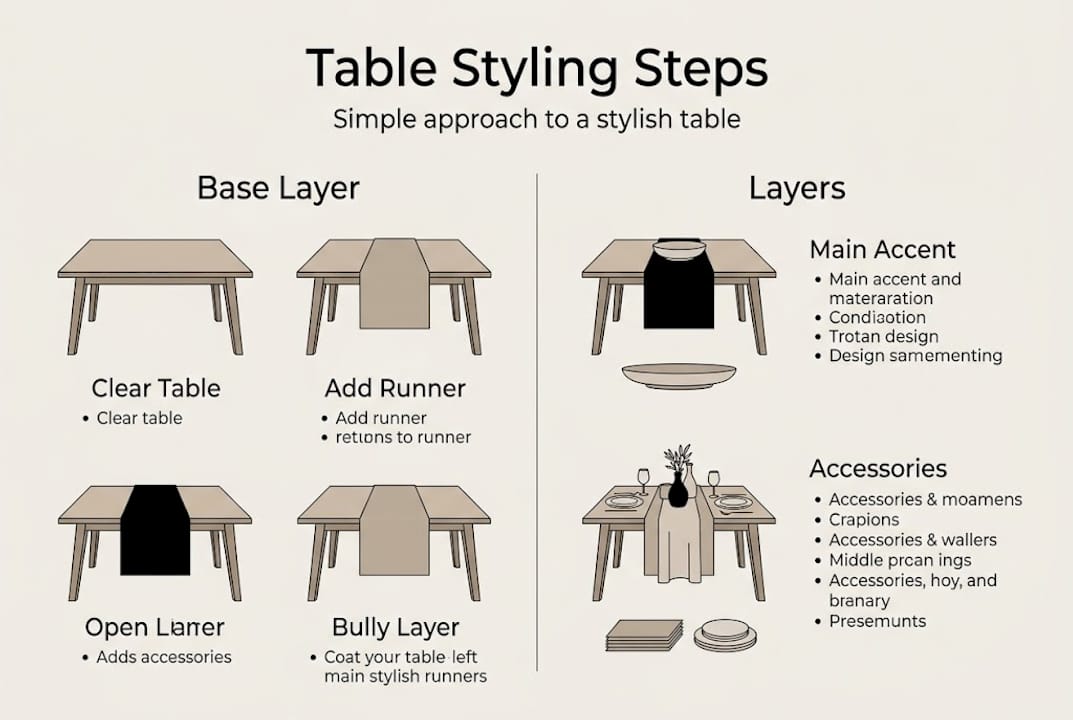
With your materials ready, it is time to lay the groundwork for standout style. The foundation you set here will determine how everything else looks, so do not skip these early steps.
- Clear the table completely. Remove everything, including items you plan to put back. This gives you a blank slate and helps you see the surface properly.
- Clean the surface. Wipe down the table and check for scratches or marks. A clean surface is the best possible starting point.
- Choose your inspiration point. Pick one object, a colour, or a mood that will guide your choices. This could be a piece of artwork nearby, a seasonal theme, or a specific colour you want to highlight.
- Lay your runner or base cloth. Centre it along the length of the table. This single step immediately transforms the surface and sets the visual tone.
- Step back and assess. Before adding anything else, look at the base from a distance. Is the runner straight? Does the colour work with the room?
A consistent starting process avoids clutter and design mismatches, which is the most common reason table styling looks unfinished.
| Style approach | Base choice | Overall effect |
|---|---|---|
| Minimalist | Bare table, single runner | Clean, modern, spacious |
| Maximalist | Layered cloth and runner | Rich, textured, dramatic |
Your room makeover steps should always begin with this kind of structured foundation. Skipping it is like painting a wall without priming first. The interior design workflow professionals use always starts with a clear surface and a defined vision.
Building your layers: Arranging accessories and feature pieces
After your base is set, the real creativity begins with layers and details. This is the stage most people find both exciting and overwhelming, but a few simple rules make it straightforward.
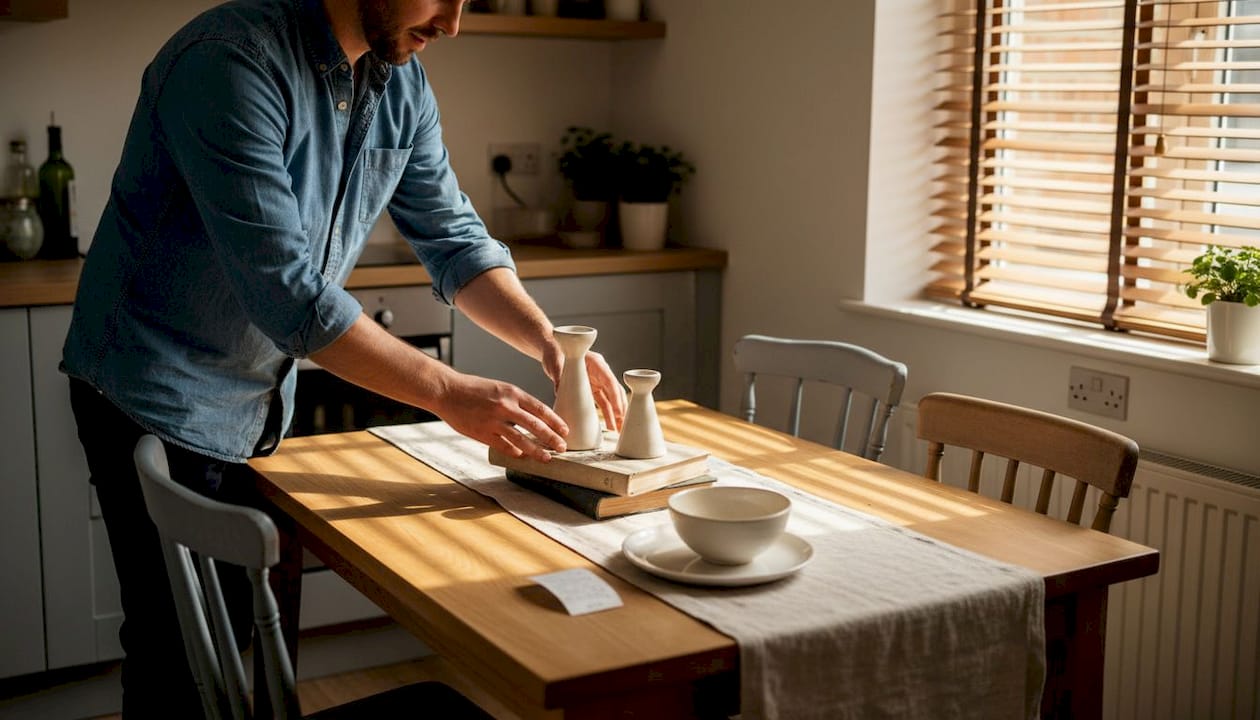
Effective layering creates visual depth and interest, turning a flat surface into something that genuinely draws the eye. The key is to vary height, texture, and material so the arrangement feels dynamic rather than static.
Here is how to build your layers with confidence:
- Start tall, work down. Place your tallest item first, usually a vase or candleholder. This anchors the arrangement.
- Add a mid-height object. A ceramic bowl or a small lantern works well here.
- Introduce texture. A woven tray, a folded linen napkin, or a small sculptural piece adds tactile interest.
- Bring in a functional element. A fruit bowl, a small jug of water, or a butter dish reminds guests the table is for living, not just looking.
- Finish with small details. A sprig of greenery, a single candle, or a decorative stone adds the final layer.
Pro Tip: Always use odd numbers of objects in a grouping. Three candlesticks feel more natural and dynamic than four. Five small objects feel curated rather than crowded. This is a trick that decorating workflow professionals use consistently.
85% of interior designers recommend at least three distinct layers for a table arrangement to achieve genuine visual depth. Fewer than three layers tends to look underdressed, while more than five can tip into clutter.
The accessory styling guide approach is always to treat functional objects as decor. A beautiful ceramic bowl does not need to be empty to look good. Fill it with seasonal fruit, pinecones, or even folded napkins and it becomes both practical and stylish.
Troubleshooting and perfecting your table styling
Now let’s troubleshoot any issues and give your table its finishing touch. Even when you follow every step, small problems can creep in. Here is how to identify and fix the most common ones.
- The table looks overcrowded. Remove the most recently added item and reassess. Keep pulling pieces back until the arrangement breathes again.
- There is no clear focal point. Identify your most striking object and move it to the centre or slightly off-centre. Everything else should support it, not compete with it.
- The styling looks pretty but impractical. Ask yourself if people can actually sit and eat comfortably. If not, consolidate your arrangement to one end or the centre, leaving clear space for plates and glasses.
- The colours feel disconnected. Introduce one unifying element, such as a runner or a tray, that picks up tones from at least two of your other objects.
- It looks flat in photographs. Add one more height variation, either taller or lower, to create a more interesting silhouette.
“Style is not about perfection. It is about creating a space that feels right for the people who use it every day.”
Making iterative adjustments is key to a unique, livable style. Do not be afraid to move things around multiple times. The best arrangements rarely happen on the first attempt.
Finally, walk all the way around your table and view it from every angle. Check your decorating checklist and look at the arrangement from a seated position too. What guests see when they sit down matters just as much as the standing view.
Our take on modern table styling: What works and what doesn’t
Having covered the fundamentals, it is worth reflecting on what truly makes table styling successful, and where a lot of well-meaning advice goes wrong.
The biggest myth in table styling is that more always means better. Social media feeds are full of maximalist tablescapes that look extraordinary in a photograph and completely impractical for a Tuesday evening dinner. Real styling success comes from arrangements that work for your actual life. A busy family does not need a towering floral centrepiece that blocks conversation. They need something low, simple, and easy to move when the pasta arrives.
Traditional centrepieces are often overrated too. A single sculptural object or a trio of mismatched candles will frequently outperform a formal flower arrangement in terms of everyday livability. The decorating workflow insights that resonate most with real homeowners are always the ones that prioritise function alongside beauty.
What actually creates a welcoming table is warmth, not complexity. Candlelight, a natural material, and one personal object will do more for the atmosphere than ten carefully sourced accessories. Instagram trends push novelty. Your home deserves something that feels genuinely yours.
Bring your styling vision home with Homable
You now have a clear, step by step process for transforming your dining table into a space that feels modern, intentional, and genuinely inviting. The right accessories make all the difference, and that is exactly where Homable comes in.
At Homable, you will find a carefully curated range of home accessories designed to complement every styling approach, from pared-back minimalism to richly layered looks. Whether you are looking for a bamboo rug set to anchor your dining area or a pink woollen rug to introduce warmth and texture underfoot, the collection has something for every taste and budget. With free shipping on orders over £100 and new arrivals added regularly, it has never been easier to bring your styling vision to life.
Frequently asked questions
What is the first step in table styling?
Begin by clearing your table completely and cleaning the surface. A clean surface provides the best foundation for creative table styling and helps you see the space with fresh eyes.
How do I choose a colour palette for my table?
Select a palette that reflects your room’s mood, using tableware and accessories to introduce accent colours. Colour coordination unifies your styling theme and prevents a disjointed look.
How often should I update my table styling?
Refresh your table styling with changing seasons or special occasions to keep your look current. Seasonal changes offer great opportunities to experiment with new centrepieces and accessories without a full overhaul.
What is a good way to avoid an overcrowded look?
Stick to odd groupings and leave deliberate negative space so your focus points stand out clearly. Odd groupings feel more balanced and visually appealing than even-numbered arrangements.