Cart
0
TL;DR:
- Home styling is about personalizing your living space with intentional decoration, unlike home staging aimed at preparing homes for sale. A good styling guide provides structure for selecting colors, arranging furniture, layering accessories, and applying lighting, making the process accessible for everyone. Ultimately, styling reflects your personality, encouraging creativity, flexibility, and ongoing evolution rather than rigid adherence to rules.
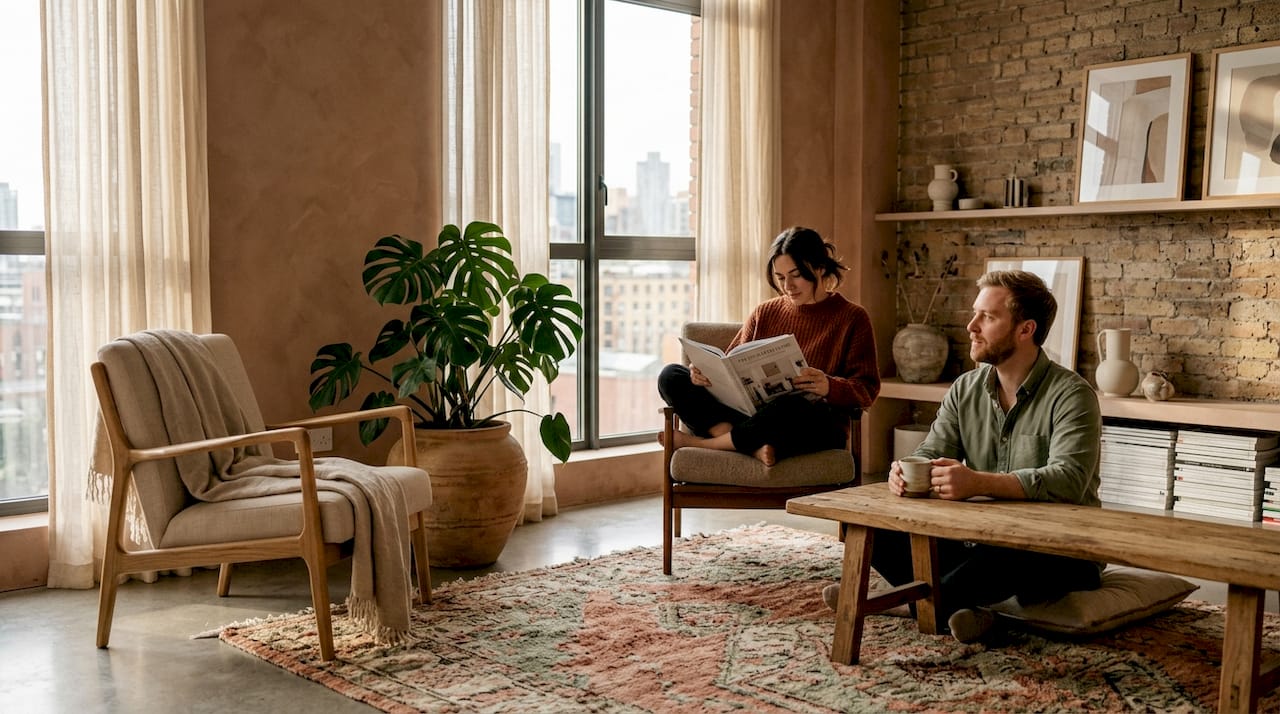
Most people confuse home styling with home staging, and it’s an easy mistake to make. Staging is what estate agents recommend before listing a property, stripping rooms back to neutral tones and minimal furniture so buyers can project themselves into the space. Styling is something entirely different. It’s about you, your personality, and how you want to feel when you walk through your own front door. A home styling guide is a practical, step-by-step resource that helps homeowners and design enthusiasts transform their lived-in spaces through intentional decoration, furniture arrangement, and thoughtful accessory curation.
Table of Contents
- Understanding the role of a home styling guide
- Home styling vs. home staging: Key differences explained
- What you’ll find in a home styling guide
- Applying home styling principles: Practical tips for your space
- What most guides miss: Personal style is the best style
- Explore curated styling guides for every space
- Frequently asked questions
Key Takeaways
| Point | Details |
|---|---|
| Home styling guides demystified | These guides give practical, step-by-step advice for truly personalising any living space. |
| Styling vs. staging | Styling creates a personal, lived-in look, while staging is about creating neutral appeal for selling. |
| Actionable results | Using a home styling guide equips you with a clear framework, reducing overwhelm and enabling confident changes. |
| Personal expression matters | Blending guide tips with your own style leads to a more authentic and enjoyable home. |
Understanding the role of a home styling guide
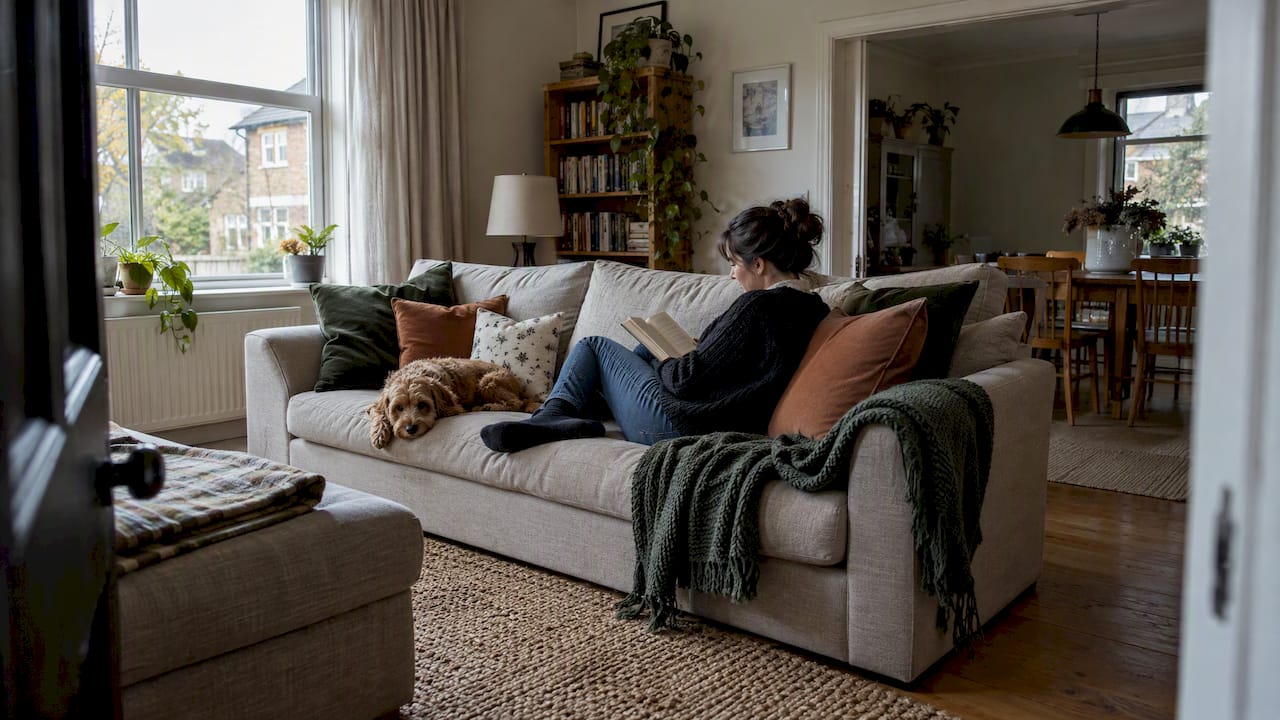
A home styling guide is not a glossy coffee table book full of unattainable interiors. It’s a working tool. Whether you’re freshening up a living room or pulling together an entire flat from scratch, a good guide gives you structure without taking away your creative freedom.
The core elements a styling guide typically covers include:
- Colour selection: How to choose palettes that feel cohesive across rooms, considering natural light, room size, and the mood you want to create
- Furniture layout: The principles of flow, proportion, and balance that make a room feel intentional rather than thrown together
- Accessory curation: How to layer ornaments, cushions, throws, rugs, and art to bring warmth and personality into a space
- Lighting strategy: How different light sources (natural, ambient, task, accent) can dramatically shift how a room feels
- Texture and material mixing: The subtle art of combining hard and soft materials to add depth without clutter
“A home styling guide offers practical tips, methodologies, and ideas for homeowners and design enthusiasts to enhance and personalise their living spaces through intentional decoration, furniture arrangement, and accessory curation.” — Interior Style Host
The beauty of a styling guide is that it works for everyone. You don’t need a large home, a generous budget, or any formal design training. Renters benefit just as much as homeowners, because the principles focus on portable, adaptable changes rather than permanent fixtures. Someone in a studio flat can apply the same colour psychology and accessory grouping techniques as someone decorating a five-bedroom house.
One common misconception is that styling is only for people who already have good taste. In reality, the desire to personalise your space is something most of us feel instinctively. A styling guide simply gives that instinct a framework.
Home styling vs. home staging: Key differences explained
Now that you understand what a home styling guide offers, it’s worth seeing clearly how it differs from home staging. The two terms get used interchangeably, but they have very different goals, audiences, and outcomes.
| Home styling | Home staging | |
|---|---|---|
| Purpose | Create a personalised, liveable space | Prepare a property for sale |
| Audience | The person living in the space | Potential buyers |
| Approach | Bold, personal, reflective of lifestyle | Neutral, minimal, broadly appealing |
| Duration | Long-term, evolving over time | Temporary, for the sale period only |
| Emotional tone | Warm, characterful, individual | Detached, show-home feel |
| Who benefits | The homeowner | The vendor and estate agent |
The practical implications of this distinction are significant. When you style your home for living, you’re making choices that genuinely improve your daily experience. You might choose a deep teal sofa because you love the colour, hang art at a height that feels right to you, or layer mismatched textiles that tell your personal story.
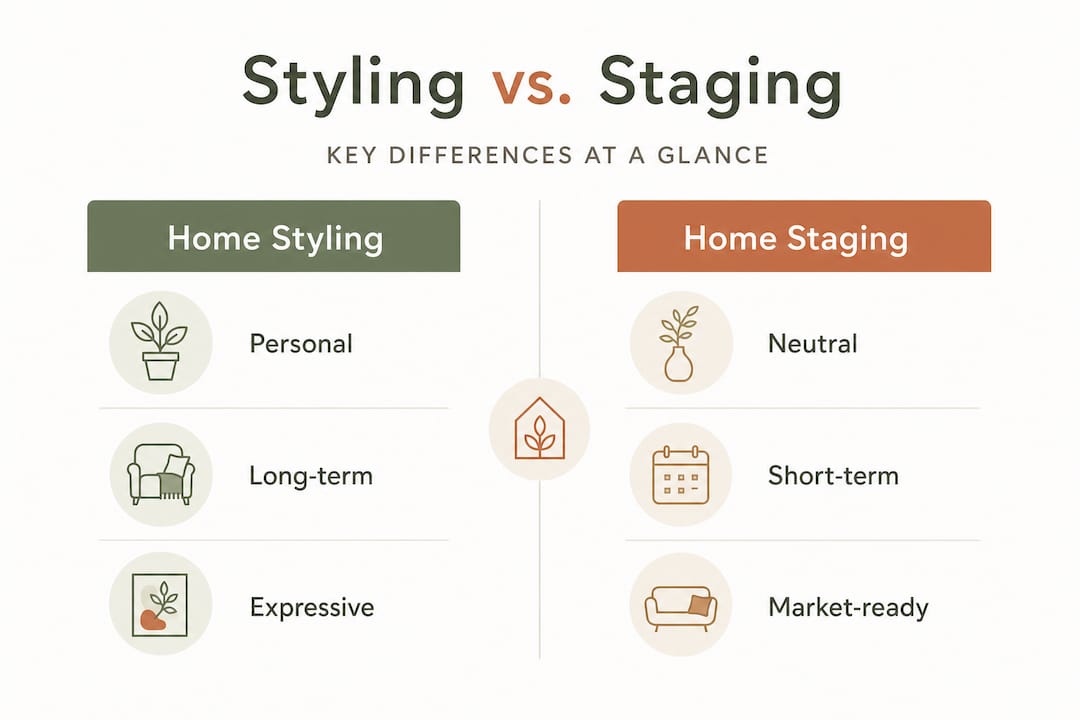
Home styling can also boost value and wellbeing in ways that go far beyond aesthetics. A well-styled home reduces visual clutter, improves how you move through a space, and has a measurable positive effect on mood and comfort.
As the research is clear: styling is personal and long-term for living, while staging is temporary and neutral for selling. Understanding this difference frees you to make choices that suit your actual life rather than some imagined future buyer.
Pro Tip: If you’re ever tempted to “neutralise” your home out of habit or external pressure, ask yourself who you’re actually decorating for. Your home should serve you first.
What you’ll find in a home styling guide
A well-structured styling guide is not just a list of tips. It follows a logical progression that takes you from where you are now to where you want to be, room by room and layer by layer. Here’s what a typical modern guide covers:
| Section | What it addresses |
|---|---|
| Style discovery | Identifying your personal aesthetic, mood boards, and inspiration sources |
| Colour principles | Palette building, undertones, and how colours interact across rooms |
| Furniture planning | Scale, proportion, traffic flow, and layout strategies |
| Accessory layering | Grouping, the rule of odd numbers, height variation, and focal points |
| Lighting design | Natural and artificial light, layering sources, and temperature |
| Texture and material | Mixing hard and soft, warm and cool, smooth and textured surfaces |
| Room-by-room application | Specific tips for living rooms, bedrooms, kitchens, and bathrooms |
| Seasonal refreshes | Low-cost ways to update a space without a full restyle |
The benefits of following a guide in this sequence are considerable. Many people feel overwhelmed when they start decorating because they’re trying to make dozens of decisions simultaneously. A guide reduces that overwhelm by breaking the process into manageable steps and giving you a clear order of operations.
A step-by-step decorating guide helps you avoid the most common pitfall: buying individual pieces you love without considering how they’ll work together. When you follow a structured approach, you end up with a space that feels intentional from every angle rather than a collection of nice things that don’t quite connect.
To get the most from any styling guide, follow these steps in order:
- Complete the style discovery section first. Don’t skip this to get to the decorating tips. Knowing your aesthetic saves you from expensive mistakes.
- Work room by room rather than tackling everything at once. Finish one space before moving to the next so you can see what’s working.
- Build your palette before you buy anything. Pin your colours to a physical board with fabric swatches and paint samples so you can see them in your actual light conditions.
- Layer in stages. Start with large furniture, then add rugs and curtains, then cushions and throws, then accessories and art. Each layer should feel complete before you add the next.
- Review and edit. After living with a room for two weeks, remove anything that doesn’t feel right. Less is almost always more in the final edit.
As a modern home styling guide will tell you, the editing phase is where most amateurs shortcut themselves. The discipline to remove things you like but that don’t serve the overall space is what separates a styled room from a decorated one.
Applying home styling principles: Practical tips for your space
Understanding structure is one thing; putting it into action in a real home is another. Here are the core principles you can start applying today, regardless of your budget or the size of your space.
Key styling principles to apply:
- Anchor every seating area with a rug. A rug defines a zone and immediately makes a room feel more intentional. The most common mistake is choosing a rug that’s too small.
- Group accessories in odd numbers. Three or five objects of varying heights always look more natural and dynamic than an even arrangement.
- Use the 60-30-10 colour rule. 60% dominant colour (walls, large furniture), 30% secondary (rugs, curtains, upholstery), 10% accent (cushions, ornaments, art). This creates balance without monotony.
- Create a focal point in every room. A statement mirror, a gallery wall, a bold piece of furniture, or a large plant. Your eye needs somewhere to land when you enter a space.
- Layer your lighting. Never rely on a single overhead source. Add floor lamps, table lamps, and candles for warmth and depth, particularly in the evenings.
Statistic worth noting: staged homes sell up to 3x faster, with 85% of agents agreeing that styling impacts buyer perception. If professional stagers think carefully about how a space feels, imagine what that same intention can do for a home you actually live in every day.
Perhaps the most exciting principle in contemporary styling is the encouragement to break traditional rules. Hang art lower than eye level for an intimate feel. Use a lampshade instead of a standard pendant. Mix metals freely. Layer rugs on rugs. The most interesting homes belong to people who understood the rules well enough to know when to ignore them.
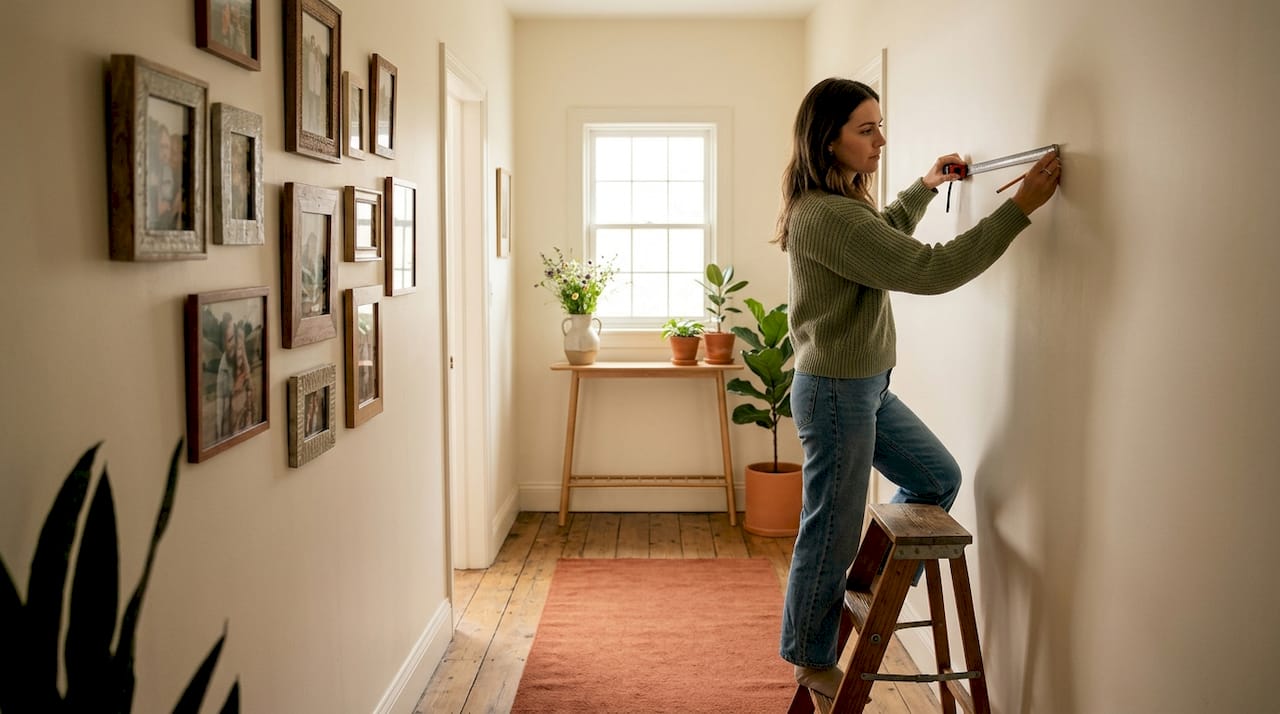
Pro Tip: Don’t decorate to impress visitors. The best-styled spaces are ones that feel deeply right to the person who lives in them. Boldness is not about maximalism; it’s about conviction.
For accessory styling steps and advice on decorating small spaces, the same principles apply at any scale. Small spaces, in particular, benefit enormously from carefully considered accessories because every object is more visible and more impactful.
What most guides miss: Personal style is the best style
Here is something most home styling guides won’t say directly: the guide is not the destination. It’s the map. And maps, as any traveller knows, are not the same as the territory.
The best-designed styling frameworks give you language for what you already feel. You might have always known you prefer rooms that feel calm and uncluttered, but until you found the word “Japandi,” you didn’t know how to shop for that feeling or explain it to someone else. Guides don’t create your taste. They help you articulate and act on it.
Where many guides fall short is in their implicit message that there is a correct way to style a space. There isn’t. Some of the most compelling homes we come across deliberately break the orthodoxy. Art hung in unexpected places. A bold decision to mix styles that no rulebook would recommend. A bedroom that prioritises personal collections over clean lines. These homes feel alive because they reflect a real person.
The uncomfortable truth is that following any guide too rigidly tends to produce safe, forgettable spaces. The goal is to use a guide to get confident enough that you can start making choices that surprise even yourself.
We’ve seen this pattern repeatedly at Homable. Customers who start by cautiously following colour rules and proportion guidelines eventually become the ones experimenting most boldly. The knowledge doesn’t constrain them; it liberates them. Once you understand why certain combinations work, you stop being afraid to try things that shouldn’t work on paper but somehow do in your actual room.
The other thing guides rarely acknowledge is that styling is iterative and joyful. It’s not a project with a completion date. Your home should change as you change, picking up new objects, rearranging what you already own, and reflecting where you are right now. Exploring affordable styling solutions makes this kind of ongoing evolution genuinely accessible, whatever your budget.
Trust your instincts. Use the guide to sharpen them, not replace them.
Explore curated styling guides for every space
You’ve now got a solid foundation for approaching home styling with intention and confidence. The next step is finding inspiration and practical guidance that’s matched to your specific rooms, your aesthetic, and your budget.
At Homable, we’ve brought together curated room guides, styling advice, and a carefully selected range of accessories, ornaments, rugs, cushions, and statement pieces designed to bring these principles to life. Whether you’re starting from scratch or looking to refresh a single room, you’ll find products and ideas that help you move from concept to finished space with ease. With free shipping on orders over £100 and a range that spans every room in the home, Homable is built to support every stage of your styling journey.
Frequently asked questions
Is a home styling guide useful for small flats or rental spaces?
Absolutely. A good styling guide for small spaces focuses on portable décor, clever layering, and easy transformations that work beautifully in compact or rented homes without requiring permanent changes.
How does home styling increase property value?
Well-styled homes are more appealing to buyers and tend to sell up to 3x faster while often achieving higher prices, because cohesive, inviting spaces make a stronger emotional impression.
What’s the main difference between decorating and styling?
Decorating addresses the fixed elements of a room such as paint and fixtures, while styling layers in personality, accessories, and arrangement. Styling is personal and long-term, whereas decorating provides the structural backdrop.
Should I follow styling ‘rules’ or create my own?
Use styling frameworks to build confidence, but breaking rules boldly and trusting your instincts is exactly what produces homes with genuine character and warmth.