Cart
0
TL;DR:
- Most UK entryways become cluttered with shoes, coats, keys, and mail, creating a chaotic first impression.
- Designing zones for shoes, coats, and essentials, combined with vertical storage, improves organisation and flow.
- Maintaining a systems-based routine ensures the space remains tidy, functional, and welcoming over time.
Your entryway is the first thing you see when you walk through the door, and the last thing you interact with before you leave. Yet for most UK households, it ends up as a dumping ground: shoes scattered across the floor, coats piled on a single hook, keys nowhere to be found, and yesterday’s post wedged under a bag. The result is a chaotic start to every morning and a less than welcoming first impression for anyone who visits. The good news is that a few well-chosen accessories and a simple, consistent workflow can completely transform this space into something both beautiful and genuinely practical.
Table of Contents
- Assess your entryway requirements
- Choose the right accessories for your space
- Implement zones and vertical storage solutions
- Style your entryway for calm and beauty
- Maintain your entryway workflow
- Why workflow matters more than decor trends
- Discover more entryway solutions with Homable
- Frequently asked questions
Key Takeaways
| Point | Details |
|---|---|
| Define clear entryway zones | Create dedicated spots for shoes, coats, bags, and essentials to prevent clutter from spreading into other rooms. |
| Prioritise vertical storage | Use wall hooks and shelves over floor furniture to maximise space and keep walkways open, especially in small entryways. |
| Combine style and utility | Select accessories that look good and make daily routines easier, using ‘pretty but practical’ solutions and regular resets. |
| Maintain with easy routines | Simple daily and weekly reset habits keep your entryway organised without much effort. |
| Workflow first, trend second | Sustained organisation comes from functional workflows, not just following the latest decor trends. |
Assess your entryway requirements
Before you buy a single accessory or rearrange a single hook, it pays to properly understand what your entryway actually needs to do. Every household is different. A family with two young children, a dog, and a mountain of after-school bags has very different requirements from a professional couple who travel frequently and need streamlined storage for luggage and outerwear.
Start by identifying the daily patterns that play out in your hallway. Think about shoes and whether they get kicked off the moment anyone walks in. Consider coats, bags, and whether post gets dropped on a surface or straight onto the floor. If you have pets, factor in leads, coats, and muddy paws. Children add backpacks, sports kits, and lunchboxes to the equation. All of these items need a designated landing spot or they will end up exactly where they should not be.
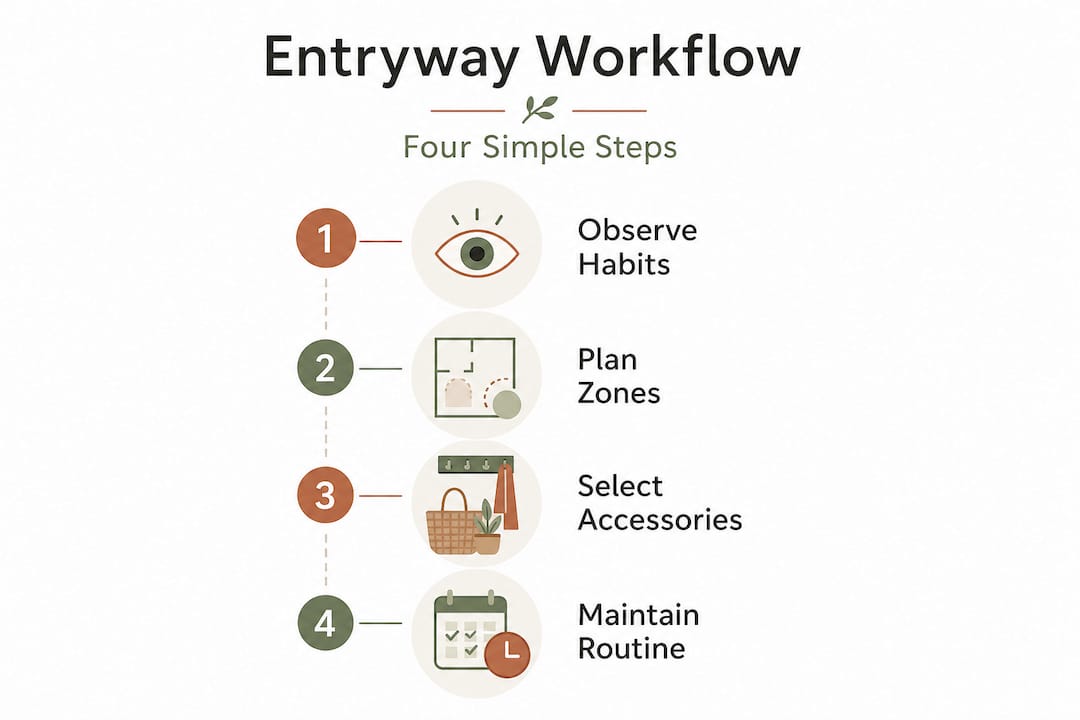
Once you have a clear picture of household patterns, think about the physical space you are working with. Is your entryway a narrow corridor, an open porch, or a generously proportioned hallway? Does it receive natural light? Are there existing built-in features like alcoves or a staircase eating into usable wall space? These factors will directly influence what storage you can realistically install and use.
For a functional entryway system, define zones for daily accumulation such as shoes and footwear, coats and bags, and an everyday essentials spot for keys and post so items do not drift into the rest of the home. Think of these zones as invisible boundaries that give every item a clear home.
Here is a quick overview of common entryway zones and their purpose:
| Zone | Items it captures | Recommended accessory |
|---|---|---|
| Shoe drop | Shoes, trainers, wellies | Shoe rack, bench with storage |
| Coat and bag station | Coats, jackets, bags, scarves | Wall hooks, coat stand |
| Essentials tray | Keys, sunglasses, wallets, post | Console tray, small basket |
| Overflow storage | Sports kit, umbrellas, pet items | Lidded basket, under-bench bin |
Key considerations before choosing any accessory:
- Measure your available floor and wall space precisely
- Note the height of your ceiling for any tall storage units
- Consider how many people regularly use the entryway
- Think about whether you need seating as well as storage
- Identify whether you want open display or concealed storage
Pro Tip: Observe your entryway without changing a thing for one full week. Take note of what accumulates and where. This exercise reveals true household patterns rather than what you think happens, and it will save you from buying the wrong accessories. You can also browse entryway styling tips for additional inspiration as you plan your approach.
Choose the right accessories for your space
Once you know what your entryway needs, selecting the right accessories becomes a much more focused task. The market is full of attractive options, but not everything that looks good in a showroom will serve your household’s real behaviour.
The core choice most homeowners face is between a bench, a console table, or modular storage. Each has its strengths:
| Accessory | Best for | Footprint | Storage capacity |
|---|---|---|---|
| Bench with storage | Families, shoe management, seating | Moderate | High |
| Console table | Styling, lighter traffic, display | Slim | Low to moderate |
| Modular wall units | Flexibility, larger households | Wall-mounted | Very high |
| Floating shelves | Small spaces, vertical use | Minimal | Low |
Choosing entryway furniture and accessories based on household behaviour and workflow makes a measurable difference: benches work well for daily shoe management and provide seating, while consoles suit decorative styling with a lighter floor footprint.
Follow this decision process when selecting your accessories:
- List every item that must be stored. Be specific: three pairs of daily shoes, two adult coats, one child’s coat, two bags, one set of keys, and so on.
- Rank items by frequency of use. Daily items need the most accessible storage. Weekly or seasonal items can be stored higher up or further back.
- Match storage type to item size. Bulky coats need generous hooks spaced at least 15cm apart. Shoes need a rack with enough depth for larger sizes.
- Consider your household’s habits honestly. If no one will ever open a drawer to put their keys away, a surface tray is a better solution than a drawer unit.
- Test scale before buying. Mark out the footprint of a bench or console with masking tape on the floor to check it won’t obstruct movement.
This step-by-step styling guide can also help you visualise how accessories work together within a hallway layout before you commit to a purchase.
Pro Tip: In narrow hallways where floor space is tight, focus on vertical hooks and a slim console rather than a chunky bench. Wall-mounted hooks at two heights, one for adults and one lower for children, double your hanging capacity without using a single centimetre of floor space.
Implement zones and vertical storage solutions
After choosing your accessories, the next step is arranging them into a clear, intuitive layout. The goal is that every member of your household, including children and frequent guests, should immediately understand where things go without being told.
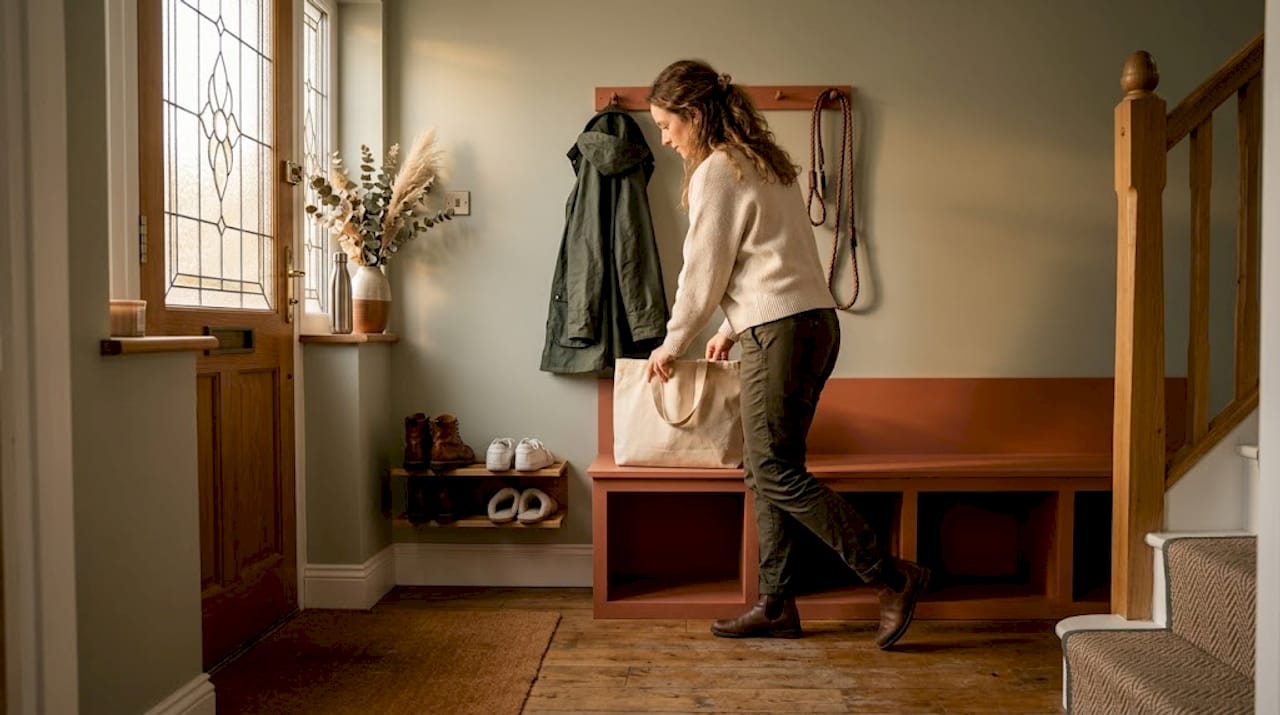
Assign a specific spot for each daily item category. Shoes go to the shoe rack or bench cubbies. Coats hang on wall hooks positioned near the door so they are easy to reach the moment someone walks in. Bags sit on lower hooks or a dedicated hook rail. Keys, post, and small everyday items land in a tray or basket on the console or a floating shelf.
When space is limited, prioritise vertical storage such as wall hooks and floating shelves, along with containment tools like trays, baskets, and lidded boxes, rather than adding more floor furniture. This principle is the single most effective change you can make in a compact UK hallway, where every square metre matters.
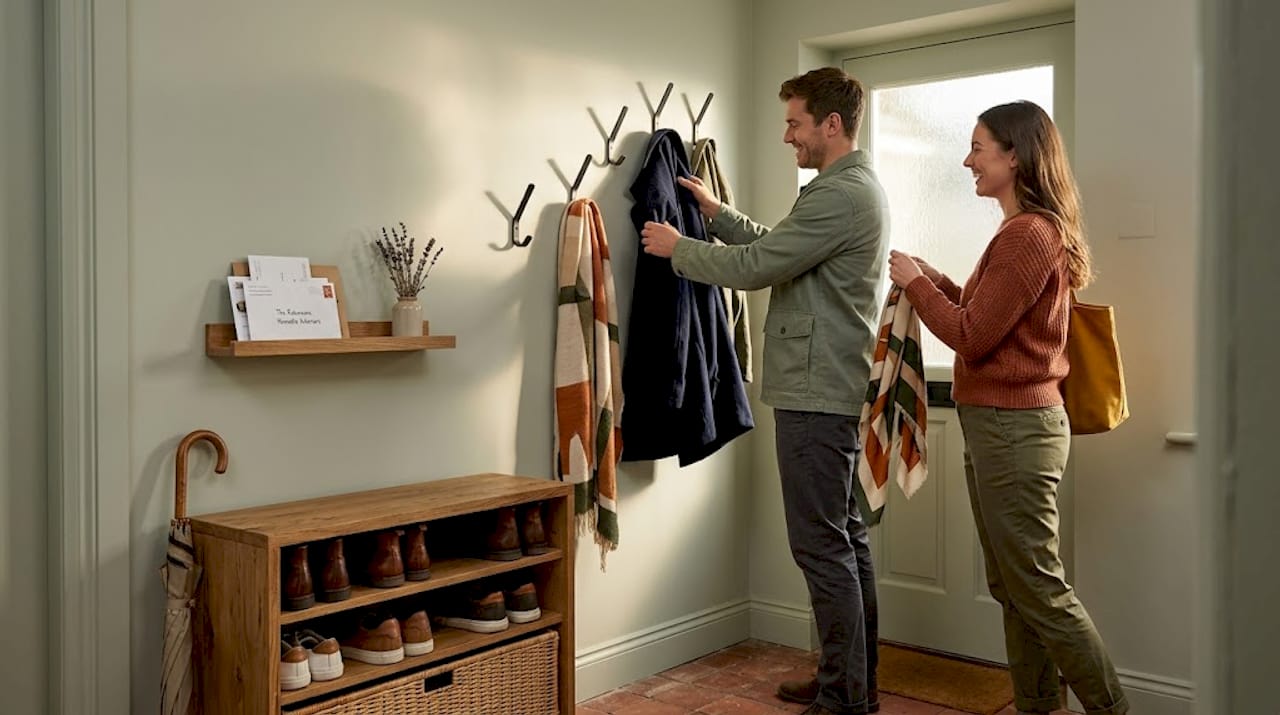
Installing wall hooks correctly makes a significant difference. Fix hooks at a height that is comfortable for the tallest person in the household, then add a second row 40 to 50cm lower for children or shorter bags. Floating shelves above the hook rail can hold baskets for hats and gloves, keeping these small items organised rather than stuffed into coat pockets.
Excellent accessories for small entryways include:
- Slim wall-mounted hook rails that hold multiple coats without protruding far into the hallway
- Floating shelves with baskets to contain hats, gloves, scarves, and dog leads
- Under-bench shoe cubbies that use space which would otherwise be dead floor area
- Over-door organisers that make use of the back of your front door
- A lidded basket for items that would otherwise sit loose and create a visually cluttered feel
“Capturing items at the point of entry is not just about tidiness. It is the foundational habit that keeps the rest of your home organised. When the entryway works, everything else follows naturally.”
Pro Tip: Use lidded baskets for items like scarves, gloves, and dog accessories. Lids reduce visual clutter dramatically and make tidying up as simple as dropping items in and closing the lid. See vertical storage examples for ideas that work in hallways of all sizes, and explore the benefits of storage solutions if you are still weighing up whether structured storage is worth the investment.
Style your entryway for calm and beauty
Organisation and aesthetics are not in competition. In fact, a well-organised entryway almost styles itself because the underlying structure is already doing the heavy lifting. Once your zones are in place, a few considered styling choices will pull everything together into a space that genuinely feels welcoming.
The guiding principle is to keep surfaces calm and uncluttered. Studies on interior environments consistently show that visual clutter raises stress levels, with cluttered spaces often described as making occupants feel less able to relax. Using pretty but practical storage solutions and simple styling rules, such as limiting what sits on surfaces and adding softness underfoot, creates a calmer, more inviting feel from the moment you open the door.
Quick ways to make your storage beautiful:
- Choose a cohesive colour palette. Natural tones like warm whites, soft greens, and warm woods create a calming first impression that works across seasons.
- Layer textures thoughtfully. A woven basket beside a smooth ceramic tray beside a linen coat gives the space depth without clutter.
- Add a rug. Even a small runner anchors the space, protects flooring, and adds warmth. Choose one that is easy to shake out and wash.
- Use one or two decorative pieces. A small plant, a piece of artwork, or a simple mirror serves both a functional and aesthetic purpose.
- Edit ruthlessly. If something does not need to be there daily, store it elsewhere. Every surface item should earn its place.
Swapping accessories seasonally is a smart way to refresh your entryway without disrupting the underlying workflow. In autumn and winter, bring forward heavier coat hooks, boot trays, and lidded baskets for hats and scarves. In spring and summer, swap these for lighter hooks, a tray for sunglasses, and a smaller rug. The bones of your system stay the same; only the surface-level styling changes. Browse the decorative storage guide for ideas on combining practical containment with genuine visual appeal.
Maintain your entryway workflow
The most beautifully designed entryway will descend into chaos within days if there is no maintenance routine in place. This is the step most guides overlook, but it is arguably the most important one.
Organisation must be system-based and maintained; purely aesthetic approaches to keeping things tidy are not self-sustaining without a reset routine and clearly assigned zones. A beautiful entryway is not the result of willpower. It is the result of a system that makes the right behaviour effortless.
Build these simple habits into your week:
- A five-minute daily reset. At the end of each day or first thing in the morning, return every misplaced item to its zone. This takes far less effort when zones are clearly defined.
- A weekly basket check. Empty and sort the contents of your baskets and trays. Redistribute anything that has drifted back to the wrong spot.
- A monthly accessory review. Check whether hooks are overloaded, whether the shoe rack is full, and whether any items have found their way to the floor. Adjust zone boundaries if needed.
- A seasonal refresh. Swap out accessories and styling items to reflect the time of year and any changes in household routine.
If your system breaks down, work through these troubleshooting steps:
- Check whether zones are clearly marked or communicated to all household members.
- Identify whether any zone is too far from where the behaviour naturally occurs (for example, a shoe rack positioned away from the door may be ignored).
- Ask whether containers are too difficult to use (lids that are fiddly, hooks placed too high for children).
- Consider whether you have enough capacity for the number of items being stored.
- Adjust placement and accessibility before assuming the system has failed entirely.
Pro Tip: Choose one day a week, such as Sunday evening, to do a brief walkthrough of your entryway. Move a basket, switch out a small decorative piece, or simply rearrange what is on display. This keeps your relationship with the space active and responsive rather than passive. The step-by-step storage solutions resource can help you revisit and refine your system as your household’s needs evolve.
Why workflow matters more than decor trends
There is a temptation, especially with so many beautiful interiors to browse online, to treat the entryway as primarily a styling exercise. Choose the prettiest console, the most on-trend hooks, and the correct shade of sage green, and everything else will follow. In our experience, this approach consistently falls short within weeks.
The uncomfortable truth is that the most photogenic entryways often hide a design flaw: items with no designated place will always migrate, undermining the home’s organisational logic and creating persistent, creeping clutter. A hallway that looks stunning in a photograph but has no functional zones will be a source of daily frustration within a fortnight.
Workflow comes first. When you build your entryway around how your household actually lives, rather than how you wish it lived, the system becomes self-reinforcing. The shoes go back to the rack because the rack is right there, at the right height, easy to use. The keys land in the tray because the tray is the first surface you encounter. The coat hangs on the hook because the hook is at exactly the right height and the first thing you reach for.
Homes with a reset routine and assigned zones consistently look and feel more genuinely cared for than homes where the aesthetic is perfect but the system is absent. Style is the reward for getting the workflow right, not the other way around. When you explore home transformation insights from a workflow perspective, it becomes clear that the homes that genuinely work are those where the practical decisions were made first and the styling followed naturally.
Discover more entryway solutions with Homable
If this guide has helped you see your entryway differently, there is plenty more to explore. Building on the zone-based approach described here, you will find that the right combination of accessories and styling ideas makes the whole system feel effortless rather than effortful.
At Homable, we curate a range of stylish, functional home accessories designed for the way modern UK households actually live. From storage baskets and coat hooks to rugs, consoles, and everything in between, our collections are selected with both aesthetics and practicality in mind. Whether you are starting from scratch or refining an existing setup, our blog resources offer ongoing expert guidance. Explore our creative storage solutions for ideas that go beyond the basics and help you reclaim space throughout your home, not just in the hallway.
Frequently asked questions
What is the most effective way to keep an entryway tidy with kids?
Define clear zones for shoes, coats, and bags at child-friendly heights and use labelled baskets to encourage daily habits. When zones for daily accumulation are clearly visible, children are far more likely to use them consistently.
Which entryway accessory should I prioritise if my space is very small?
Install wall hooks and floating shelves to maximise vertical storage, keeping floors as clear as possible. Prioritising vertical storage and containment tools like trays and lidded baskets delivers the most usable space in compact hallways.
How often should I reset or reorganise my entryway?
A quick daily tidy and a weekly refresh are usually enough to keep entryways organised and functional. Organisation must be maintained through consistent routines rather than relying on willpower alone.
Can I combine decorative and practical storage in my entryway?
Yes, opting for stylish baskets, trays, and benches both contains clutter and enhances the entryway’s appearance. Using pretty but practical storage means you never have to choose between function and style.
What if my entryway becomes messy again even with a system?
Check whether zones are clearly marked and easy to use, then adjust routines or accessory placement as needed. System-based organisation only works when every zone is intuitive and accessible for all household members.