Cart
0
TL;DR:
- UK homes are increasingly compact, requiring stylish and adaptable storage solutions.
- Modern storage combines functionality with aesthetics, including built-in, freestanding, modular, and multi-functional furniture.
- Custom and flexible systems, tailored to household habits, are essential for sustainable organisation.
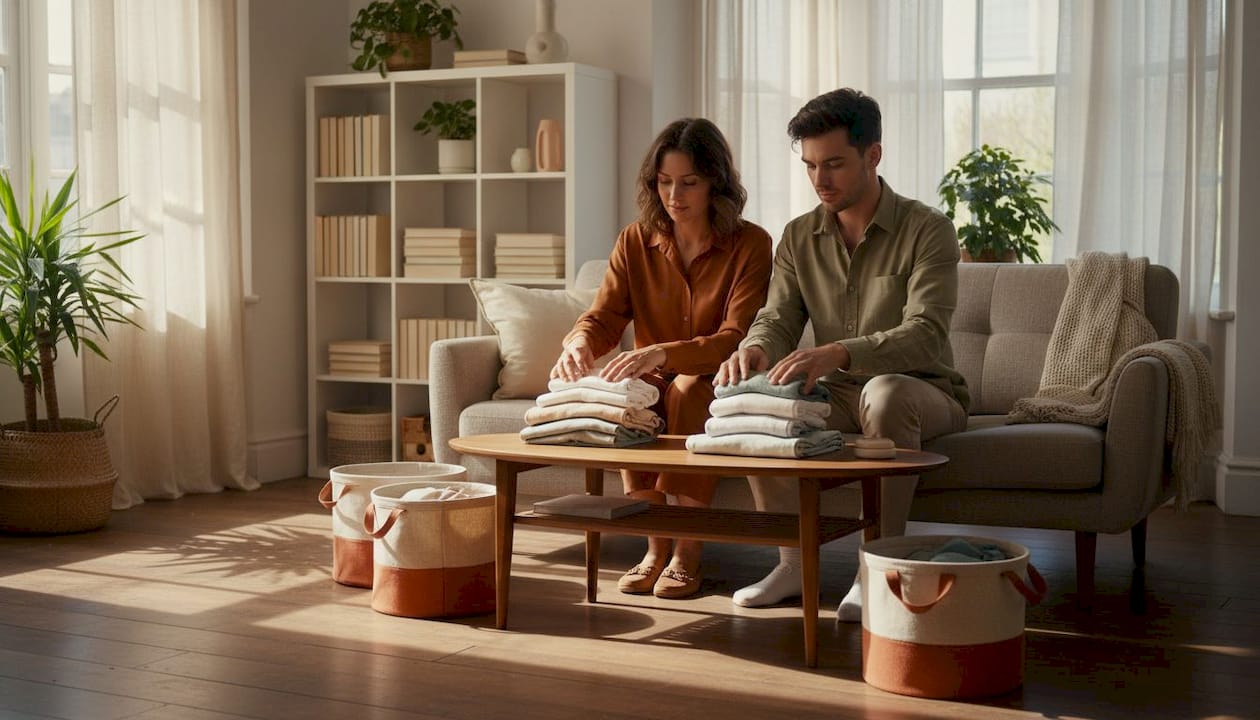
UK homes are shrinking. New-build homes often feature reduced cupboard space compared to older properties, leaving homeowners scrambling for aftermarket solutions that don’t ruin the look of their carefully decorated interiors. Many people believe that adding storage automatically means ugly plastic bins, bulky shelving units, or furniture that clashes with everything else in the room. That simply isn’t true anymore. This article will show you how to choose storage that genuinely works for your lifestyle, fits your space, and looks like it belongs there rather than arrived as an afterthought.
Table of Contents
- Understanding storage solutions: blending function and style
- Types of storage solutions for modern homes
- Tackling challenging spaces: innovative answers for UK homes
- Organising styles and practical routines for sustainable storage
- Why customising storage solutions beats one-size-fits-all advice
- Ready to upgrade your home’s storage?
- Frequently asked questions
Key Takeaways
| Point | Details |
|---|---|
| Blend style and storage | Modern storage solutions let you organise your home without sacrificing visual appeal. |
| Choose the right type | Built-in, modular, and multi-functional options suit different spaces, needs, and budgets. |
| Tackle awkward spaces | Custom solutions work best for narrow, sloped, or smaller rooms in UK homes. |
| Match your routine | Pick systems that fit your organising habits and use quick-win routines for long-term order. |
| Personalise for best results | Customising your storage ensures it works for your home’s unique layout and your lifestyle. |
Understanding storage solutions: blending function and style
Storage solutions have evolved far beyond the basic wardrobe and kitchen cupboard. At their core, they are any system, piece of furniture, or organisational tool that helps you manage clutter, protect your belongings, and make better use of the space you have. In UK homes, this covers an enormous range of options, from built-in joinery crafted by local carpenters to flat-pack modular shelving you assemble yourself on a Saturday afternoon.
Designing storage for modern homes reveals that storage solutions for UK homeowners span built-in wardrobes, utility spaces, modular shelving, multi-functional furniture like storage beds and ottomans, and vertical storage systems. That variety matters because no two homes are identical, and no two households have the same habits, possessions, or priorities.
The most significant shift in recent years is aesthetic. Storage used to be hidden at all costs, tucked behind doors or stacked in spare rooms. Today, open shelving, woven baskets, and colour-coordinated boxes are deliberate design choices. The storage is the decor. This means you no longer have to choose between a tidy home and a beautiful one.
Here are the main categories you’ll encounter:
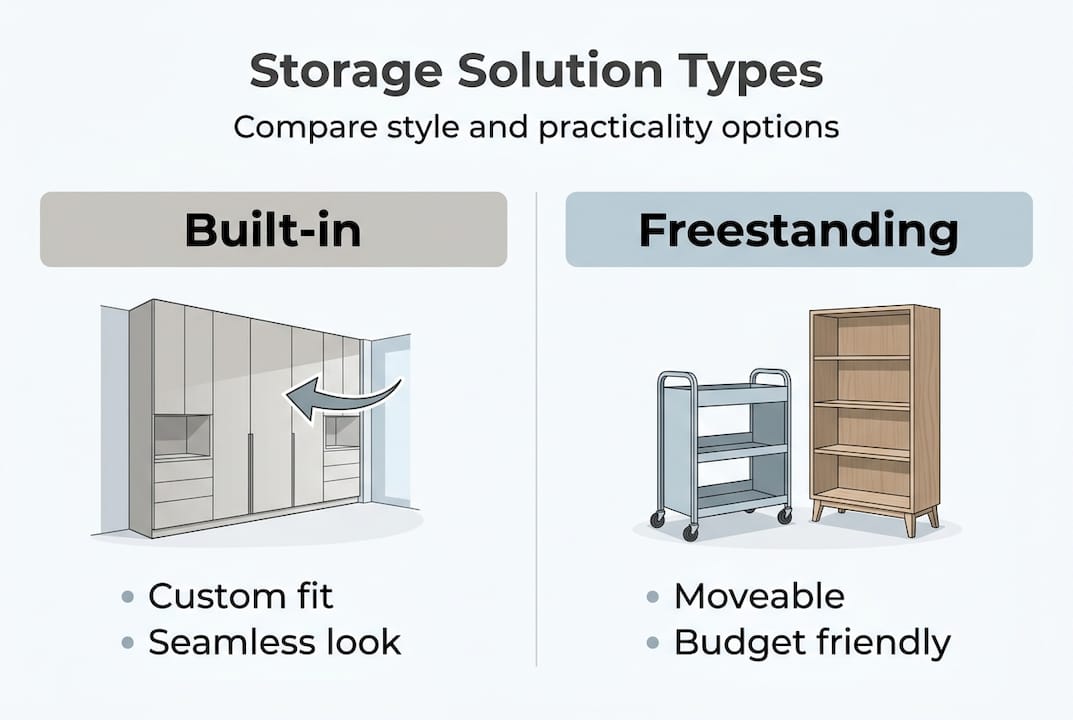
- Built-in storage: Wardrobes, alcove shelves, under-stair cupboards, and fitted kitchen units designed specifically for your space
- Freestanding furniture: Bookcases, sideboards, chest of drawers, and storage cabinets you can move if needed
- Modular systems: Cube units, stackable boxes, and wall-mounted grids that you configure to suit your changing needs
- Multi-functional pieces: Ottoman beds, storage footstools, benches with hidden compartments, and coffee tables with drawers
- Vertical storage: Tall shelving units, pegboards, and wall-mounted rails that draw the eye upward and use height rather than floor space
“The best storage solution isn’t the one that holds the most. It’s the one you’ll actually use consistently without it feeling like a chore to maintain.”
Pro Tip: Before buying anything, photograph the space you’re trying to organise and list the specific items that need a home. This stops you buying attractive storage that turns out to be the wrong size or shape for what you actually own.
Exploring decorative storage solutions is a great way to see how modern products combine visual appeal with genuine practicality, proving that tidiness and taste really can coexist.
Types of storage solutions for modern homes
Understanding the categories is useful, but choosing the right one requires honest comparison. Cost, flexibility, aesthetics, and longevity all play a role in making the right decision for your home.
The table below breaks down the four main types so you can weigh them at a glance:
| Type | Approximate cost | Flexibility | Best suited for | Key drawback |
|---|---|---|---|---|
| Built-in | £2,500 to £8,000+ | Low (fixed in place) | Long-term homes, maximising every centimetre | High upfront cost, can’t move |
| Freestanding | £100 to £800 | High (easily relocated) | Renters, frequently changing layouts | Can look cluttered if mismatched |
| Modular | £300 to £1,500 | Very high (reconfigurable) | Growing families, evolving needs | Requires planning to look cohesive |
| Multi-functional | £150 to £900 | Medium | Small spaces, living rooms, bedrooms | Limited storage capacity per piece |
Data drawn from product comparisons including the IKEA KALLAX, HOMCOM 9-cube units, Dunelm ottomans, and Rhino shelving shows that built-in options range from roughly £2,500 to £8,000 for a professionally installed wardrobe system, while freestanding and modular alternatives typically fall between £300 and £1,500 for a comparable amount of storage capacity.
What the numbers tell you: Built-in storage wins on seamless integration and long-term durability. If you own your home and aren’t planning to move within the next five years, the investment often pays for itself through improved liveability and added property value. Modular units, particularly nine-cube systems, are the sweet spot for renters or homeowners who want flexibility without sacrificing style. You can reconfigure them seasonally, repaint them, or take them to your next property.
A few popular product styles worth knowing:
- Cube units (e.g., IKEA KALLAX or HOMCOM 9-cube): Iconic, versatile, and easy to accessorise with fabric drawers or decorative boxes
- Ottoman storage: Excellent for living rooms and bedrooms; hides blankets, toys, or seasonal items while doubling as seating or a footstool
- Alcove shelving: Custom or semi-custom units that slot into the recesses beside chimney breasts, common in older UK terraced houses
- Pegboard walls: Popular in home offices and kitchens for keeping frequently used items visible and accessible
Browsing stylish storage solutions gives you a clearer sense of how these products actually look in finished UK interiors rather than bare showrooms. And if you want inspiration from real homes, reading examples of stylish storage solutions in modern settings shows how others have tackled the same challenges you’re facing.
The most important factor beyond budget is matching the storage type to your actual lifestyle. A pristine glass-fronted cabinet looks beautiful but becomes a source of daily stress if you have young children or a partner who prefers quick, casual tidying.
Tackling challenging spaces: innovative answers for UK homes
British homes are famously quirky. Sloping ceilings in loft conversions, narrow Edwardian hallways, cramped new-build kitchens with minimal fitted storage, and awkward alcoves that defeat standard off-the-shelf furniture. These are not niche problems. They affect the majority of UK households in some form.
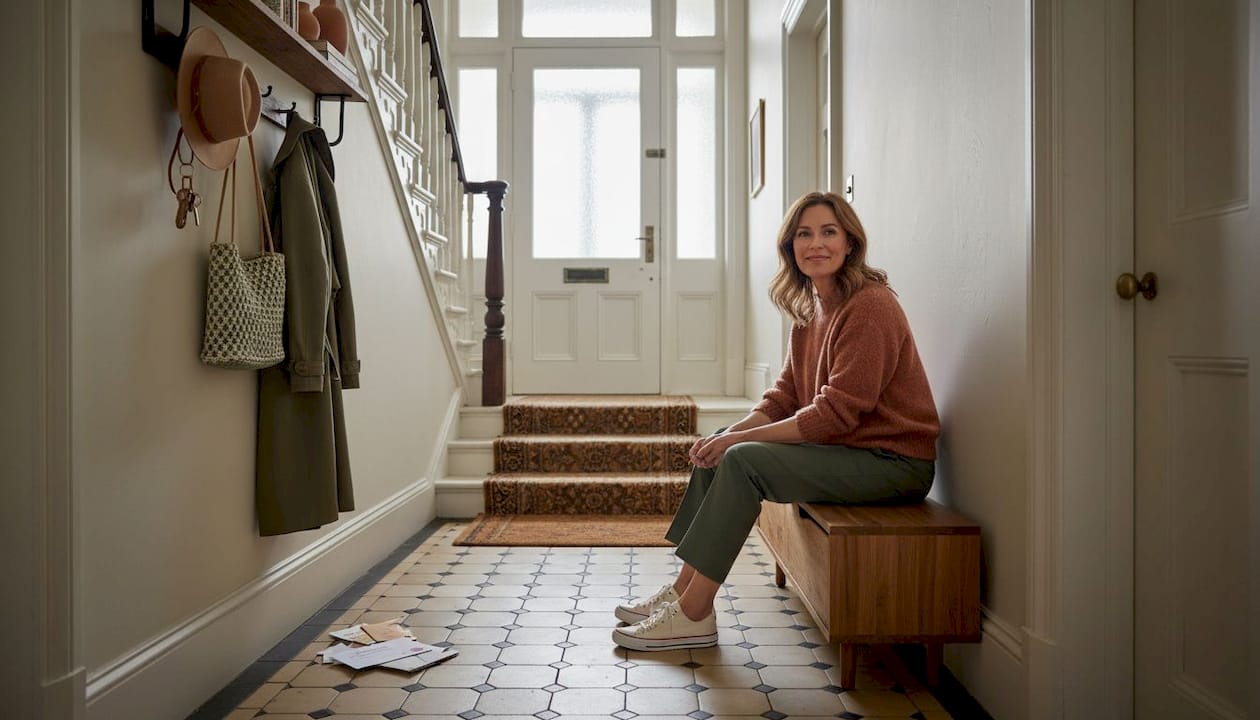
Research into storage challenges in London homes highlights several recurring edge cases: narrow hallways are best served by wall-mounted slim units that sit flush against the wall without impeding movement; sloping roofs in loft rooms require bespoke joinery to avoid wasted dead space beneath the eaves; and new builds with reduced cupboard allocations almost always need aftermarket solutions to make daily life manageable.
Here is a practical step-by-step approach for tackling the trickiest spots:
- Audit what you actually store. Walk through each problem area and write down everything that currently lives there without a proper home. This reveals the true volume and type of storage you need before you spend a penny.
- Measure everything twice. Awkward spaces punish rough estimates. Measure height, width, and depth at multiple points because old walls and ceilings are rarely perfectly square or straight.
- Go vertical first. Most UK rooms have more usable height than homeowners realise. A standard KALLAX unit sat on its side becomes a low bench; stood upright and wall-mounted it becomes a statement display column.
- Choose slim over wide. In narrow hallways and tight landings, a 20-centimetre deep wall-mounted cabinet holds a surprising amount while keeping the walkway clear.
- Commission bespoke for awkward shapes. Under-stair cupboards, eaves storage, and chimney alcoves often need custom joinery. The cost is higher than flat-pack, but the result uses every centimetre rather than leaving odd gaps.
- Use doors as storage surfaces. Over-door organisers, hooks, and pocket systems add storage without consuming any floor or shelf space at all.
| Challenging space | Best solution | Approximate cost |
|---|---|---|
| Narrow hallway | Wall-mounted slim unit or floating shelf | £80 to £350 |
| Under stairs | Fitted pull-out drawers or bespoke shelving | £500 to £3,000 |
| Loft with sloping ceiling | Bespoke eaves storage or low modular units | £600 to £4,000 |
| New-build kitchen | Wall-mounted rails, vertical dividers, drawer inserts | £50 to £400 |
| Small bedroom | Ottoman bed base, over-bed shelving | £200 to £900 |
Pro Tip: In any room where floor space is tight, the wall above the door frame is almost always unused. A slim shelf at picture-rail height can hold books, baskets, or display items that free up room elsewhere.
The space-saving solutions checklist is a practical resource for working through these challenges room by room, and the organising small spaces guide gives you a proven workflow that reduces the overwhelm of facing a cluttered, awkward room with no obvious starting point.
Organising styles and practical routines for sustainable storage
Buying the right storage is only the beginning. The reason most organising projects fail within six months isn’t the furniture. It’s the systems being mismatched to the people using them.
Professional organiser Rebecca Crayford’s research shows that matching storage to household style makes a profound difference to whether systems stick. Visual thinkers, often called “Explorers” in organising methodology, do far better with open shelving, pegboards, and clear containers because they need to see their things to remember they exist. Methodical personalities, sometimes labelled “Architects,” prefer hidden storage with clear labels because visual clutter genuinely raises their stress levels. The same ottoman that delights one household becomes an annoying obstacle for another.
Here is how to identify and match your household’s style:
- Observe natural behaviour, not aspirational behaviour. Notice where items actually land when your household comes through the door, not where you wish they would go. Design storage around the real habit, not the ideal one.
- Create one-step returns. Every item should be returnable to its home in a single action. If putting something away requires opening two doors, lifting a lid, and finding a specific slot, it won’t happen consistently.
- Prioritise high-traffic zones first. Hallways, kitchen worktops, and living room surfaces generate the most visible clutter. Solving these first delivers the biggest mental payoff and motivates you to tackle less visible areas.
- Use 15-minute tidy sessions rather than marathon declutters. Short, regular maintenance beats a full weekend sort-out every few months. Brief, visible-win sessions reduce the mental load associated with household organisation.
The most effective storage habits share a few qualities:
- They require minimal decisions. The home for each item is obvious and consistent.
- They are forgiving of busy weeks. A basket is easier to maintain than a perfectly divided drawer.
- They involve everyone in the household, including children, because systems only survive when the whole family can use them without assistance.
“Organisation isn’t a destination. It’s a series of small decisions, repeated consistently, that happen to result in a tidy home as a side effect.”
Following a step by step storage approach helps you sequence these decisions sensibly rather than trying to overhaul everything at once. And if you’re looking for ideas that feel fresh rather than formulaic, exploring creative storage solutions for 2026 highlights approaches that genuinely boost usable space without requiring major renovation.
Why customising storage solutions beats one-size-fits-all advice
Here is something that most storage articles won’t tell you: the furniture itself is almost irrelevant. You can spend £5,000 on a bespoke fitted wardrobe or £150 on a modular cube unit, and the outcome in terms of lasting organisation will depend almost entirely on whether the system suits your actual life.
The conventional wisdom is to plan storage during the home design phase. Prioritising storage in the design phase genuinely does prevent the reliance on cramped self-storage units and awkward furniture arrangements. But the vast majority of UK homeowners don’t get that opportunity. Most people are retrofitting storage into homes that were never designed with their lifestyle in mind. The advice to “plan ahead” is correct but not particularly useful after you’ve already moved in.
What actually works is the willingness to treat storage as an ongoing conversation with your home rather than a single purchase. The family that works well with an open-plan kitchen in 2024 will have different needs after a new baby, a teenager who starts accumulating sports equipment, or a partner who begins working from home. Good storage systems are ones you can adjust as your life shifts, not ones that looked perfect in a showroom brochure.
We’d also argue that stylish, multi-functional pieces do something that purely utilitarian storage never manages: they make organisation feel worth maintaining. When your hallway bench is genuinely beautiful as well as practical, you feel motivated to keep it tidy. When your storage is just a stack of mismatched boxes, the clutter creeps back within weeks. Investing in pieces you’re proud of is not a vanity exercise. It’s a psychological strategy for staying organised.
The uncomfortable truth is that no list of products or tips will replace honest self-reflection about how your household actually behaves. Spend time observing before spending money on solutions.
Ready to upgrade your home’s storage?
Whether you’re dealing with a cramped new-build, an awkward Victorian hallway, or simply a home that’s grown messier than you’d like, the right storage can genuinely transform how your space feels every day.
At Homable.co.uk, we’ve curated a collection of storage and home organisation products designed specifically for modern UK living. From decorative baskets and ottomans to stylish shelving and multi-functional furniture, every piece is chosen for both its looks and its practicality. Orders over £100 qualify for free shipping, and our bestseller and new arrivals collections are updated regularly so you’ll always find something that suits your home. Browse our full range at Homable.co.uk and find storage solutions that actually work for your life.
Frequently asked questions
What counts as a storage solution in a UK home?
Storage solutions range from built-in wardrobes to modular shelves and multi-functional furniture such as storage beds and ottomans, covering any system that helps you organise and optimise your living space.
Are built-in storage options always better than freestanding ones?
Built-in options are seamless and make excellent use of fixed space, but they typically cost between £2,500 and £8,000, while freestanding and modular alternatives offer flexibility and lower upfront costs that suit renters or changing households.
How can I create more storage in a small or awkward UK home?
Wall-mounted slim units work well in narrow hallways, bespoke joinery solves the problem of sloping ceilings in loft rooms, and vertical shelving makes use of wall height that most homeowners overlook entirely.
How do I maintain organised storage long term?
Build one-step return habits for every item, and tackle high-traffic visible zones first so quick, regular tidy sessions deliver noticeable results without feeling overwhelming.