Cart
0
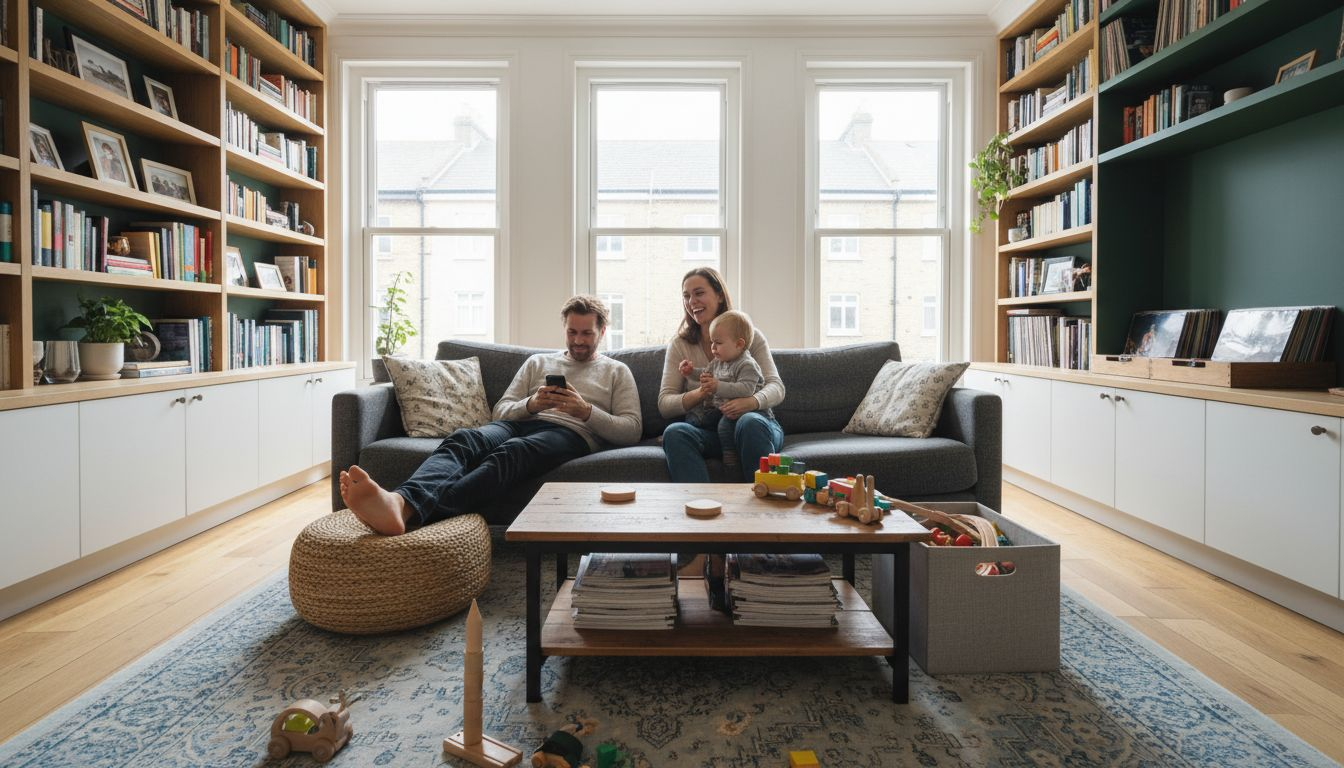
Wrestling with clutter in a compact London flat or Manchester townhouse is a daily reality for many. Stylish storage is more than just practicality—it has the power to revolutionise both your space’s function and its look. With square footage at a premium, the right storage choices blend clever organisation with interior design flair. Discover how integrated systems designed to capture, organise, and retain items can transform small urban homes without sacrificing style.
Table of Contents
- Defining Storage Solutions And Common Myths
- Popular Types For Modern Home Interiors
- Key Features: Functionality, Design, And Quality
- Integrating Storage For Style And Space-saving
- Mistakes To Avoid And Practical Buying Tips
Key Takeaways
| Point | Details |
|---|---|
| Storage Solutions Are Multifaceted | Modern storage integrates functionality and aesthetics, offering structural, decorative, and spatial solutions tailored to specific needs. |
| Myths About Storage | Common misconceptions include the belief that storage is purely functional and that more storage automatically creates organisation. |
| Importance of Planning | Assess current storage needs and available space before purchasing new storage solutions to avoid costly mistakes. |
| Ongoing Reassessment Is Key | Regularly review and adapt storage systems to match evolving needs and prevent clutter from accumulating again. |
Defining Storage Solutions and Common Myths
Storage solutions have transformed dramatically. They’re no longer just places to stash things. Modern storage encompasses everything from physical furniture systems to digital infrastructure that keeps your life organised.
When you think about storage in your home, you’re looking at more than cupboards and shelves. You’re investing in space efficiency, accessibility, and visual appeal all at once. For UK urban dwellings where square footage costs a premium, this distinction matters enormously.
What Storage Solutions Actually Are
Storage solutions are integrated systems designed to capture, organise, and retain items while maintaining functionality and aesthetics. Think of them as purposeful organisation tools that serve multiple functions simultaneously.
Contemporary storage extends across three main categories:
- Structural storage (wardrobes, shelving units, fitted storage)
- Decorative storage (baskets, boxes, ottomans that blend function with style)
- Spatial storage (under-bed systems, wall-mounted solutions, corner optimisers)
Each addresses specific needs in modern homes. The key difference between basic and brilliant storage is intentionality. Are you simply cramming items away, or are you creating systems that work with your space?
[Modern storage technologies] have evolved beyond homogenous approaches into diverse, intelligent systems. Manufacturers now combine materials, designs, and functionality to create solutions tailored to specific spaces and lifestyles.
Here’s a concise overview of modern storage categories and their main purpose:
| Storage Type | Typical Examples | Primary Purpose |
|---|---|---|
| Structural Storage | Wardrobes, fitted shelves | Maximise long-term organisation |
| Decorative Storage | Baskets, stylish ottomans | Enhance décor, store small items |
| Spatial Storage | Under-bed, corner optimisers | Expand usable space, hide items |
Common Misconceptions About Storage
Myth one: “Storage is purely functional, not decorative.” This simply isn’t accurate. Your storage choices shape your entire interior aesthetic. A statement bookcase becomes wall art. A well-designed basket becomes décor.
Myth two: “More storage automatically solves organisation problems.” Storage without systems breeds chaos. Adding another cupboard without addressing what goes where creates hidden clutter, not solutions.
Myth three: “All storage solutions work the same way.” This misses the reality entirely. Bespoke fitted wardrobes operate differently from modular shelving, which differs from floating wall storage. [Regulations around storage solutions clarify that they’re not homogenous] and require thoughtful selection based on your specific needs.
Myth four: “Storage should hide everything.” Modern design embraces selective visibility. Open shelving displaying curated items creates visual interest whilst storing essentials.
Why This Matters for Your Home
Storage decisions directly impact how your space functions daily. Poor storage leads to wasted time searching for items, visual clutter, and frustration. Smart storage simplifies your routine and maximises usable space.
For urbanites in tight flats, storage isn’t optional—it’s survival. Every litre of wasted space feels like lost pounds from your property value. Strategic storage amplifies functionality without expanding your footprint.
Smart storage solutions balance utility with aesthetics, transforming disorganised spaces into streamlined, visually appealing environments.
Pro tip: Audit your current storage before purchasing anything new—measure your spaces precisely, photograph your belongings, and identify what truly needs accessible storage versus occasional-use items that can be archived.
Popular Types for Modern Home Interiors
Modern storage comes in distinct types, each solving specific space challenges. Understanding these categories helps you choose solutions that actually work for your lifestyle, not just fill empty walls.
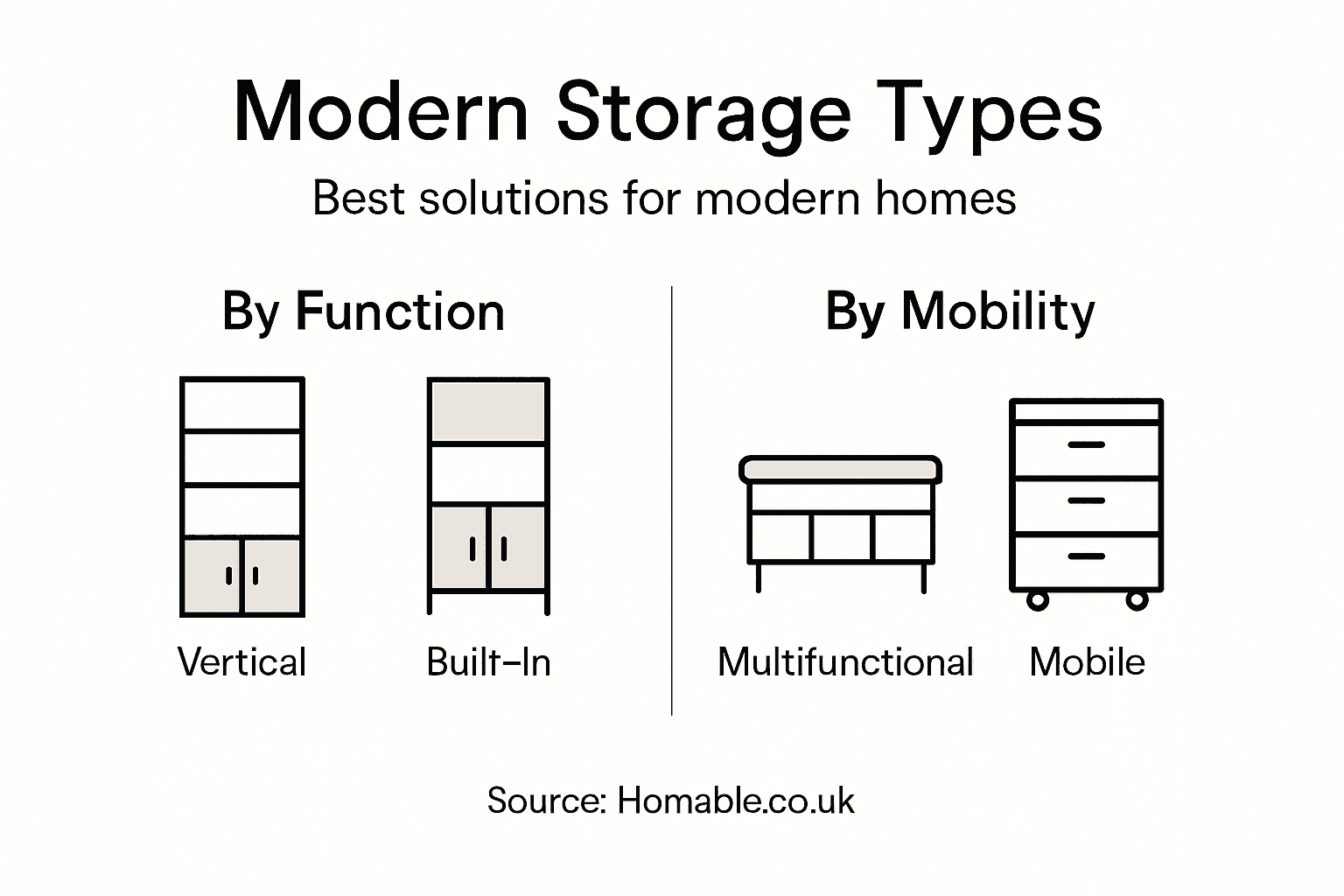
StorageDesigners categorise popular options by how they function, how they look, and how accessible they need to be. The right choice depends entirely on your space, your items, and your daily habits.
Vertical Storage Solutions
Vertical storage maximises wall space without consuming floor area. This proves invaluable in compact flats where every square metre matters.
Wall-mounted shelving, floating units, and tall bookcases pull your eye upward, making rooms feel larger. They’re particularly effective for displaying items you use regularly whilst keeping surfaces clear.
Key benefits include:
- Creates visual height in lower-ceilinged spaces
- Keeps frequently used items at arm’s reach
- Transforms blank walls into functional design features
- Works brilliantly alongside contemporary home styling aesthetics
Built-In and Fixed Storage
Built-in storage integrates seamlessly into your home’s architecture. Think fitted wardrobes, under-stair cabinets, and bespoke shelving systems designed specifically for your space.
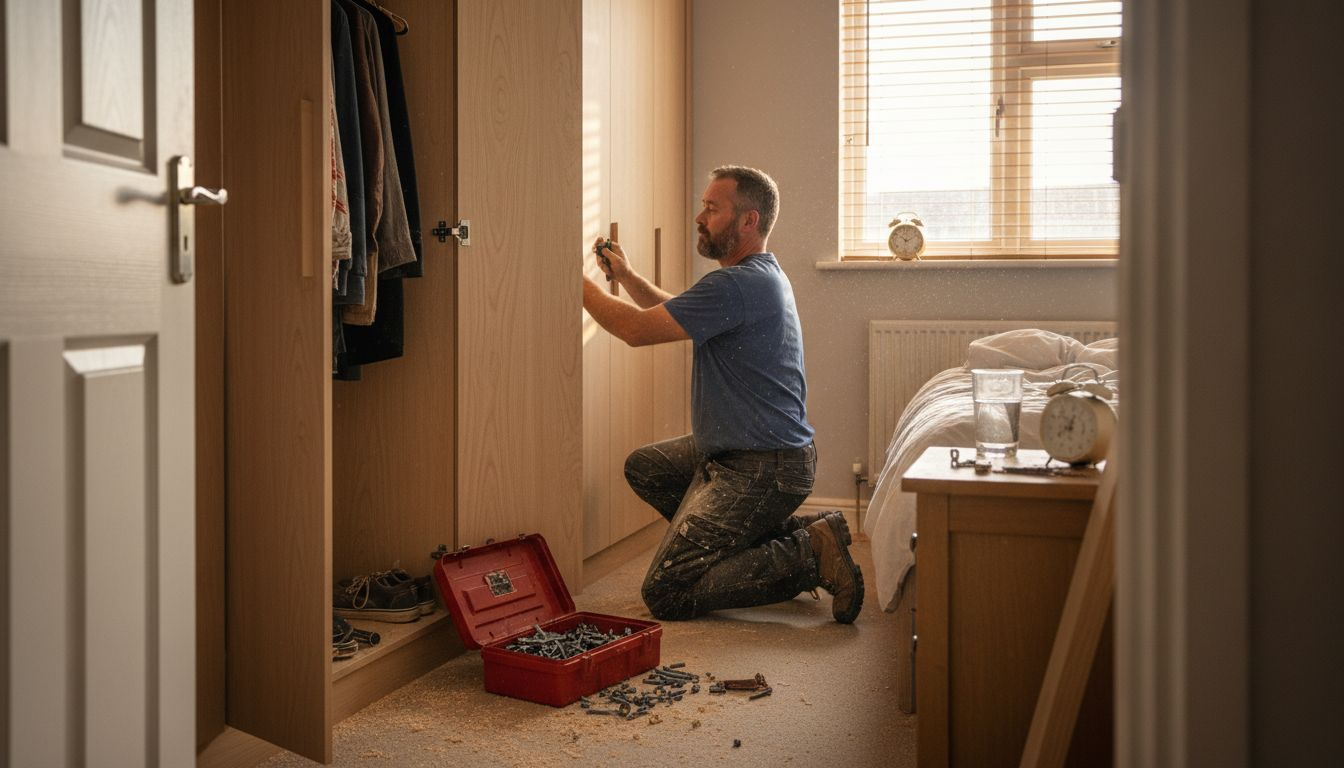
These permanent solutions offer superior organisation because they’re tailored to your exact dimensions. They hide clutter entirely whilst maximising every centimetre. The investment pays dividends through improved aesthetics and functionality.
Built-ins work exceptionally well for bedrooms, kitchens, and living areas needing substantial storage without dominating visual space.
Multifunctional and Mobile Storage
Multifunctional furniture combines storage with seating, sleeping, or work surfaces. An ottoman becomes hidden storage. A console table conceals clutter. A bed frame incorporates drawers underneath.
[Multifunctional furniture and modular storage units] address the reality of modern living. Space is precious, so every piece must earn its place. These solutions prove especially popular in studio flats and open-plan living areas where conventional storage would feel overwhelming.
Mobile storage options—trolleys, wheeled units, and sliding systems—provide flexibility. Move them where needed, reorganise as your life changes, adapt without permanent commitment.
Compare these storage solution approaches for UK homes:
| Approach | Best Suitability | Notable Advantage | Limitation |
|---|---|---|---|
| Built-in/Fitted Systems | Bedrooms, kitchens | Custom fit, maximum capacity | Requires upfront investment |
| Multifunctional Furniture | Studio flats, open spaces | Dual use, flexible layout | Can be visually bulky |
| Vertical Storage | Compact rooms, hallways | Saves floor space, stylish | Needs wall mounting |
Hidden and Decorative Storage
Not all storage needs to be obvious. Hidden storage conceals items behind closed doors, within drawers, or inside seemingly ordinary furniture pieces.
Decorcosmos baskets, boxes, and decorative storage blend function with visual appeal. They organise whilst contributing to your interior design rather than detracting from it.
Consider:
- Stylish storage ottomans for living rooms
- Woven baskets under console tables
- Decorative boxes on shelves alongside books
- Sliding barn doors concealing shelving systems
The best storage type balances accessibility with aesthetics—keeping essentials within reach whilst maintaining visual calm.
Pro tip: Assess your daily habits first: items you use constantly need quick-access storage (open shelving, drawer systems), whilst seasonal or occasional items can live in hidden, higher spaces.
Key Features: Functionality, Design, and Quality
Not all storage solutions perform equally. The difference between a storage system that transforms your space and one that frustrates you daily comes down to three critical features working together: functionality, design, and quality.
When these elements align properly, your storage becomes invisible—it simply works. You find what you need instantly. Your space looks intentional and calm. Things last for years without sagging or breaking.
Functionality First
Functionality means your storage actually solves your problem. Does it hold what you need? Can you access items easily? Does it organise logically?
Effective storage must support your specific lifestyle. A busy parent needs quick-access systems for school uniforms and sports kit. A remote worker needs filing solutions and desk organisation. A clothes enthusiast needs visibility across their entire wardrobe.
Key functional considerations include:
- Accessibility: Items you use daily should require minimal effort to reach
- Organisation: Designated spaces for different categories prevent chaos
- Capacity: Realistic storage that doesn’t force overstuffing
- Adaptability: Systems that adjust as your needs change
[Effective storage must support daily use and enhance aesthetic appeal] simultaneously. This isn’t about cramming more stuff in—it’s about storing what you actually use in ways that make sense.
Design and Aesthetic Integration
Design determines whether your storage enhances or detracts from your home’s appearance. Poor design storage becomes visual clutter itself.
Storage should either blend seamlessly into your interior or become a deliberate design feature. A floating shelf system might showcase beautiful books and objects. A fitted wardrobe disappears into your bedroom architecture. Decorative baskets contribute warmth whilst hiding chaos.
Consider these design aspects:
- Colour and finish matching your existing décor
- Proportions that feel balanced within your space
- Open or closed designs based on what you’re storing
- Material textures that complement your style
Modern storage succeeds when form and function merge invisibly. Your eye shouldn’t struggle past the storage to appreciate your room.
Quality and Durability
Quality separates short-lived purchases from investments that serve you for years. Poor materials sag, warp, and fail—creating more problems than they solve.
High-quality storage features:
- Robust materials suited to their purpose (solid wood, quality plywood, steel reinforcement)
- Proper joinery and construction methods
- Hardware rated for regular use
- Finishes that resist wear and maintain appearance
Budget storage might seem affordable initially. But replacing a collapsing unit annually costs far more than purchasing one quality solution that lasts a decade.
Quality storage balances accessibility with aesthetics—creating harmonious living environments where organisation improves your daily life.
Pro tip: Test storage before buying by checking weight limits, opening mechanisms repeatedly, and inspecting joints—these reveal whether quality matches the price you’re paying.
Integrating Storage for Style and Space-saving
The best storage solutions disappear into your home’s design whilst working harder than anything else in your room. Integration is the secret—making storage feel like part of your space rather than an afterthought bolted onto walls.
This means choosing pieces that complement your aesthetic, using vertical space strategically, and selecting items that serve double duty. Your storage shouldn’t compete for attention; it should enhance what matters.
Choosing Storage That Matches Your Design
Design alignment starts before you measure anything. What style dominates your home? Are you minimalist, maximalist, industrial, or eclectic?
Your storage should echo your existing design language. Sleek floating shelves suit modern interiors. Chunky wooden units work brilliantly in traditional spaces. Metal-framed systems complement industrial aesthetics.
Consider these design integration points:
- Finish colour matching existing cabinetry or trim
- Material consistency with furniture you already own
- Proportions that feel balanced against your other pieces
- Visual weight distributed across the room
Storage that clashes with your décor becomes a constant eyesore, no matter how functional it is.
Multifunctional Pieces That Earn Their Space
Multifunctional furniture serves storage and style simultaneously. An ottoman becomes storage plus seating. A console table hides clutter whilst displaying décor. Bed frames with integrated drawers replace separate chests.
[Multifunctional furniture pieces serve as design statements] whilst solving your storage problem. Every item your home contains should justify its footprint. In compact flats, this non-negotiable principle determines whether spaces feel spacious or cluttered.
Look for pieces offering:
- Hidden storage beneath surfaces you use daily
- Dual purposes reducing total furniture count
- Surfaces that display as well as store
- Designs that work whether doors open or stay closed
Maximising Vertical Space Without Clutter
Walls hold far more potential than most people realise. Vertical storage frees floor space whilst drawing eyes upward, making rooms feel larger.
Floating shelves, tall bookcases, and wall-mounted cabinets accomplish this without dominating your space. The key lies in styling them thoughtfully. Overloaded shelves look chaotic; curated displays feel intentional.
Vertical strategies include:
- Alternating decorative items with stored objects
- Grouping items by colour for visual coherence
- Creating breathing space between displayed pieces
- Using backing panels to define shelf boundaries
Creating Visual Calm Through Smart Organisation
Storage integration requires organising what you keep before choosing where it goes. Decluttering precedes styling—always.
When items within your storage are organised logically, they remain accessible and look intentional even when visible. Matching storage boxes, coordinating baskets, and consistent labelling systems transform chaotic collections into curated displays.
[Organising small spaces effectively] requires strategic planning that balances what you need with what you have room for.
True storage integration makes functionality invisible—your space simply looks beautiful whilst remaining effortlessly organised.
Pro tip: Before purchasing any storage, arrange items you’ll store there on your floor to test visibility, accessibility, and visual balance—this reveals whether your chosen piece actually solves your problem.
Mistakes to Avoid and Practical Buying Tips
Storage purchases often disappoint because people skip crucial planning steps. A beautiful shelving unit arrives to find it doesn’t fit your space. Storage bins multiply, creating clutter instead of solving it. Money vanishes on solutions addressing the wrong problems.
Learning what to avoid transforms your storage strategy from guesswork into intentional decision-making.
The Biggest Storage Mistakes
Buying storage before decluttering ranks as the most expensive mistake. You purchase bins, cupboards, and shelves without knowing what you actually need to store.
The result? You buy wrong sizes, wrong quantities, or wrong types. You waste money and end up with storage that doesn’t work. [Key storage mistakes include keeping items “just in case” and buying containers before planning] your actual needs.
Common pitfalls include:
- Purchasing storage without measuring your space first
- Keeping items you haven’t used in years
- Assuming more storage automatically solves organisation problems
- Neglecting to reassess belongings regularly
- Buying trendy solutions that clash with your actual lifestyle
Poor Planning Creates Cascading Problems
Planning failures compound over time. Storing items randomly means you can’t find anything. Inaccessible storage becomes a graveyard for forgotten purchases.
Without a system, your storage fails spectacularly. You spend 10 minutes daily searching for things that should take seconds. Frustration builds. You abandon your organisation system entirely.
Avoid this by planning before purchasing:
- Audit what you currently own
- Measure your available space precisely
- Identify which items you actually use regularly
- Decide where each category logically belongs
- Select storage that matches your specific needs
Practical Buying Strategy
Measure twice, buy once. Seriously. Grab a tape measure and document your space dimensions, doorway widths, and ceiling heights.
When shopping, photograph your space, bring samples of colours you’re matching, and test weight limits on display units. Don’t trust your memory—visual comparisons matter enormously when judging proportions.
Before purchasing, ask yourself:
- Will this actually hold what I need to store?
- Can I access items easily from this location?
- Does it match my space dimensions and design?
- Will I maintain this system long-term?
- Could I repurpose it if my needs change?
Ongoing Reassessment Prevents Relapse
Storage requires maintenance. Your needs evolve. Seasons change. Children grow. Your system must adapt.
Schedule quarterly reviews to reassess what you’re storing. Discard items you’ve stopped using. Reorganise systems that aren’t working. Add storage where needed based on actual usage patterns.
This ongoing evaluation prevents storage chaos from creeping back in.
Successful storage starts with ruthless honesty about what you actually use, not what you might need someday.
Pro tip: Create a “maybe” box for items you’re unsure about—if you haven’t touched them in three months, donate them without reopening the box.
Transform Your Home with Smart and Stylish Storage Solutions
Struggling with clutter or wasted space in your modern UK home means you understand how crucial intentional storage is. Whether you need built-in units, multifunctional furniture, or decorative baskets that blend seamlessly with your décor, finding solutions that balance accessibility, design, and quality can feel overwhelming. Remember the article’s advice: successful storage is about creating systems that truly work for your lifestyle rather than just hiding things away.
Discover how Homable.co.uk can help you solve daily storage challenges with a curated selection of functional and beautiful products. Enjoy a range of storage options designed to maximise your space and enhance your interior style. Take the first step towards a more organised and visually calm home by exploring our collection today. Shop now and benefit from free shipping on orders over £100. Don’t wait to make your space truly work for you with solutions that last and look great.
Frequently Asked Questions
What are modern storage solutions?
Modern storage solutions are integrated systems designed to capture, organise, and retain items while maintaining functionality and aesthetics, such as structural, decorative, and spatial storage options.
How do I choose the right storage solution for my home?
Choosing the right storage solution involves assessing your items, available space, design preferences, and how frequently you use certain belongings. It’s essential to opt for storage that complements your décor and meets your organisational needs.
What are the benefits of multifunctional storage furniture?
Multifunctional storage furniture offers dual purposes, such as combining seating with hidden storage. This is particularly useful in compact living spaces, as it saves space and reduces the amount of furniture required, allowing for more flexibility in room layouts.
Why is decluttering important before buying storage solutions?
Decluttering prior to purchasing storage solutions ensures that you only acquire what is necessary for your needs. It prevents the common mistake of buying storage for items you no longer use, enabling you to choose solutions that genuinely solve your organisation problems.