Cart
0
Yes, some shedding is normal for wool rugs. Expect a break-in period followed by a steady decline if the rug is well-made. Two things to do right now: vacuum with suction only, no beater bar, and check the manufacturer’s care label before you do anything else.
TL;DR:
- Most wool rugs shed heavily during the first few weeks, especially if they contain high proportions of short fibers or have poor latex penetration in tufted construction.
- Hand-knotted rugs generally shed less over time than tufted rugs, which depend heavily on quality latex application for fiber retention.
- Vacuuming with suction only and avoiding beater bars or rotating brushes significantly reduces surface fuzzing and prolongs the rug’s appearance.
- Shedding should decline gradually over three to six months; persistent or increasing shedding after this period indicates a possible manufacturing issue.
- Regular care, including gentle vacuuming, outdoor surface brushing, and proper rotation, helps manage shedding and extends the rug’s lifespan.
Table of Contents
- Why wool rugs shed in the first place
- How construction and pile type change how much a rug sheds
- Typical shedding timeline: what to expect and when it subsides
- Practical care: how to reduce and manage shedding at home
- When shedding is abnormal and what to do
- How Homable thinks about rug care
- Practical perspective: when to accept some shedding and when to be picky
- Where to find rugs and accessories that make care easier
- Sources
- FAQ
Why wool rugs shed in the first place
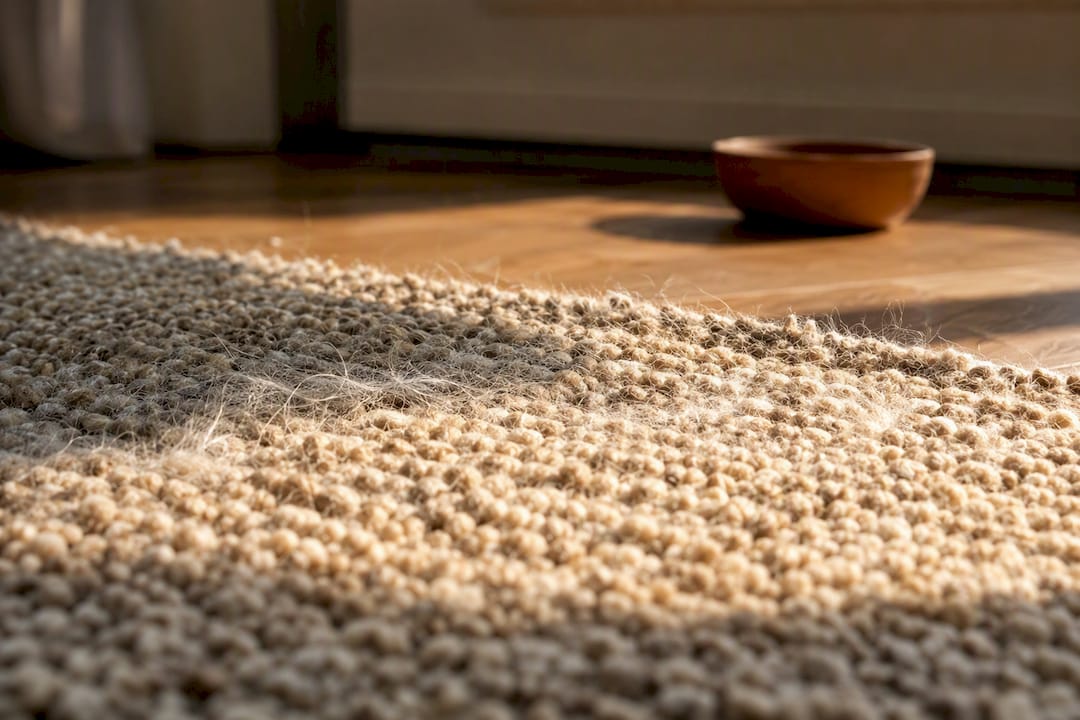
Wool is a staple fibre, meaning it’s made of short, individual strands twisted together rather than one continuous filament like nylon or polyester. During spinning and tufting, some of those shorter fibres never get locked tightly into the yarn. They sit near the surface, loose, waiting for a vacuum or a footstep to work them free. That’s shedding, and on a technical level it’s often called “fluffing”.
According to Woolwise’s technical reference on carpet fibres, excessive shedding is linked to a high proportion of short fibre in the yarn and, in tufted rugs, inadequate latex penetration into the backing. Latex is the glue that anchors tufted yarn in place. When it doesn’t soak through properly, the yarn has room to move and pull loose more easily.
One sheds for a fortnight and settles down. Another keeps producing fluff for months. The difference usually comes down to fibre length and how well the backing was made, not the wool itself being faulty.
It helps to separate two very different things that both get called “shedding”:
- Cosmetic loose-fibre shedding: short fragments left over from spinning and tufting work their way out, then taper off as the rug settles.
- Structural fibre loss: yarn is actually withdrawing from the backing because of poor latexing, which tends to get worse rather than better.
The first is a normal part of owning a wool rug. The second is a manufacturing issue, and it’s the one that eventually needs a professional to look at rather than more vacuuming.
How construction and pile type change how much a rug sheds
Not all wool rugs are built the same way, and construction has more influence on shedding than most buyers realise. Hand-knotted rugs, where each strand is individually knotted into the foundation, generally hold their fibres more securely than tufted rugs, where yarn is punched through a backing and held with latex. Flatwoven rugs, which have no pile at all, shed very little once the initial loose fibres from weaving are gone.
Hand-tufted and machine-tufted rugs sit at the other end of the scale. Their fibre retention depends heavily on how thoroughly the latex was applied during manufacturing, which is exactly the point Woolwise raises about early shedding. A cheaply latexed tufted rug will almost always shed more, and for longer, than a well-made knotted one.
Pile type matters just as much as construction method:
- Loop pile is especially vulnerable to brushing and pulling. A single snagged loop can unravel a visible line across the surface.
- Cut pile can sometimes tolerate a rotating brush attachment, but only if the manufacturer says so.
Shaw Industries’ wool maintenance guidance is clear that brushing can cause fuzzing and pile distortion on loop-pile wool, which is why suction-only cleaning is the safer default.
Before you assume the worst, do two simple checks. Look at the backing: is it tightly woven with no visible gaps around the tufts? Then tug gently on a few strands in an inconspicuous spot. Fibres that come away easily suggest weaker retention and probably more shedding ahead, while fibres that resist a gentle pull are a good sign the rug was made well.

Typical shedding timeline: what to expect and when it subsides
Most wool rugs shed the heaviest in the first few weeks, then taper off gradually over the following three to six months. That window covers the vast majority of well-made rugs, whether hand-knotted or properly tufted.
A few things can stretch that timeline out:
- Short-fibre wool blends shed for longer because there’s simply more loose material to work free.
- Heavy foot traffic disturbs the pile more often, so fibres surface faster and the process can feel like it’s dragging on.
- Manufacturing defects, particularly poor latex penetration in tufted rugs, can keep shedding at a high level well past the usual break-in period.
The pattern you’re watching for is decline, not disappearance. A rug that sheds noticeably less each week is behaving exactly as expected, even if you’re still finding the odd fibre on your socks at the three-month mark. What should concern you is the opposite trend: shedding that holds steady or gets worse after the first couple of months, especially if it starts appearing in the same spot repeatedly. That pattern points towards a construction issue rather than ordinary fibre loss, and it’s worth moving from patience to inspection.
Practical care: how to reduce and manage shedding at home
Care routine matters more than people expect, and getting it wrong can genuinely make shedding worse. Start with vacuuming: use suction only, and lift or remove the beater bar unless your rug’s manufacturer specifically says a rotating brush is safe. Shaw’s maintenance checklist recommends strong suction without a beater bar for loop-pile wool precisely because brushing causes fuzzing and pile distortion.
Beyond the vacuum, a few tools and habits make a real difference:
- Rug rake or soft brush: use outdoors, in the direction of the pile, to lift surface fluff without disturbing the weave.
- Scissors, not fingers: trim any loose fibres you spot rather than pulling them, which can drag out fibres that were otherwise anchored.
- A proper rug pad: cushions the pile, reduces friction from foot traffic, and stops the rug shifting and rubbing against hard flooring.
- Rotate the rug every few months so wear and shedding spread evenly rather than concentrating in one path.
- Blot, don’t rub: for spills, use a moist white cloth with cold water and wool-safe cleaning products, always testing on a hidden corner first.
Pro Tip: If you’re unsure whether your vacuum’s rotating brush is safe, run it over a small hidden section first and check for fuzzing before committing to the whole rug.
A simple schedule keeps this manageable. Vacuum lightly once or twice a week during the break-in period, rake or brush the surface outdoors once a month, and rotate the rug every three to six months depending on traffic. Avoid aggressive brushing at any stage, skip harsh or ammonia-based chemicals, and never rub at a stain, since both habits loosen fibres that would otherwise have settled on their own.

When shedding is abnormal and what to do
A short checklist helps you distinguish ordinary break-in shedding from a genuine problem:
- Shedding that increases rather than declines after two or three months.
- Clumps or tufts pulling away in one motion, rather than single loose fibres.
- Bald patches or thinning visible in specific areas.
- Exposed or deteriorating backing showing through the pile.
If you spot any of these, photograph the affected area for reference, then check the care label and your original purchase terms. Try only conservative care, gentle suction-only vacuuming and nothing more, before deciding whether to escalate. If the shedding continues or worsens, contact the seller or a rug-care professional rather than experimenting further.
Depending on what they find, the fix might be a repair, re-latexing the backing, a professional deep clean, or a return under the seller’s guarantee if the rug turns out to have a manufacturing fault.
How Homable thinks about rug care
Some retailers sell rugs, rug pads and non-slip accessories alongside a wider range of home décor, so pairing the right pad or underlay with a given rug construction is a common consideration. Our guidance on keeping jute rugs fresh with weekly dry care and on outdoor rug care covers similar principles: gentle routine maintenance beats aggressive cleaning every time, whatever the fibre. Many e-commerce sites offer free shipping over certain order amounts, and product pages commonly carry customer reviews so buyers can see how a specific rug has performed for others before buying.
Practical perspective: when to accept some shedding and when to be picky
Some early shedding is simply the cost of choosing a natural fibre over synthetic alternatives, and I think that trade-off is worth it for most homes. If you already own the rug, follow a sensible care routine and reserve your concern for the checklist signs: clumping, bald patches, exposed backing. Everything short of that is just wool being wool.
— Cristiano
Where to find rugs and accessories that make care easier
Choosing the right accessories from the start makes wool rug care far less fiddly. Homable’s rug and accessory range includes options that pair well with the routines above, whether you need a pad to protect the pile or a non-slip underlay to stop movement-related wear.

If you’re setting a rug down on a carpeted floor, our guide to securing a rug on carpet and our non-slip rug solutions are worth a look before you buy a pad. Match whatever you choose to your rug’s construction and its manufacturer’s care label rather than assuming one pad or cleaner suits every wool rug. Browse the current range on the Homable shop page to see what fits your space.
Sources
Technical detail on fibre and construction comes from Woolwise and Shaw Industries, with practical inspection tips from Art of Clean.
FAQ
How do I stop my wool rug from shedding?
You can’t stop shedding entirely, but you can reduce it: vacuum with suction only, avoid rotating brushes unless the manufacturer permits them, and use a rug rake outdoors for surface fluff. Trimming loose fibres with scissors, rather than pulling them, also helps limit how much comes away.
How long does it take for a wool rug to stop shedding?
Most wool rugs shed heaviest in the first few weeks and taper off gradually over the following three to six months. Short-fibre blends, heavy foot traffic or manufacturing defects can extend that period, but the shedding should be declining throughout, not increasing.
Why is my new wool carpet shedding?
New wool rugs shed because wool is a staple fibre, and loose short strands left over from spinning and tufting work their way to the surface. Woolwise links heavier shedding to high short-fibre content and, in tufted rugs, poor latex penetration in the backing.
What are the downsides of using a wool rug?
The main downside is the care wool demands: initial shedding, sensitivity to aggressive brushing, and the need for careful, wool-safe spill treatment rather than rubbing. Shedding during early wear is a normal part of owning a wool rug and doesn’t necessarily mean it’s defective.