Cart
0
Choose sisal where durability and shape retention matter, and choose jute where softness and a relaxed look matter most. That single line settles most decisions, but backing, weave tightness and any dye or protective treatment can shift how either fibre actually performs underfoot. The right choice depends on the room, the traffic it gets and whether bare feet or muddy boots cross it most often.
TL;DR:
- Sisal is better suited for high-traffic areas due to its stiffness, durability, and ability to hold bold dyes and patterns, but it can be uncomfortable on bare skin.
- Jute offers a softer, more relaxed look with a warmer tone, making it ideal for bedrooms or low-traffic spaces, though it sheds more and flattens faster.
- Both fibres are moisture-sensitive, with slow drying after spills risking cellulosic browning, which is easier to fix through professional cleaning than DIY methods.
- Investing in a rug pad and checking construction details can significantly extend the life and performance of either fibre rug.
- Price differences depend on backing, weave density, and size, but generally, sisal costs more upfront and lasts longer, often providing better value in busy environments.
Table of Contents
- Sisal vs jute rugs: durability, texture and appearance compared
- Which rooms suit sisal, and which suit jute?
- Caring for sisal and jute rugs without ruining them
- What sisal and jute rugs cost, and how to judge value
- What to check before you buy a sisal or jute rug
- How Homable supports natural-fibre rug decisions
- Choosing between sisal and jute in real households
- Where to find natural-fibre rugs and accessories
- Sources
- FAQ
Sisal vs jute rugs: durability, texture and appearance compared
Sisal comes from the agave plant’s leaves, and that origin explains most of what makes it distinctive. Leaf fibres are naturally stiff and strong, which is why sisal rugs hold their shape under heavy footfall and resist crushing in a way that softer fibres struggle to match. That stiffness comes at a cost underfoot: sisal has a coarse, almost bristly texture that some people love for its structure and others find uncomfortable on bare skin.
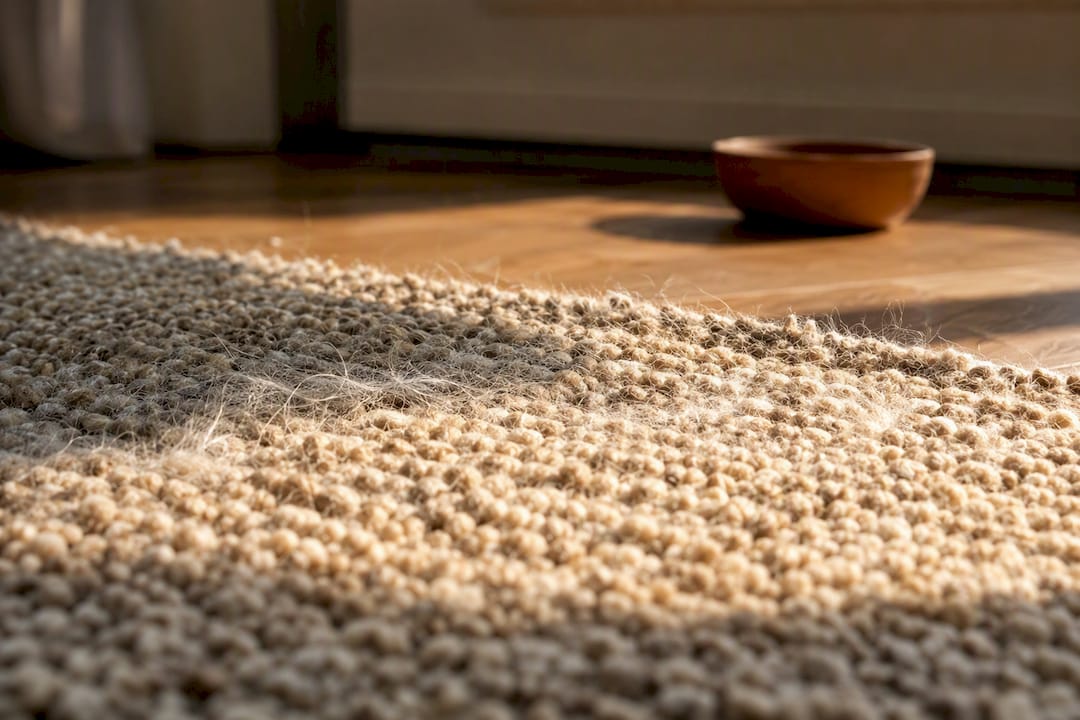
Jute is a stem fibre, pulled from the plant’s stalk rather than its leaves, and that difference shows up immediately when you touch it. It is softer, more flexible and generally kinder to bare feet, which is why it turns up so often in bedrooms and reading nooks. The trade-off is that jute sheds more over time and flattens faster under sustained heavy use, according to a guide to jute, sisal and seagrass rugs. Neither fibre is a wipe-clean surface, and both react to moisture in ways that a synthetic rug simply does not.
Both fibres are moisture-sensitive, and this is where a lot of natural-fibre disappointment starts. Spills that sit too long, or a rug that gets wet and dries slowly, can develop a yellow-brown discolouration known as cellulosic browning. According to an IICRC tip sheet on area rugs, this happens because natural sugars and lignans in the plant fibres rise to the surface as the rug dries, and it is far easier to correct in a controlled cleaning facility than with home remedies. Damp basements, poorly ventilated bathrooms and conservatories with condensation are all poor matches for either fibre.
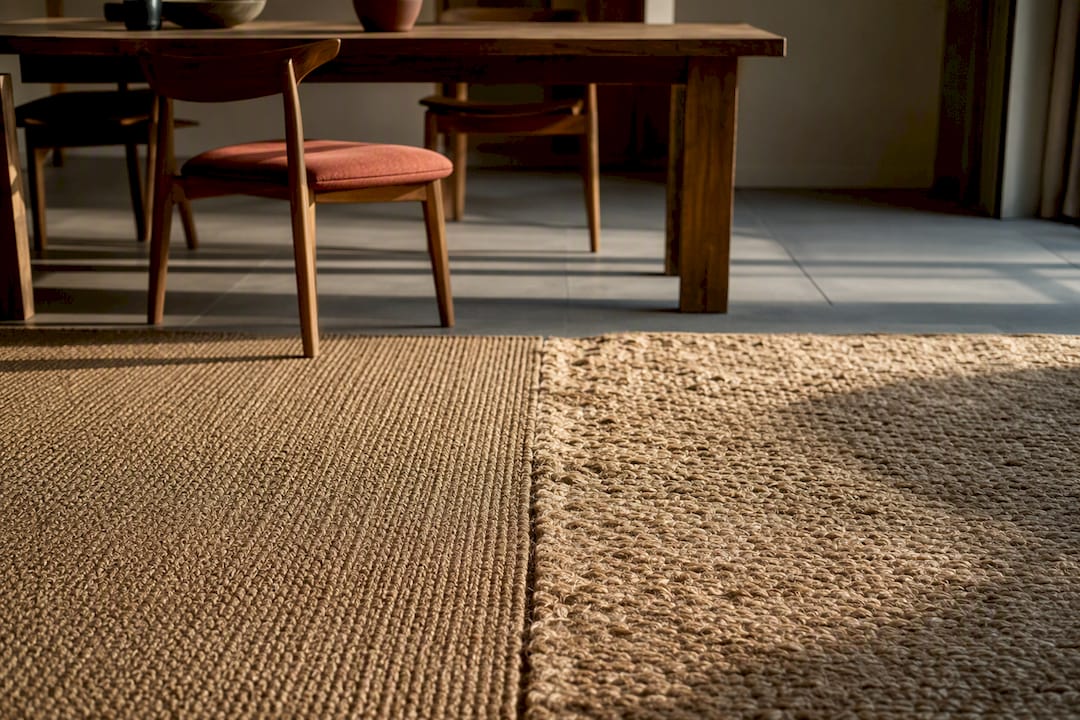
Appearance is the other major fork in the road. Sisal takes dye well and is often sold in a wider range of colours and patterns, including bold geometric weaves that hold their crispness because the fibre itself is so structured. Jute leans towards warmer, more muted natural tones, and its softer fibre gives rugs a looser, more textured weave that reads as relaxed rather than graphic. Neither look is objectively better: it is a question of whether a room wants structure or softness.
A few practical differences are worth listing, side by side:
- Strength: sisal’s leaf fibre is stiffer and generally more durable under repeated footfall.
- Feel: jute’s stem fibre is noticeably softer and more pleasant for bare feet.
- Shedding: jute tends to shed loose fibres more readily, especially when new.
- Moisture risk: both fibres are prone to browning if they dry slowly after getting wet.
- Styling: sisal holds bolder dyes and patterns; jute favours soft, neutral tones.
Weave and backing change all of this in practice. A tightly woven sisal rug with a latex or cotton backing behaves very differently from a loose, unbacked weave, and the same is true of jute. Backing adds grip and some cushioning, but it can also trap moisture against the floor, which makes fast drying after any spill even more important. Before assuming a fibre’s general reputation applies to a specific rug, check the construction details on the product page.
Which rooms suit sisal, and which suit jute?
Matching fibre to room is less about personal taste and more about matching the fibre’s strengths to how that space actually gets used. A hallway that sees muddy shoes every day has completely different demands from a bedroom where feet are usually bare.
- Entryway and hallway: choose sisal, because its stiffness and durability handle repeated foot traffic and grit better than a softer fibre.
- Staircases: choose sisal or a tightly woven blend, since stairs need a fibre that keeps its shape and does not flatten unevenly on the treads.
- Living room: choose sisal for a high-use family lounge, or jute if the room is more of a quiet sitting space with lighter footfall.
- Dining room: choose sisal, since chair legs and dropped crumbs favour a fibre that resists crushing and hides wear.
- Bedroom: choose jute, because bare feet meet the rug first thing every morning and softness matters more than heavy-duty resilience.
- Home office or reading nook: choose jute for comfort in a low-traffic space where you spend time sitting or standing still.
- Households with pets or young children: lean towards sisal with a protective backing, since accidents and rough play are harder on a softer, more absorbent fibre.
For a busy family living room that doubles as a play area, a blended weave or a rug with a reinforced backing often splits the difference better than either pure fibre alone. If you are still working out proportions for the space, guidance on choosing a living room rug size is worth checking before you commit to a fibre, since an ill-fitting rug wears unevenly regardless of what it is made from. It also helps to test how a rug sits in the room before buying, and a quick placement check can reveal wear patterns you would otherwise only discover months later.
Pet owners in particular should treat sisal with a backing and a pad as close to a default choice for main living areas, reserving jute for rooms pets rarely enter. Children who play on the floor barefoot tend to prefer jute, but a jute rug under a high chair or in a playroom with frequent spills will show its limits quickly.
Caring for sisal and jute rugs without ruining them
Natural fibre rugs reward routine care and punish neglect fast, particularly when it comes to moisture. Getting the basics right protects the fibre and avoids the kind of damage that no amount of cleaning can fully undo.
Vacuum both fibres regularly, using low suction and a brush-free attachment where possible. A rotating beater bar, the kind built into many upright vacuums, can pull and fray loose fibres rather than lifting dirt, and a guide to jute, sisal and seagrass care specifically advises avoiding it on these rugs. A dedicated dry-care routine, vacuuming little and often rather than deep-cleaning rarely, keeps grit from working its way into the weave.
Spills need a fast, careful response:
- Blot the liquid immediately with a clean, dry cloth; never rub, since rubbing drives the spill deeper into the fibre.
- Use as little water as possible if you need to treat a stain, since both fibres are sensitive to prolonged wetting.
- Open a window or use a fan to speed up drying, because slow drying is exactly what triggers cellulosic browning.
- Check the manufacturer’s care label before applying any cleaning product, since some treatments and dyes react badly to certain solutions.
- Keep the rug off damp floors and out of consistently humid rooms, since both fibres can warp or support mould growth in persistent moisture.
Pro Tip: Keep a stack of plain white cloths near any room with a natural-fibre rug, so you can blot a spill in seconds rather than hunting for something absorbent while the liquid soaks in.
Cellulosic browning develops when plant-fibre rugs dry slowly after getting wet, according to the IICRC’s tip sheet on area rugs, and correcting it is far more reliable in a controlled cleaning facility than through home treatment. That single fact is the reason professional advice consistently favours quick drying and, for anything beyond a minor spill, off-site cleaning over an ambitious DIY attempt.
For significant soiling, deep staining or any sign of browning already setting in, call an IICRC-certified rug cleaning technician rather than reaching for a carpet shampoo. In-plant cleaning controls drying conditions in a way a living room simply cannot, which matters enormously for fibres already prone to this kind of discolouration. A weekly dry-care routine for jute rugs is a good way to catch problems before they need that level of intervention.
A rug pad underneath either fibre reduces friction against the floor, cuts down on slipping, and can extend the life of the rug by absorbing some of the abrasion that would otherwise wear the base of the fibres. Fringed edges benefit from occasional gentle combing to stop loose threads from tangling, and trimming stray fibres with scissors is safer than pulling them, which can unravel a wider section of the weave.

What sisal and jute rugs cost, and how to judge value
Jute rugs are generally cheaper to buy than sisal, largely because the raw fibre is less costly to process, according to a comparison of sisal and jute rugs. Sisal’s higher upfront cost can still work out as better value in high-traffic areas, simply because it tends to outlast a softer fibre under the same conditions.
Price is not just about the fibre itself. The same source notes that backing, weave density, borders and custom sizing all move the final price, so two sisal rugs of the same dimensions can cost noticeably different amounts depending on construction. A few things typically drive that difference:
- Backing type: a latex or cotton backing adds cost but also adds grip and some cushioning.
- Weave density: a tighter weave generally costs more and wears more evenly.
- Custom sizing or borders: bespoke dimensions and finished edges push the price above standard stock sizes.
- Brand and retailer: identical fibre can be priced very differently depending on where you buy it.
A simple way to compare options is to estimate cost per year of expected use rather than just the sticker price. Say a jute rug costs a moderate amount and you expect a few years of good use from it in a moderate-traffic room. A sisal rug typically costs more upfront but tends to last longer in the same spot, potentially offering better value over time, even though it costs more initially. This is an illustrative calculation, not a guarantee of either fibre’s lifespan, since actual durability depends heavily on traffic, care and construction, but it is a useful way to frame the decision beyond the price tag alone.
What to check before you buy a sisal or jute rug
A few minutes of checking before you buy saves a lot of regret once the rug is on the floor. Whether you are browsing online or handling a rug in person, the same questions apply.
- Feel the sample: run your hand and, ideally, a bare foot over a swatch or corner to judge whether the texture suits the room.
- Check the weave: a tighter, denser weave generally means better durability and more even wear.
- Inspect the edges: look for a bound or serged edge rather than a raw one, since finished edges resist fraying far longer.
- Ask about backing: find out whether the rug has a latex, cotton or no backing at all, since this affects grip, cushioning and moisture behaviour.
- Confirm care instructions: ask whether the manufacturer recommends professional cleaning and what products, if any, are safe to use at home.
- Ask about returns and swatches: a retailer willing to send a swatch or accept a return gives you a safety net if the texture or colour is not what you expected once it is home.
Pro Tip: If you are torn between two fibres for the same room, order a swatch of each rather than guessing from a photo. Texture is the one quality that a screen genuinely cannot show you.
A rug pad is worth adding in almost every case, since it reduces slipping and absorbs some of the friction that would otherwise wear straight into the rug’s backing. For a broader look at how placement and non-slip solutions work together, a guide to non-slip rug fixes covers the practical side of keeping a natural-fibre rug secure on hard flooring.
How Homable supports natural-fibre rug decisions
Homable’s own care content backs up the same routine covered here, including a weekly dry-care guide for jute rugs and placement advice that helps a rug wear evenly rather than fraying at pressure points. The site’s guide to contemporary rug design is a useful next step for anyone still deciding how texture and pattern should work with the rest of a room.
This guide was written by Cristiano, whose professional background is not publicly listed here. The advice draws on published fibre and care guidance rather than personal testing. Homable’s free shipping on orders over £100 and secure checkout make it practical to order a rug pad or a complementary bamboo rug alongside a sisal or jute piece without a second delivery charge eating into the saving.
Choosing between sisal and jute in real households
For a busy household with shoes and a dog underfoot, sisal with a protective backing and a rug pad is the sensible default: it shrugs off grit and holds its shape. A bedroom-focused home that lives barefoot most of the day is better served by jute, even knowing it will not last as long under heavy use. For a shared living and dining space, sisal in the entry and dining zones with jute in a quieter adjoining reading corner often works better than forcing one fibre to do every job.
— Cristiano
Where to find natural-fibre rugs and accessories
Choosing between sisal and jute is easier once you can compare textures and finishes side by side rather than guessing from photos, and a curated range of rugs and home accessories at various retailers makes that comparison practical. Alongside natural-fibre options, Homable stocks bamboo rugs that offer a similar organic look with a different underfoot feel, worth considering if neither sisal nor jute feels quite right for a specific room.

- Browse the full range of rugs and home accessories to compare textures, sizes and finishes in one place.
- Pair any natural-fibre rug with a rug pad to cut down on slipping and reduce wear on the backing.
- Many retailers offer promotional incentives such as free shipping over a certain amount and secure checkout options.
If you are narrowing down a shortlist, start with the product categories on Homable and check individual listings for backing, weave and care details before you buy.
Sources
- Tip sheet: Onsite area rugs — IICRC
- Keeping It Natural | A Guide to Jute, Sisal, and Seagrass Rugs - Molly in Maine
- Sisal and Jute Rugs: What’s the difference? - The Flooring Girl
FAQ
Which is better, sisal or jute?
Neither fibre is universally better: sisal suits high-traffic areas because it is stiffer and holds its shape, while jute suits low-traffic, barefoot-friendly rooms because it is softer. The right choice depends on the room’s traffic pattern and how it gets used, not on either fibre being superior overall.
What are the disadvantages of sisal rugs?
Sisal’s main drawback is its coarse, bristly texture, which some people find uncomfortable underfoot compared with softer fibres. It is also moisture-sensitive and can develop cellulosic browning if it gets wet and dries slowly, as noted in the IICRC’s guidance on area rugs.
What are the downsides of using jute rugs?
Jute sheds more than sisal, particularly when new, and it flattens faster under sustained heavy foot traffic. It shares sisal’s sensitivity to moisture, so spills need prompt blotting and fast drying to avoid discolouration.
Is sisal more expensive than jute?
Sisal generally costs more upfront than jute, according to a comparison of sisal and jute rugs, though its greater durability can make it better value in busy areas over time. Final price also depends on backing, weave density and custom sizing rather than fibre alone.