Cart
0
TL;DR:
- Contemporary rug design emphasizes texture, minimal pattern, and neutral, muted palettes, creating flexible, timeless interiors.
- Textures like high/low piles and woven details are prioritized over bold motifs, reflecting a shift toward understated elegance.
- Choosing size, scale, and texture thoughtfully enhances a space’s visual depth, comfort, and overall style.
Most people assume a contemporary rug means something bold and eye-catching, a loud geometric pattern or a splash of colour you can’t ignore. But 2025 rug trends tell a very different story. Today’s most desirable rugs are quieter, more considered, and driven by texture rather than pattern. Understanding this shift matters because it changes every buying decision you make, from the pile height you choose to the way a rug interacts with your furniture and flooring. This guide breaks down exactly what contemporary rug design means right now, and how to use it confidently in your own home.
Table of Contents
- What defines contemporary rug design?
- Trends shaping contemporary rugs today
- How texture transforms your living space
- Choosing the right contemporary rug for your home
- Why texture, not pattern, is the secret to contemporary rug impact
- Discover more ways to enhance your space with Homable
- Frequently asked questions
Key Takeaways
| Point | Details |
|---|---|
| Prioritise texture | The newest rug designs use high/low pile and woven details to add depth and interest. |
| Keep things simple | Choosing less busy patterns helps maintain a calm, contemporary atmosphere. |
| Match to your space | Scale and proportion are critical, so rugs should ground but not overwhelm your room. |
| Versatility over trends | Textured, neutral rugs adapt to changing fashion and furnishings more easily than bold motifs. |
What defines contemporary rug design?
Contemporary is one of those words that gets used loosely, but it has a genuine meaning in the world of interior design. Unlike “modern,” which refers to a specific mid-20th century design movement with clean Scandinavian lines and functional forms, contemporary simply means of the moment. It reflects the prevailing design sensibility right now, which means it can and does shift over time.
At its core today, contemporary rug design prioritises four things: minimalism, clean visual lines, tactile richness, and flexibility across different interior styles. You will not typically find overly ornate floral borders or intricate medallion patterns in a contemporary rug. Instead, you are more likely to find a single tone field with a subtly looped weave, or a geometric pattern so understated it reads more as texture than motif.
The key characteristics that define today’s contemporary rugs include:
- Minimal pattern or no pattern at all, allowing texture to carry the visual interest
- High/low pile construction, where alternating pile heights create shadow and depth across a single colourway
- Hand-stitched or hand-tufted details, which add a bespoke, artisan quality without visual busyness
- Neutral and muted colour palettes, from warm stone and sand to deep charcoal and dusty sage
- Material innovation, including boucle, viscose blends, and recycled fibres that offer tactile variety
“Contemporary rug design trends emphasise less pattern, more texture, with high/low pile, woven weaves, and stitched details creating a modern look without visual overload.” — Better Homes & Gardens
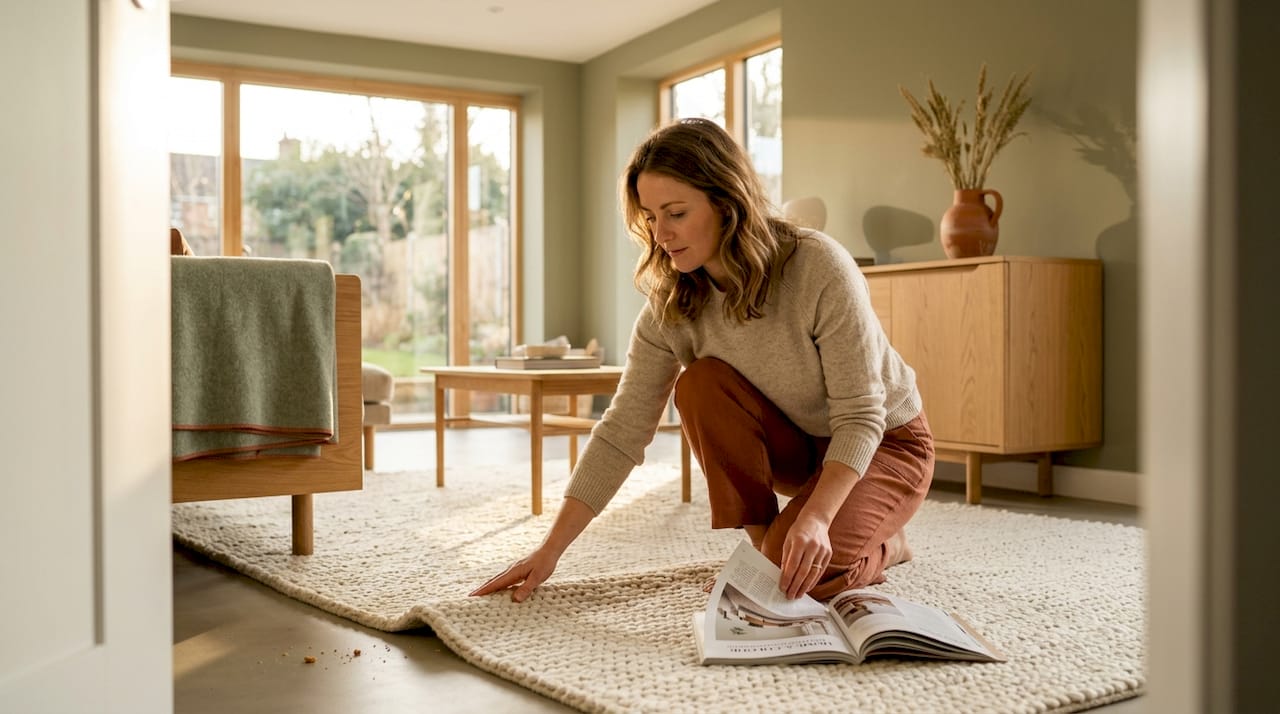
What makes this style so versatile is that it works across contrasting interiors. A chunky woven rug in off-white sits just as well in a calm, minimalist-inspired home as it does in a layered, eclectic living room. Texture creates interest without committing you to a particular mood or era. If you want to understand how this fits into the broader picture, exploring 2026 contemporary home trends gives useful context for the direction interiors are heading.
Trends shaping contemporary rugs today
Now that the features of contemporary rugs are established, let’s explore how these characteristics materialise in today’s most popular trends.
The clearest shift happening right now is the move away from graphic pattern towards textural depth. Where previous years saw a surge in abstract prints, painterly splashes, and bold geometric mosaics, today’s direction is deliberately quieter. Clients and designers alike are turning to monochrome or subdued colours combined with tactile weave detail, creating rugs that invite you to touch them rather than just look at them.
Here is a comparison of what is trending versus what is fading out:
| Trending now | Fading out |
|---|---|
| High/low pile, tone-on-tone | Bold multicolour abstract prints |
| Boucle and bouclé-inspired weaves | Heavily patterned traditional motifs |
| Matte, single-colour fields | High-sheen viscose with graphic patterns |
| Organic and irregular shapes | Perfectly symmetrical medallion designs |
| Earthy, muted palettes | Overly saturated primary colours |
| Hand-tufted artisan details | Machine-made uniformity |
Several additional trends are worth noting for anyone shopping in 2026:
- Organic shapes: Rugs are shedding the rectangle. Irregular, free-form silhouettes add sculptural interest to a floor plan, particularly in open-plan living spaces.
- Nature-inspired palettes: Stone, terracotta, moss, and warm linen tones are dominating, reflecting a broader pull towards biophilic design (a design philosophy that connects interiors to the natural world).
- Layering: Stacking a smaller rug over a larger natural-fibre base is a practical trend that adds depth and allows for easier updating when styles shift.
- Sustainability: Natural materials like jute, seagrass, and undyed wool are gaining popularity as buyers become more conscious of environmental impact.
Keeping up with modern design trends helps you understand why these choices are resonating. They are not arbitrary shifts. They reflect how people are living, what they value in a home, and how they want their spaces to feel. Exploring 2026 modern homes trends reveals that comfort, calm, and considered simplicity are the threads running through virtually every major movement in interiors right now.
Pro Tip: When a room already features a statement piece of furniture or artwork, choose a rug with maximum texture and minimum pattern. This lets the rug do its work as a grounding element without competing for visual attention.
How texture transforms your living space
Closely tied to these trends is texture, now the most critical design element in contemporary rugs.
The reason texture has become so important is straightforward: it adds the visual and tactile complexity that pattern used to provide, but it does so in a way that is far more adaptable. A high/low pile rug in warm grey reads differently under morning light than it does by lamplight in the evening. That shift is created entirely by the play of shadows in the pile, not by any printed motif. This quality makes textured rugs feel alive and dynamic without ever being demanding.
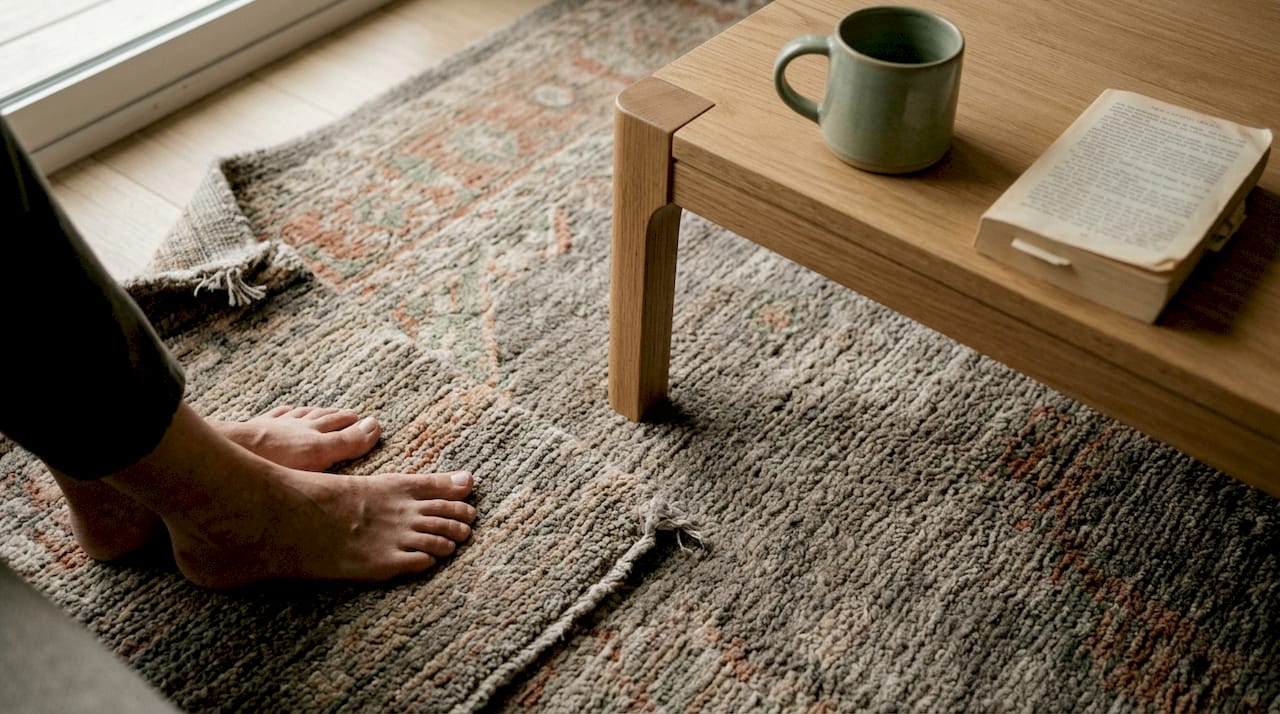
Here is a breakdown of the most common texture techniques and what they bring to a room:
| Texture technique | Visual effect | Best suited for |
|---|---|---|
| High/low pile | Shadow depth, rich dimensionality | Lounge, bedroom |
| Boucle weave | Soft, looped surface with cosy warmth | Bedroom, reading nook |
| Flatweave | Clean, graphic, low-maintenance | Dining room, hallway |
| Hand-tufted loops | Artisan quality, irregular surface | Feature spaces, living room |
| Shaggy/deep pile | Maximum warmth and softness | Bedroom, media room |
| Woven rib texture | Subtle linear interest | Open-plan living, study |
Choosing the right texture depends on both aesthetics and practicality. A deep-pile boucle rug is luxurious underfoot but harder to clean. A flatweave works beautifully in a dining space where spills are more likely. The role of texture in home styling goes well beyond rugs, but rugs are where texture often makes the biggest single impact because they cover such a large visual and physical area.
“Clients seek more texture rather than pattern, including monochrome rugs with high/low pile and woven and stitched details.” — Better Homes & Gardens
Texture also performs an acoustic function worth considering. A thick, woven rug absorbs sound, making a hard-floored room feel less echoey and more intimate. In open-plan spaces where sound travels freely, a well-placed textured rug can genuinely change how a room feels to spend time in.
Pro Tip: If you are working with a monochrome room, introduce two different textures in the same tone rather than adding a contrasting colour. A stone linen sofa paired with a high/low pile rug in the same hue creates visual interest without disrupting the calm.
Choosing the right contemporary rug for your home
The benefits of textured rugs are clear, but how do you confidently pick one for your space? Here is a step-by-step approach.
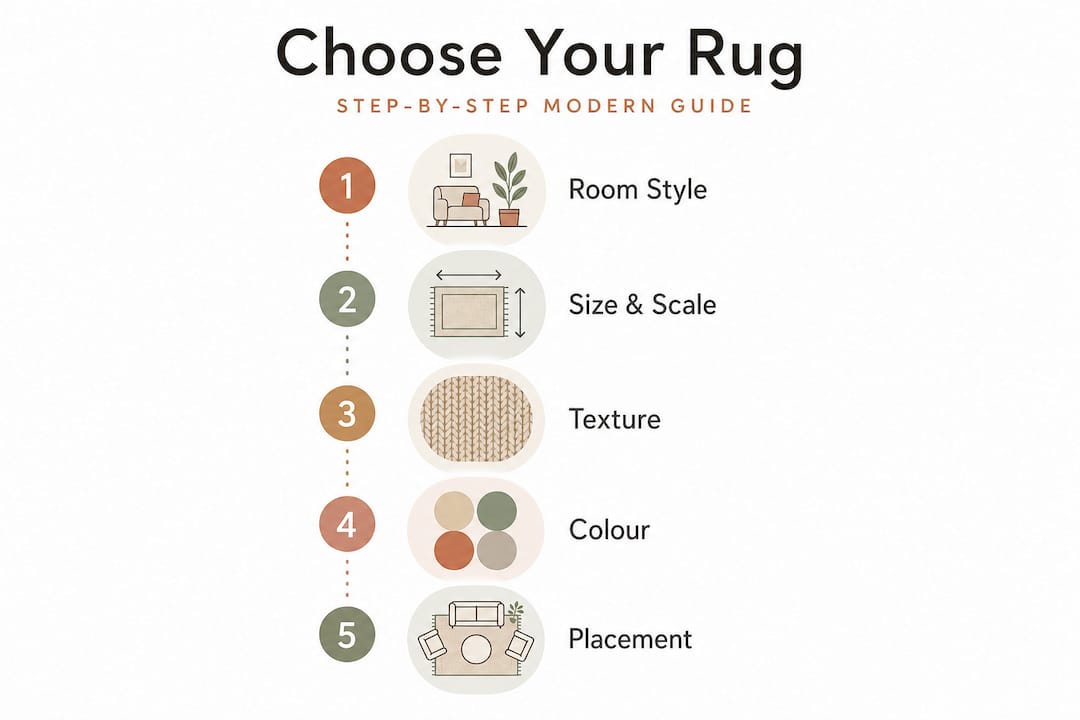
Contemporary rug design often functions as a visual statement, which means scale and texture are critical. Get the scale wrong and even the most beautiful rug will fail to deliver. A rug that is too small looks like an afterthought, while one that is too large can overwhelm a smaller room or cut into the visual space of the walls.
Follow these steps when choosing:
- Measure your seating area first. The rug should be large enough for all main furniture legs to sit either fully on or at least partially on it. This grounds the seating group and prevents the floating-furniture look.
- Consider the room’s existing weight. If you have heavy, dark furniture, a lighter textured rug in a warm neutral will lift the space. If your furniture is pale and minimal, a rug with deeper texture or a slightly richer tone adds the necessary visual anchor.
- Match pile height to lifestyle. Households with children or pets benefit from low-pile or flatweave designs that are hardwearing and easier to clean. A home without heavy footfall can carry a deeper pile.
- Opt for tone-on-tone layering for complexity without chaos. Layering a smaller rug over a neutral jute base lets you add personality while keeping the overall look cohesive. This works especially well in living rooms and bedrooms.
- Balance your statement. If you want a rug with some visual presence, such as a bold ribbed texture or an organic shape, balance it with simpler decor choices elsewhere. Keep cushions, throws, and accessories understated so the rug has room to breathe.
Exploring minimalist interior examples is useful here because minimalist spaces demonstrate perfectly how a single textured rug can carry an entire room without any other decorative work. It is a masterclass in trusting one element to do the heavy lifting. Understanding why minimalist design works will also help you think about proportion and restraint, skills that apply to any interior style. If you are interested in the broader principles at play, reading about calm living through minimalism offers a thoughtful perspective on how the way we design our spaces genuinely affects how we feel inside them.
Why texture, not pattern, is the secret to contemporary rug impact
Now that the practical steps are clear, let’s take a step back and re-examine what most people still overlook about contemporary rugs.
We have noticed that a huge number of rug shoppers still default to pattern as their primary selection criteria. They look for something visually striking in the product image, something that looks interesting on screen. And this is precisely where many styling decisions go wrong, because a pattern that photographs beautifully can completely overwhelm a real room where it needs to coexist with furniture, flooring, walls, and the people who live there.
Pattern dates quickly. What feels fresh and exciting in a trend cycle often looks tired within a few years. Texture, on the other hand, is essentially timeless. A beautifully woven rug with genuine tactile quality will age well, wear in gracefully, and complement a room as its other elements evolve. It is the difference between buying a statement piece and buying a foundation.
There is also a comfort dimension that goes underappreciated. A deeply textured rug feels genuinely different underfoot, it is warmer, softer, and more inviting than a flat-printed alternative of the same pile height. In a living room where you spend real time sitting, lying, and playing on the floor, that tactile quality matters enormously.
The strongest advice we offer is this: invest in texture and scale before you invest in pattern. Choose a rug that feels extraordinary to walk on, that creates depth under your lighting, and that grounds your furniture arrangement. Then let your cushions, artwork, and accessories carry whatever personality and pattern your room needs. This approach, rooted in contemporary home styling, almost always produces a result that looks more considered, more expensive, and more you than any loud pattern could manage.
The bottom line is that texture is not the safe, boring choice. It is actually the braver one, because it asks you to trust proportion and craftsmanship rather than reaching for instant visual drama.
Discover more ways to enhance your space with Homable
At Homable, we believe that the right rug does not just cover your floor. It defines the feeling of an entire room. Whether you are just beginning to explore contemporary interiors or you are looking to refine an existing space, the choices you make at floor level set the tone for everything above.
Homable.co.uk offers a curated range of contemporary rugs and home accessories designed to bring tactile richness, modern style, and genuine quality into your living space, all with free UK delivery on orders over £100. From woven textures and tone-on-tone palettes to organic shapes and artisan detailing, you will find pieces that align with exactly the design principles explored in this guide. Browse our new arrivals and best sellers to find the rug that anchors your room with confidence. Secure payment, detailed product descriptions, and real customer reviews make it easy to shop with complete peace of mind.
Frequently asked questions
What makes a rug ‘contemporary’ versus ‘modern’ or ‘traditional’?
Contemporary rugs are defined by their focus on texture, minimal pattern, and innovative materials, whereas modern rugs reference a specific mid-century design movement and traditional rugs draw from historic motifs. As noted in current rug design trends, the contemporary approach prioritises less pattern and more tactile depth.
How do I choose the right size of contemporary rug for my room?
Measure your main seating area and choose a rug large enough to anchor all key furniture pieces, ideally with front legs resting on the rug, while leaving a visible border of flooring around the edges for balance.
Are textured rugs suitable for households with children or pets?
Yes, many contemporary textured rugs are practical as well as stylish, but opt for low-pile flatweave or tightly woven designs in family homes, as they resist matting, clean more easily, and hold up better under heavy daily use.
What colours are trending in contemporary rug design for 2026?
Muted, single-colour fields in warm neutrals such as stone, warm linen, terracotta, and dusty sage are leading the trend, with simpler colour fields and tone-on-tone palettes replacing the saturated, multicolour designs of previous years.