Cart
0
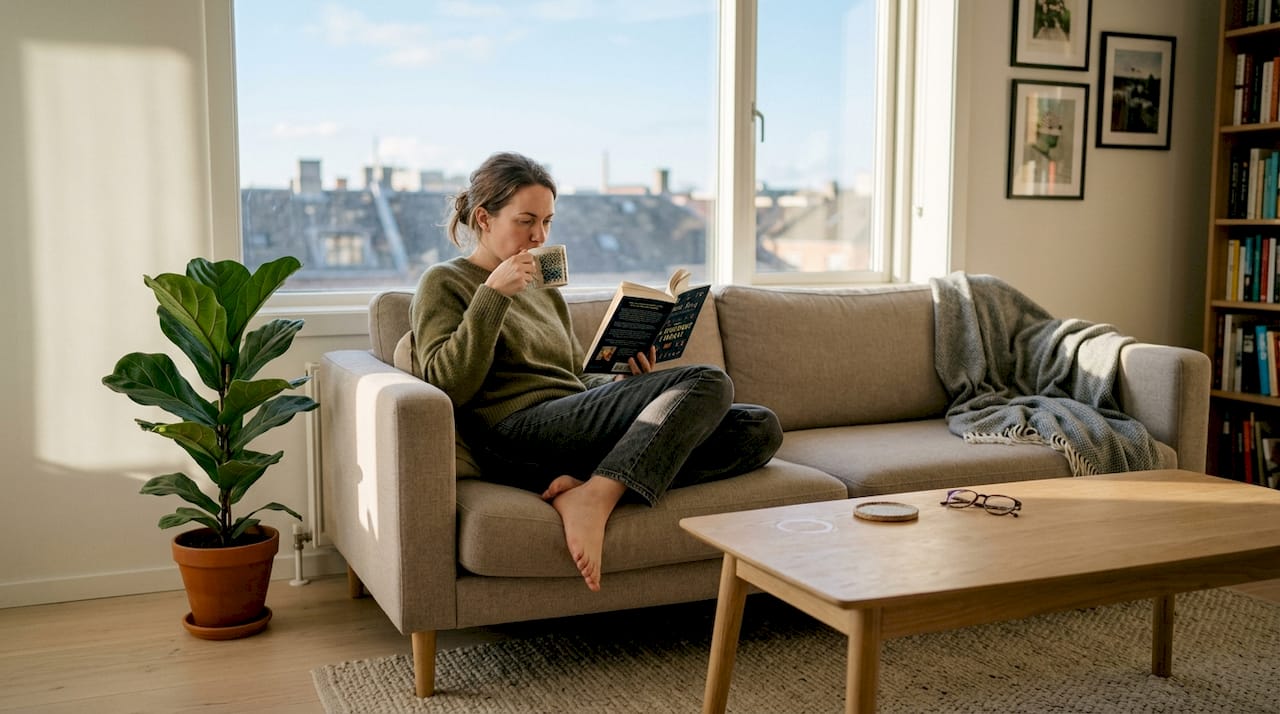
Minimalism in design is one of the most misunderstood ideas in home styling. Many people assume it means bare walls, cold rooms, and a home that feels more like a showroom than a place to live. In reality, minimalism is a philosophy guided by ‘less is more’, focusing on simplicity, function, and calm. It’s about choosing what belongs and letting go of what doesn’t. By the end of this guide, you’ll know exactly what minimalism means, why it works, and how to bring it into your home in a way that feels warm, personal, and genuinely stylish.
Table of Contents
- Defining minimalism in design
- Core principles and characteristics
- Benefits of minimalism: More than just style
- Minimalism vs maximalism and new hybrid trends
- Applying minimalism to your home: A practical framework
- Expert tips and pitfalls: What most people get wrong
- Bring minimalism home with Homable
- Frequently asked questions
Key Takeaways
| Point | Details |
|---|---|
| Minimalism defined | Minimalism means prioritising function, simplicity, and calm through purposeful, uncluttered design. |
| Core design principles | Use neutral palettes, natural materials, multifunctional furniture, and negative space for a serene home. |
| Tangible benefits | Minimalist homes boost well-being, improve focus, and make small spaces feel larger. |
| Practical application | Start small with decluttering, adopt quality pieces, and layer textures for warmth. |
| Avoiding pitfalls | Balance minimalism with personal style and warmth to prevent a cold, unfinished look. |
Defining minimalism in design
Minimalism in design isn’t a trend. It’s a considered approach to how we live with objects, space, and light. At its core, it means stripping back to what’s essential and allowing each element in a room to breathe. Minimalism emphasises simplicity, functionality, and calm through clean lines, natural materials, and negative space.
The most common myth is that minimalism equals emptiness or coldness. That couldn’t be further from the truth. A well-executed minimalist room feels intentional, serene, and deeply comfortable. Think of it as editing rather than erasing.
Here are the hallmarks of minimalist design:
- Neutral colour palettes: whites, creams, warm greys, and soft beiges
- Natural materials: wood, stone, linen, and cotton
- Clean lines: furniture and architecture with simple, unfussy shapes
- Negative space: deliberate areas of emptiness that give the eye room to rest
- Purposeful objects: every item earns its place
“Minimalism is not about having less. It’s about making room for what matters most.”
Minimalism also works brilliantly across all home sizes. In fact, it’s particularly powerful in smaller spaces where clutter can quickly make a room feel oppressive. You can explore examples of minimalist design to see how the principles translate across different room types and layouts.
Core principles and characteristics
Now that you know what minimalism is, let’s examine its core principles and how they translate into your living environment. Minimalism prioritises simplicity, function, clean lines, and neutral palettes. These aren’t arbitrary rules. Each one serves a purpose.
The four cornerstones of minimalist design are:
| Principle | What it means in practice |
|---|---|
| Simplicity | Remove anything that doesn’t serve a function or bring genuine joy |
| Functionality | Every piece of furniture or décor should have a clear purpose |
| Natural materials | Wood, stone, and linen add warmth without visual noise |
| Negative space | Empty areas are design features, not failures |
One of minimalism’s underrated advantages is how easy it makes daily life. Fewer objects mean less to clean, less to organise, and less visual distraction when you walk into a room. Many homeowners report feeling calmer and more focused in minimalist spaces, and that’s not coincidental.
Pro Tip: When assessing whether an item belongs in a minimalist room, ask yourself two questions: does it serve a function, and does it genuinely add to the room’s feel? If the answer to both is no, it’s time to let it go.
For further inspiration on how these principles come together in real homes, take a look at minimalist design for modern living to see how simplicity and style can coexist beautifully.
Benefits of minimalism: More than just style
Understanding the basic principles sets the foundation. Next, discover why so many homeowners embrace minimalism, including research-backed benefits that go well beyond aesthetics.
The numbers are striking. 63% of consumers prefer minimalist spaces, and clutter-free environments have been shown to improve concentration and mood. In digital design, minimalist interfaces produce 60% lower bounce rates and 40% faster decision-making, which tells us something important: our brains genuinely respond better to visual simplicity.
The emotional case for minimalism is just as compelling:
- Reduced stress: visual clutter competes for your attention and raises cortisol levels
- Better focus: a clear space supports a clear mind, especially when working from home
- Improved mood: entering a calm, ordered room has an immediate positive effect
- Sense of control: knowing where everything is reduces low-level anxiety
- More perceived space: light colours and open layouts make rooms feel larger
For families in smaller homes, minimalism is particularly valuable. Removing unnecessary furniture and keeping surfaces clear can make a modest living room feel genuinely spacious. The calm, functional home benefits of this approach are well documented, and many homeowners find the lifestyle shift as rewarding as the visual result.
Minimalism vs maximalism and new hybrid trends
Minimalism doesn’t stand alone. Many draw inspiration from other styles. Here’s how it stacks up against maximalism and the rise of stylish hybrid interiors.
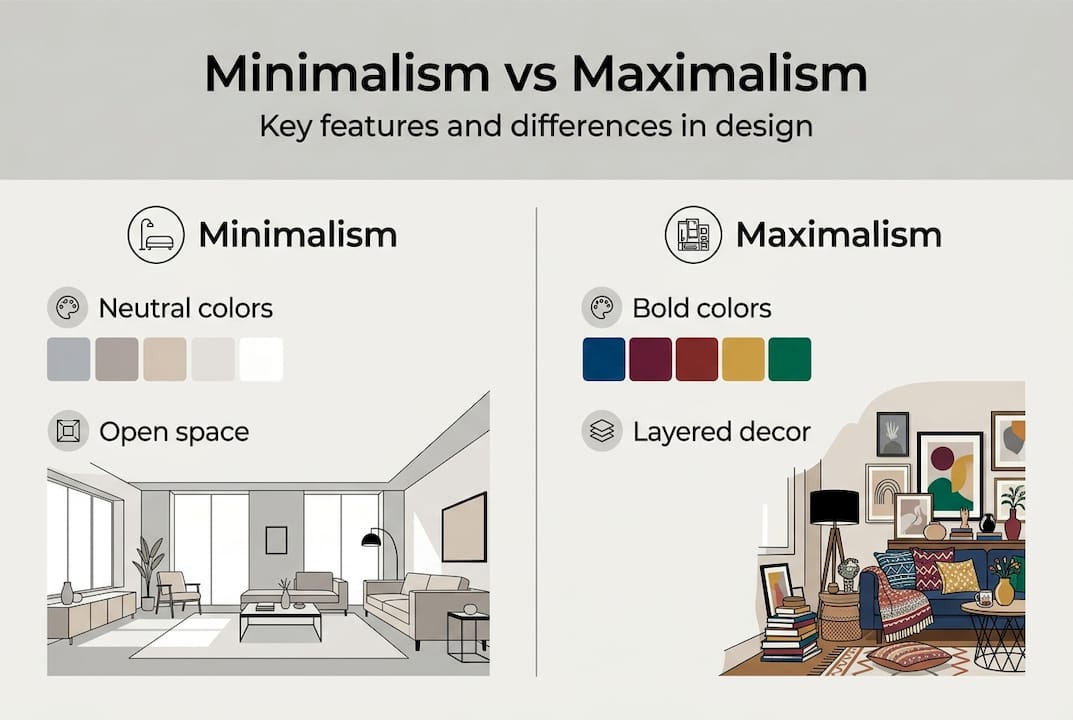
Maximalism features energy and personality through abundance, colour, and texture, while minimalism emphasises clarity and restraint. Neither is objectively better. They reflect different personalities and priorities.
| Feature | Minimalism | Maximalism |
|---|---|---|
| Colour palette | Neutral, muted tones | Bold, layered, expressive |
| Objects and décor | Carefully curated, few | Abundant, collected over time |
| Mood | Calm, serene, spacious | Energetic, vibrant, busy |
| Maintenance | Easy to clean and organise | Requires more upkeep |
| Best suited to | Small spaces, busy lifestyles | Larger rooms, expressive personalities |
What’s particularly interesting in 2026 is the rise of hybrid interior styles. ‘Soft minimalism’ is gaining real traction. It blends the restraint of minimalism with warmth, personality, and carefully chosen statement pieces. Think a neutral room anchored by a bold piece of art, or a clean-lined sofa dressed with richly textured cushions.
The key distinction is intent. Soft minimalism still edits ruthlessly. It simply allows a little more personality to show through. For many homeowners, this hybrid approach feels more liveable and less intimidating than strict minimalism.
Applying minimalism to your home: A practical framework
With the distinctions made clear, how do you turn minimalist principles into practical results at home? Follow this framework.
An 8-step method recommends decluttering, adopting neutral palettes, and using multifunctional furniture as the foundation of any minimalist transformation. Here’s a simplified version you can start this weekend:
- Declutter one room at a time: don’t try to overhaul the whole house at once. Start with the room that causes you the most stress.
- Choose a neutral base palette: repaint walls in white, warm grey, or soft beige to create a calm backdrop.
- Invest in quality over quantity: one well-made sofa beats three mismatched pieces every time.
- Layer textures thoughtfully: linen throws, a wool rug, and a wooden side table add warmth without visual noise.
- Optimise storage: hidden storage keeps surfaces clear. Built-in shelving, ottomans with storage, and under-bed drawers are your best friends.
- Maximise natural light: remove heavy curtains where possible and use mirrors to bounce light around the room.
- Choose multifunctional furniture: a dining table that doubles as a workspace, or a bed with built-in drawers, reduces the need for extra pieces.
- Edit regularly: minimalism isn’t a one-time project. Revisit each room every few months and remove anything that’s crept back in.
Pro Tip: If you’re decorating a smaller room, decorating small spaces with minimalism is one of the most effective approaches available. Light colours, mirrors, and smart storage can genuinely transform a compact room.
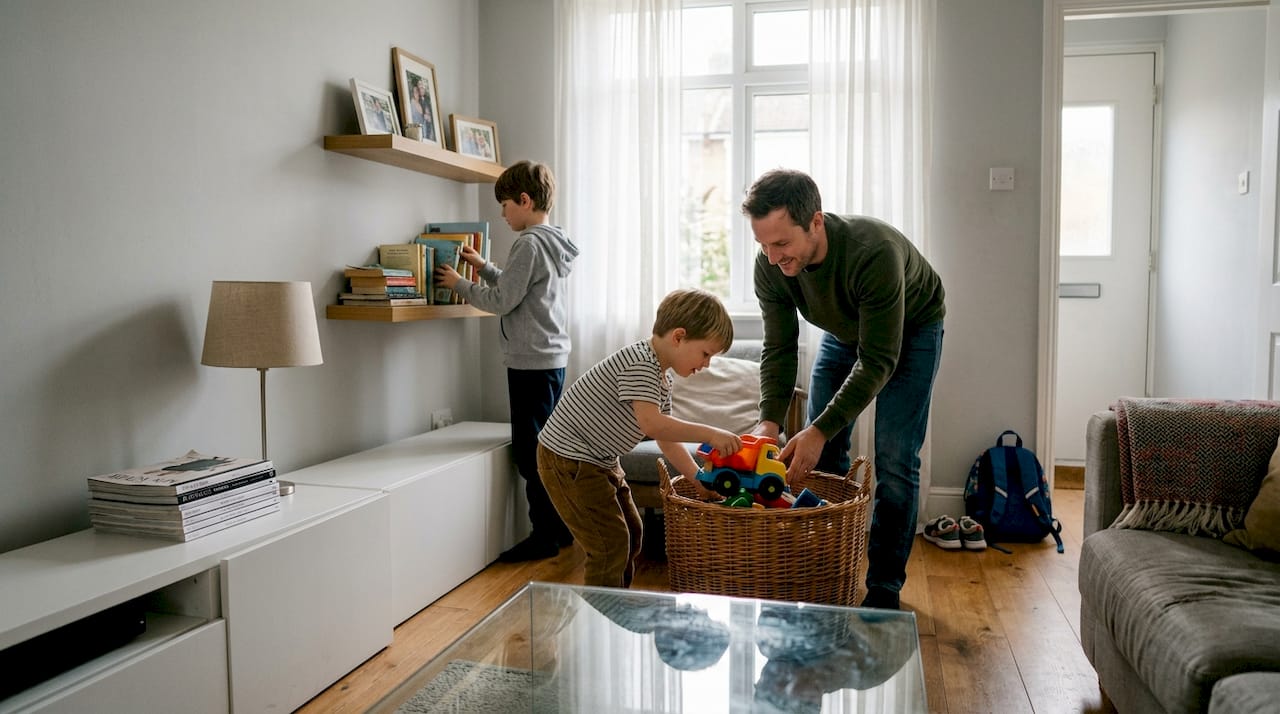
For families, minimalism requires a little more flexibility. Clever stylish storage solutions are essential. Baskets, labelled boxes, and built-in cabinetry keep children’s belongings contained without sacrificing the calm aesthetic you’re working towards.
Expert tips and pitfalls: What most people get wrong
Ready to put minimalism into action? Avoid these common mistakes, and learn from top designers how to create warmth and intent.
The biggest pitfall is going too bare. Removing everything and leaving a room with nothing but a sofa and a lamp isn’t minimalism. It’s an unfinished room. Warm minimalism uses textures and earth tones to prevent sterile or unfinished results. Minimalism, done well, is actually harder than maximalism because every remaining item carries more visual weight.
Here are the most common mistakes and how to avoid them:
- Skipping focal points: every room needs one strong visual anchor, whether that’s a piece of art, a statement light fitting, or a beautifully textured wall
- Ignoring warmth: all-white rooms with no texture feel clinical. Add wood, linen, and plants to bring life to the space
- Buying cheap to buy less: minimalism is about quality. One well-chosen piece will always outperform several budget alternatives
- Forgetting function: a beautiful room that doesn’t work for your life isn’t minimalist. It’s impractical
- Treating it as permanent: your home should evolve with you. Allow the space to change as your needs do
“Every item in a minimalist home must earn its place. If it doesn’t serve a purpose or bring genuine pleasure, it has no business being there.”
There’s also a fair critique that minimalism can feel elitist. Quality pieces cost money, and not everyone can invest in bespoke furniture. The honest answer is that minimalism is a direction, not a destination. You can apply its principles at any budget by simply buying less, choosing carefully, and prioritising function. Explore styling tips for small spaces for budget-conscious ideas that still deliver a clean, considered look.
Bring minimalism home with Homable
Once you’ve discovered what minimalism can do for your home, the next step is finding the right pieces to bring it to life. At Homable, we’ve curated a collection of home décor and accessories designed with exactly this in mind: clean lines, quality materials, and purposeful design.
Whether you’re looking for a single statement piece like our decorative silver flower candle holder or need practical storage solutions to keep surfaces clear, our collections are built around the idea that every item should earn its place. Browse our full minimalist design guide for room-by-room inspiration, and enjoy free shipping on orders over £100. Stylish, functional living is closer than you think.
Frequently asked questions
How do I start creating a minimalist home?
Begin by decluttering one room at a time, using the 90/90 rule as a guide: if you haven’t used something in 90 days and won’t use it in the next 90, let it go. Choose functional, quality items that serve a clear purpose.
Is minimalism suitable for families with children?
Absolutely. Hybrid approaches and practical storage make minimalism accessible for families. Use durable materials, flexible layouts, and concealed storage to keep the space calm without sacrificing practicality.
What are the main colours used in minimalist interiors?
Minimalist interiors favour neutral shades such as white, warm beige, and soft grey, paired with natural materials like wood and stone to add warmth and texture.
Can minimalism increase the sense of space in a small home?
Yes. Minimalism enhances perceived space by removing clutter and using light colours to make rooms feel larger and more open, which is particularly valuable in compact homes.
How do I keep minimalist spaces from feeling cold or empty?
Layer textures such as linen, wool, and wood, add a natural element like a plant or stone bowl, and include one strong focal point. Warm minimalism uses these techniques to keep spaces inviting rather than sterile.