Cart
0
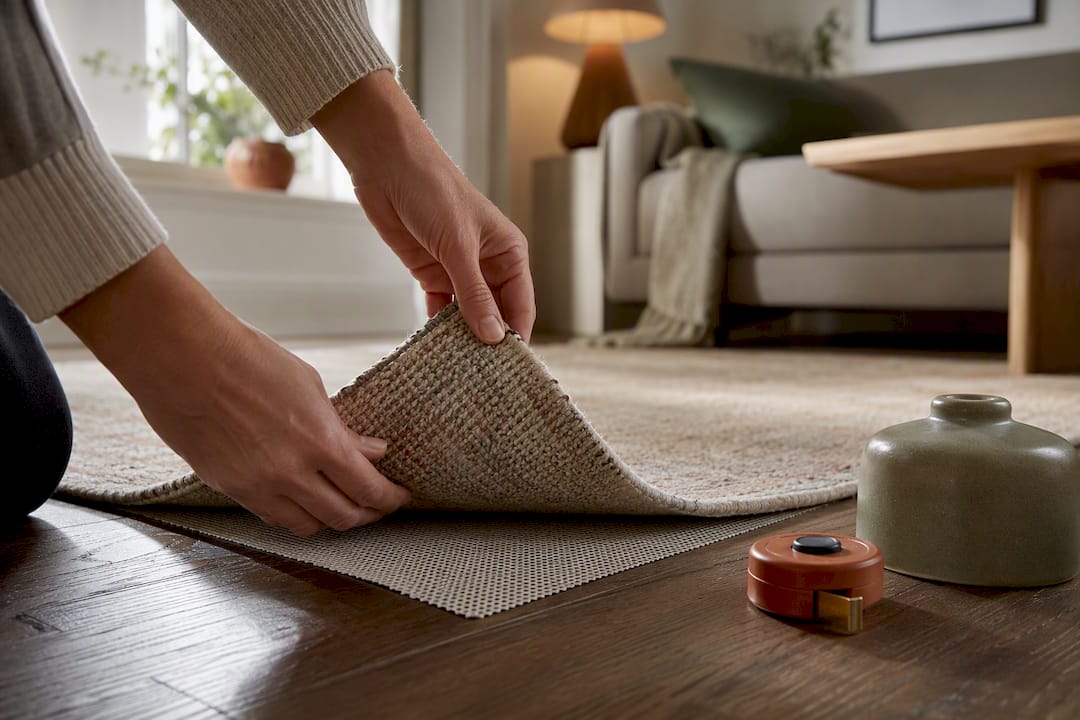
The most reliable answer is a well-matched rug pad, chosen for your specific floor, not a generic one-size-fits-all product. Felt-and-rubber hybrids or natural rubber pads solve the problem for years; double-sided tape and corner grippers only manage it for weeks. Which one you need depends entirely on your floor type. Homable stocks non-slip mats suited to several of these situations if you want to fix it today rather than experiment.
TL;DR:
- Felt-and-rubber hybrid pads or natural rubber pads are the most durable and floor-safe options for long-term grip, especially on wood and laminate floors.
- Double-sided tape and corner grippers are temporary solutions suitable for small rugs or runners but can leave residue or lose effectiveness over weeks.
- Choose rug pads that are PVC-free or labeled safe for vinyl flooring to avoid staining or damage, particularly on LVT and vinyl surfaces.
- Proper installation involves cleaning surfaces, trimming pads slightly smaller than the rug, and pressing firmly to prevent shifting or curling.
- Regular maintenance, including monthly vacuuming and yearly pad checks, is essential to preserve grip over several years.
Table of Contents
- What non-slip rug solutions actually work?
- Which non-slip products suit your floor type?
- How do you install a non-slip rug pad or tape?
- How do you maintain non-slip rugs and pads long-term?
- Homable’s take on getting this right
- Where to buy the right non-slip mat today
- Sources
- FAQ
What non-slip rug solutions actually work?
Not every product marketed for grip belongs under every rug. The five main categories differ wildly in cost, lifespan, and how kindly they treat your floor.
Rug pads and underlays are the industry standard for good reason. Felt, natural rubber, and felt-rubber hybrids grip the floor on one side and the rug backing on the other, and they last for years rather than weeks. A well-matched pad offers the strongest long-term grip without harming the floor, which is why flooring specialists reach for one first rather than tape.
- Felt pads: cushion well, moderate grip, best under furniture-anchored rugs on hard floors.
- Natural rubber pads: strongest grip, ideal for high-traffic hallways and living rooms, slightly pricier.
- Felt-and-rubber hybrids: combine cushioning with grip, the safest general-purpose choice for wood and laminate.
- Waffle or open-mesh rubber pads: breathable, easy to trim, no adhesive residue, but less cushioning underfoot.
Double-sided carpet tape works fast and costs little, but it’s a short-term measure. It can lift finish or leave sticky residue on wood and laminate if left down too long, so treat it as a stopgap for a rug you’ll reposition soon.
Corner grippers and hook-and-loop strips suit runners, doormats, and small bathroom mats better than large area rugs. They hold the corners flat without covering the whole underside, which makes them quick to fit and just as quick to remove.
DIY hacks like silicone caulk or hot glue dots turn up often in online forums, and they do add friction. They’re also the riskiest option here: both can bond permanently to some floor finishes, and removing dried silicone from oak or vinyl often takes the finish with it. Use these only as an emergency measure, never as your main plan.
Which non-slip products suit your floor type?
Floor material decides which product is safe, not just which one grips best. Get this wrong and you risk stains, warranty voids, or a rug that still slides.
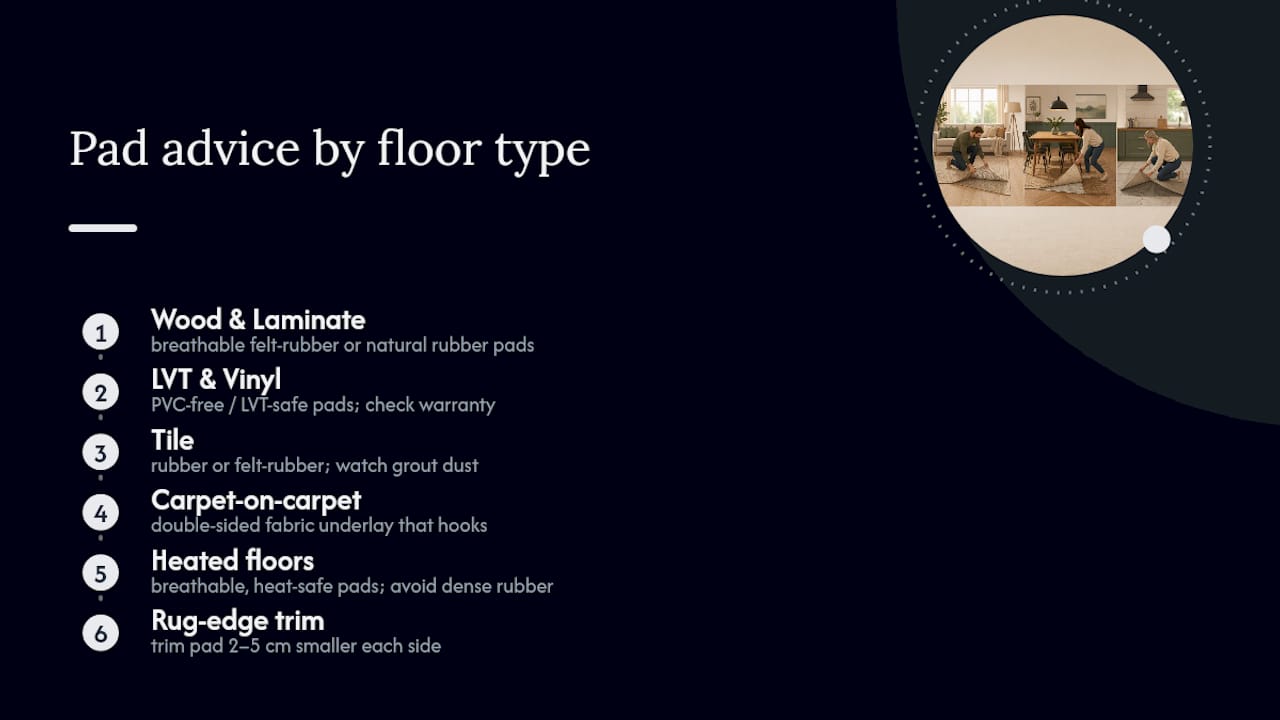
Wood, engineered wood, and laminate need a breathable pad that won’t react with the finish. Felt-and-rubber hybrid pads suit natural oak and engineered wood because they avoid the plasticiser migration that cheaper PVC pads can cause over time. Natural rubber is a safe alternative for the same reason: it’s the most reliable long-term fix for hardwood, without the chemical risk of budget vinyl.
LVT and vinyl flooring deserve extra caution. Many rubber pads aren’t suitable for LVT because plasticisers can migrate into the vinyl and cause permanent staining. Always choose a pad labelled PVC-free or LVT-safe, and check your flooring warranty before fitting anything with adhesive backing.
Tile floors tolerate rubber and felt-rubber pads well, since tile is largely inert, but grout lines can trap dust that reduces grip over time.
Carpet-to-carpet situations need a different approach entirely. Rubber pads tend to travel with the rug on a carpeted floor rather than gripping it, so a double-sided fabric underlay that hooks into both surfaces is the only practical fix for carpet-on-carpet.
Heated floors need pads described as breathable and heat-safe; dense rubber can trap warmth and degrade faster than it should.
Whatever pad you choose, trim it 2 to 5cm smaller than the rug on every side, so it stays hidden and never creates a trip edge at the border.
How do you install a non-slip rug pad or tape?
Fitting any of these products properly takes fifteen minutes and prevents most of the problems people blame on “bad” pads.
- Lift the rug and clean both surfaces. Vacuum the floor and the rug’s underside thoroughly, then wipe the floor dry. Grit trapped under a pad reduces grip almost as much as skipping the pad altogether.
- Measure before you cut. Roll the pad out flat, lay the rug on top, and mark 2 to 5cm inside the rug’s edge all round.
- Trim the pad to size. Use sharp scissors or a utility knife along a straight edge; ragged cuts create weak points that curl over time.
- Centre and press. Lay the pad down first, then the rug on top, pressing from the centre outward to remove air pockets.
- Test the fit. Walk across the rug at a few points and tug a corner gently. It shouldn’t shift more than a centimetre.
- For tape or grippers, apply short strips at each corner and at 30 to 40cm intervals along the edges, press firmly for the manufacturer’s stated cure time, and avoid walking on it for at least an hour.
- If anchoring with furniture, position at least the front legs of a sofa or armchair on the rug itself. This “two-feet-on” placement often removes the need for any adhesive at all in a living room.
Run the 48-hour patch test described above on any adhesive product before it goes anywhere near LVT or a valuable hardwood finish. It’s the one-step people skip and the one that causes most complaints about staining.
How do you maintain non-slip rugs and pads long-term?
Grip fades gradually, not suddenly, which is why most people don’t notice a problem until the rug starts sliding again.
- Vacuum under rugs monthly. Dust and grit act like tiny ball bearings beneath the pad and quietly rob it of friction.
- Check pads yearly for compression, cracking, or crumbling rubber, and replace them roughly every 3 to 4 years.
- Remove old tape slowly, at a low angle, then lift residue with a little warm soapy water rather than scraping.
- Recheck grip after seasonal humidity swings; wood floors expand and contract enough to loosen a previously snug pad.
- Wash washable non-slip mats on a gentle cycle and air dry flat, since tumble heat can warp rubber backing.
Homable’s take on getting this right
Bathroom and hallway mats fail differently to living room rugs, which is why some retailers separate non-slip bath mats, bamboo rugs, and washable mats rather than treating grip as one problem with one fix. A bamboo rug behaves like a hard, heavier textile and sits more securely on its own; a bath mat needs constant water resistance alongside grip, which is a different engineering brief entirely.
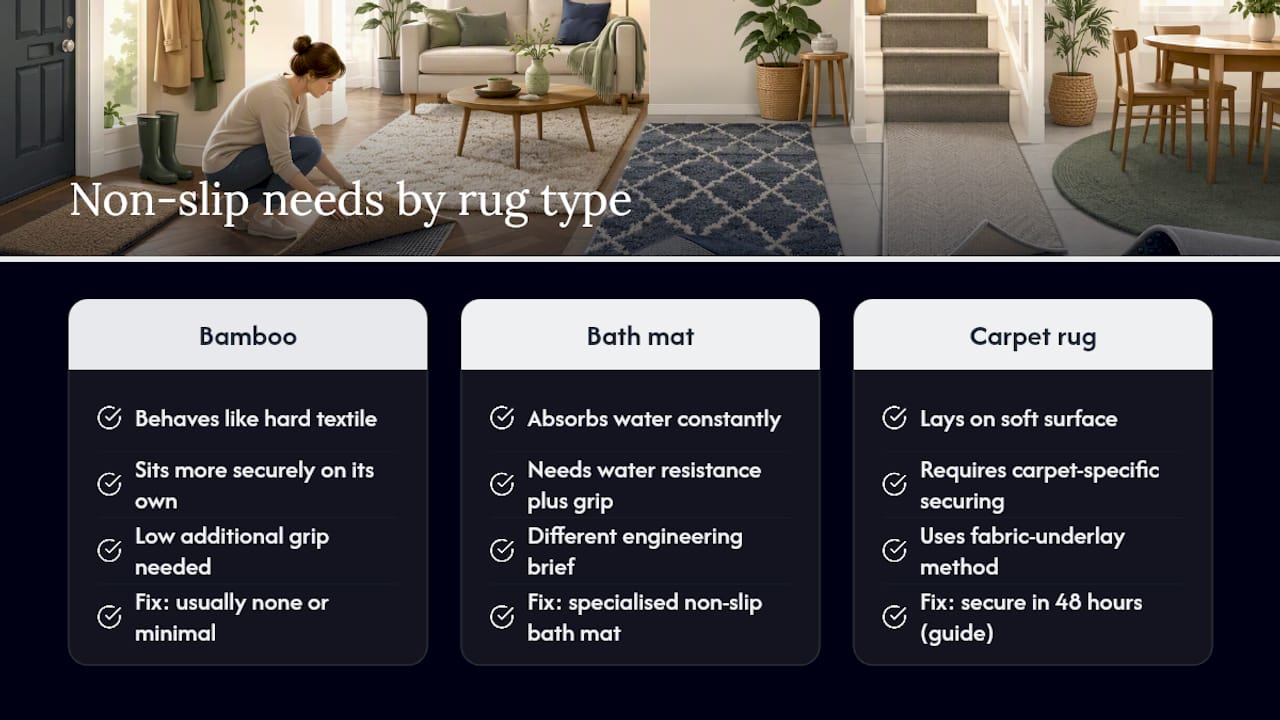
For carpet-specific setups, Homable’s blog post on securing a rug on carpet in 48 hours walks through the fabric-underlay method mentioned earlier in more depth…
Some e-commerce sites offer free shipping over a certain order value and secure payment options, which helps reduce risk in purchasing.
— Cristiano
Where to buy the right non-slip mat today
Some suppliers offer ranges built around floor-specific logic rather than a single catch-all product. If your problem is a bathroom or pedestal mat that keeps creeping across tile, the 2-piece bath and pedestal rug set is water-absorbent and built with grip already worked into the backing, so there’s no separate pad to buy or trim.

If your sliding rug is really a case of the wrong rug for the space, a heavier textile such as the rectangular bamboo rug two-piece set sits flatter and shifts less than a thin synthetic rug ever will, simply through its own weight. Measure your space first, check the returns policy before you commit, and read the care label so you know whether a mat is machine washable before it goes anywhere near a spill. Start by browsing Homable’s full range to compare sizes and materials side by side, and pick the one that matches the floor you’re actually trying to protect.
Sources
- How to Keep Rugs From Sliding on Hardwood, Tile, and Carpet — Fallrugs
- How to Stop a Rug from Slipping: A Frank Guide to Floor Safety — Frankly Flooring
FAQ
What can you use to stop rugs from slipping?
A felt-and-rubber or natural rubber rug pad is the most reliable fix, cut slightly smaller than the rug and placed underneath it. Double-sided tape and corner grippers work as temporary measures for runners and small mats, but they wear out faster and can leave residue on hard floors.
What are the best non-slip rugs for elderly people?
Rugs paired with a full-coverage felt-and-rubber pad reduce trip risk far more than tape or grippers alone, since the pad supports the entire rug rather than just the edges. Choose a pad with a slightly textured, non-slip top surface and keep the rug’s edges trimmed flat with no curling corners.
How do you make a rug non-slippery?
Fit a rug pad sized 2 to 5cm smaller than the rug on every side, so it grips the floor without peeking out from underneath. Vacuuming under the rug monthly helps too, since dust and grit reduce the pad’s grip over time almost as much as using no pad at all.
Do rug anti-slip mats work?
Yes, when matched to the correct floor type. A rubber pad on LVT can stain the vinyl through plasticiser migration, while the same pad works safely on wood or tile, so checking floor compatibility first is what makes these mats effective rather than a source of new damage.
Can I put a rug pad under any type of rug?
Most pads work under wool, synthetic, and natural fibre rugs, though thicker natural fibre rugs like jute sit better with a firmer felt pad for extra support. For carpet-on-carpet setups, a double-sided fabric underlay works better than a rubber pad, since rubber tends to move with the rug rather than gripping the carpet beneath it.