Cart
0
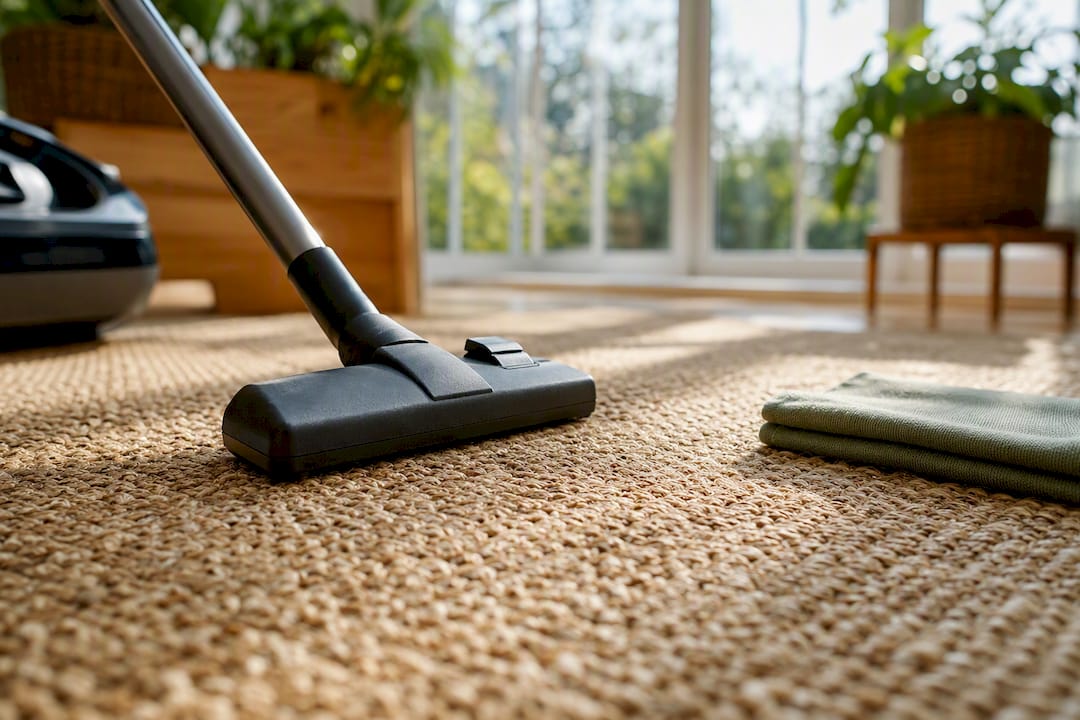
Treat jute like a dry-clean only fibre: vacuum on low suction, blot spills the moment they happen, and reach for dry powders rather than water or steam. That single habit prevents most of the damage jute suffers. Combine it with weekly vacuuming, a breathable rug pad, and rotation every three to four months, and a jute rug will outlast almost any other natural-fibre floor covering in the house.
TL;DR:
- Regular vacuuming on low suction with the beater bar off, plus frequent rotation, prevents grit from damaging the fibers and prolongs the rug’s lifespan.
- Immediate blotting of spills and careful use of minimal water-based cleaning prevents permanent watermarks, discoloration, and structural weakening.
- Deodorizing with dry powders like baking soda is effective and safe, but heavy oil or urine stains require specialized professional cleaning with proper drying methods.
- Wet cleaning or prolonged moisture exposure risks mold and mildew, especially if the underside remains damp for more than a few hours.
- Professional help is recommended only for large or deep stains, persistent odors, or mildew, with emphasis on experienced natural-fiber rug specialists using controlled drying techniques.
Table of Contents
- What is jute, and why does it need different care?
- How often should you vacuum a jute rug?
- How do you get a stain out of a jute rug?
- Can you deodorise a jute rug without water?
- How long does a jute rug take to dry, and how do you stop mould?
- Why is my jute rug shedding, and is it normal?
- When should you call a professional rug cleaner?
- What do rug specialists say about long-term jute care?
- What’s the one habit that actually protects a jute rug?
- How can Homable help you protect your jute rug?
- Sources
What is jute, and why does it need different care?
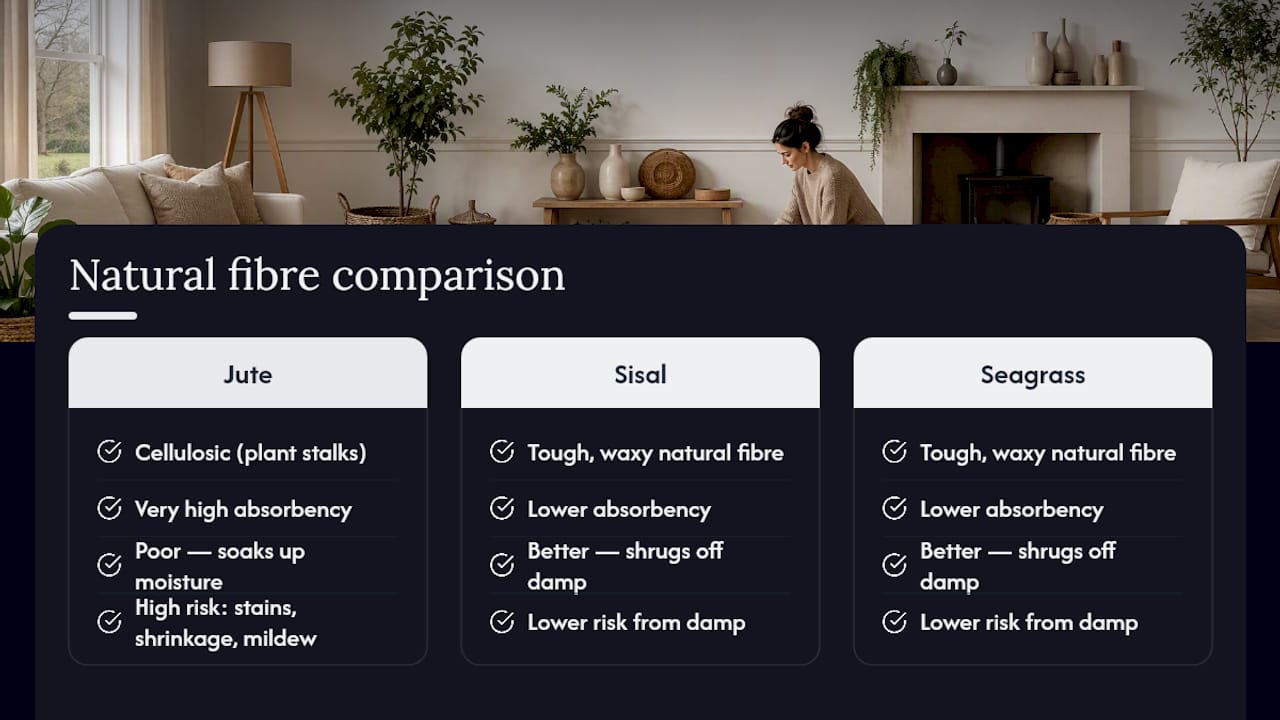
Jute is a plant-based cellulose fibre, spun from the stalks of the jute plant and woven into rugs prized for their texture and warm, neutral tone. Cellulose fibres are naturally absorbent, which is exactly the problem: jute soaks up moisture like a paper towel, and wet cellulose is prone to yellow-brown watermarks, shrinkage, and mildew.
Compare that with sisal or seagrass, both tougher, waxier natural fibres that shrug off a bit of damp far better than jute does. Jute has none of that protection. Wetting jute commonly causes permanent discolouration and structural weakening within a day or two, sometimes less in a warm, humid room. That is the whole logic behind dry-first care: every cleaning decision should start with the question “does this involve water?” and, if the answer is yes, how little can you get away with.
How often should you vacuum a jute rug?
A weekly vacuum in a busy living room, fortnightly in lower-traffic spaces, keeps grit from working its way down into the weave and cutting the fibres from the inside. Grit is the real enemy here, not dirt on the surface. Left alone, it acts like sandpaper every time someone walks across the rug, causing damage over time.
Get the technique right and the schedule matters less:
- Use low suction only, and switch off the beater bar or rotating brush head, since both accelerate shedding and fraying on a woven natural fibre.
- Vacuum in the direction of the weave, not against it, to avoid pulling loose fibres upright.
- Flip smaller rugs and vacuum the underside every couple of months to clear dust that has migrated straight through.
- Rotate the rug every few months so foot traffic and sunlight wear it evenly rather than fading one edge faster than the rest.
- Give it an occasional brush with a natural-bristle brush, following the weave, to lift flattened patches back into shape.
Choose the room carefully too. Jute belongs in living rooms, bedrooms, and dining areas, not bathrooms, kitchens, or covered patios, where splashes and humidity are a daily risk rather than an occasional accident. A breathable rug pad underneath helps on two fronts: it stops the rug creeping on hard flooring and lets air circulate underneath, which matters more for jute than for synthetic rugs because trapped damp has nowhere to go.
Pro Tip: Vacuum against a wall or skirting board first, working outward, so any grit dislodged from the edges doesn’t get pushed back under the rug.
How do you get a stain out of a jute rug?
Speed matters more than product choice. The moment something spills, blot rather than rub, and always work from the outer edge of the stain inward, so you are not spreading it wider across dry fibre.
- Blot immediately with a dry cloth or paper towel, pressing rather than wiping, until no more liquid transfers.
- For food and drink stains, dampen a cloth very lightly with diluted mild detergent, dab gently, then follow with a dry cloth and repeat until the mark lifts. Speed the area dry with a fan straight afterwards.
- For grease and oil, cover the mark generously with cornflour or cornstarch, leave it to draw out the fat, then brush and vacuum away. Repeat two or three times for a stubborn patch rather than soaking it in one go.
- For red wine or other acidic spills, blot first, then dab with a little soda water on a cloth. The fizz helps lift pigment without saturating the fibres.
- For pet urine or anything already set in, resist the urge to keep scrubbing with water. Deep, dried-in stains and odours usually need more moisture and agitation than jute can safely take without a specialist drying setup.
That last point is worth taking seriously. Wet cleaning can lift urine successfully, but only when the whole rug is wetted evenly and dried fast with proper equipment, not a hairdryer and an open window. Attempt it yourself on a large rug and you risk trading one stain for a much bigger watermark.
Can you deodorise a jute rug without water?
Yes, and this is where jute rewards patience over force. Baking soda or dry carpet powder sprinkled generously over the rug absorbs odours and surface oils without introducing a drop of moisture.
- For light freshening, fifteen minutes is enough dwell time before vacuuming it back up.
- For a musty smell that has lingered, leave it overnight, but no longer. Powder left for days starts attracting dirt rather than lifting it.
- As a rough guide, around a cup of baking soda covers a rug roughly 3ft by 5ft, adjusted up for a bigger area.
- A dry compound or bonnet cleaning treatment, the kind a carpet specialist uses with minimal moisture, can refresh a rug that looks tired without a full wet clean.
Dry compound cleaning has its limits with heavy oil staining or urine that has soaked through, but for general freshening it does the job full steam cleaning or wet shampooing risks without the payoff.
How long does a jute rug take to dry, and how do you stop mould?
If any part of the rug does get properly wet, treat the next few hours as a race against mildew. Point a fan at the damp area, run a dehumidifier in the room if you have one, and lift the rug’s edges or prop it slightly off the floor to get air moving underneath rather than just across the top.
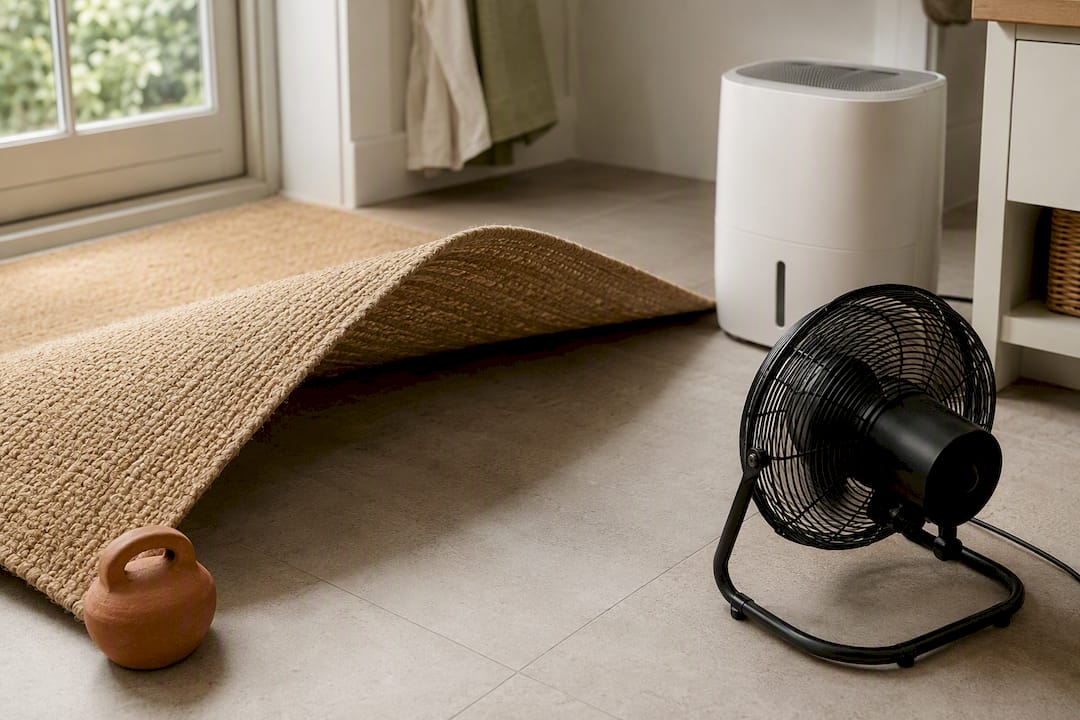
Drying time swings wildly depending on how much moisture got in and how well the room is ventilated: a light damp patch might be dry within two or three hours, while a rug that has been properly soaked can take up to 48 hours, even with fans running. Don’t push furniture back into place until you’re confident the underside is dry, not just the surface you can see.
That underside check matters more than most people realise. Rug pads and heavy furniture legs both trap moisture against the backing, which is exactly where mildew starts, out of sight, weeks before the smell reaches the surface. Lift a corner and check the back of the rug and the floor beneath it after any spill worth mentioning.
Why is my jute rug shedding, and is it normal?
Some shedding in the first few weeks is completely normal. Jute sheds loose fibres from the manufacturing and weaving process, and a new rug will noticeably calm down after four to six weeks of regular use and vacuuming.
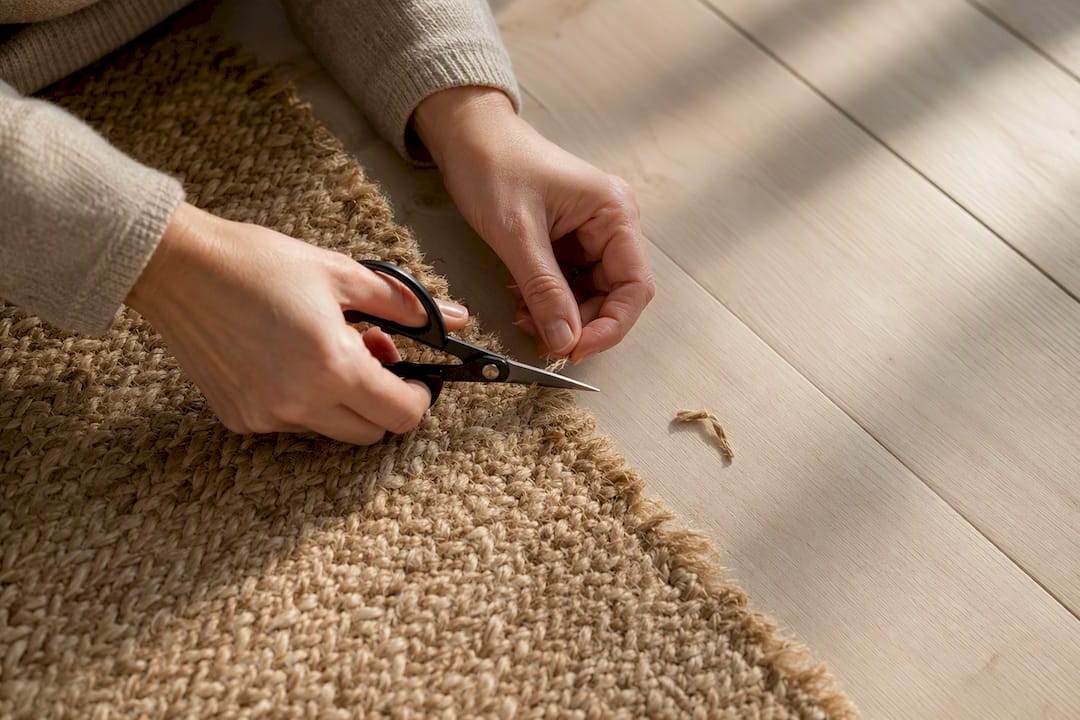
Heavy, ongoing shedding months later usually points to over-aggressive cleaning, most often a beater bar or high suction pulling at the weave every time you vacuum. Switch to low suction with the brush head off, and trim any long loose strands with scissors rather than pulling them, which can unravel a section of the weave. If shedding is getting worse rather than settling down, or you can see the weave thinning in patches, that’s a sign of wear rather than normal fibre loss, and it’s worth having a specialist assess whether the rug can be repaired.
When should you call a professional rug cleaner?
Call in a specialist for pet urine, any large area that has been properly soaked, visible mildew, or a smell that won’t lift after baking soda treatment. These are the situations where dry, at-home methods genuinely run out of road.
- Ask whether they have specific experience with jute or other natural-fibre rugs, not just wool or synthetics.
- Ask what drying method they use and how long the rug will be out of action.
- Ask whether they offer dry compound cleaning as an option, not only full wet cleaning.
Professional wet cleaning can resolve urine damage, but it needs rapid, controlled drying equipment most households don’t have, and on a lower-cost rug it can cost more than replacing it outright.
What do rug specialists say about long-term jute care?
Specialists who work with natural fibres often flag curled edges as the most common long-term complaint. The fix is careful, low-heat steaming through a thin cloth, held at a distance so the fibres never actually get wet, with the edge weighted flat until fully dry.
For deeper guidance on placement and protection, Homable’s outdoor rug care and living room rug size guides cover related ground worth reading alongside this one.
What’s the one habit that actually protects a jute rug?
Vacuum on low suction, beater bar off, and blot any spill the second it happens. That’s the habit that does more work than anything else on this page, because most jute damage comes from delay, not disaster. Pair it with one preventive buy: a breathable rug pad or a proper doormat at the entrance, so grit and damp never reach the jute in the first place. If you’re shopping for either, a range of home accessories is worth a browse.
— Cristiano
How can Homable help you protect your jute rug?
A rug pad and a decent doormat do more to protect a jute rug than any cleaning product ever will, since most of the damage starts with grit and moisture that never needed to reach the fibres at all. While you’re setting up that routine, it’s worth thinking about the rest of the room too. A rubber tray door mat at the entrance catches grit and water before it ever reaches your jute rug, and for kitchens or bathrooms where jute isn’t suitable, a washable runner covers the areas jute can’t.

Once the practical protection is sorted, Homable’s homeware range is worth a look for finishing touches that don’t need special care at all, pieces like the decorative silver flower candle holder sit happily on a sideboard or shelf near your rug without adding another thing to worry about cleaning. Browse the collection and find something that suits the room your jute rug lives in.