Cart
1
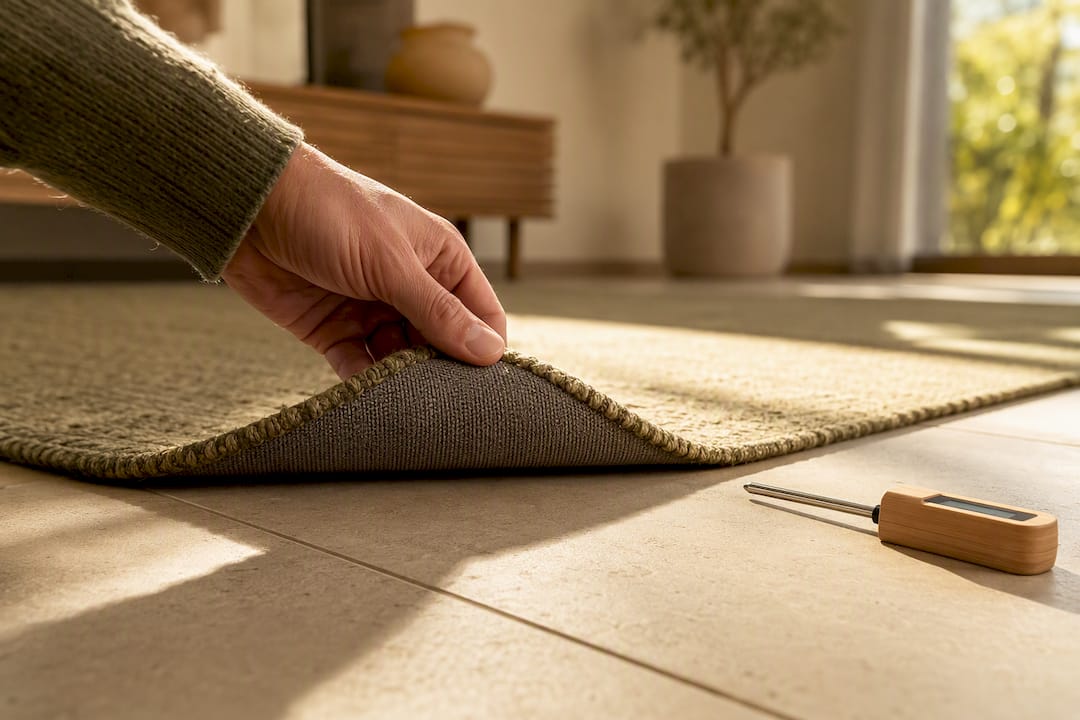
Most rugs can sit happily on top of underfloor heating, provided the combined thermal resistance of the rug and any underlay stays at or below the widely used threshold of 2.5 tog. The main things to avoid are rubber, latex or heavy felt backings and very thick shag piles, since these trap heat rather than letting it through. The sections below explain how to check tog, pick the right materials and steer clear of the mistakes that cause hot spots.
TL;DR:
- Most rugs are suitable for underfloor heating if their combined tog rating stays at or below 2.5, with natural, low pile, flatweave fibers being preferable.
- Rubber, latex, heavy felt backings, and thick shag piles significantly trap heat and should generally be avoided on heated floors.
- Checking the rug’s tog or thermal resistance, along with its backing material, is essential before purchase, especially when using thicker or synthetic piles.
- The placement of the system sensor is critical; a rug covering or near the thermostat probe can mislead the heating system and affect performance.
- Using breathable underlays like hessian or open mesh grippers instead of foam or rubber helps prevent hot spots and maintains system efficiency.
Table of Contents
- Which rug materials work best on heated floors
- Tog and thickness: the practical rule and how to check it
- Underlay and backing: what to avoid and breathable alternatives
- Matching your rug to tiles, engineered wood or laminate
- Risks, warranties and how to avoid hot spots
- Placement, thermostat settings and everyday living with rugs on heated floors
- Cleaning and maintenance to protect rugs on heated floors
- Homable’s practical shopping checks for underfloor heating
- What the industry guidance gets right, and where it falls short
- Bring home a rug that suits your heated floor
- Where to read the primary guidance
- Sources
- FAQ
Which rug materials work best on heated floors
Heat needs a way through the rug, and that comes down to fibre and weave as much as thickness. Natural fibres such as cotton, jute and open weave wool let warmth pass through far more readily than dense synthetic piles, which is why they dominate the recommendations for heated floors. A flatweave cotton runner or a jute area rug allows the floor to do its job without much resistance in the way.

Synthetic blends are not automatically off limits, but they need scrutiny. A thin, low pile synthetic rug with a breathable backing can perform reasonably well, while a thick synthetic pile with a foam or rubber base is one of the worst combinations for underfloor heating: it insulates the room from the heat it is paying for and, in some cases, risks damage from sustained warmth against the backing.
Pile height matters as much as fibre type. Low pile and flatweave constructions transmit heat with minimal resistance and tend to feel warm underfoot fairly quickly, since little separates your feet from the heated floor beneath. High pile and shag rugs behave differently: the extra depth of fibre acts as insulation, holding heat back from the room and taking longer to warm through, which works against the system rather than with it.
- Flatweave cotton or wool: low resistance, quick to warm, easy to clean.
- Jute or sisal blends: breathable and durable, though coarser underfoot.
- Low pile wool: a natural insulator in small doses, still acceptable below the tog threshold.
- Dense shag or thick synthetic pile: best avoided or used only in unheated zones.
Pro Tip: Run your hand flat against the rug pile: if you can feel the floor beneath through a light press, heat can probably get through it too.
Tog and thickness: the practical rule and how to check it
A tog is a unit of thermal resistance equal to 0.1 m²K/W, and the higher the tog value, the more a material resists heat flow. For underfloor heating, the commonly cited ceiling is a combined rug and underlay resistance of 2.5 tog or below, a figure drawn from Carpet Foundation and BEAMA guidance on floor coverings.
2.5 tog is the combined resistance ceiling recommended for rug and underlay together on underfloor heating, according to industry guidance. Staying under it keeps heat output efficient and response times reasonable.
Thickness offers a rougher but useful proxy. Many installers and trade guides treat roughly 25 millimetres as a practical maximum for a rug used over heated floors, though tog remains the number that actually determines performance.
To check where a rug stands:
- Look for a tog rating or thermal resistance figure on the product listing or care label.
- Ask the retailer directly for the rug’s construction details if no figure is given.
- Estimate by measuring pile depth and pairing a thicker rug with a very low tog underlay to keep the combined total in range.
Underlay and backing: what to avoid and breathable alternatives
The backing under a rug often causes more trouble than the rug itself. Rubber, latex, foam and dense felt underlays are common in standard rug pads, but they are also effective insulators, which is precisely the wrong quality to introduce between a heated floor and the room above. Adhesive backed mats sold for slip resistance frequently use the same materials and are worth checking carefully before use on underfloor heating.
Breathable alternatives exist and are widely recommended in place of standard padding:
- Hessian backed underlay: porous and low resistance, a straightforward swap for foam.
- Open mesh rug grippers: hold a rug in place without sealing heat underneath.
- UFH specific low tog underlay: sold by flooring specialists for exactly this purpose.
- Thin breathable felt blends: low density options exist that stay under the combined tog limit.
If you already own a rug with a rubber or foam backing you want to keep using, removing the backing and replacing it with a breathable pad is often more practical than replacing the whole rug. Avoid stacking a rug with its own thick backing on top of an additional foam underlay, since the two combine to push well past the recommended threshold.
Matching your rug to tiles, engineered wood or laminate
Floor type changes how forgiving the system is. Tiles and stone conduct heat fastest of all common finishes, so rugs warm quickly on them, but a low tog choice still helps the system respond promptly rather than lagging behind the thermostat.
Engineered wood is more sensitive. Manufacturers often set a maximum surface temperature, and Nu-Heat’s guidance notes that thick rugs can create hot spots on some wooden floors, which in turn can affect warranty cover or cause warping over time. Thin rugs paired with a breathable pad are the safer route on engineered wood.
Laminate and vinyl carry similar temperature limits and the same sensitivity to trapped heat. Dense foam backing is particularly risky on these finishes, since it concentrates heat in one spot rather than letting it dissipate evenly.
- Tiles and stone: fast conductors, low tog rugs give the quickest, most even response.
- Engineered wood: check the manufacturer’s maximum surface temperature before choosing a thick rug.
- Laminate and vinyl: avoid foam backing and stick to low tog, breathable options.
- Any floor type: leave the area over the thermostat probe or floor sensor uncovered so the system reads room temperature accurately.
Risks, warranties and how to avoid hot spots
A hot spot forms when heat cannot escape evenly through a rug, usually because the rug and its backing sit above the recommended combined tog. The heat concentrates under that patch of floor, and on sensitive finishes such as engineered wood this can lead to visible warping or discolouration over time, as Nu-Heat’s guidance points out.
Flooring warranties are often tied directly to surface temperature. Many manufacturers set maximum limits often around room temperature levels, and exceeding those limits under a rug may void warranty cover even if the rest of the installation is faultless. Checking the flooring supplier’s stated limit before laying a thick rug is a five minute job that avoids a much bigger headache later.
A short mitigation checklist covers most situations: keep combined tog at or below 2.5, avoid covering the sensor, rotate rugs occasionally so heat exposure is not concentrated in one area, use breathable pads rather than foam, and call in an installer or request a thermal survey if you are dealing with an unusual floor build up or persistent uneven warmth.

Pro Tip: If one patch of floor consistently feels hotter than the rest under a rug, lift it and check for a folded or doubled up underlay before assuming the heating system itself is at fault.
Placement, thermostat settings and everyday living with rugs on heated floors
Getting the sensor position right matters more day to day than almost anything else on this list, since a covered probe can misread the room and either underheat or overheat it.
- Locate the floor sensor or thermostat probe before laying any large rug and keep that area clear.
- After first laying a rug, let the system run at its normal setting for a full cycle and note whether warmth feels even across the room.
- Check periodically for uneven warmth, curling edges or any change in the backing, since these are early signs the tog balance needs revisiting.
- Rotate rugs every few months where practical, spreading heat exposure and wear more evenly across the pile.
Cleaning and maintenance to protect rugs on heated floors
Heat and cleaning routines interact more than most people expect. Avoid drying a rug with high heat directly on an active heated floor, and instead follow whatever temperature guidance the manufacturer gives for washing or spot cleaning, since sustained high heat against the backing can accelerate wear.
- Lift and rotate rugs occasionally to check the backing and edges for stiffening, cracking or discolouration.
- Vacuum regularly rather than relying on heat to loosen dirt, since warmth can bake dust further into the pile.
- If you plan to leave the heating running for extended periods while away, consider lifting rugs in high traffic heat zones rather than leaving them exposed continuously.
- Book professional cleaning on the schedule natural fibre rugs typically need, since jute and wool respond poorly to over-frequent deep washing.
Jute and other natural fibre rugs in particular benefit from light, dry care rather than heavy washing, a point covered in more detail in our jute rug care guide.
Homable’s practical shopping checks for underfloor heating
Buying the right rug is mostly about asking the right questions before checkout rather than technical calculation. When shopping for a rug intended for a heated floor, ask for the tog rating, fibre content and backing material, and confirm the retailer’s returns policy in case the fit or feel is not right once it is down.
- Ask for tog, fibre and backing details before buying, not after it arrives.
- Pair any rug with a breathable pad rather than a standard foam one.
- Check sizing against the room first, since a rug that is too large is more likely to cover a floor sensor, a point covered in our living room rug size guide.
- Confirm non-slip solutions are breathable, using guidance from our non-slip rug solutions advice rather than adhesive-backed mats.
Flatweave, bamboo and low pile constructions consistently tick the boxes set out earlier in this guide, and they are worth prioritising over deep pile styles if underfloor heating is a fixed part of the room.
What the industry guidance gets right, and where it falls short
The tog threshold is genuinely useful, and it is the one number worth remembering from all of this. Where the conventional advice falls short is in treating rug choice as a purely technical exercise, full of thermal resistance calculations that most homeowners will never actually perform before buying a rug they like the look of.
The more honest approach is the one that trade guidance itself increasingly nods towards: give people a short, practical checklist rather than a physics lesson. Ask about the backing, avoid rubber and thick felt, keep pile reasonably low, and check the sensor location. That covers the overwhelming majority of real-world cases without anyone needing to calculate a combined tog value by hand.
What gets underrated is sensor placement. People fixate on rug thickness and forget that a large rug sitting over a thermostat probe can throw the whole room’s heating off, regardless of how breathable the rug itself is. If you take one thing from this guide, check where your sensor sits before you check the tog label.
— Cristiano
Bring home a rug that suits your heated floor
A range of bamboo and flatweave rugs alongside breathable accessories suits the guidance above, helping avoid the guesswork of hunting for tog ratings across multiple retailers.

A simple starter combination works well for most rooms: a flatweave or bamboo rug, a breathable rug pad in place of foam, and a non-slip solution that will not trap heat underneath. Free shipping may be available for orders above a certain amount, and checkout is secured throughout. Browse the full range of rugs and home accessories to find a style that fits both your room and your floor.
Where to read the primary guidance
- BEAMA underfloor heating guide: floor covering and efficiency guidance.
- Nu-Heat guidance on rugs and underfloor heating: warranty and hot spot advice.
- Easyflow practical guide: backing materials and thickness notes.
- For unusual floor builds, consult your installer or request a thermal imaging survey.
Sources
- Rugs for Underfloor Heating: Can You Put Rugs on Underfloor Heating?
- BEAMA Underfloor guide - Choosing your floor covering to maximise your underfloor heating efficiency
- Can You Lay a Rug Over Underfloor Heating | Full Guide
- Are rugs suitable for underfloor heating?
FAQ
Is it okay to put a rug on underfloor heating?
Yes, most rugs are fine on underfloor heating as long as the combined thermal resistance of the rug and any underlay stays at or below the 2.5 tog threshold. Choosing a low pile or flatweave rug in natural fibres makes this easier to achieve without checking a spec sheet.
What rugs are not suitable for underfloor heating?
Rugs with rubber, latex or thick felt backings are generally unsuitable because these materials trap heat rather than letting it pass through, as Easyflow’s guidance explains. Very thick shag piles and rugs thicker than around 25 millimetres are also best avoided or reserved for unheated areas.
Are carpets compatible with underfloor heating?
Carpets can work with underfloor heating provided the carpet and its underlay together stay within the recommended 2.5 tog limit, the same rule that applies to rugs. Thick, deep pile carpets with dense underlay tend to exceed that limit and reduce system efficiency.
Can I put a rug on heated floors?
Yes, provided you check the backing material and avoid dense insulating layers like foam or rubber underneath the rug. On sensitive floor finishes such as engineered wood, it is also worth checking the manufacturer’s maximum surface temperature guidance, which Nu-Heat notes is often set around 27°C to protect the floor and its warranty.