Cart
0
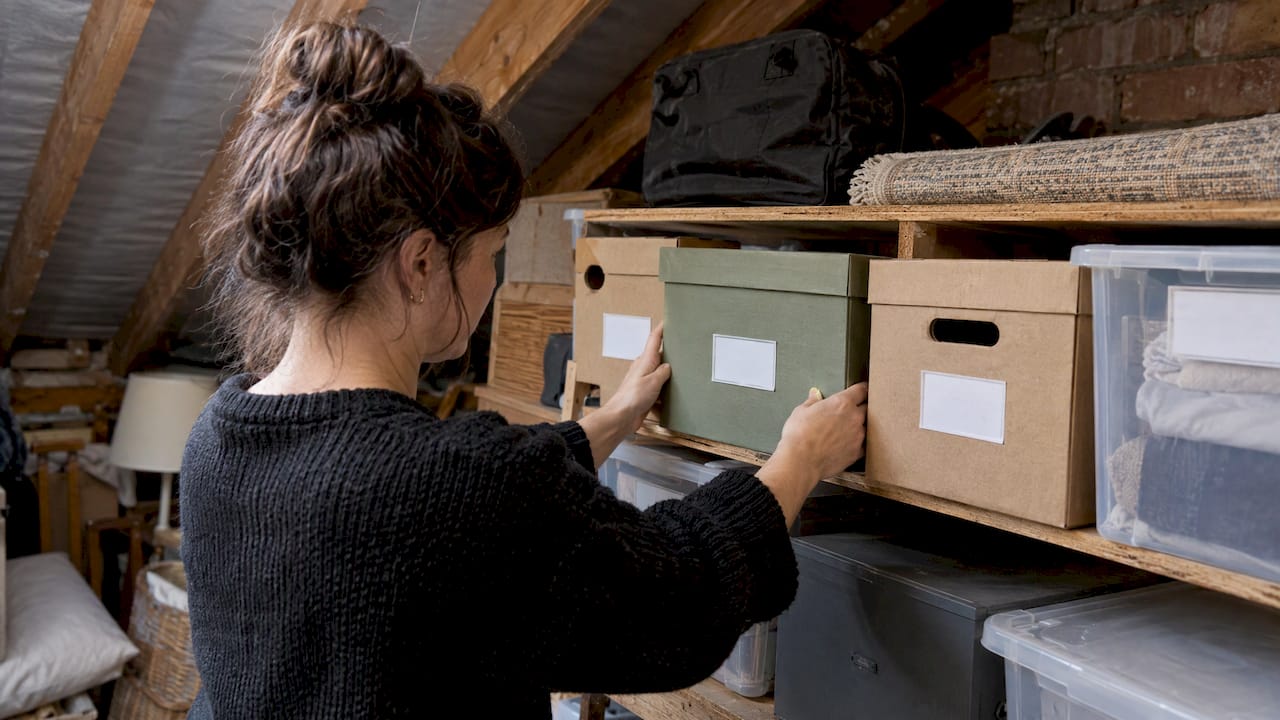
The best storage labels are short, name the purpose of the container rather than every object inside, and use one consistent style so they calm a room instead of cluttering it. Pair them with baskets and shelves that already look good on show, and the label becomes a finishing touch rather than a fix. Our kids storage baskets and wall shelves are made for exactly that kind of visible, everyday storage.
Below you will find what to write, which label to choose for each surface, how to make labels stay put, and room-by-room examples you can copy this weekend.
TL;DR
- Label the purpose of the container (“Guest towels”, “Winter gloves”), not a vague word like “Stuff” or a list of every item.
- Keep one font, one text colour and neutral tones throughout the home so labels look deliberate.
- Match the label to the surface: written labels for fixed contents, clip-on tags for baskets, waterproof tape for cold or damp spaces.
- Label only where clarity genuinely helps: the top-shelf bin you open once a year, not the one you use daily.
- Trial your categories with painter’s tape for a few days before committing to polished labels.
Table of Contents
- What a good label actually does
- Decide what to write first
- Label ideas by room
- Choosing a label type
- Make labels look as good as the storage
- Make labels stay put
- Test before you commit
- Pair labels with storage worth showing
- Shop the storage, then label it
- Our view: label for the person who tidies up last
- FAQ
- Sources
What a good label actually does
A label has two jobs. It tells you what is inside without opening the container, and it tells everyone in the house where the container goes back. WhereKept’s team describes this two-part job, and it is why labels keep a system running when more than one person uses it.
The Home Edit’s Clea Shearer and Joanna Teplin go further. As reported by Grazia, they call labels “critical” because they add instructions that help you find things and put them away.
That second half matters most in family homes. A child can follow a label that says “Soft toys” long before they can follow a system that lives in your head.

Decide what to write first
Before buying a single sticker, sort like with like and decide your categories. Then choose words that another person could understand without asking you.
Name the container’s purpose, not its contents
A label that lists objects goes out of date the day you add something new. One that names the purpose does not. Prestigal’s checklist gives the example of “Markers and pens”, which absorbs new pens without relabelling, and pairs weak and strong wording:
- “Guest towels” rather than “Miscellaneous” in a linen cupboard
- “Winter gloves” rather than “Stuff” in the hallway
- “Pasta and rice” rather than “Food” in the pantry
Use a main category plus a short detail
For bigger items going into storage, Public Storage suggests a main category, a short description and the destination room, such as “Holiday Décor, Lights and Ornaments”. Write it large enough to read from a short distance.
Add a number when you have several similar boxes
If you own three Christmas boxes, call them “Holiday Décor 1”, “2” and “3”, as TapNota suggests, and keep the detailed list in a note on your phone. For attics, garages and lofts, JotTheSpot recommends a location letter plus a number, so “G-14” means garage, box 14. Never reuse a number once a box is emptied, so every note about “box 14” stays true. They also advise putting labels on one long side and one short side rather than the lid, because lids get stacked on, removed and swapped.
Label ideas by room
Nothing makes labelling easier than seeing real wording. These are starting points to adapt.
| Room | Container | Label wording |
|---|---|---|
| Kitchen | Dry-goods jars | Pasta, Rice, Snacks, Baking, Breakfast, Tea & Coffee |
| Kitchen | Drawer baskets | Foil and Bags, Candles, Batteries |
| Hallway | Basket by the door | Winter Gloves, Hats and Scarves |
| Bathroom | Shelf baskets | Spare Toiletries, First Aid |
| Children’s room | Fabric baskets | Soft Toys, Lego, Craft, Dress-Up |
| Linen cupboard | Shelf edge | Guest Towels, Spare Bedding |
| Loft or garage | Large totes | G-14 Camping, Christmas Lights |
The pantry categories come from Homefulness’s list of common pantry labels, which also notes that clear containers with subtle labels make a kitchen feel calmer and more spacious. If the kitchen is your starting point, our guide to kitchen canister labelling goes deeper on what to write and where to put it.
Documents and keepsakes
For paperwork, use plain, dated wording such as “Tax Papers 2025” in large black text, as The Storage Society suggests. For small collections of treasured pieces, a numbered system borrowed from museums works well. Collectors use mineral specimen labels that tie a number to a record, and the same idea suits a box of keepsakes or a shelf of small ornaments.
Choosing a label type
The right label depends on how often the contents change and what the container is made of.
| Label type | Best for | Watch out for |
|---|---|---|
| Marker on masking or painter’s tape | Testing categories; short-term use | Looks temporary |
| Adhesive label with permanent marker | Most indoor bins; cheap and replaceable | Needs a clean, dry surface |
| Label maker with clear tape | Small, precise text; blends with most surfaces | Tape cost adds up |
| Chalkboard label with chalk marker | Contents that change often, such as a kids’ craft bin | Use a chalk marker, as ordinary chalk smudges |
| Clip-on tag or label holder | Wire baskets, fabric cubes, open-top baskets | Tags can be pulled off by small hands |
| Washi tape | Closets, cords and chargers; peels off and replaces | Less durable in damp spaces |
| QR code label | Mixed, changing contents | Needs a phone to read |
The guidance on tape, adhesive labels, chalk markers and clip-on tags comes from The Storage Society. On QR codes, WhereKept explains that written labels suit contents that never change, such as “Winter hats”, while a QR code suits mixed contents because the list sits on your phone where you can search and update it.
A note on label makers
A label maker is the quickest route to crisp, uniform text. UK office suppliers list entry-level models, for example a Brother P-touch PT-H110 at £31.99 and a DYMO LabelManager 160 at £43.89 on Viking UK’s published listing, with tape sold separately. Prices change, so check the listing for today’s figures. Professional organiser Brenda Scott, quoted in Homes and Gardens, says label makers are a tool professional organisers can’t live without.
Handmade options
If you prefer a handmade finish, vinyl cut on a Cricut, patterned washi tape, black contact paper with a liquid chalk marker, and printed cardstock protected with laminate or clear packing tape are all covered in this round-up of DIY label options. Hobbycraft’s Cricut storage jar label project is rated beginner level, takes about an hour and has a stated budget of £10 to £30. It also notes that removable vinyl can be taken off for up to three years, while permanent vinyl is for labels that stay.
Make labels look as good as the storage
Labels are visible every day, so style counts as much as function.
One font, one colour, neutral tones
Homefulness recommends a single font style, neutral colours and minimal text, with readability winning over decoration. Organiser Raychel Klein, in Homes and Gardens, says that if you use labels, choosing one font colour for the whole home supports a calm, cohesive look. For the clearest contrast, The Storage Society recommends black text on a light background.
Colour coding, kept simple
Colour helps you spot a category from across the room, but only up to a point. JotTheSpot’s scheme uses red for holidays, blue for clothes and bedding, green for outdoors and sport, yellow for kitchen and entertaining, purple for keepsakes and white for paperwork, and notes that colour stops helping beyond five or six.
Handwritten warmth
Interior designer Vanessa, speaking to Livingetc, likes plain sticky white labels written by hand on pantry jars, and prefers reusing glass jars to buying plastic. A luggage-style label on a basket handle gives the same effect on a shelf of baskets.
Don’t over-label
A label on every container can make a home feel visually busy and rigid. Homefulness suggests labelling where clarity genuinely helps: where several people use the system, where items move around, or where categories could blur over time. WhereKept adds a practical rule: label the bins you open least. The top-shelf bin opened once in December needs a label; the one you use weekly does not.
Make labels stay put
The commonest labelling failure is a label that peels off. A few checks prevent it.
- Prepare the surface. Custom Labels advises wiping with a lint-free cloth and isopropyl alcohol or methylated spirits, letting it dry fully, avoiding touching the adhesive, pressing firmly, and allowing 48 to 72 hours for permanent adhesive to reach full strength.
- Pick the right adhesive. Avery UK explains that permanent plastic labels are rated to -40°C and suit freezers, while removable plastic labels resist only to -10°C. Removable labels peel off without residue, which suits reusable containers.
- Know that removable is not repositionable. Mercury Labels points out that a removable label cannot necessarily be lifted and re-stuck, and one that peels cleanly after an hour may behave differently after a month.
- Match the plastic. North, South Labels notes that polyethylene and polypropylene are harder to bond to, and rough or porous surfaces need stronger adhesive.
- Protect labels in cold, damp spaces. Cover paper labels with clear packing tape, as WhereKept advises, or use waterproof labels or durable label-maker tape on garage, basement and loft totes.
- Use tags where stickers fail. Wire baskets, fabric cubes and open-top baskets take clip-on tags or holders far better than stickers.
Test before you commit
Before ordering anything, write your categories on painter’s tape and live with them for a few days. The Storage Society recommends this trial because it shows quickly whether “Cables” should really be split into “Chargers” and “Leads”. Once the names hold, move to your chosen finish.
Pair labels with storage worth showing
Labels work best on containers that suit the room. A woven or fabric basket with a neat tag looks intentional; a mismatched pile of plastic tubs with stickers does not. Our guides to basket storage ideas, home organisation tips and decorative storage solutions show how to build the whole look, and the storage solutions checklist helps you plan a room before you buy.

Shop the storage, then label it
Homable stocks kids storage baskets, wall shelves, kitchen mats, tea towels, ornaments and more, all chosen for modern home styling. Kids storage baskets take a clip-on tag or a simple written label well, and wall shelves give you a clear row of edges for neat labels. Browse the range at homable.co.uk. Orders over £100 ship free.
Our view: label for the person who tidies up last
Most labelling advice is written for the person who already knows where everything goes. We think about the person who doesn’t: the child putting toys away, the guest looking for a towel, the partner unloading the shopping.
That is why we favour plain words, one consistent style and storage that looks good with or without a label. A basket on a shelf is part of the room, so it should be something you like looking at. Then a small tag is all it needs.
We design our ranges around rooms, from kids storage baskets to wall shelves and kitchen mats, because a tidy home is easier to keep when every space has a home for what belongs there. Start with the containers, name them simply, and the labels will do the rest.
Cristiano
FAQ
What is the best way to label storage totes?
Put large, simple words in black on a light background, and place them where you naturally look. For stackable totes, that means the front and one side rather than the lid. Add a number if you own several similar totes, and keep a fuller list in a note on your phone.
What are the cheapest ways to label storage?
Masking tape or painter’s tape with a marker costs next to nothing and is ideal for testing categories. Sticker paper or cardstock printed at home and covered with clear tape is the next step up. Washi tape adds pattern, and it peels off when you need to change a label.
What should a storage label include?
Three things: what is inside, where it belongs, and which container it is if you have several alike. For example, “Holiday Décor 1” tells you the category and the box. Keep it short enough to read from a short distance.
Should I label every basket and box?
No. Label where several people use the system, where items move around, or where the contents could become unclear. Containers you open daily rarely need one, while the ones you open once a year usually do.
Sources
- Home Labelling Ideas for a More Organised Home
- How to Label Storage Bins for Less Daily Chaos
- How to Label Storage Bins: Written and QR Code Labels
- The Home Edit’s top organisation tips, Grazia
- How to Label Storage Bins Like a Pro
- A storage box labeling system that stays accurate
- Label It Right: A Simple Home Storage Checklist
- How Do You Label and Color-Code Storage Bins?
- Storage ideas, Homes and Gardens
- Mineral specimen labels: a practical guide
- Label machines and labels, Viking UK
- 70+ Creative Ways to Label Baskets and More
- Cricut: How to Make Storage Jar Labels, Hobbycraft
- Pantry organisation tip, Livingetc
- Applying labels to last, Custom Labels
- Choosing between permanent and reusable labels, Avery UK
- Label Adhesives Explained, Mercury Labels
- Choosing the Right Label Adhesive, North, South Labels