Cart
0
TL;DR:
- Effective home organization starts with decluttering by category and building daily habits to maintain order. The “one in, one out” rule and leaving 20 percent of storage space empty help prevent clutter from returning. Systems should be tailored to your lifestyle, not based on idealized routines, to ensure long-lasting order.
Home organisation tips are practical strategies designed to maximise your living space, reduce clutter, and maintain order without constant effort. The most effective approach combines category-based decluttering with realistic daily habits and storage choices that fit how you actually live. Whether you rent a studio flat or own a four-bedroom house, the same core principles apply: subtract before you store, build habits around your real routine, and never buy a storage box before you know what goes in it.
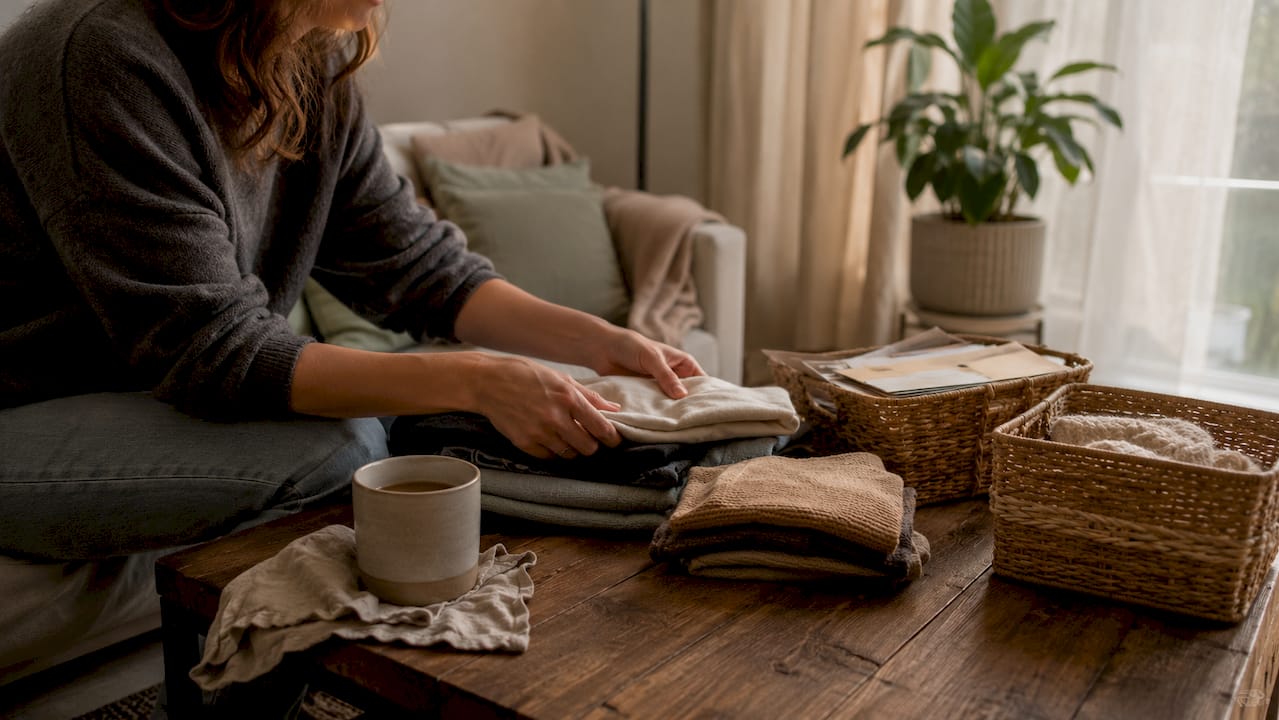
1. What are the best home organisation tips for daily maintenance?
The 15-minute daily reset is the single most recommended habit among professional organisers. It involves one focused tidy-up session each day covering tasks like clearing dishes, folding laundry, and returning items to their designated spots. That short window prevents small messes from compounding into weekend-long overhauls.
The key is consistency, not perfection. Set a timer, pick the most-used rooms first, and stop when it rings. You will find that 15 minutes done daily saves far more time than a three-hour blitz once a fortnight.
Pro Tip: Pair your daily reset with an existing habit, such as after dinner or before bed. Habit stacking makes the routine stick far faster than willpower alone.
2. Use the “one in, one out” rule to stop clutter at the door
The one in, one out rule is the simplest policy for preventing clutter from rebuilding after a declutter. Every time a new item enters your home, one existing item leaves. It applies to clothes, kitchen gadgets, books, and decorative pieces equally.
This rule works because it forces a decision at the point of acquisition rather than months later when drawers are overflowing. Most clutter accumulates not through dramatic shopping sprees but through dozens of small, unconsidered additions. The one in, one out rule closes that gap before it opens.
3. Declutter by category, not by room
Decluttering by category rather than by room is the most effective method for gaining a clear picture of what you own. Gather every item in a single category, such as shoes, kitchen utensils, or bed linen, into one place before making any decisions. Seeing 14 spatulas on a kitchen counter makes the excess impossible to ignore.
Micro-categories take this further. Instead of “clothes,” you work through “work trousers,” then “jumpers,” then “gym kit” as separate sessions. This level of specificity leads to sharper, more intentional decisions and avoids the vague overwhelm of tackling an entire wardrobe at once.
Pro Tip: Start with the easiest category first, such as duplicate kitchen tools or expired pantry items. Early wins build momentum for harder categories like sentimental items.
4. Budget your time realistically for each area
Underestimating how long decluttering takes is one of the most common reasons people abandon the process halfway through. Bathrooms take 45–90 minutes; living rooms and entryways require 2–3 hours; bedrooms and wardrobes need 3–4 hours; kitchens can take 3–5 hours. These are realistic figures, not worst-case estimates.
Knowing this upfront lets you schedule sessions properly. Block a Saturday morning for the kitchen rather than assuming you can fit it in after work on a Tuesday. Realistic time budgeting is the difference between finishing a declutter and abandoning it with half-empty boxes on the floor.
5. Never buy storage before you declutter
Buying storage containers before decluttering is one of the most expensive organisational mistakes you can make. You end up with boxes full of things you should have discarded, neatly arranged on shelves. The clutter does not disappear. It just gets a lid.
The correct sequence is: declutter first, measure what remains, then buy storage that fits. This approach saves money and produces a system that actually works. Measure your shelves, drawers, and cupboard depths before purchasing anything. A storage solution that does not fit your space creates more frustration than the original mess.
6. Apply zone-based storage to every room
Zone-based storage means keeping items at or near their point of use. Charging cables belong near the sofa, not in a kitchen drawer. Medicines belong in the bathroom cabinet, not a box under the bed. This principle sounds obvious, but most homes violate it constantly.
Applying zones reduces the time spent searching for things and makes it far easier to return items after use. The step-by-step approach to storage works best when each zone is defined before any products are purchased. Label zones clearly, especially in shared households, so everyone knows where things live.
| Home zone | Zone storage principle | Common mistake to avoid |
|---|---|---|
| Kitchen | Group by task: prep, cooking, baking | Mixing categories across drawers |
| Bedroom | Keep daily-use items within arm’s reach | Storing seasonal items in prime space |
| Living room | Designate a home for remotes, chargers, books | No fixed home for frequently used items |
| Entryway | Hooks, trays, and a dedicated key spot | Letting bags and post pile on surfaces |
| Bathroom | Medicines, toiletries, and cleaning products separated | Overfilling cabinets beyond easy reach |
7. Leave 20% of every storage space empty
Storage areas filled beyond 80% capacity fail quickly. When a drawer or shelf is packed to the brim, people stop putting things away properly because it takes too much effort. The system collapses within weeks.
Leaving roughly 20% of every storage space empty creates breathing room. It makes retrieval easier, encourages proper returns, and gives space for the occasional new addition without triggering a full reorganisation. Think of it as the maintenance margin built into the system.
Pro Tip: When filling a new storage solution, stop before it feels full. If you have to push things in, you have already exceeded the 80% threshold.
8. Organisation hacks for small spaces
Small spaces demand vertical thinking. Walls, door backs, and the space above cupboards are all usable storage areas that most people ignore. Over-door organisers, floating shelves, and wall-mounted hooks can triple the effective storage in a small flat without adding a single piece of furniture.
Organising small spaces also requires stricter editing. Every item in a compact home must earn its place. Decorative items that serve no function are a luxury that small spaces cannot afford unless they genuinely bring value to the room. Dual-purpose furniture, such as ottomans with internal storage or beds with built-in drawers, is the most space-efficient investment a renter or small-home owner can make.
- Use the back of every door for hooks, pockets, or slim racks
- Choose furniture with built-in storage wherever possible
- Store vertically: tall shelving units use wall height, not floor space
- Decant bulky packaging into slim, stackable containers
- Keep surfaces clear by giving every item a drawer or cupboard home
9. Remove donation bags from your home immediately
Donation bags left near exits have a well-documented tendency to re-enter the home. You walk past the bag, spot something you forgot you owned, and it creeps back inside. The declutter is undone before the bag reaches the car.
The fix is simple: schedule a collection or drop-off before you start decluttering, not after. If you use a charity collection service, book the slot first. If you are driving to a charity shop, load the car the same day the items come out of the cupboard. Removing items from the home immediately is the single most reliable way to make a declutter permanent.
10. Build systems around how you actually live
Organisation systems fail when they are built around an idealised version of daily life rather than the real one. If you never fold clothes immediately after washing, a system that requires folding before storage will collapse within a week. Design around your actual behaviour, not the behaviour you wish you had.
This means accepting some imperfect solutions. A laundry chair is a real phenomenon in most homes. Rather than fighting it, designate a specific chair or hook for “worn but not dirty” clothes and keep it tidy. Working with your habits rather than against them produces systems that last years, not weeks.
11. Label strategically, not obsessively
Labels are useful when they reduce decision fatigue for everyone in the household. A label on a pantry shelf tells a partner or child exactly where the pasta goes. That single label prevents a dozen small misplacements per week. Labels on every individual item, however, create maintenance work without adding value.
The best practices for home organisation suggest labelling categories and zones rather than individual containers. Label the shelf, not every jar. Label the drawer, not every item inside it. This keeps the system readable without turning maintenance into a full-time job.
12. Schedule regular declutter sessions throughout the year
A single annual declutter is not enough to prevent clutter from rebuilding. Scheduling regular cleanouts at the change of each season keeps accumulation in check and makes each session shorter and less overwhelming. Four 90-minute sessions per year are far less daunting than one full-day overhaul.
Seasonal timing also makes practical sense. Swap winter and summer clothing at the same time you declutter the wardrobe. Clear the garage before summer. Tackle the kitchen before the festive period. Tying declutter sessions to seasonal transitions makes them easier to remember and easier to motivate.
Key takeaways
Effective home organisation depends on decluttering by category first, storing strategically second, and building daily habits that match how you actually live.
| Point | Details |
|---|---|
| Declutter before you store | Buy storage only after purging and measuring what remains. |
| Category beats room | Grouping items by type reveals true volume and sharpens decisions. |
| Daily 15-minute reset | A short daily tidy prevents clutter from compounding over time. |
| Leave 20% space empty | Storage filled beyond 80% capacity breaks down quickly. |
| Remove donations immediately | Bags left at home often return items inside within days. |
The part most guides skip: systems must fit your life, not the other way round
Most home organisation advice assumes you will change your behaviour to fit the system. I have found the opposite is true. The systems that last are the ones built around what you already do, not what you aspire to do.
I spent years trying to maintain a perfectly labelled pantry. Every jar decanted, every shelf colour-coded. It looked extraordinary for about two weeks. Then life happened, and the system demanded more maintenance than it was worth. What actually worked was far simpler: clear bins, broad categories, and a rule that anything without a home gets dealt with during the evening reset.
Category-based decluttering genuinely changed how I think about possessions. Seeing every item in a category together, rather than spread across rooms, makes the excess undeniable. You cannot argue with 23 tote bags laid out on a bed. That visibility is what makes decisions easy rather than agonising.
The other thing worth saying: resist the urge to buy storage products as a reward for decluttering. The satisfaction of a tidy space is real, but it is easy to fill it again immediately with attractive boxes and baskets. Wait a week after decluttering before buying anything. You will almost always find you need less than you thought.
Organisation is not a project you complete. It is a set of small, repeatable decisions made consistently. Get those right, and the rest follows.
— Cristiano
Discover stylish storage solutions at Homable

A decluttered home still needs the right storage to stay that way. Homable offers a curated range of stylish storage solutions designed to work across every room, from compact flat-friendly pieces to statement living room organisers. Every product balances function with design, so your home looks as good as it feels to live in. Free shipping is available on orders over £100, and the full collection includes new arrivals updated regularly. Browse the Homable storage range and find pieces that fit your space, your style, and your actual daily routine.
FAQ
What is the best way to start organising a messy home?
Start with one category of items across the whole home rather than tackling a single room. Seeing the full volume of a category in one place makes decisions faster and more decisive.
How long does it take to declutter a home?
Bathrooms take 45–90 minutes, living rooms 2–3 hours, bedrooms 3–4 hours, and kitchens 3–5 hours. Budget time realistically and schedule sessions in advance rather than fitting them around other tasks.
Should I buy storage boxes before or after decluttering?
Always declutter first. Buying storage before purging means you organise clutter rather than remove it. Measure your remaining items and available space before purchasing anything.
How do I keep my home tidy long-term?
A 15-minute daily reset combined with the one in, one out rule prevents clutter from rebuilding. Consistency with small daily habits outperforms occasional large overhauls every time.
What are the best organisation hacks for small spaces?
Use vertical storage, over-door organisers, and dual-purpose furniture with built-in storage. Keep surfaces clear by giving every item a fixed home, and edit possessions more strictly than you would in a larger space.