Cart
0

Curated design is intentional editing: selecting pieces that work together rather than accumulating items that merely fill space. Choose it because it produces cohesion you can feel the moment you walk into a room, and it saves money over time by reducing the costly mistakes that come from impulse buying.
- Cohesion: every piece relates to the others through shared palette, material, or scale.
- Longevity: pieces chosen for quality and relationship rather than trend stay relevant for years.
- Cost-efficiency: fewer replacements, fewer regrets, fewer “it looked fine in the shop” disasters.
- Authenticity: the result reflects who you are, not what was on sale.
The contrast with trend-led buying is straightforward. Trend-led rooms accumulate; curated rooms edit. One grows cluttered and dates quickly. The other ages gracefully.
Key takeaways
Curated design consistently outperforms trend-led buying because intentional editing produces cohesion, longevity, and authenticity that accumulation never achieves.
| Point | Details |
|---|---|
| Set guardrails first | Define 2–3 rules before buying anything; they filter out more bad decisions than any mood board. |
| Test small before committing large | Buy cushions and accessories first to confirm your palette works at low cost. |
| Cross-category coordination matters | In kitchens, aligning worktop, hardware, and lighting finishes prevents costly rework after installation. |
| Sustainability and curation align | Buying fewer, better-chosen pieces reduces replacement costs and environmental impact over time. |
| Homable simplifies sourcing | Homable’s curated collections are pre-vetted for design quality and material coherence, reducing the cross-referencing burden. |
Table of Contents
- Why choose curated design over simply buying what you like?
- The real benefits of a curated approach to home interiors
- The guardrails and elements that make curation work
- How to curate a room from brief to finish
- Why curation matters especially in kitchens
- Common mistakes when trying to curate and how to fix them
- How curation saves money and produces better long-term outcomes
- How to assess your personal style for a truly personalised result
- Before-and-after: what curated design transformations actually look like
- Sourcing responsibly and making sustainable choices
- Homable’s curated collections make the process simpler
- A note on curation from Cristiano
- Sources
Why choose curated design over simply buying what you like?
Most people furnish a room the same way they pack a suitcase in a hurry: grab what seems right, worry about fit later. Curated design works the opposite way. It starts with a clear picture of the whole and selects each piece to serve that picture.
The word “curated” comes from the museum world, where a curator’s job is not to acquire everything available but to choose what belongs together and why. Applied to interiors, curated home design means the same discipline: editing down to pieces that earn their place through quality, relationship, and meaning.
The practical difference shows up in how a room feels. A haphazardly furnished sitting room might contain a bold geometric rug, a delicate floral sofa, a chunky industrial coffee table, and three mismatched lamps. Each piece is fine alone. Together, they argue. A curated version of the same room anchors on one material story, say warm oak and linen, and every subsequent choice either reinforces or quietly supports that story. Well-curated interiors balance function, comfort and personal expression, and that balance is what makes them feel settled rather than assembled.
Curation also treats the relationships between pieces as the real design work. Palette, texture, and scale are not afterthoughts; they are the structure. A single piece of art can anchor a room’s colour story. A change in texture, such as smooth ceramic beside rough linen, creates depth without adding visual noise.

The real benefits of a curated approach to home interiors
Curated choices prioritise meaning and longevity over rapid accumulation, and that single shift produces a chain of practical advantages:
- Fewer costly mistakes. When you buy within a defined brief, you stop purchasing pieces that “almost work.” Almost-work pieces get replaced. Replacement costs add up fast.
- Durability and longevity. Curated selections tend to favour craftsmanship over immediate price, which aligns with sustainability goals and cuts long-term replacement costs.
- Better daily experience. A room that feels coherent is genuinely easier to live in. Clutter and visual noise are tiring; calm, considered spaces are not.
- Resale value. Buyers respond to rooms that feel considered. A kitchen with coordinated finishes reads as quality even before they open a cupboard.
- Sustainability. Buying less, buying better, and buying with longevity in mind reduces the volume of furniture and accessories that end up in landfill.
- Reduced homeowner workload. A curated interior design approach focuses on storytelling and lifestyle alignment, which means the decision-making burden shrinks because the brief does the filtering for you.
For kitchens specifically, the financial case is sharper; incorporating interior doors as the next big home trend can enhance coordination and overall aesthetic impact. A worktop, cabinetry finish, splashback, and hardware that were chosen without coordination can look fine individually and clash badly once installed. Fixing that after the fact is expensive. Getting it right the first time is not.
The guardrails and elements that make curation work
Curation without structure is just selective shopping. The elements below are what turn individual purchases into a coherent whole.
Pro Tip: Set your guardrails before you buy anything. Two or three rules, such as “warm neutrals only, no cool greys” and “natural materials over synthetic,” will filter out more bad decisions than any mood board.
The table below shows how each element type functions within a curated scheme:
| Element type | Role in the scheme | Examples |
|---|---|---|
| Anchor piece | Sets the material and tonal story | Statement sofa, kitchen island, large rug |
| Supporting surfaces | Reinforce the anchor without competing | Side tables, worktops, shelving |
| Accent pieces | Add depth, texture, and personality | Cushions, ceramics, artwork, plants |
| Lighting | Controls mood and unifies the palette | Pendant, task, and ambient layers |
Base palette. Limit yourself to three tones: a dominant, a secondary, and an accent. This approach helps prevent the “too many colours” problem that makes rooms feel restless.
Texture and finish. Smooth surfaces need rough counterparts. Matte walls read better beside a gloss ceramic. Linen softens a room with polished concrete floors. The contrast is what creates richness.
Scale and proportion. A large sofa in a small room is not automatically wrong, but every other piece must respond to it. Scale mismatches, a tiny rug under a large dining table, for instance, are one of the most common reasons a room feels off even when the individual pieces are attractive.
Lighting. Design professionals favour curated partners partly for their technical consultation on lighting, and for good reason. Lighting changes how every other element reads. A warm-toned pendant over a kitchen island can make a cool stone worktop feel inviting. Plan lighting before you finalise finishes, not after.
Art and textiles. These are the last layer, but they carry significant weight. A single large artwork does more for a room than five small ones. Textiles, throws, curtains, rugs, add warmth and absorb sound, making a space feel inhabited rather than staged.
How to curate a room from brief to finish
Follow these steps in sequence. Skipping ahead, particularly buying major pieces before testing smaller ones, is where most DIY curation goes wrong.
- Study inspiration. Collect 15–20 images that genuinely appeal to you, not images you think you should like. Look for the common thread: is it the palette, the material, the sense of space?
- Set 2–3 guardrails. Translate that common thread into rules. “Warm tones, natural materials, no pattern mixing” is a guardrail set. Write them down.
- Buy small items first. Test your guardrails with cushions, a vase, a small textile. These are low-cost experiments. If the palette feels wrong at small scale, it will feel worse at large scale.
- Photograph everything. Place test pieces in the room and photograph them. Photos reveal scale and colour relationships that your eye misses in person. This is the single most underused step in DIY curation.
- Source major pieces last. Once the guardrails are confirmed by small tests, commission or purchase the anchor piece, sofa, kitchen island, large rug. By this point, you know it will work.
- Coordinate materials across categories. For kitchens and bathrooms, cross-category coordination prevents specification mismatches and reduces rework. Check that worktop, cabinetry, hardware, and splashback all speak the same material language before ordering.
- Schedule delivery and installation in order. Flooring before furniture. Lighting before styling. Getting the sequence wrong means moving things twice.
- Edit at the end. Once everything is in place, remove three items. Live with the result for a week. You will almost always find the room is better for it.
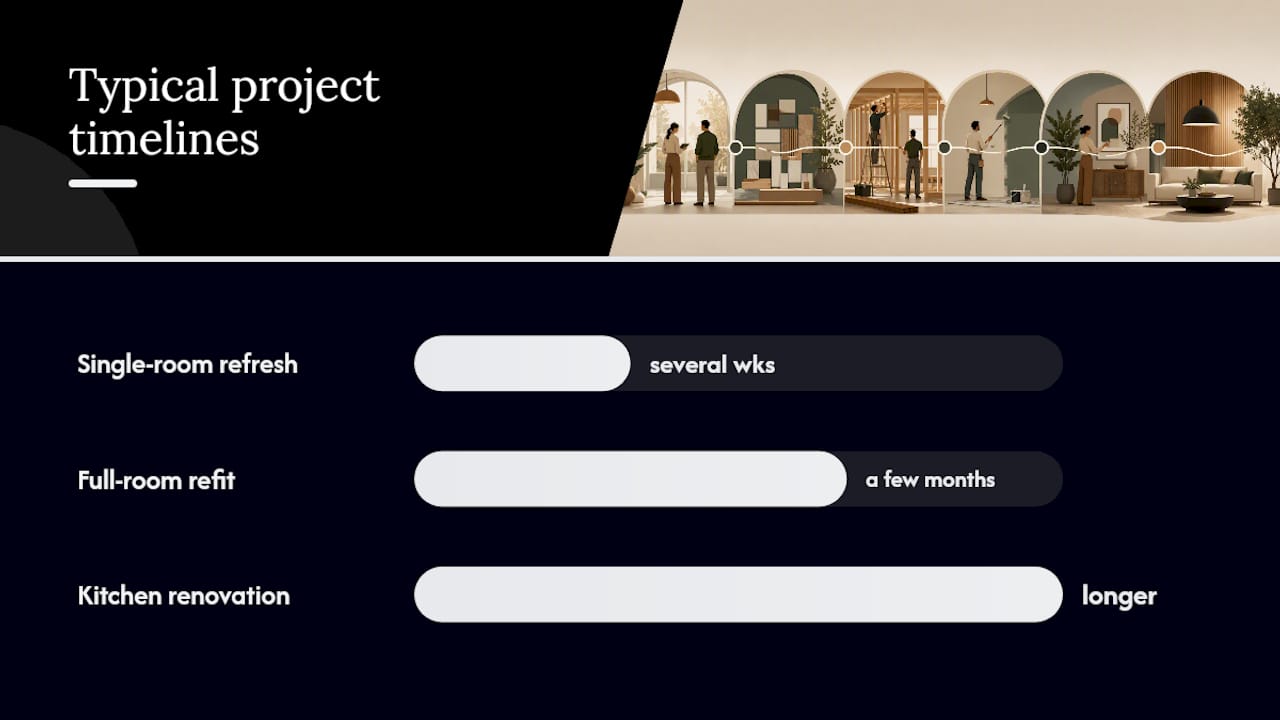
Timeline guidance: a single-room refresh (new textiles, accessories, lighting) typically takes several weeks. A full-room refit with new furniture may take a few months. A kitchen renovation with coordinated finishes often requires a longer timeline, including lead times for bespoke cabinetry.
For sourcing, check room-specific curation guidance before committing to major purchases, and request physical samples for any finish you plan to use across multiple surfaces.
Why curation matters especially in kitchens
Kitchens are where curated design earns its keep most visibly, because the technical and aesthetic decisions are inseparable. A worktop material affects maintenance requirements. A cabinetry finish affects how light reads in the room. A splashback colour either ties the scheme together or fractures it.
The key distinctions to make before sourcing:
- Aesthetic accents versus functional requirements. A ceramic pot on the worktop is an accent; it can be swapped. The tap finish is a commitment; it should match the hardware throughout. Confusing these two categories leads to rooms that look curated in photographs and feel mismatched in use.
- Material compatibility. Matte cabinetry and a high-gloss splashback can work, but only if the contrast is intentional and consistent. Mixing finishes accidentally, because they were sourced separately without cross-referencing, is the most common kitchen curation error.
- Hardware as a unifying thread. Brushed brass, satin nickel, or matte black: pick one metal finish and carry it through handles, tap, and light fittings. This single decision does more for kitchen cohesion than almost any other.
- Lighting layers. Task lighting under cabinets, ambient lighting overhead, and a statement pendant above the island are three distinct jobs. All three should share a tonal warmth. Mixing cool LED strips with warm pendant bulbs creates a colour-temperature conflict that no amount of styling will fix.
- Small styling details. A curated room decor approach in a kitchen means the items on the worktop are there because they are used or because they are beautiful, not both by accident. Edit the worktop to three or four purposeful objects. The rest goes in a cupboard.
Common mistakes when trying to curate and how to fix them
Overfilling. The most frequent error. More is not more in a curated scheme. Fix: remove items until the room feels slightly sparse, then add back one piece at a time.
Chasing trends. A trending colour or material is fine if it fits your guardrails. If it does not, it will date the room and require replacement. Fix: ask whether the piece would still feel right in five years.
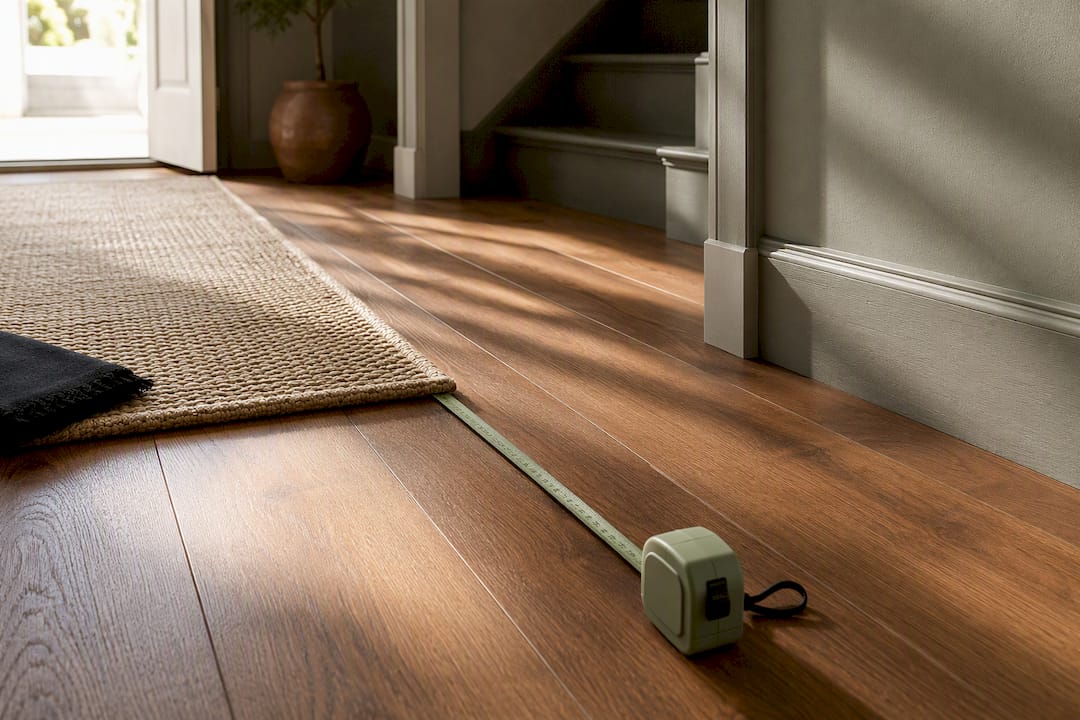
Mismatched scale. A rug that is too small, a pendant that is too delicate for the ceiling height, a sofa that overwhelms the room. Fix: photograph the space with a tape measure visible to check proportions before purchasing.
Ignoring lighting. Buying furniture and finishes without considering how the room’s light, natural and artificial, will affect them. Fix: test finish samples in the room at different times of day before committing.
Buying the anchor piece first without testing. A large sofa or kitchen island purchased before the palette and material guardrails are confirmed locks you into decisions you may regret. Fix: always test small before committing large.
Pre-purchase checklist:
- Does this piece fit within my stated guardrails?
- Have I photographed it in context?
- Does the scale work relative to the anchor piece?
- Does the finish coordinate with at least two other elements already confirmed?
- Am I buying this because it fits the brief, or because it was available?
If the answer to the last question is “available,” put it back.
How curation saves money and produces better long-term outcomes
The financial case for curation is not about spending more upfront. It is about spending less overall. Specification mismatches on larger projects, a worktop that clashes with cabinetry once installed, hardware that reads as a different metal tone under the kitchen’s actual lighting, generate rework costs that dwarf the original savings from buying quickly.
A curated dealer’s value lies in pre-selection vetting and cross-category compatibility checks. For projects with multiple surface specifications, kitchens, bathrooms, open-plan living areas, that coordination reduces on-site adjustments significantly.
A practical materials-compatibility checklist for any multi-surface project:
| Check | Question to answer before ordering |
|---|---|
| Tone alignment | Do all finishes sit in the same warm or cool register? |
| Finish contrast | Is any contrast between matte and gloss intentional? |
| Metal consistency | Is one metal finish carried through all hardware? |
| Scale coherence | Does the scale of each piece respond to the anchor? |
| Light response | Have samples been tested under the room’s actual lighting? |
For single-room refreshes with a clear brief, DIY curation using this checklist is entirely achievable. For projects spanning multiple rooms or involving bespoke cabinetry and fitted elements, professional coordination typically pays for itself in avoided rework.
How to assess your personal style for a truly personalised result
Personal style is not a fixed category. It is a set of preferences that emerge when you pay attention to what you actually respond to, rather than what you think you should like.
Start by auditing what you already own and genuinely love. The pieces you never tire of, the mug you always reach for, the chair you always sit in, share characteristics. Identify those characteristics: material, colour temperature, level of ornamentation, sense of weight. That is your style brief in miniature.
Then use Homable’s guide to selecting a decor theme to translate those characteristics into a coherent direction. The goal is not to label yourself (Scandi, maximalist, coastal) but to identify two or three consistent preferences that can become guardrails.
One useful exercise: collect 20 images from any source, then remove the ten that feel aspirational but not genuinely you. The ten that remain are honest. Look at what they share.
Before-and-after: what curated design transformations actually look like
The most instructive transformations are not dramatic renovations. They are rooms where the same furniture reads completely differently once the curation principles are applied.
Sitting room scenario. Before: a grey corner sofa, a patterned rug in blue and green, a glass coffee table, two mismatched side tables, and four different lamp styles. The room contains good individual pieces. It feels unsettled because nothing relates. After: the rug is replaced with a plain jute version that picks up the sofa’s warm undertone. The glass coffee table is swapped for a solid oak one that anchors the natural material story. One lamp style is chosen and repeated. The room uses the same footprint and most of the same furniture; it now reads as considered.
Kitchen scenario. Before: white cabinetry, a grey quartz worktop, a chrome tap, brushed nickel handles, and a patterned tile splashback in three colours. Each element is individually acceptable. Together, the metal tones conflict and the splashback competes with everything else. After: handles and tap are unified in brushed brass. The splashback is replaced with a plain warm-toned ceramic that recedes rather than competes. The worktop remains; it now reads as intentional against the warmer metal and tile.
Neither transformation required new cabinetry or structural work. Both required editing and cross-category coordination, which is precisely what curated design delivers.
Sourcing responsibly and making sustainable choices
Sustainable sourcing within a curated approach is less about finding “eco” labels and more about buying with intention. A piece chosen carefully, for quality and longevity, is inherently more sustainable than three cheaper pieces that will be replaced within five years.
Practical principles for responsible sourcing in the UK:
- Buy secondhand first. Auction houses, estate sales, and reputable online marketplaces carry quality pieces at lower environmental cost than new production.
- Prioritise natural materials. Solid wood, stone, linen, wool, and ceramic age well and are generally more repairable than composite or synthetic alternatives.
- Ask about lead times and provenance. A supplier who can tell you where a piece was made and how is more likely to be producing responsibly.
- Choose curated collections over mass-market browsing. Pre-vetted collections reduce the time spent filtering out low-quality options and make it easier to source pieces that coordinate without extensive cross-referencing.
- Repair before replacing. A reupholstered chair or a refinished table is almost always a better environmental and financial decision than a new purchase.
The curated approach and the sustainable approach align naturally: both require you to buy less, choose better, and think longer-term.
Homable’s curated collections make the process simpler
Applying curation principles is straightforward in theory and genuinely time-consuming in practice, particularly when sourcing across multiple categories. Homable’s curated collections do the cross-referencing work for you: every product is selected for design quality, material coherence, and compatibility with the kind of considered interiors this guide describes.
Whether you are refreshing a sitting room with new textiles and accessories or coordinating a kitchen’s finishing details, Homable’s range covers ornaments, rugs, curtains, storage, kitchen accessories, and more, all chosen to work together rather than simply fill a catalogue. Orders over £100 include free shipping, and the collections are updated regularly so the options stay current without chasing trends.
Browse the Homable home decor collections to find pieces that fit your guardrails, or explore the styling guides on the Homable blog for room-specific curation advice before you buy.
A note on curation from Cristiano
The piece of advice I find most consistently undervalued is this: curation is an act of restraint, not acquisition. Most rooms improve when something is removed, not when something is added. The instinct to fill space is strong, and the market is designed to encourage it. Resisting that instinct, buying the one right thing instead of three adequate things, is where the real skill lies.
What I have observed across many home styling projects is that the rooms people are proudest of are rarely the ones with the most pieces. They are the ones where every piece was chosen with a clear reason. That clarity is what curated design produces, and it is why the approach consistently outperforms trend-led buying over any meaningful time horizon.
Homable’s collections are built on exactly this principle: fewer options, better chosen, easier to coordinate. That is not a limitation; it is the point.
Sources
- The power of design guidance: why curated choices matter more than ever – Deborah L Kerbel
- Showroom to site | how a curated dealer works | Citadel Spaces
- The impact of well-curated interiors on modern homes
- Why LA designers are choosing curated design partners | Ricca Design
- Why choosing a curated interior design company transforms your living and work spaces | Whizolosophy