Cart
0
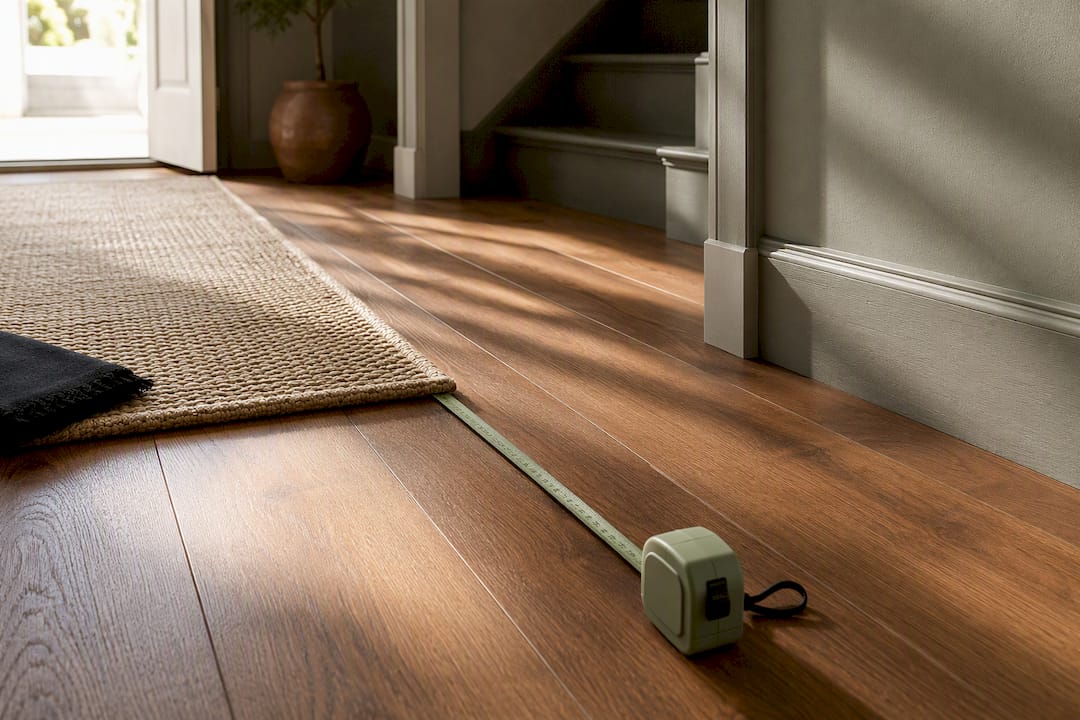
The right runner length leaves the usable floor length minus roughly 15 to 20cm of clearance at each end, with common lengths sold in 150cm, 180cm, 240cm and 270 to 300cm bands. Rug guides and author Cristiano recommend starting with a tape measure and working from actual floor space, not the hallway’s overall footprint. Getting this one figure right does more for a hallway’s look than any other decision you’ll make about the rug.
TL;DR:
- The ideal runner length matches the usable floor length minus 15 to 20cm at each end, with common lengths spanning 150cm to 300cm depending on hallway size.
- Measure the actual clear floor space, excluding thresholds and obstacles, and use masking tape or cardboard to test fit optional length options before purchasing.
- In narrow hallways, select narrower runners to maintain balance and facilitate easier cleaning, while wider hallways suit wider rugs for a more cohesive look.
- Keep the runner short of doorframes by 15 to 20cm to avoid interference with door swings or furniture, adjusting clearance for tight or spacious hallways.
- For high-traffic areas, choose low-pile synthetic or natural materials with non-slip underlays suited to your floor type, and verify dimensions and return policies before ordering.
Table of Contents
- Recommended runner lengths for common hallway sizes
- How to measure for a runner the right way
- Choosing the right width for narrow hallways
- Getting placement and clearance right around doors
- Material, backing and safety for high-traffic runners
- Buying checklist before you order a runner
- How runner length shapes the feel of a hallway
- Adjusting runner length for kitchens, stairs and other spaces
- Why the tape test still catches me out
- Where to find the right runner and sizing support
- FAQ
Recommended runner lengths for common hallway sizes
Hallway proportions vary enormously, so the right runner length depends on the space you’re actually filling rather than a single universal number. A short hallway needs a runner that doesn’t crowd the walls, while a long corridor can carry a much bigger rug without looking oversized.
As a starting point:
- Under 250cm hallways: a 150 to 180cm runner usually works best, leaving generous space at each end, so the rug reads as a deliberate accent rather than a tight squeeze.
- 250cm to 400cm hallways: 180 to 240cm runners tend to fill the space without overwhelming it, striking the balance most homes are after.
- Long hallways: longer runners suit extended runs, and some homeowners join two rugs end to end for particularly long corridors.
A slightly shorter runner that reveals more floor at each end often looks more intentional and less like an ill-fitting carpet remnant, an effect worth considering in smaller entryways where floor visibility keeps the space feeling open. In grander or longer corridors, a near-full-length runner reads as more finished, provided you still respect end clearances rather than pushing the rug right up to the skirting. The goal is proportion, not maximum coverage: a rug that swallows the whole floor rarely looks as good as one with breathing room.
How to measure for a runner the right way
Getting the length right starts with measuring the actual clear floor run, not the hallway’s total length on a floor plan. Skirting boards, thresholds and door swings all eat into that figure, so work from the space the rug will genuinely occupy.
- Measure the clear floor length from the point where you want the runner to start to where it should end, ignoring skirting boards and door thresholds.
- Decide your end clearance: a small clearance is a sensible default, which might be reduced in tight hallways or increased in longer, grander spaces.
- Subtract that clearance from each end of your measured length to get the runner length to order.
- Check for obstacles along the run, including door swings, radiators and any furniture that might sit over or beside the rug.
- Mark out the proposed rug footprint with masking tape or a sheet of cardboard and live with it for a day before buying, a method Homable’s placement guide recommends to catch sizing mistakes early.
Pro Tip: Run the tape test at different times of day, since natural light can make a marked-out rug area look larger or smaller than it will once the runner is actually down.
Choosing the right width for narrow hallways
Length gets most of the attention, but width decides whether a runner looks balanced against the walls or gets lost in the middle of the floor. The right width depends on how wide the hallway itself is.
- In narrower hallways, narrower runners are common to leave enough bare floor at each side for skirting and easy cleaning.
- Wider hallways suit wider runners, which fill more of the floor without crowding the walls.
- Aim to leave a reasonable clearance on each side, adjusting narrower or wider depending on hallway width.
- Where a console table or storage bench sits along one wall, keep the runner narrow enough that it doesn’t catch on furniture legs or force awkward foot placement.
Getting width right also matters for cleaning: a runner set too close to the wall traps dust along the skirting, while one with sensible clearance is far easier to vacuum properly.
Getting placement and clearance right around doors
A runner that looks perfect on paper can still cause problems if it interferes with a door swing or sits awkwardly against a frame. Placement deserves as much thought as the measurements themselves.
- Stop the runner short of any doorframe by your chosen clearance distance, typically 15 to 20cm, so it never catches under a swinging door.
- Check clearance against every door along the hallway, not just the front entrance, since internal doors can catch a rug just as easily.
- In a tight hallway, drop to a smaller clearance or a narrower runner rather than letting the rug interfere with door movement.
- For entryways, consider a shorter runner or a pair of mats rather than one continuous rug, which often suits the change in floor use right at the threshold.
- Along a continuous corridor with no doors to navigate, a single longer runner usually looks more cohesive than several shorter pieces.
Homable’s entryway styling guide covers this transition between entry zones and hallway proper in more detail, including how placement shifts the overall feel of the space.
Material, backing and safety for high-traffic runners
Hallways see more foot traffic than almost any other room, so backing and material choices matter as much as size. A non-slip underlay matched to your floor type keeps the rug in place and stops doors catching on a rug that’s crept sideways over time. Wooden floors and tiles both need specific underlay types to work safely, a point covered in Homable’s non-slip guide.

For material, low-pile synthetic blends and natural bamboo options both hold up well to repeated footfall and are easier to keep clean than deep-pile alternatives. Thin, flat weaves also sit more comfortably under doors, reducing the risk of the rug bunching against a threshold.
Pro Tip: If you’re unsure how a material will wear, order a sample swatch first and leave it in the hallway for a week to see how it handles daily use.
Buying checklist before you order a runner
A few minutes of checking before you buy saves the hassle of a return later, particularly with longer rugs that are awkward to repackage.
- Measure the usable length and width twice, ideally on different days, to catch any errors.
- Note every door swing and piece of furniture along the hallway before finalising a size.
- Confirm the product’s shipping dimensions and return policy on the product page.
- Match the material and backing to how much traffic and cleaning the hallway realistically gets.
- Check that a compatible non-slip underlay is available for your floor type before the rug arrives.
How runner length shapes the feel of a hallway
Runner length does more than fill floor space: it sets the rhythm of a corridor. A rug that’s too short leaves awkward gaps of bare floor at each end, which can make a hallway feel unfinished or oddly proportioned. One that runs almost wall to wall, on the other hand, can make even a generous hallway feel narrower than it is, since the eye has no bare floor to rest on.
The most flattering effect usually comes from a runner that echoes the shape of the hallway without exaggerating it. In a long corridor, a well-proportioned runner draws the eye down its length and makes the space feel more deliberate, almost architectural. In a shorter entry hall, a slightly undersized runner keeps the floor feeling open and the ceiling feeling higher by comparison, since less visual weight sits low in the room.
Colour and pattern interact with length too. A busy pattern on a very long runner can feel repetitive by the time it reaches the far end, while a plainer weave tends to suit longer lengths better. Shorter runners have more licence to carry bolder patterns since the eye takes in the whole design in one glance. None of this overrides the core measuring rules, but it’s worth bearing in mind once you’ve settled on a length that fits the space physically.
Adjusting runner length for kitchens, stairs and other spaces
Hallways aren’t the only place a runner earns its keep, and the sizing logic shifts slightly once you move into other rooms. In a kitchen, a runner typically sits in front of the sink, hob or main work area rather than running the full length of the room, so measure the specific stretch of floor you stand on most rather than the whole kitchen footprint. A shorter runner, often in the 150 to 180cm range, usually suits this more targeted placement.

Stair runners work to a different logic entirely, since length is dictated by the number of steps and the depth of each tread rather than a single floor measurement. Rather than one flat clearance figure, stair runners are typically ordered by the metre and cut to fit the full flight, so measuring floor-by-floor length doesn’t apply in the same way it does to a hallway.
In both cases, the same underlying principle from hallway sizing still holds: measure the actual usable space, not the room’s total dimensions, and check clearance around anything the rug might catch on, whether that’s a cupboard door in a kitchen or a stair nosing on a landing.
Why the tape test still catches me out
Cristiano here. Even after years of writing about rug sizing, the cardboard test still saves me from ordering the wrong length more often than I’d like to admit. A floor plan measurement never quite captures how a hallway feels in person.
That’s why Homable’s rug sizing guide and non-slip advice are worth a proper read before you commit to a length, especially if your hallway has an unusual shape or several doors to navigate.
— Cristiano
Where to find the right runner and sizing support
Once you know your target length and width, Homable’s rug collection is a straightforward place to compare options, including rectangular bamboo rugs available in 120x180cm, which work well as a runner alternative in shorter hallways.

A few things make ordering easier once you’ve settled on a size:
- Free shipping applies on orders over a certain amount, which is worth factoring in if you’re ordering a longer rug alongside an underlay.
- Product pages typically list exact dimensions, so you can double-check against your own measurements before checkout.
- Checkout is secure, and return policies are usually listed on product pages if the fit isn’t quite right once it arrives.
Browse the current collection, check the dimensions against your own tape measurements, and order the length that actually fits your hallway rather than the nearest round number.
FAQ
How long should a runner rug be?
A runner rug should generally be the length of your usable floor run minus around 15 to 20cm of clearance at each end. Most hallways end up with a runner somewhere between 150cm and 300cm, depending on the length of the space.
What size rug is considered a runner?
A runner is any rug that’s noticeably longer than it is wide, typically sold in widths of 60 to 80cm and lengths ranging from around 150cm up to 300cm or more. The narrow, elongated shape is what distinguishes it from a standard rectangular rug.
What is the size of a normal runner?
There’s no single standard size, but common lengths sold for hallways cluster around 150cm, 180cm, 240cm and 270 to 300cm, paired with widths of roughly 60 to 80cm. The right combination depends on your hallway’s own length and width rather than a fixed norm.
What size is a runner rug in cm?
Runner rugs are typically sold in centimetre bands such as 150cm, 180cm, 240cm and 270 to 300cm in length, with widths most often between 60cm and 80cm. Measuring your own hallway before choosing from these bands gives a far more reliable fit than picking a size at random.