Cart
0

TL;DR:
- Start by decluttering and assessing your entryway to identify your specific storage needs.
- Use wall-mounted solutions for narrow UK hallways to maximize space and maintain flow.
- Focus on functional storage first, then enhance style with decor, textiles, and seasonal updates.
Streamline your entryway: a step-by-step styling guide
Your entryway is the first thing you see every morning and the last thing you navigate every evening. When it’s cluttered with stray shoes, forgotten letters, and tangled leads, it sets a chaotic tone for the entire day. Yet most advice stops at “add a hook and a rug.” A genuine styling workflow goes much further, treating your hallway as a functional system that also happens to look beautiful. This guide walks you through every stage, from ruthless decluttering to seasonal refreshes, with expert-backed recommendations and practical tools to help you create an entryway you’re genuinely proud of.
Table of Contents
- Assessing your entryway: decluttering and defining needs
- Planning and optimising your entryway layout
- Layering style: choosing decor and balancing aesthetics
- Maintaining and troubleshooting your stylish entryway
- Our perspective: why the perfect entryway workflow isn’t one-size-fits-all
- Create your ideal entryway with Homable
- Frequently asked questions
Key Takeaways
| Point | Details |
|---|---|
| Declutter first | Start by removing all unnecessary items to reveal true space and needs. |
| Plan storage smartly | Invest in functional storage—especially vertical options—to maintain a tidy, welcoming entryway. |
| Style with intention | Balance minimalist essentials and statement décor for a personalised look. |
| Maintain regularly | Weekly resets and seasonal style tweaks ensure your entryway stays beautiful and usable. |
Assessing your entryway: decluttering and defining needs
Before you buy a single hook or choose a paint colour, you need to understand exactly what your entryway is dealing with. Most hallways become dumping grounds not because of bad taste, but because no clear system was ever established. Fixing that starts with a thorough assessment.
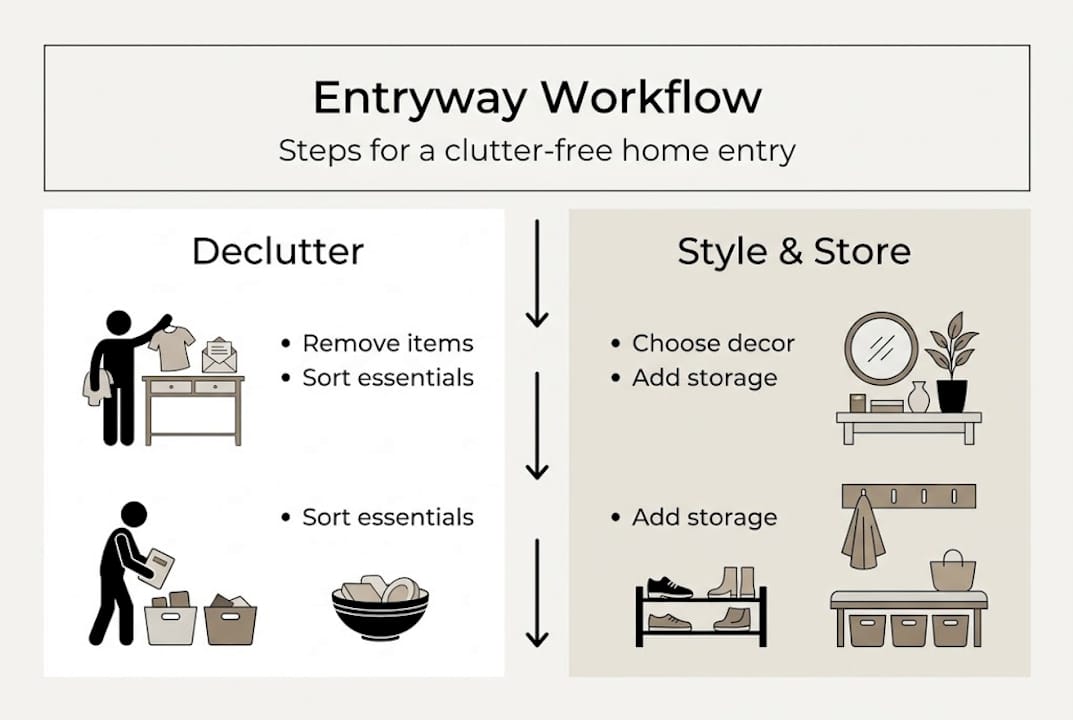
Step one: empty and evaluate. Remove everything from your hallway. Yes, everything. Pile it in a nearby room and look at your blank space with fresh eyes. You’ll immediately notice what’s missing: perhaps there’s no logical place for shoes near the door, or the hooks are positioned too high for children. This blank-canvas moment is your most honest starting point.
As Good Housekeeping UK notes, the entryway styling workflow begins with decluttering and assessing the space to identify storage needs for shoes, coats, and keys. It’s the foundation everything else builds upon.
Here’s a simple numbered checklist to guide your declutter:
- Remove all items from the hallway completely.
- Sort everything into three groups: daily essentials, occasional use, and unnecessary.
- Return only daily essentials to the space.
- Find a proper home elsewhere for occasional-use items.
- Discard or donate anything that genuinely doesn’t belong near the door.
For entryway styling tips that actually stick, assigning a clear purpose to every item is non-negotiable. If something doesn’t have a designated home, it will drift and create clutter again within a week.
“Clutter is nothing more than postponed decisions.” This quote, often attributed to organising experts, captures precisely why hallways accumulate mess. Every stray item represents a choice that hasn’t been made yet.
Pro Tip: Place a donation box just inside or beside your front door during the declutter phase. If you remove something but aren’t certain it can go, drop it in the box. After two weeks, if you haven’t retrieved it, donate it without guilt.
Once the space is clear, define your household’s primary needs. Common categories include: shoes and boots, coats and jackets, bags and rucksacks, keys, post and parcels, and pet leads. Map these honestly against the people who use the space daily.
| Common entryway problem | Possible functional solution |
|---|---|
| Shoe pile by the door | Low shoe rack or pull-out shoe drawer |
| Keys always lost | Wall-mounted key hook or decorative bowl |
| Post and letters accumulating | Wall-pocket organiser or slim letter tray |
| Coats piled on one hook | Multi-hook rail with individual pegs |
| Bags slipping onto the floor | Deep hooks at varying heights |
| No seating for putting on shoes | Slim storage bench or fold-down seat |
For households sharing organising small spaces across multiple occupants, labelling zones or even colour-coding hooks can reduce daily friction considerably.
Planning and optimising your entryway layout
With your needs mapped, the next step is planning a layout that genuinely works for your home’s dimensions. UK hallways are notoriously narrow. The average British hallway measures roughly 1.8 to 2.1 metres in width, and many Victorian terrace homes offer even less. That constraint shapes every decision you make.
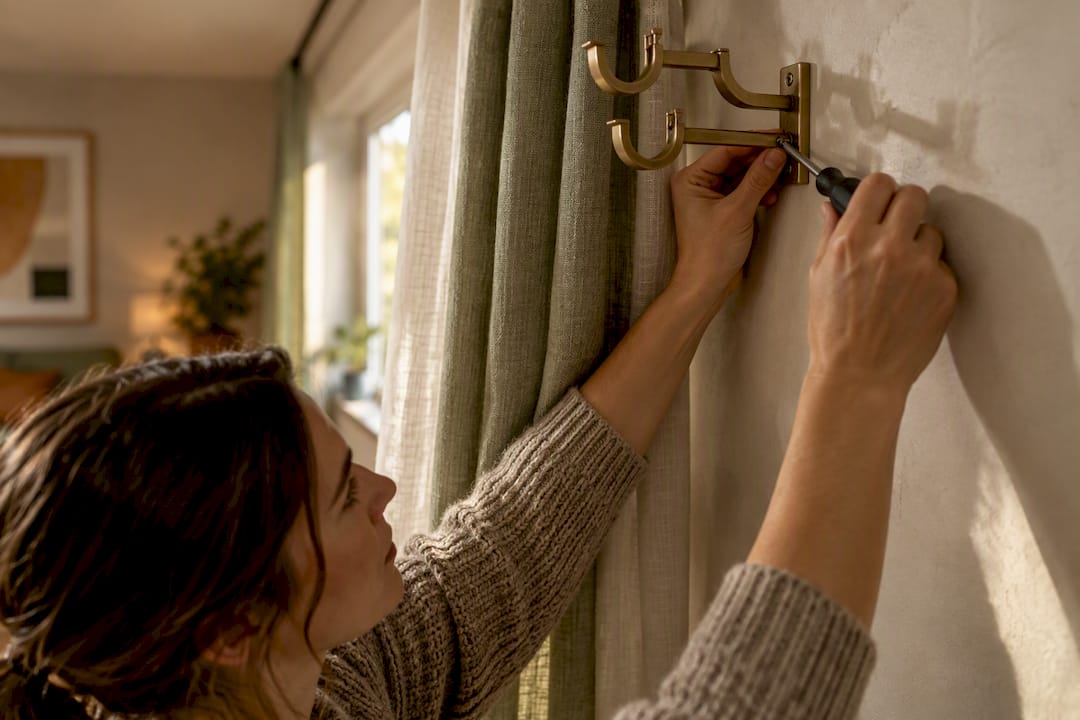
The key is to think vertically. Wall-mounted solutions keep the floor clear, which makes the space feel larger and reduces trip hazards. As Resi advises, incorporating wall hooks, trays or bowls for keys and mail, and wall-mounted shoe racks is essential for maintaining flow in narrow UK hallways.
Comparing storage approaches:
| Storage type | Pros | Cons | Best for |
|---|---|---|---|
| Wall-mounted | Frees floor space, visually light | Requires drilling, less flexible | Narrow hallways, rental homes (with permission) |
| Free-standing | No installation, moveable | Takes up floor space, can feel heavy | Wider entryways, temporary solutions |
| Hybrid (bench with hooks above) | Combines seating and hanging | Needs 60cm+ of wall space | Family homes, medium-width hallways |
A budget of £150 to £300 is realistic for a meaningful entryway refresh in 2026, covering a quality hook rail, a shoe rack, a small mirror, and a couple of decorative accents. That’s a reasonable investment for a space you use twice a day, every day.
Here are some entryway focal points and zoning ideas worth considering:
- A mirror above a console table to add depth and light
- A dedicated shoe zone kept to one side near the door
- A landing zone for keys, post, and daily carry items close to eye level
- A rug to define the entryway zone and protect flooring
- Artwork or a statement piece on the first wall you see when entering
Follow this numbered process for optimising room layout before purchasing anything:
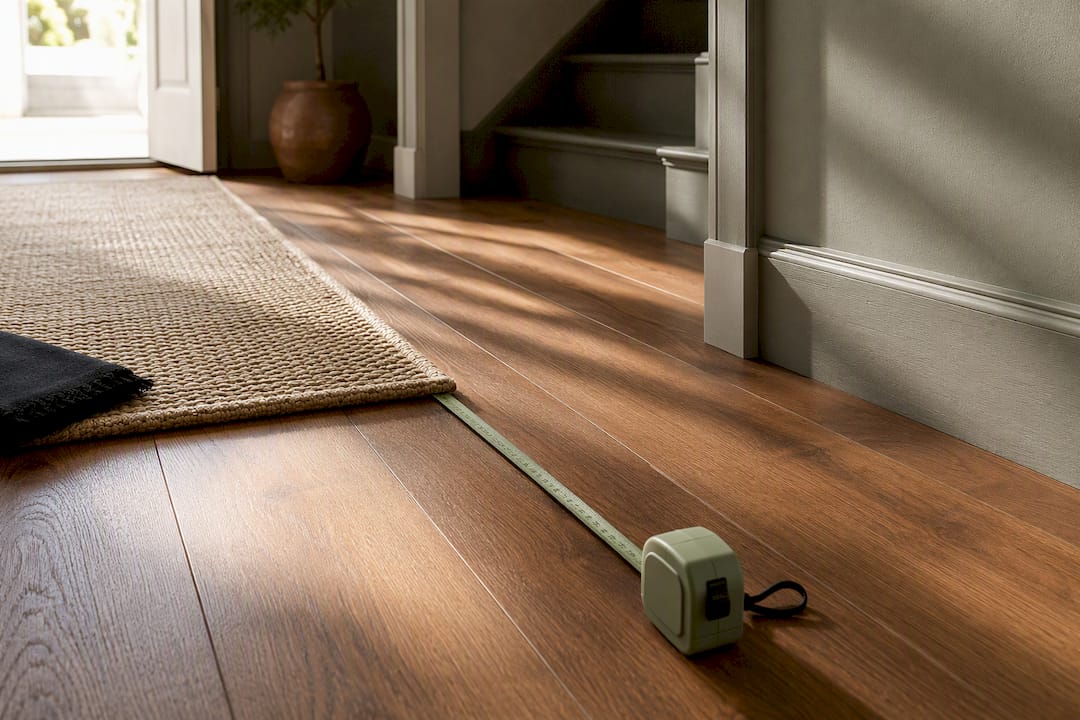
- Measure your hallway width, length, and ceiling height.
- Sketch a basic floor plan on paper, noting doors, radiators, and light switches.
- Mark your desired zones: shoe area, coat area, landing zone.
- Position furniture on paper first, checking that doors swing clear.
- Review the flow by physically walking the route from door to interior rooms.
When looking at decorative storage solutions, prioritise pieces that serve more than one function. A bench that stores shoes underneath, or a mirror with integrated hooks, earns its floor print twice over.
Layering style: choosing decor and balancing aesthetics
Storage is the skeleton. Style is what gives your entryway its personality. Once the functional layer is in place, you can start building a visual identity that feels intentional rather than accidental.
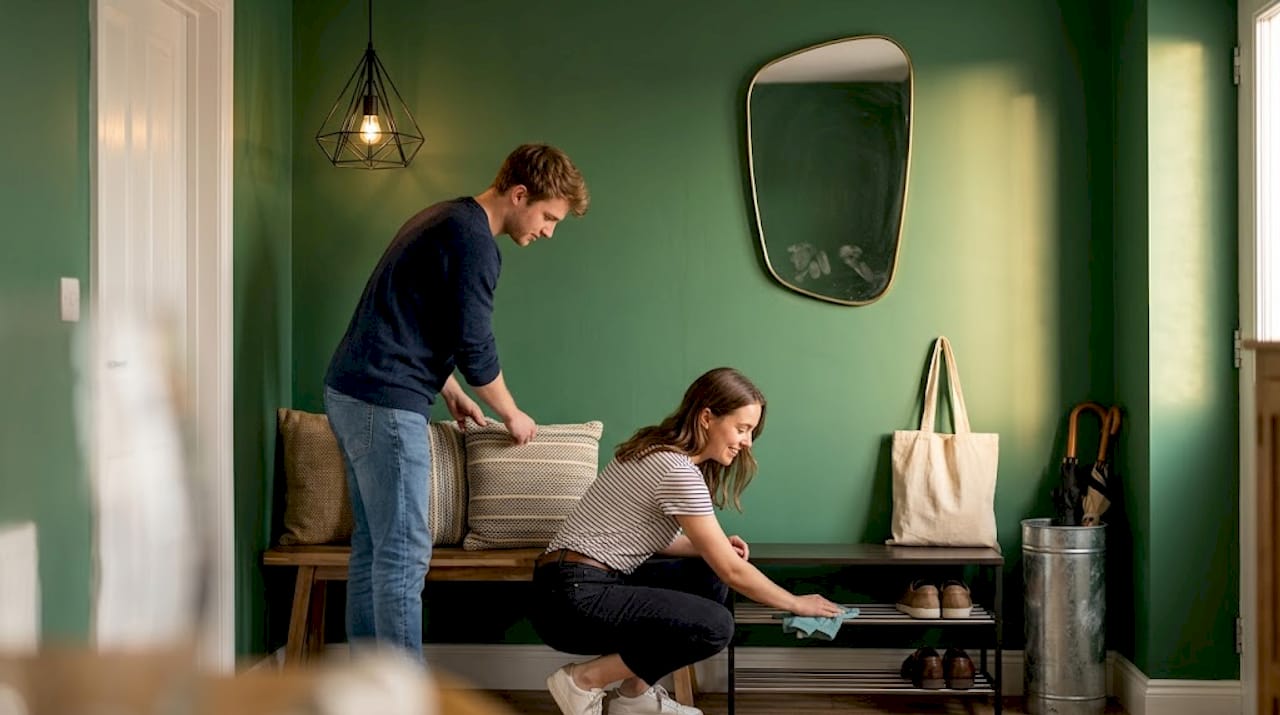
Colour is your most powerful, most affordable tool. A deep, saturated wall colour such as forest green, navy, or terracotta makes a narrow hallway feel deliberate rather than cramped. Pale neutrals work beautifully in darker or north-facing halls, where light is precious. If you’re renting or cautious about commitment, a bold coloured rug or a richly toned piece of artwork delivers similar impact without a paintbrush.
Lighting deserves far more attention than it typically receives in hallways. A pendant light or wall sconce immediately elevates the space from corridor to room. Even swapping a flat ceiling rose for a warm-toned bulb makes a surprising difference to how welcoming the space feels when you arrive home.
Here are five quick decor ideas to create either drama or calm:
- Drama: A sculptural pendant light above a console, paired with a large-format mirror.
- Calm: A linen runner rug, a small plant on a slender shelf, and a single framed print.
- Drama: A gallery wall of black-and-white photography extending into the hallway.
- Calm: A wicker basket for shoes, a pale ceramic bowl for keys, and nothing else on the surface.
- Drama: A statement wallpapered alcove or feature wall at the end of the hallway.
The tension between minimalism and a more layered approach is something interior designers frequently debate. Marie Kondo’s method advocates for keeping only joy-sparking essentials, resulting in a clean, intentional entryway. Other designers champion statement pendants, textured textiles, and carefully curated art arrangements that build visual richness. Neither approach is wrong. The key is knowing which philosophy suits your personality and, crucially, your capacity to maintain it.
“A well-designed entryway doesn’t need to choose between function and beauty. The best ones treat them as inseparable.” This is the guiding principle behind the most satisfying hallway transformations.
For those drawn to a cleaner look, exploring minimalist design benefits reveals why restraint often creates a stronger first impression than abundance. For those who love layering, minimalist inspiration can still inform how you edit and curate even a more expressive scheme.
Pro Tip: Choose one statement piece, whether that’s a mirror, a piece of artwork, or a pendant light, and build every other decision around it. This creates cohesion without restricting your creativity.
Textiles are often the finishing touch that makes a hallway feel truly lived-in and warm. A runner rug adds colour, pattern, and softness underfoot. A woven basket brings texture. Even the style of hooks you choose, whether raw brass, matte black, or aged ceramic, communicates something about the home beyond the door.
Maintaining and troubleshooting your stylish entryway
A beautifully styled entryway is only valuable if it stays that way. The most common complaint from homeowners who’ve invested in a hallway refresh is that within a few months, it drifts back towards clutter. That drift is always caused by the same handful of problems.
The weekly reset is the single most effective maintenance habit. It takes roughly five minutes. Everything that has drifted from its designated spot goes back. Post gets sorted. Shoes get paired and returned. The landing zone gets cleared. If you build this into a Saturday or Sunday routine, the entryway rarely reaches a state of genuine chaos.
Here are the most common entryway mistakes and how to troubleshoot them:
- Overfilling hooks: Every hook gains more than one item, turning a hook rail into a fabric mountain. Solution: enforce a one-item-per-hook rule and add extra hooks if needed.
- Ignoring vertical space: Floor clutter accumulates because there’s nowhere upward to put things. Solution: add a second row of hooks at a lower height for children or bags.
- Mismatched organisers: A mix of plastic bins, wicker baskets, and metal trays creates visual noise. Solution: choose two materials and stick to them throughout the space.
- No landing zone: Without a clear surface for keys and post, they land everywhere. Solution: a small tray or bowl directly beside the door solves this immediately.
- Seasonal overflow: Winter coats crowd out summer jackets. Solution: rotate wardrobes seasonally and store off-season items elsewhere.
Stylish storage examples prove that functional organisers don’t have to be dull. A raffia basket, a leather key hook, or a lacquered tray can perform a practical role while looking genuinely beautiful.
As Good Housekeeping UK emphasises, assigning homes for essentials only and keeping organisers functional avoids the wasted space that plagues so many hallways.
Follow this numbered approach for maintaining your entryway workflow throughout the year:
- Weekly: return all items to their designated spots and clear flat surfaces.
- Monthly: check that every organiser is still serving its purpose and remove anything that’s crept in.
- Seasonally: swap textiles, rotate accessories, and reassess storage needs as clothing layers change.
- Annually: repeat the full declutter process to prevent gradual accumulation.
Pro Tip: Rotate a small piece of art or swap out a decorative tray each season. It costs almost nothing but makes the space feel considered and fresh, and it gives you a small reason to look forward to each change of season.
Our perspective: why the perfect entryway workflow isn’t one-size-fits-all
The honest truth is that most design guides, including beautifully photographed magazine features and well-intentioned blog posts, present a single ideal. A flawless, symmetrical hallway with matching baskets and a perfectly positioned console. Real homes don’t work like that.
Every household has different routines, different numbers of people, different levels of tolerance for visual noise, and different capacities for maintenance. A workflow that suits a single professional in a flat is completely different from what a family of four with muddy dogs actually needs.
The principles in this guide are proven starting points, not rigid rules. Minimalist design examples might inspire your colour palette without requiring you to pare back to three items. A complex hook-and-shelf system might suit your family beautifully even if it would overwhelm a smaller household.
What matters most is building a workflow you’ll genuinely maintain. A magazine-perfect entryway that collapses into chaos by Tuesday is far less valuable than a slightly imperfect one that functions reliably every single day. Trial and error is not a sign of failure. It’s how most genuinely satisfying home systems are built. Buy one organiser, live with it for a month, and then decide if you need more.
Create your ideal entryway with Homable
Once you’ve worked through this workflow, you’ll have a clear picture of exactly what your entryway needs, both functionally and aesthetically. The next step is finding pieces that actually deliver on both counts.
At Homable, you’ll find a curated range of home accessories and storage solutions designed to help you put everything in this guide into practice. From decorative trays and hooks to rugs, mirrors, and stylish organisers, the collection is built around modern British homes where style and function genuinely matter. With free shipping on orders over £100, it’s straightforward to refresh your entryway without the added cost of delivery. Browse the new arrivals and bestsellers to find the pieces that fit your space and your personality.
Frequently asked questions
What is the first step in entryway styling workflow?
Begin by completely decluttering and assessing what storage and features your household actually needs. As Good Housekeeping UK confirms, identifying those needs is the essential foundation before any styling decisions are made.
How can I style a narrow UK entryway without clutter?
Maximise wall-mounted storage such as hooks and slim racks, and keep only daily essentials accessible near the door. Resi recommends prioritising vertical and wall-mounted options to maintain comfortable flow in narrow British hallways.
Should I prioritise storage or décor in my entryway?
Storage must come first to control clutter, but décor adds personality once essentials are organised. Livingetc notes that the function-first approach favours slim, simple organisers before statement pieces like benches or textured textiles are layered in.
How often should I refresh my entryway styling?
A seasonal refresh, such as swapping textiles, accessories, or a piece of artwork, keeps the space feeling inviting and practical throughout the year without requiring a complete overhaul each time.