Cart
0
TL;DR:
- Choosing furniture and decor tailored to each room’s function improves home comfort and mental well-being. Proper scale and lighting ensure spaces feel spacious and harmonious, reducing clutter and frustration. Planning with briefs and scaled layouts helps prevent costly mistakes and creates calming, purposeful environments.
Room-specific item selection is the deliberate process of choosing furniture and decor tailored to each room’s unique function, scale, and character. Get it right and every space in your home works harder, feels calmer, and looks more considered. Get it wrong and you end up with a sofa that blocks the doorway, curtains that drain the light, and a bedroom that never quite lets you switch off. Living space design impacts mental well-being by up to 50%, which means the choices you make about what goes in each room are not purely aesthetic. They shape how you feel, focus, and rest every single day. Understanding why select room-specific items matters is the first step to making those choices with confidence.
Why select room-specific items: function comes first
Every room in your home has a primary job. The bedroom restores you. The kitchen feeds you. The living room connects you with others or gives you space to decompress. Selecting items without first defining that job is the most common mistake homeowners make.
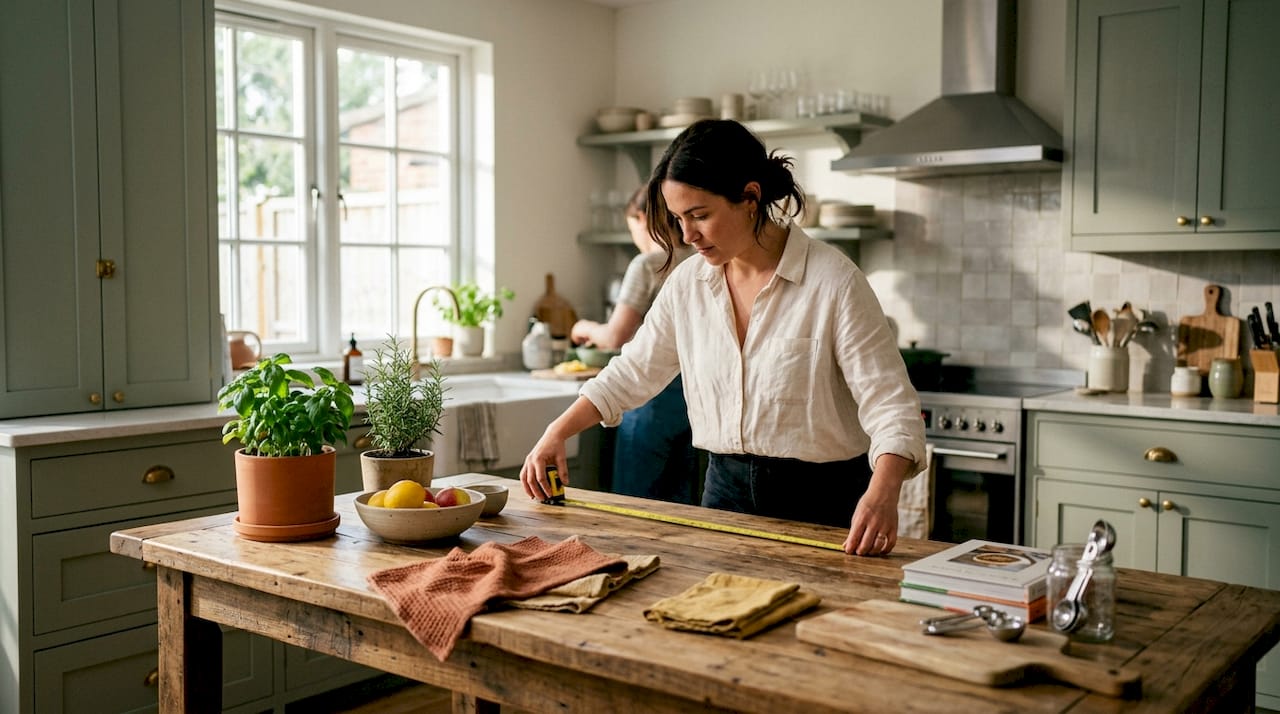
Start by listing the activities that actually happen in each room, not the ones you imagine might happen. A dining room used for homework three evenings a week needs different lighting and storage than one used purely for formal meals. A home office shared with a guest bed needs furniture that serves two routines without compromising either.
Room function dictates the practical requirements of every item you choose:
- Comfort and support: Seating in a living room needs lumbar support for long evenings; a kitchen stool needs a footrest for short, active use.
- Storage and access: A bedroom wardrobe should be sized to your actual wardrobe, not the aspirational one.
- Movement and clearance: A dining table needs at least 90cm of clearance on each side for chairs to pull out freely.
- Light and atmosphere: Biophilic design elements improve productivity by 15%, making natural light a functional requirement in workspaces, not just a nice feature.
The principle of biophilic design, which integrates natural elements such as plants, natural materials, and daylight into built environments, applies directly to room-specific design advantages. A home office with a north-facing window benefits from warm-toned artificial lighting and natural textures to compensate. A bedroom gains from blackout curtains and low, diffused light sources that signal rest to the brain.
Pro Tip: Spend one week noting where you actually sit, stand, and move in each room before buying anything. Real behaviour beats imagined use every time.
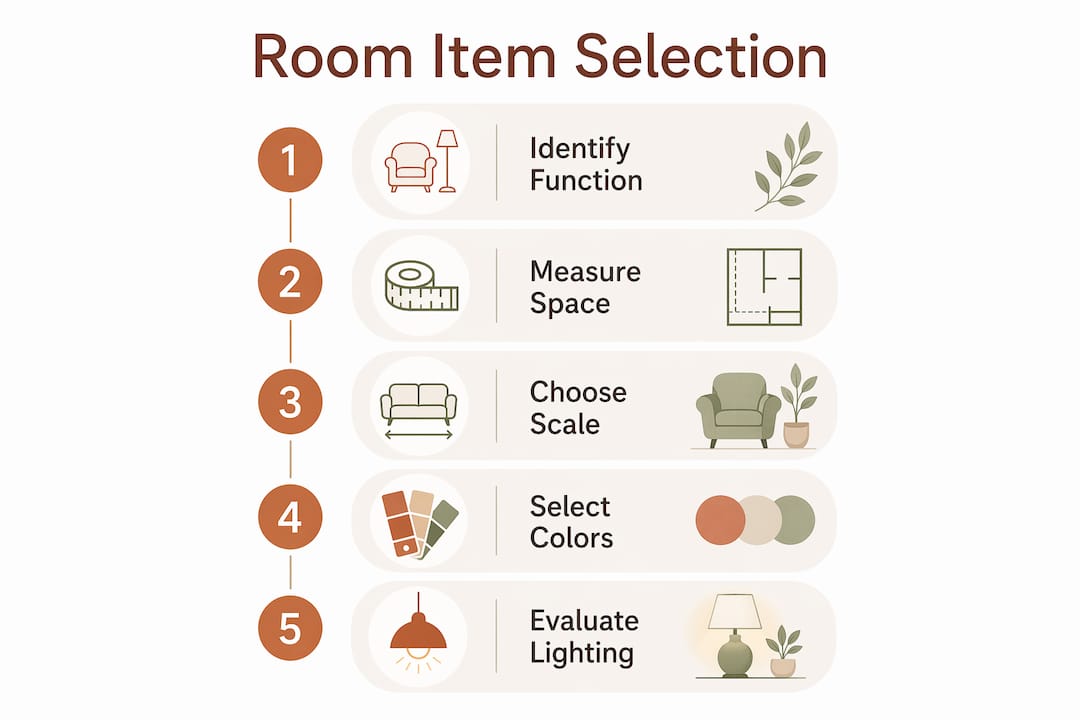
Does scale really matter when choosing room items?
Scale is the relationship between an item’s size and the room it occupies. Size is just a measurement. The distinction matters because a sofa can be the correct size in absolute terms and still be completely wrong for the room.
Poor scale creates friction you feel before you can name it. An oversized sofa in a small living room forces you to squeeze past it, blocks natural light from lower windows, and makes the room feel oppressive. An undersized rug in a large dining room makes the space feel unfinished and disconnected, as though the furniture is floating.
Furniture must respect movement and routine behaviour rather than forcing you to adapt to it. This is the core principle behind spatial planning, and it applies to every item from a bedside table to a kitchen island.
Follow these steps before committing to any large purchase:
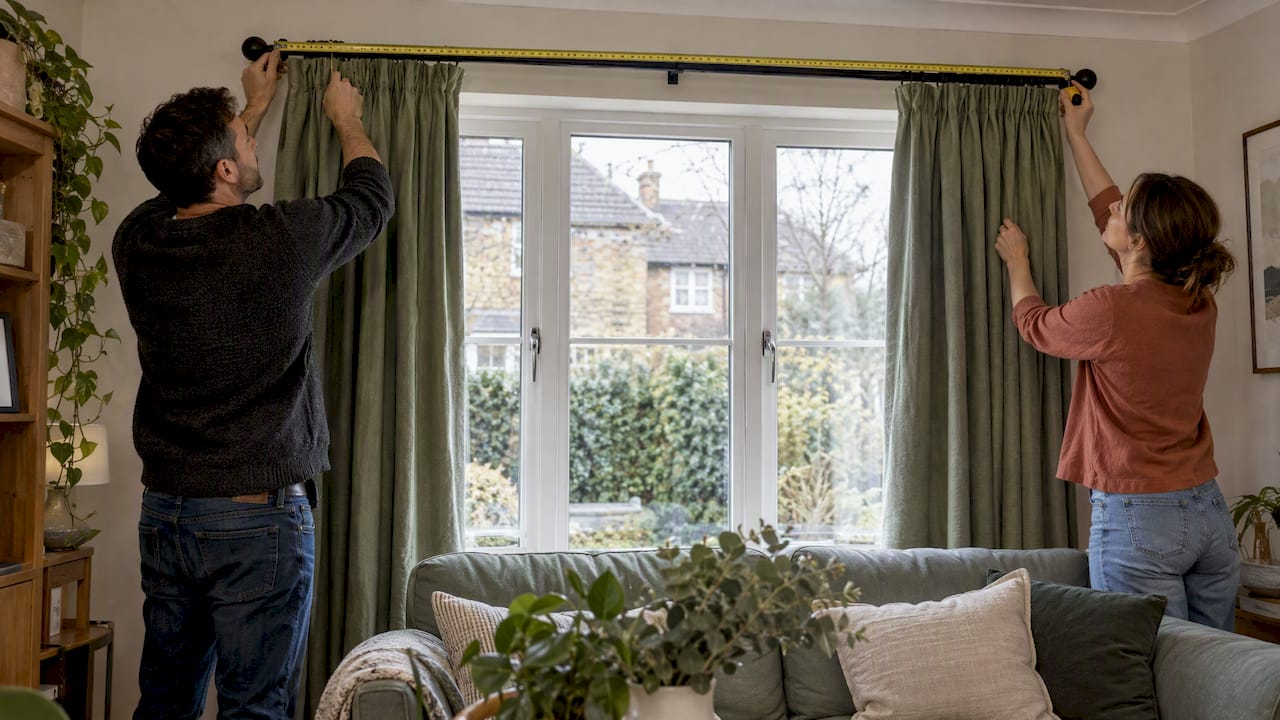
- Measure the room accurately, including door swings, window sills, and radiator positions. A floor plan drawn to scale takes 20 minutes and prevents expensive mistakes.
- Mark out the footprint of any large item using masking tape on the floor. Walk around it. Open drawers. Sit where you would normally sit. Check that pathways remain clear.
- Check circulation routes. The minimum comfortable corridor width in a domestic space is 90cm. Anything narrower creates daily frustration.
- Model in 3D if possible. 3D modelling at 1:1 scale uncovers spatial friction points before purchase in a way that 2D mood boards simply cannot replicate.
Pro Tip: Professional interior designers model every piece to scale inside exact floor plans before finalising their shopping lists. Adopt the same habit, even if your tool is just graph paper and a pencil.
How do lighting and colour work together in room design?
Lighting and colour are not two separate decisions. They are one system, and treating them separately is the single most common reason a room looks right in a showroom and wrong at home.
Colour needs matching lighting temperature and placement for effect. A warm grey wall painted under cool white LED lighting reads as cold and clinical. The same grey under a warm 2,700K bulb reads as sophisticated and restful. The paint has not changed. The light has.
Colour psychology gives you a practical framework for each room. Warm tones such as terracotta, ochre, and deep red stimulate appetite and conversation, making them well suited to dining rooms and kitchens. Cool tones such as soft blue, sage green, and pale lavender lower heart rate and cortisol, making them effective in bedrooms and bathrooms. Neutral tones in living rooms give you flexibility to shift mood through accessories and lighting alone.
| Room | Best colours | Lighting strategy | Common mistake |
|---|---|---|---|
| Bedroom | Soft blue, sage, pale lavender | Warm 2,700K, dimmable, no overhead glare | Cool white ceiling light that disrupts sleep |
| Living room | Warm neutrals, terracotta accents | Layered: ambient, task, and accent sources | Single ceiling pendant with no dimmer |
| Kitchen | Crisp white, warm cream, soft grey | Bright task lighting under cabinets | Relying on one central light for all tasks |
| Home office | Pale green, warm white, natural tones | Daylight-balanced 4,000K, no screen glare | Dark walls that absorb light and cause fatigue |
| Dining room | Deep warm tones, rich earthy hues | Pendant over table, dimmable for evenings | Overhead light positioned off-centre from table |
No design decision is neutral. Texture, colour, and materials shape your neurological state deliberately. A dining room lit with a warm pendant and dressed in deep ochre tones will feel more convivial than the same room painted pale grey under cool white light, even if the furniture is identical.
How does tailored selection prevent clutter and support wellbeing?
Clutter is not just a visual problem. It is a cognitive one. Brains prefer visually coherent environments, and reducing sensory stimuli makes rooms feel larger and more restful, regardless of their actual size. Room-specific planning directly addresses this by ensuring every item earns its place before it enters the room.
Room-specific planning prevents impulse buying and clutter by ensuring every item serves a functional role. That constraint is not limiting. It is liberating. When you know exactly what a room needs, you stop browsing aimlessly and start selecting with purpose.
The psychological benefits of calm, coherent spaces are well documented. Rooms that match your daily routines reduce decision fatigue, lower background anxiety, and make it easier to transition between activities. A bedroom that is genuinely set up for sleep, with blackout curtains, soft textures, and minimal visual noise, does more for your rest than any supplement.
Practical strategies that support this approach include:
- Lock your colour palette early. Choose two or three colours per room and stick to them. Every new purchase must pass the palette test before it enters the space.
- Apply the importance of tailored items principle to accessories too. A decorative object that serves no function in a bedroom creates visual noise. In a living room, the same object might anchor a shelf display perfectly.
- Phase your purchases. Buy anchor pieces first, such as the bed, sofa, or dining table, and let accessories follow once the room’s character is established.
- Edit regularly. A room that worked well two years ago may have accumulated items that no longer serve it. Seasonal edits keep spaces coherent.
For further guidance on must-have decor items that balance style with function, the principle remains consistent: every item should earn its place through use, beauty, or both.
Practical steps to implement room-specific selection
The gap between knowing the principles and applying them is where most homeowners stall. These steps close that gap.
- Write a room brief. One paragraph describing who uses the room, when, and how. This brief becomes your filter for every purchase decision.
- Draw a scaled floor plan. Mark doors, windows, radiators, and sockets. This takes 20 minutes and prevents months of regret.
- Identify your anchor piece. Every room has one item that defines its scale and character. Buy this first and build around it.
- Check furniture fit and flow before ordering. Use masking tape, cardboard cut-outs, or a free floor plan app to confirm scale and circulation.
- Source from verified retailers. Quality matters more for anchor pieces than for accessories. Invest in the items you touch and use daily.
Major furniture regrets stem from poor fit and routine compatibility, not from quality alone. A beautifully made armchair placed in the wrong corner of the wrong room will still frustrate you every day. The brief, the plan, and the anchor piece approach exist to prevent exactly that outcome.
The role of texture in home styling is worth considering at this stage too. Texture affects how a room feels physically and emotionally, and it is often the last thing homeowners think about and the first thing they notice when something feels off.
Key takeaways
Room-specific item selection is the most direct way to improve how your home functions, feels, and supports your daily wellbeing.
| Point | Details |
|---|---|
| Function defines selection | Identify each room’s primary activities before choosing any item. |
| Scale prevents friction | Model furniture to scale before purchasing to protect movement and flow. |
| Colour and light work as one | Match paint tones to lighting temperature or the intended effect will not land. |
| Tailored choices reduce clutter | Every item must serve a functional or aesthetic role specific to that room. |
| Plan before you purchase | A room brief and scaled floor plan prevent the majority of costly regrets. |
The detail most homeowners overlook
I have spent years watching homeowners make the same mistake: they fall in love with an item in isolation and then try to make the room fit around it. A velvet sofa in a colour they adore. A statement pendant light they spotted in a magazine. A rug that looked perfect on a website. None of these are bad choices in themselves. The problem is the sequence.
The room always comes first. Its function, its dimensions, its light, and the routines of the people who use it. Every item you choose is a response to those conditions, not the other way around. When you reverse that order, you end up with beautiful things that make your home harder to live in.
The other thing I have noticed is that homeowners consistently underestimate the power of restraint. A room with eight well-chosen items feels more considered and more spacious than a room with twenty items, even if the twenty items are individually attractive. Your brain reads coherence as quality. Editing is not compromise. It is the work.
The good news is that room-specific selection is a learnable skill, not an innate talent. Write the brief. Draw the plan. Buy the anchor piece. Then wait. The right accessories will become obvious once the room has a clear identity. Patience here is not hesitation. It is good design practice.
— Cristiano
Homable’s curated picks for every room in your home
Choosing the right pieces for each room is far easier when the products themselves are designed with both style and function in mind.
Homable offers a carefully selected range of decorative accessories suited to distinct room types, from living room ornaments to bedroom accents. Each product is chosen to complement specific spaces rather than fill them. A good example is the Decorative Silver Flower Candle Holder, which brings warmth and visual focus to a bedside table, mantelpiece, or dining surface without overwhelming the space. Homable ships free on orders over £100, making it straightforward to build a considered room scheme without inflated delivery costs. Browse the full room-by-room decor range to find pieces that earn their place in your home.
FAQ
What does room-specific item selection mean?
Room-specific item selection is the practice of choosing furniture and decor based on each room’s unique function, scale, and daily use rather than buying items that appeal in isolation.
How does room design affect mental well-being?
Living space design impacts mental well-being by up to 50% by either facilitating relaxation or causing overstimulation, depending on the choices made.
Why do colour and lighting need to match?
Colour only achieves its intended effect under the right lighting temperature. A warm grey under cool white light reads as cold; under warm 2,700K light it reads as restful.
How do I avoid buying furniture I will regret?
Write a room brief, draw a scaled floor plan, and model large items using masking tape before ordering. Most furniture regrets come from poor fit with daily routines, not from quality issues.
Does tailored decor really reduce clutter?
Room-specific planning prevents impulse buying by ensuring every item serves a defined role. When you know exactly what a room needs, you stop acquiring items that have no clear purpose in that space.