Cart
0
TL;DR:
- Creating a cozy room involves layering warm lighting, tactile textiles, and intentional furniture placement. Removing clutter and focusing on sensory details make the space feel genuinely inviting rather than staged.
A cosy room setup is defined as a layered arrangement of warm lighting, tactile textiles, considered furniture placement, and personal objects that work together to create physical comfort and emotional ease. The term “hygge,” borrowed from Danish and Norwegian design culture, is the recognised standard for this kind of intentional cosiness. Following a step by step cosy room setup process means you address each element in sequence rather than buying things at random and hoping for the best. The result is a room that feels genuinely lived in, not just styled for a photograph. This guide covers every stage, from bulb colour temperature to rug sizing rules, so you can build warmth into any room without a renovation.
What do you need before starting a cosy room setup?
Preparation separates a room that feels cosy from one that merely looks it in photos. Before you move a single piece of furniture, gather the right materials across four categories.
Lighting equipment
- Bulbs rated between 2700K and 3000K for a warm amber glow. Bulbs above 4000K emit a cool, clinical light that actively works against comfort.
- At least one floor lamp, one table lamp, and one accent or task light. These three sources form the foundation of layered lighting.
- A dimmer switch, if your fittings allow. Dimmers give you direct control over mood without changing a single bulb.
Textiles
- A throw in a chunky knit or boucle fabric. Textiles with visible texture trigger biophilic safety responses more effectively than smooth synthetics.
- Four to six cushions in mixed fabrics: velvet, linen, and knit work well together. Avoid buying more than you can comfortably sit around.
- A rug large enough to anchor your seating group. Undersized rugs are one of the most common and most fixable mistakes in room styling.
Furniture basics
- A sofa or armchair with a seat depth of at least 55 cm. Shallow seats feel perched rather than relaxed.
- A low side table within arm’s reach of your main seat. Comfort drops sharply when you cannot set down a drink without standing up.
Personal and natural accessories
- One or two plants, or high-quality faux greenery. Natural materials with visible grain, such as olive wood or rattan, add warmth that painted surfaces cannot replicate.
- Candles or a reed diffuser in warm, grounded scents: sandalwood, amber, or cedar.
- A small collection of personal objects: books, a framed photograph, a souvenir. These signal that the room belongs to someone.
| Category | Key item | Why it matters |
|---|---|---|
| Lighting | 2700K–3000K bulbs | Produces warm amber light that reads as safe and inviting |
| Textiles | Chunky knit throw | Adds tactile depth and visual warmth |
| Furniture | Correctly sized rug | Anchors the seating group and prevents a floating effect |
| Natural elements | Wood or plant item | Activates biophilic calm and sensory richness |
| Personal objects | Books, photos, mementos | Creates emotional connection and lived-in character |
How do you create layered warm lighting for a cosy room?
Lighting is the single fastest way to change how a room feels. Most rooms rely on one overhead light, which creates flat, shadowless brightness that reads as functional rather than warm.
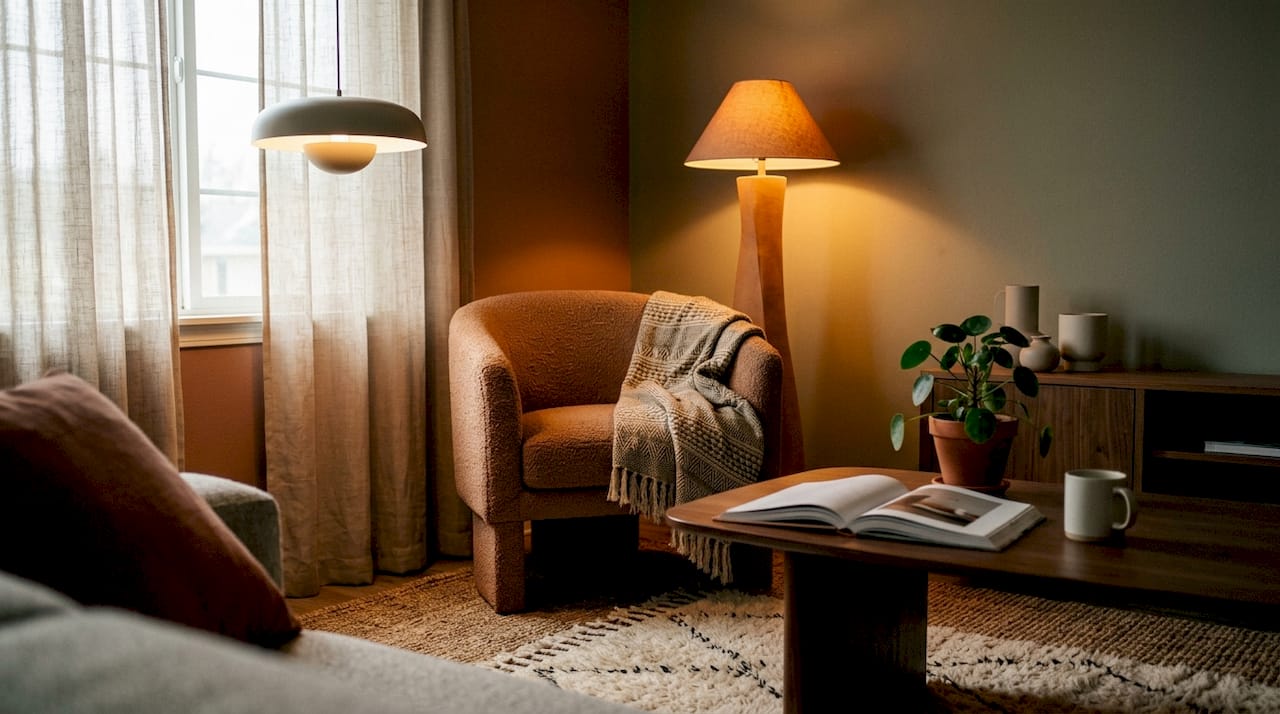
The fix is straightforward. Designers recommend a minimum of three distinct light sources placed at different heights: a floor lamp in a corner, a table lamp on a side table or shelf, and a smaller accent or task light near a reading spot. Each source creates its own pool of light. Together, they produce depth and shadow, which is what makes a room feel enclosed and comfortable rather than exposed.
Bulb choice matters as much as placement. Warm amber light mimics firelight and sunset conditions, triggering the brain’s association with safety and rest. Bulbs rated 5000K–6500K do the opposite. They signal alertness and task focus, which is exactly what you do not want in a room designed for relaxation.
- Switch every bulb in the room to a 2700K–3000K warm white or soft white rating.
- Position your floor lamp in the corner farthest from the main window to balance natural and artificial light.
- Place a table lamp at seated eye level, roughly 60–70 cm from the floor when measured from the lampshade base.
- Add a small accent light, such as a plug-in wall sconce or a battery-powered LED lamp, near a bookshelf or alcove.
- Fit a dimmer switch to at least one circuit, or use lamps with built-in dimming capability.
- Turn off the overhead light entirely for one evening and assess the room using only your layered sources.
Pro Tip: Avoid placing all lamps on the same wall. Spreading light sources around the perimeter of a room creates a sense of enclosure that a single bright corner cannot achieve. For guidance on bulb temperature and placement that applies equally well indoors, the LED lighting principles used in outdoor design are directly transferable to interior spaces.
How do textiles and furniture layout create genuine cosiness?
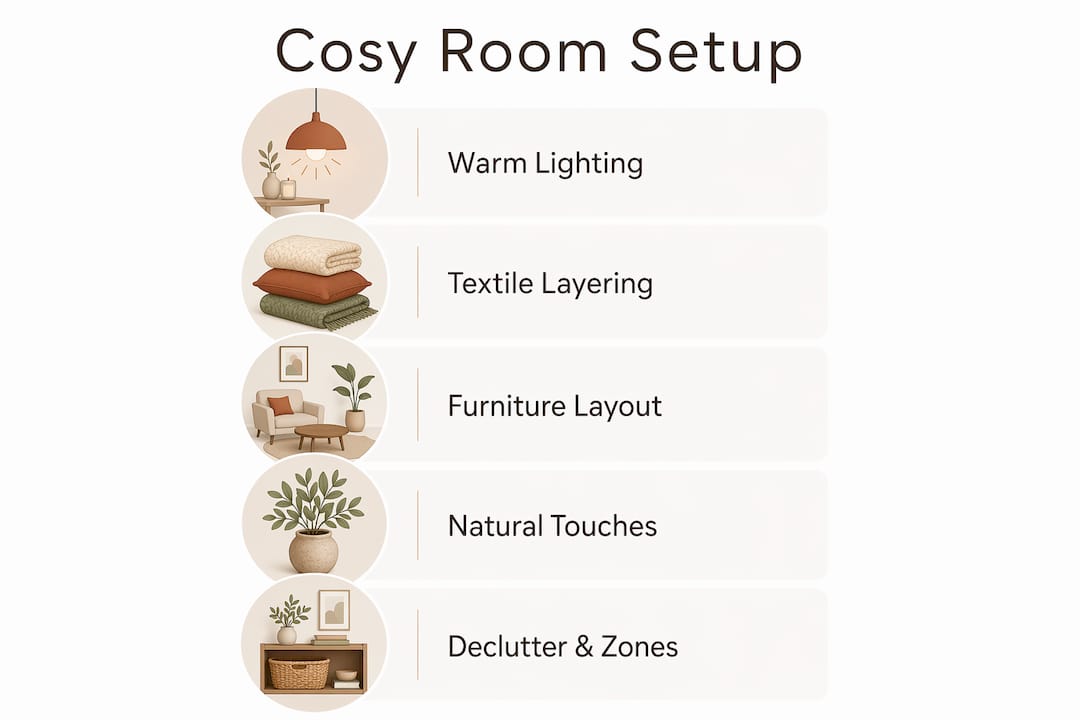
Textiles and layout work together. Get one right and ignore the other, and the room still feels off.
Rug sizing: the rule most people get wrong
Rug sizing is non-negotiable. The minimum standard is that the front two legs of every sofa and armchair sit on the rug. The ideal is all four legs of the sofa on the rug. A rug that only sits in the middle of the floor, touching nothing, makes the seating group look as though it is floating. That visual disconnection reads as cold and unintentional.
For a standard living room with a three-seat sofa and two armchairs, a rug of at least 200x300 cm is usually required. Measure your seating group before buying. A woollen rug adds both visual warmth and genuine underfoot softness, which matters when you are padding around barefoot on a cold morning.
Textile layering without making the sofa unusable
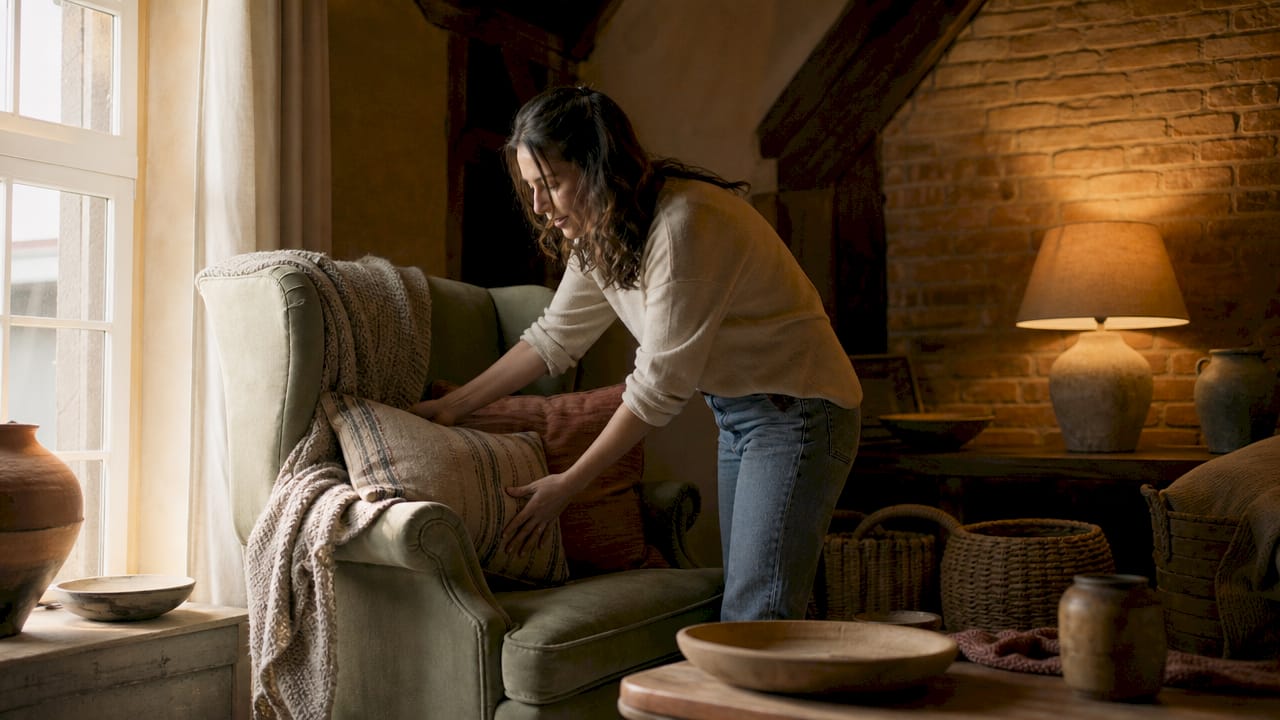
Over-layering pillows and throws is a real problem. Four cushions on a standard three-seat sofa is the practical upper limit. Beyond that, you spend more time moving cushions than sitting comfortably. Mix fabrics rather than multiplying them: one velvet cushion, one linen cushion, one knit cushion, and one plain cushion in your main colour creates variety without chaos.
A single throw draped over one arm of the sofa is more inviting than three throws folded in a pile. The goal is to suggest warmth, not to bury the furniture.
Furniture placement and curtain height
Pulling furniture away from walls by 15–30 cm creates an intimate seating zone rather than a room where everything lines the perimeter like a waiting room. Floating the sofa on a properly sized rug signals that the space was arranged with intention.
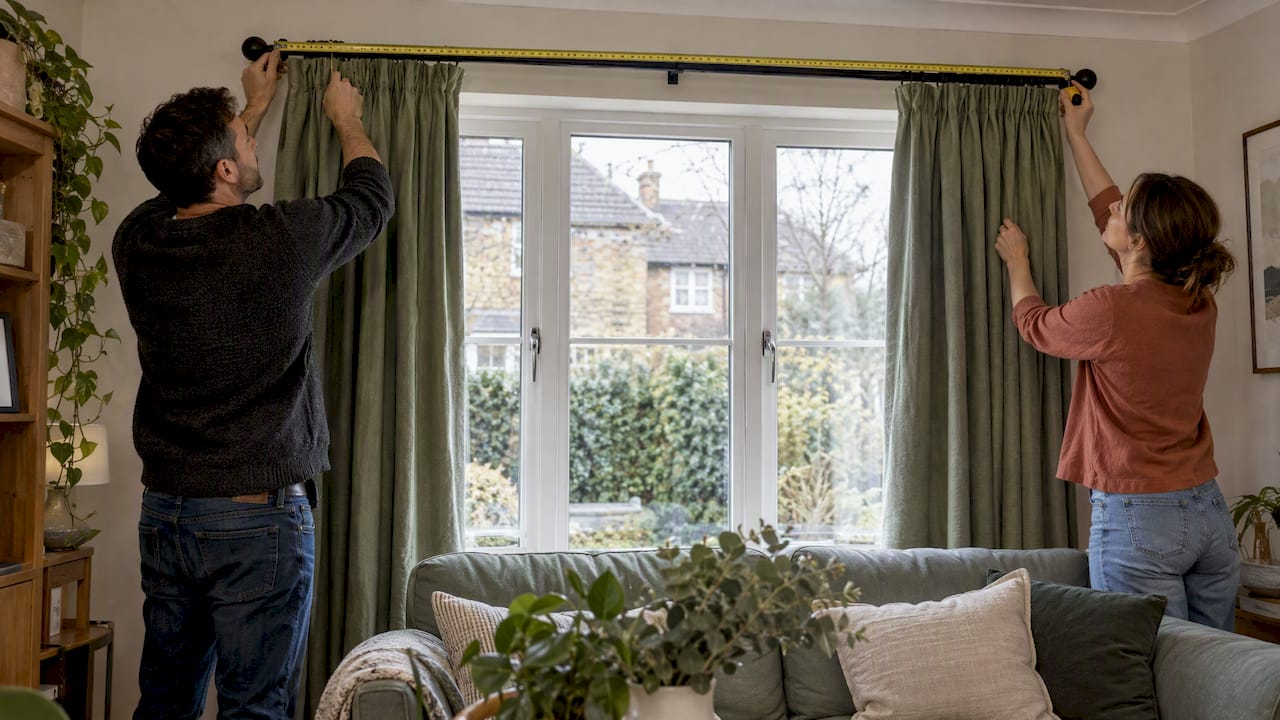
Curtains hung close to the ceiling and extended 15–20 cm beyond the window frame on each side visually lower the ceiling and create a cocooning effect. High ceilings feel grand but rarely feel cosy. Tall curtains solve this without structural work.
- Pull all seating at least 15 cm away from the walls.
- Hang curtains as close to the ceiling cornice as possible.
- Extend curtain tracks or poles 15–20 cm past the window on each side.
- Keep a clear walkway of at least 60 cm between furniture pieces.
- Avoid placing large furniture pieces that block natural light sources.
How do natural elements and personal touches complete the setup?
The difference between a room that looks cosy in a catalogue and one that actually feels cosy in person comes down to sensory and emotional detail. Natural materials with visible grain, such as olive wood, rattan, or unfinished oak, activate a biophilic response. The brain reads these textures as safe and familiar in a way that smooth, manufactured surfaces simply do not.
Plants serve a similar function. A single medium-sized plant in a terracotta pot adds colour, movement, and a sense of life that no ornament replicates. If you cannot maintain live plants, high-quality faux greenery in natural-looking pots achieves a comparable effect. The key is avoiding anything that reads as obviously artificial.
Scent is the most underused tool in room styling. A candle or reed diffuser in a warm, grounded fragrance, such as sandalwood, cedarwood, or amber, engages a sense that no amount of rearranging furniture can reach. Scent also creates memory associations. A room that smells the same every time you enter it begins to feel like a refuge.
- Choose one or two wood items with visible grain: a side table, a tray, a small sculpture.
- Add a plant in a natural pot, or a high-quality faux alternative in a ceramic or terracotta vessel.
- Display three to five personal objects: a stack of books you have actually read, a photograph, a travel souvenir.
- Place a candle or diffuser within the seating zone, not on a distant shelf.
- Avoid matching sets of decorative objects. Collected-over-time looks more personal than bought-at-once.
Pro Tip: Textiles and objects that carry visible history, such as a boucle cushion, a worn leather book, or a hand-thrown ceramic mug, trigger comfort responses more effectively than expensive, pristine items. Cosiness is not about newness. It is about depth.
What mistakes undermine a cosy room setup?
Most cosy room setups fail not because of what is missing, but because of what is wrong. Fixing these errors costs nothing except attention.
“The key distinction between a staged room and a truly cosy one is the thoughtful removal of friction points. Clutter, trailing cables, and mismatched bulbs break the atmosphere before a single cushion is placed.”
- Wrong bulb temperature. Cool-white bulbs rated above 4000K make a room feel like an office. Replace every bulb in the space before assessing anything else.
- Undersized rug. A rug that touches no furniture floats in the middle of the room and makes the space feel unresolved. Size up before you style up.
- Clutter versus curation. Removing clutter and managing cables is the single highest-impact, zero-cost change you can make. A cosy room has surfaces with three to five objects on them, not fifteen.
- Relying on one overhead light. Overhead-only lighting flattens a room. Switch it off and use your layered lamps instead.
- Too many pillows. Four cushions on a sofa is the functional limit. More than that and the sofa becomes a display, not a seat.
- High, formal furniture. Tall, rigid furniture creates a formal atmosphere. Lower, softer pieces, such as a low-slung armchair or a pouffe, bring the visual weight of the room down and increase perceived warmth.
Decluttering and defining functional zones before adding any new decor removes the chaos that prevents cosiness from landing. Start there, every time.
Key takeaways
A cosy room setup works because warm layered lighting, correctly sized textiles, and intentional furniture placement address the brain’s physical and emotional need for enclosure and safety.
| Point | Details |
|---|---|
| Bulb temperature first | Replace all bulbs with 2700K–3000K warm white before changing anything else. |
| Three light sources minimum | Use a floor lamp, table lamp, and accent light at different heights for depth. |
| Size your rug correctly | Front two legs of all seating on the rug is the minimum; all four legs is ideal. |
| Layer textiles, not pile them | Four cushions and one throw is the practical limit for a functional, comfortable sofa. |
| Remove friction before adding decor | Clear clutter and manage cables before buying a single new accessory. |
What I have learned about cosiness that most guides miss
People treat cosiness as a shopping list. Buy the right throw, the right candle, the right lamp, and the room will feel warm. That is not how it works. The rooms I have seen that genuinely feel cosy share one thing: they have had things taken away, not just added.
The first thing I do in any room I want to make cosier is clear every surface completely. Then I put back only what earns its place. That single act, which costs nothing, changes the atmosphere more than any new purchase. Affordable decor ideas matter, but they only work in a room that is not already fighting itself.
My second observation is that most people try to do the whole room at once and give up halfway through. Starting with one cosy corner is genuinely the better strategy. One armchair, one lamp, one side table, one plant. Get that corner right and the rest of the room follows naturally. The corner also gives you a reference point. You can see what works and what does not before committing to the whole space.
The third thing I have learned is that cosiness is sensory, not visual. A room can look perfect in a photograph and feel cold in person. If it does not smell right, if the seat is too shallow, if the light is too bright, no amount of styling fixes it. Address the senses first. The photographs will sort themselves out.
— Cristiano
Homable’s picks for a warmer, more comfortable room
Rugs and curtains do more heavy lifting in a cosy room than almost any other product category. The right rug anchors your seating group and adds underfoot warmth. The right curtain brings the ceiling down visually and wraps the room in softness.

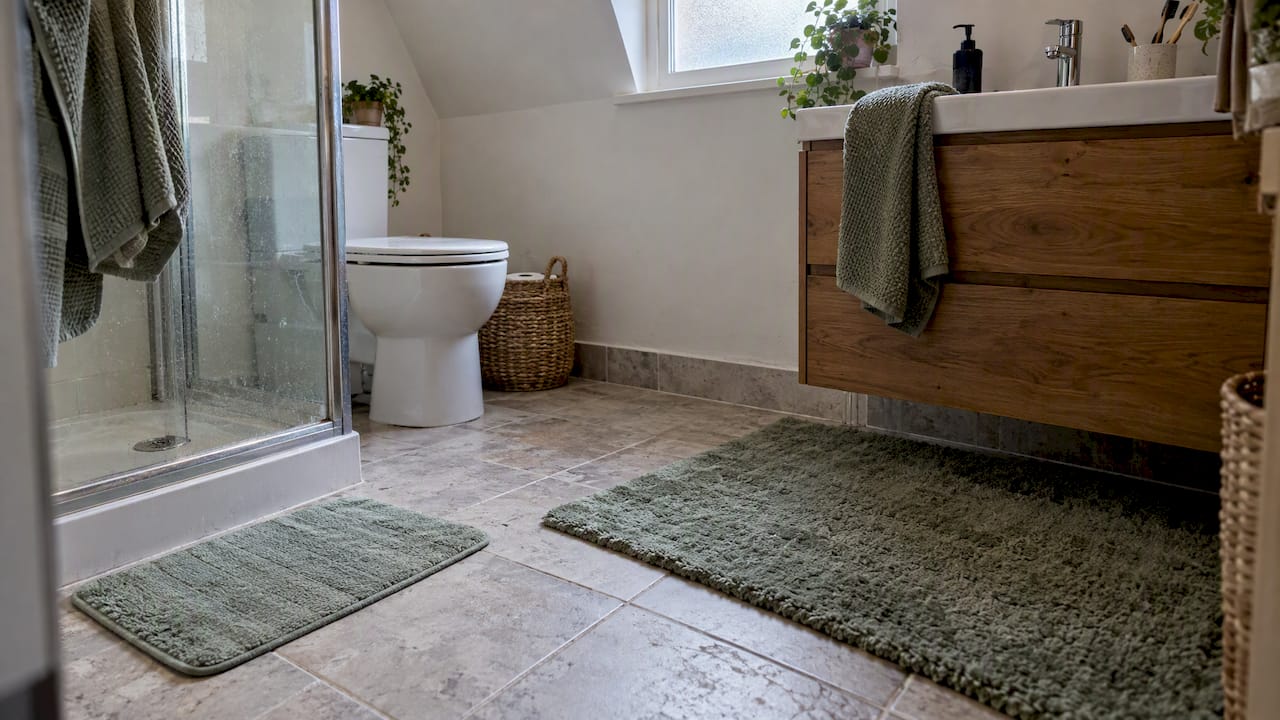
Homable stocks a range of products built for exactly this kind of styling work. The Baluchi woollen rug brings textured warmth and colour to any seating zone, while the bamboo rectangular rug set adds natural grain and a grounded, organic feel. For curtains, the dark grey bamboo curtain hangs beautifully close to the ceiling and creates that enveloping, cocooning effect that makes a room feel genuinely sheltered. Orders over £100 include free shipping.
FAQ
What colour temperature bulb makes a room feel cosy?
Bulbs rated between 2700K and 3000K produce the warm amber light associated with cosiness. Anything above 4000K creates a cool, clinical tone that works against relaxation.
How many cushions should a sofa have for a cosy look?
Four cushions is the practical upper limit for a standard three-seat sofa. More than four reduces usable seating space and makes the sofa feel like a display rather than somewhere to sit.
What size rug do I need for a cosy living room?
The front two legs of all seating pieces must sit on the rug as a minimum standard. For a full sofa and two armchairs, a rug of at least 200x300 cm is typically required to anchor the group properly.
Can I create a cosy room on a small budget?
Yes. Quick budget transformations under £100 are achievable by focusing on warm bulb replacements, a single throw, and clutter removal. These three changes deliver the highest return for the least spend.
Where should I start if the whole room feels wrong?
Start with one corner: one chair, one lamp, one side table. Get that zone right before addressing the rest of the room. It gives you a working reference point and prevents the project from stalling.