Cart
0
TL;DR:
- Transitional decor blends traditional warmth with modern simplicity, creating timeless and versatile interiors. The style uses neutral palettes, layered textures, and balanced furniture to achieve a refined yet comfortable look. It lasts longer than trend-driven styles, maintaining relevance for 10 to 15 years through careful design choices.
Transitional decor is defined as an interior design style that deliberately blends traditional warmth with contemporary simplicity, producing spaces that feel both comfortable and current. Unlike purely modern or classical approaches, transitional interior design sits at the midpoint between two worlds without belonging entirely to either. The result is a home that feels lived-in and refined at once. Neutral colour palettes, clean furniture lines, and layered natural textures are its three defining signals. Designers across the industry consistently describe it as one of the most requested and enduring styles in residential interiors.
What is transitional decor and what are its essential features?
Transitional decor is built on a neutral colour foundation of soft whites, creams, taupes, and greiges. These tones create a calm backdrop that accommodates changing accent pieces over time without requiring a full redesign. That flexibility is precisely why the style suits homeowners who want longevity from their interiors.
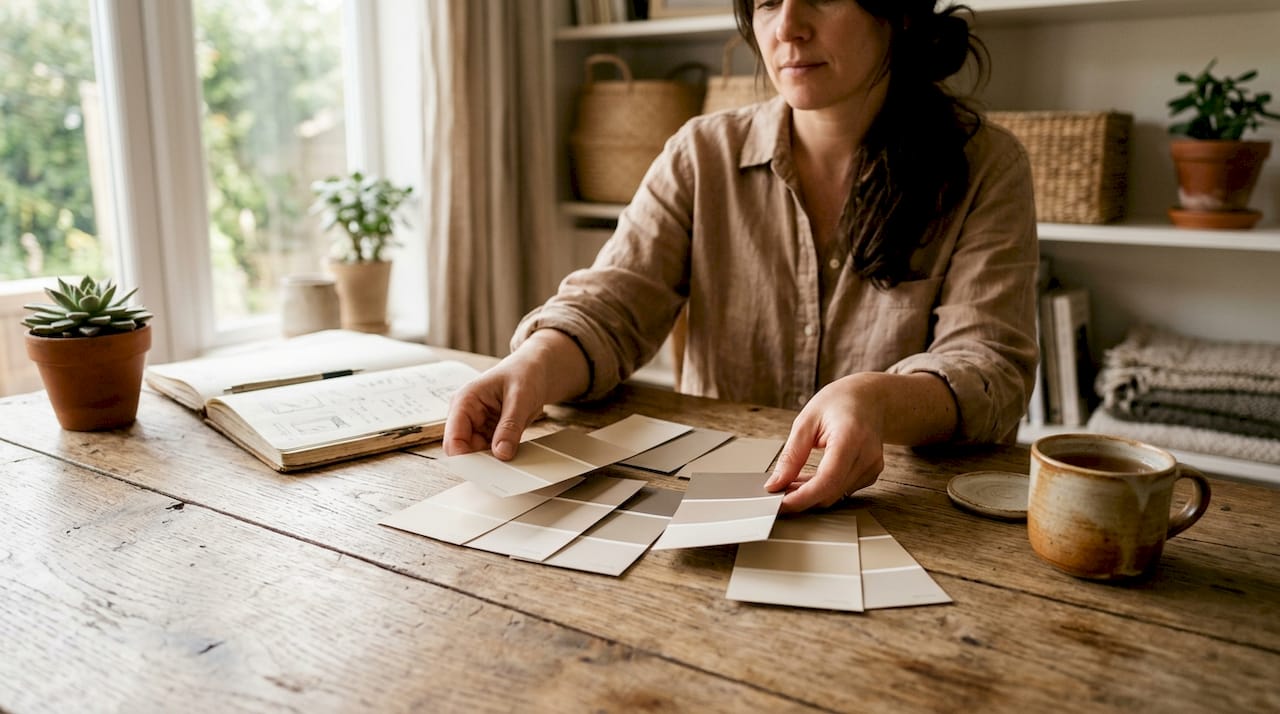
Furniture in a transitional space carries clean silhouettes with soft upholstery and proportionate shapes. You will not find heavily carved legs or ultra-modern steel slabs. Instead, furniture lines are gentle with profiles that feel approachable rather than formal or stark.
The style borrows natural wood, stone, and organic textures while maintaining clean geometry. A linen sofa paired with a wool rug and brushed-metal lamp is a textbook transitional combination. The contrast comes from texture, not from clashing colours or competing periods.
Pro Tip: Resist the urge to add colour contrast when a room feels flat. Add a second texture instead: a jute cushion, a ribbed ceramic vase, or a woven throw will do more for visual depth than a bold accent wall.
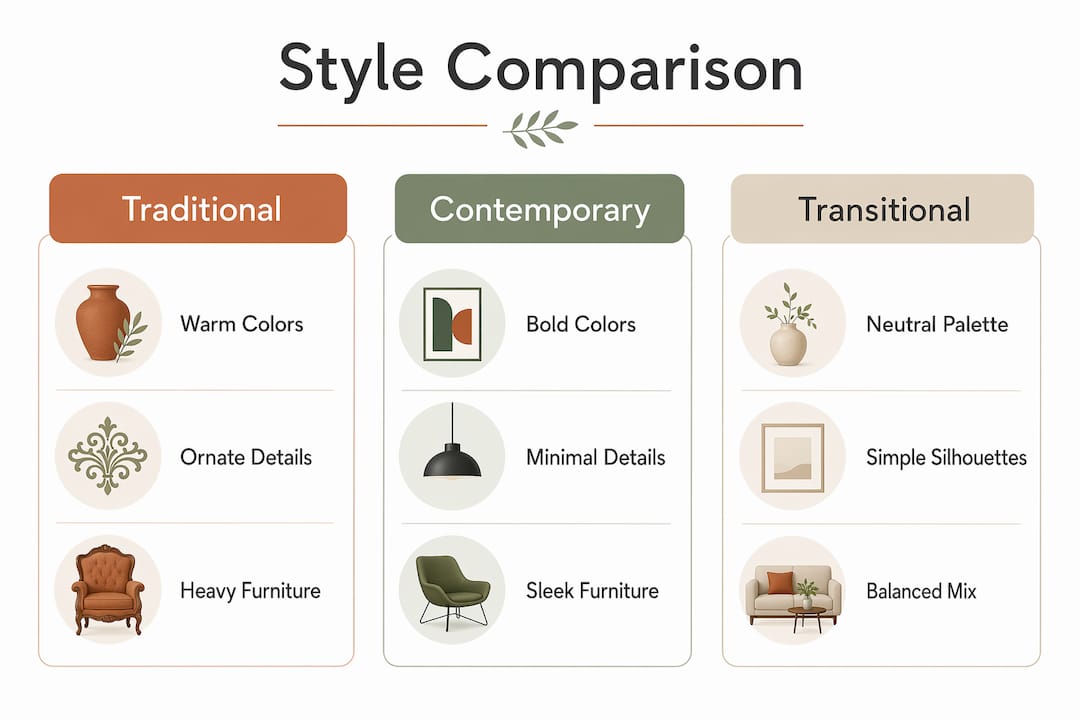
How transitional compares to traditional and contemporary styles
| Feature | Traditional | Transitional | Contemporary |
|---|---|---|---|
| Colour palette | Rich, saturated tones | Neutral: whites, taupes, greiges | Bold or monochrome |
| Furniture profile | Ornate, carved legs | Clean lines, soft upholstery | Angular, minimal |
| Texture use | Heavy fabrics, pattern | Layered naturals: linen, wool, wood | Sparse, smooth surfaces |
| Formality level | High | Balanced | Low to medium |
| Trend sensitivity | Low | Very low | High |
How does transitional decor balance tradition and modernity?
Transitional design is not a lukewarm compromise but a deliberate architectural philosophy. That distinction matters. A space that simply mixes old and new furniture without intention looks inconsistent. A transitional space makes considered choices about which elements from each era to retain and which to leave behind.
The style retains warmth without fussiness and embraces clean lines without austerity. Traditional design can feel heavy and formal; contemporary design can feel cold and impersonal. Transitional design solves both problems by selecting the best qualities of each approach.
Unlike contemporary style, which follows fast-changing trends, transitional design is intentionally timeless. It focuses on craftsmanship and proportional balance rather than what is fashionable in a given season. That focus is what keeps transitional interiors looking right years after completion.
Avoiding a “lukewarm” result requires at least one strong focal point in each room. A statement light fixture or vintage accent chair grounds the space and gives the eye somewhere to land. Without that anchor, a transitional room can feel unfinished rather than balanced.
Pro Tip: Choose one piece per room that you genuinely love, whether it is a classic armchair or a sculptural pendant light. Build the rest of the room around that piece rather than trying to balance every element equally.
The layering of textures also plays a structural role. Wool, linen, brushed metal, and natural wood each carry a different visual weight. Combining them in the right proportions creates depth without disorder.
Why does transitional decor last longer than most styles?
Designers consistently estimate a 10–15 year lifespan for well-executed transitional interiors. That figure stands in sharp contrast to trend-led styles, which can feel dated within three to five years. The reason is straightforward: transitional design does not chase trends, so it is never caught out by them.
The neutral palette is central to that longevity. Soft whites, beiges, and taupes do not go out of fashion because they are not fashion statements. They are quiet backdrops that allow the room to evolve through accent pieces, artwork, and soft furnishings without structural change.
Lifestyle compatibility also extends the style’s relevance. Transitional interiors balance comfort with a degree of formality, making them suitable for everyday living and for entertaining. A space that works for both a quiet Tuesday evening and a dinner party does not need to be redesigned when your life changes.
Style longevity at a glance
| Factor | Transitional advantage |
|---|---|
| Colour palette | Neutral tones remain relevant across decades |
| Trend dependence | Very low, no seasonal updates required |
| Accent flexibility | Easy to refresh with new textiles or accessories |
| Estimated style lifespan | 10–15 years for well-executed interiors |
How can you practically implement transitional decor at home?
Start with the walls and floors. Paint in a warm neutral such as greige or soft white, and lay a natural-fibre rug to anchor the room. These two decisions set the tone for everything else.
Choose furniture with clean profiles and soft upholstery. A sofa with straight arms and a linen or velvet cover works well. Pair it with a wooden coffee table that has simple joinery rather than ornate detailing. The goal is furniture that reads as neither period nor aggressively modern.
Layering material texture over colour contrast is the most important practical rule in transitional styling. A wool rug, linen curtains, a ceramic lamp base, and a brushed-brass handle on a cabinet drawer all contribute texture without introducing competing colours. The room gains depth while staying cohesive.
Hardware and architectural details carry more weight than most decorators expect. Brushed nickel, matte black, or aged brass handles on cabinetry signal the style’s character without requiring expensive furniture. Swapping out dated chrome hardware is one of the fastest ways to shift a kitchen or bathroom toward a transitional feel.
Avoid common styling mistakes such as mixing too many wood tones or layering patterns without a unifying neutral. Both errors undermine the cohesion that defines the style. Stick to one or two wood tones and keep patterns subtle, such as a simple geometric cushion or a tone-on-tone stripe.
Pro Tip: When in doubt, edit rather than add. Transitional rooms often look better with fewer, better-chosen pieces than with a full room of mismatched items. Remove one thing before you buy another.
For further guidance on getting the balance right, modern home styling steps offer practical frameworks that translate well to transitional interiors.
What rooms suit transitional decor best?
Transitional decor adapts well to every room in the house, but the approach shifts slightly depending on the space.
- Living rooms benefit most from layered comfort. A neutral sofa, a natural-fibre rug, and a mix of cushion textures create the warmth the style is known for. Add one statement piece, such as a sculptural floor lamp or an oversized artwork, to anchor the room.
- Kitchens are natural candidates for shaker-style cabinetry with simple geometric hardware. Shaker doors carry traditional proportions with clean, unfussy lines. Pair them with stone or quartz worktops and brushed-metal taps for a complete transitional kitchen.
- Bedrooms call for warm textiles with clean furniture lines. A linen headboard, cotton bedding in a warm white or soft grey, and a wooden bedside table with simple joinery deliver the style without effort. Avoid heavy drapes or ornate bed frames.
- Entryways and dining rooms suit balanced statement pieces. A round dining table with upholstered chairs in a plain fabric, or a console table with a simple mirror above it, both read as transitional without requiring extensive styling.
- Bathrooms respond well to shaker cabinetry, neutral tiles, and brushed hardware. A cabinet refinishing approach can update existing cabinetry to align with transitional aesthetics without a full renovation.
For room-by-room detail, room-specific decor tips provide practical guidance tailored to each space in the home.
Key takeaways
Transitional decor succeeds because it combines traditional warmth and contemporary clarity through neutral palettes, layered textures, and proportionate furniture, producing interiors that remain relevant for a decade or more.
| Point | Details |
|---|---|
| Neutral palette is the foundation | Soft whites, taupes, and greiges create a backdrop that never dates. |
| Texture beats colour contrast | Layer wool, linen, wood, and metal to add depth within a restricted palette. |
| Every room needs a focal point | One strong anchor piece prevents the space from looking incomplete or bland. |
| Style lifespan is 10–15 years | Transitional interiors outlast trend-led styles by avoiding seasonal updates. |
| Shaker cabinetry suits kitchens and baths | Simple profiles with brushed hardware deliver the style in functional rooms. |
Why I think transitional decor is the most honest style in residential design
People often come to transitional design by elimination. They know they do not want a room that looks like a period drama set, and they know they do not want something so minimal it feels clinical. Transitional design is what remains when you remove both extremes, and that is not a weakness. It is the point.
What I find genuinely interesting about this style is how it rewards restraint. The rooms that work best are the ones where someone has removed things rather than added them. A well-chosen linen sofa in a warm neutral, a single vintage lamp, and a natural rug will always outperform a room full of carefully sourced pieces that compete with each other.
The misconception that transitional design is “safe” or “boring” comes from seeing it done badly. A room without a focal point, with too many wood tones and no textural variation, is not transitional design. It is indecision. The style done well is confident and considered, and it ages in a way that almost no trend-led interior can match.
— Cristiano
Homable’s picks for a transitional home
Rugs are the single fastest way to shift a room toward a transitional feel, and Homable stocks several options that fit the style precisely.
The rectangular bamboo rugs from Homable bring natural texture and warmth to living spaces, sitting perfectly within the neutral, layered aesthetic that defines transitional interiors. For kitchens, the washable kitchen rug in coffee and black velvet adds subtle contrast without disrupting a neutral palette. Homable offers free shipping on orders over £100, making it straightforward to refresh multiple rooms at once. Browse the full collection at Homable to find pieces that complement your transitional scheme.
FAQ
What is transitional decor in simple terms?
Transitional decor is a design style that blends traditional warmth with contemporary clean lines, using neutral colours and layered textures to create comfortable, timeless spaces.
What colours define transitional interior design?
The core palette centres on soft whites, creams, beiges, taupes, and greiges, avoiding both saturated traditional tones and the stark whites of minimalism.
How long does transitional decor stay relevant?
Designers estimate a 10–15 year lifespan for well-executed transitional interiors, significantly longer than trend-led styles that can feel dated within a few years.
Is transitional decor the same as contemporary style?
No. Contemporary style follows current trends and changes frequently, while transitional design is intentionally timeless, prioritising craftsmanship and proportional balance over seasonal fashion.
What is the most common mistake in transitional styling?
The most common mistake is creating a room without a focal point. A statement light fixture or a single well-chosen accent chair grounds the space and prevents it from looking unfinished.