Cart
0
TL;DR:
- Functional design aligns a space’s form with its purpose, making beauty come naturally from utility. It emphasizes user-centered layouts, durability, and sustainability to create long-lasting, practical, and stylish interiors. Most homeowners incorrectly prioritize aesthetics over function, leading to cluttered and inefficient spaces that fail over time.
Functionality in design is defined as the purposeful alignment of an object’s form with its intended use, so that aesthetics emerge naturally from utility rather than being applied on top of it. The principle “form follows function,” first articulated by architect Louis H. Sullivan and exemplified in works like the Wainwright Building, remains the foundation of professional design practice today. Sullivan saw form and function not as competing forces but as a spiritual union, where beauty is an organic result of purpose. For homeowners, this means every decor choice carries weight beyond appearance. A rug, a curtain, or a storage unit either earns its place by doing something useful, or it quietly undermines the space it was meant to improve.
How does functionality influence aesthetics in home decor?
The relationship between function and form is not a trade-off. Beauty emerges naturally when aesthetic and functional choices are unified, which is why the most admired interiors rarely feel cluttered or contrived. When a piece of furniture serves a clear purpose, its proportions, materials, and placement all follow logically. The result looks right because it is right.
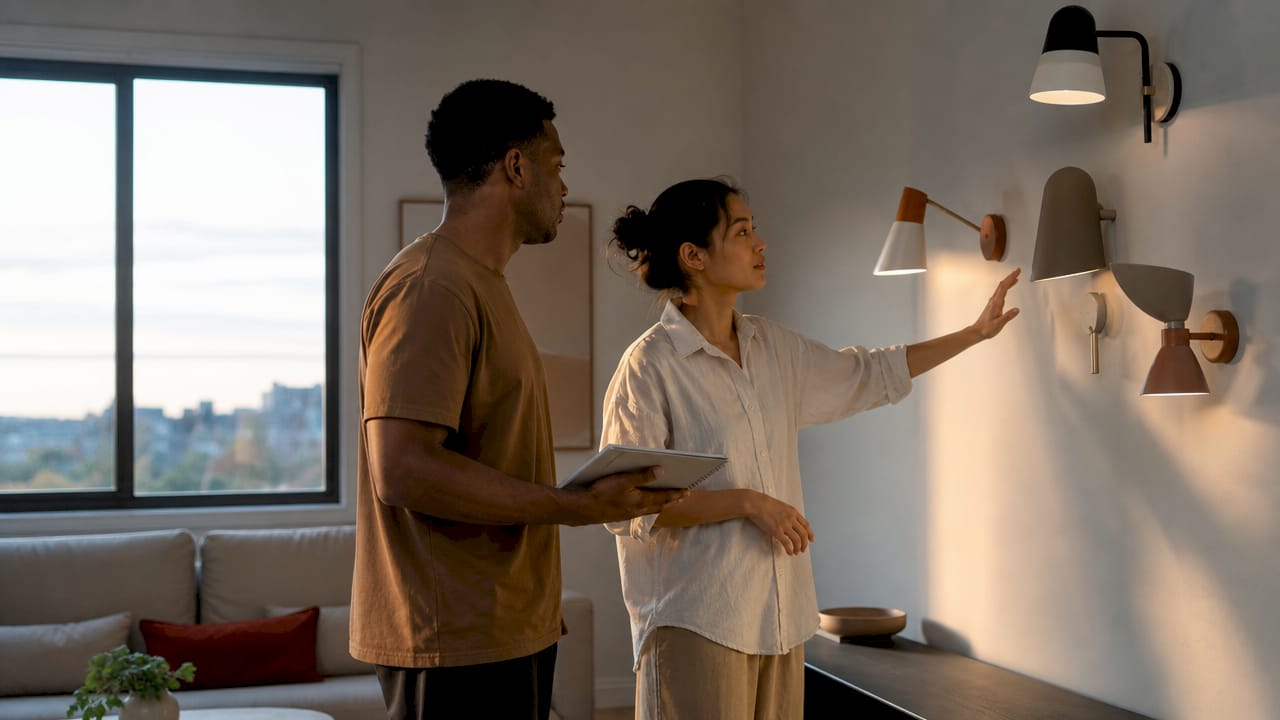
Lighting is one of the clearest examples. A pendant light positioned directly above a dining table does two things at once: it illuminates the surface for practical use and draws the eye to the centrepiece of the room. Neither role undermines the other. The same logic applies to rugs, which define zones in open-plan spaces, absorb sound, and add warmth underfoot, all while contributing colour and texture to the room’s palette.
Visual hierarchy is a functional tool that decreases cognitive load and guides attention through a space. In interior design, this means arranging furniture and decor so the eye moves naturally from focal point to supporting elements, without confusion or visual noise. A room with clear hierarchy feels calm. A room without it feels busy, even when it contains fewer objects.
Functional design also carries emotional and cultural dimensions that go beyond pure utility. A handwoven rug from a specific tradition brings meaning and warmth that a purely decorative print cannot replicate. Recognising this helps homeowners make choices that satisfy both practical needs and personal identity.
- Furniture with built-in storage removes visual clutter without sacrificing style.
- Layered lighting (ambient, task, and accent) serves multiple functions from a single design decision.
- Textiles like rugs and curtains regulate temperature, reduce noise, and define spatial zones.
- Layout choices that allow free movement reduce daily friction and make rooms feel larger.
Pro Tip: Before buying any decor item, ask two questions: what does this do, and where exactly will it go? If you cannot answer both clearly, the item is likely decorative filler rather than a functional addition.
What are the key principles governing design functionality today?
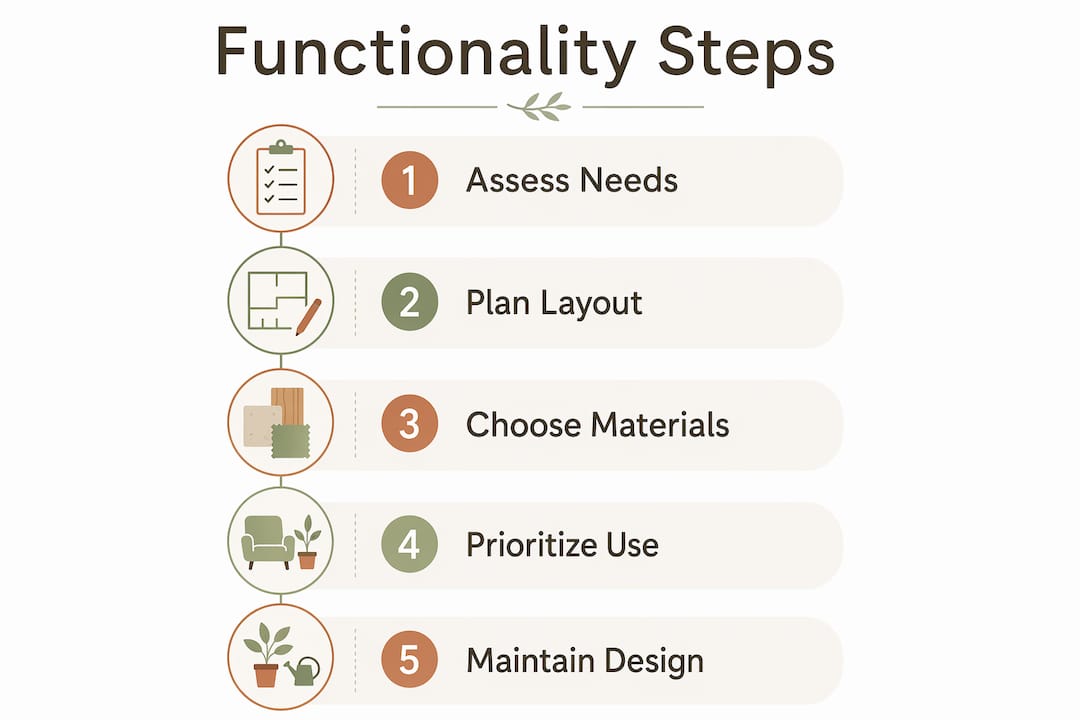
Functional design standards in 2026 emphasise user-centric layouts, usability, sustainability, and durability for both residential and commercial spaces. The shift is significant. Durability and ease of maintenance now sit alongside aesthetics as primary criteria, not afterthoughts. A design that looks beautiful on day one but requires constant upkeep or wears poorly within a year fails by professional standards.
The core principles break down into five areas. User-centric layout means every element is positioned to serve the person using the space, not to impress a visitor. Usability means the space works without friction, so daily routines flow naturally. Clarity removes unnecessary complexity from both the visual field and the physical environment. Sustainability favours materials and products that last and cause minimal environmental harm. Durability ensures the design holds its value and function over time.
Effective functional design achieves problem-solving with user-centric layouts, removing confusion and friction from every interaction with the space. That is a high bar, but it is the right one. A kitchen where the bin is on the opposite side of the room from the food preparation area fails this test, regardless of how well the cabinetry is styled.
| Design approach | Outcome |
|---|---|
| Functional design | Long-term usability, low maintenance, adaptable to changing needs |
| Purely aesthetic design | Strong initial visual impact, higher upkeep, limited adaptability |
| Functional and aesthetic combined | Durable appeal, practical daily use, sustained satisfaction |
| Purely decorative items | Adds visual interest but may create clutter and serve no practical role |
The table above makes the case plainly. Designs that combine function and aesthetics consistently outperform those that prioritise one at the expense of the other. Homeowners who prioritise design and function together report greater long-term satisfaction with their spaces.
Common challenges and misconceptions about design functionality
The most persistent myth in home decor is that function and beauty are in tension. They are not. Aesthetics alone will not succeed without equal function, and operational ease is primary in professional design. The belief that choosing a practical item means settling for something plain has led countless homeowners to fill their spaces with objects that look good in a shop but create daily frustration at home.
A second misconception is that functional design is cold or minimal. Functionality does not mean stripping a room bare. It means every element present has a reason to be there. A richly decorated room can be deeply functional if each piece serves a purpose, whether physical, emotional, or cultural.
A design’s success is judged by its ability to function effectively over time, including maintenance ease and durability, rather than just initial appearance. An item requiring constant repair or tedious cleaning fails functionally even if it looks beautiful. This is the test most homeowners forget to apply at the point of purchase.
Common mistakes homeowners make include:
- Buying oversized furniture that blocks natural movement through a room.
- Choosing light-coloured rugs for high-traffic areas without considering cleaning requirements.
- Installing decorative lighting that leaves work surfaces poorly lit.
- Selecting curtains based on appearance alone, without considering insulation or light control.
Pro Tip: When assessing a decor item’s true functional value, live with it mentally for a week. Picture yourself using the space on a Tuesday morning, not a Saturday evening with guests. If the item still makes sense, buy it.
How to enhance functionality in design for your home
Improving functional design in your home does not require a full renovation. It starts with honest assessment. Walk through each room and identify where daily routines create friction. Where do you put things down that have no designated place? Where does the room feel awkward to move through? Those friction points are your starting list.
Well-designed spaces use purposeful organisation that leads to clear outcomes, improves home usability, and enhances satisfaction. Purpose-driven purchasing is the single most effective change most homeowners can make. Buying a piece because it solves a specific problem, rather than because it caught your eye, produces rooms that work better and look more considered.
Multifunctional furniture is the most direct application of design functionality principles. An ottoman with internal storage, a dining table that extends for guests, or a bed frame with built-in drawers each solve two problems with one purchase. These choices are not compromises. They are the definition of good design.
Sustainable materials add another layer of functional value. Bamboo, for example, is durable, moisture-resistant, and visually warm. A bamboo rug in a hallway or living space handles heavy foot traffic while contributing natural texture to the room. The material’s properties and its aesthetic qualities reinforce each other, which is exactly what functional design looks like in practice.
- Audit each room for friction points before making any purchases.
- Define the primary purpose of each space and let that purpose guide every decor decision.
- Choose multifunctional pieces that solve more than one problem at once.
- Select materials based on durability and maintenance requirements, not appearance alone.
- Use layout to create clear movement paths and defined zones within open-plan areas.
- Review your choices after three months of daily use and adjust where friction remains.
Decorating small spaces requires particular attention to this process, because every square metre must earn its keep. In compact rooms, the balance between form and function becomes non-negotiable rather than aspirational.
Key takeaways
Functional design produces spaces that are more usable, more durable, and more visually satisfying than those built on aesthetics alone.
| Point | Details |
|---|---|
| Form follows function | Beauty emerges naturally when design serves a clear purpose, not when it is applied as decoration. |
| Durability matters | A design’s true success is measured by long-term ease of use and maintenance, not initial appearance. |
| Audit before you buy | Identify friction points in your home before purchasing, so every item solves a real problem. |
| Multifunctional choices win | Pieces that serve more than one purpose deliver greater value and reduce visual clutter. |
| Emotion and utility coexist | The best home decor satisfies practical needs and personal or cultural meaning simultaneously. |
Why I think most homeowners get functionality backwards
Most people approach home decor by finding something they like and then working out where to put it. That is the wrong order. The right approach starts with the problem the space needs to solve, and then finds the object that solves it beautifully.
I have seen this play out repeatedly. A homeowner buys a striking rug because the colour is perfect, then discovers it shows every footprint and cannot go near a washing machine. Six months later it is rolled up in a cupboard. The same budget spent on a washable kitchen rug that handles daily use would still be on the floor, still looking good, and still doing its job.
The sustainability argument for functional design is one that does not get enough attention. Buying fewer, better items that last longer is both financially and environmentally sounder than replacing decorative pieces every season. Modern design increasingly values function without sacrificing beauty, and the two are genuinely inseparable when the process starts in the right place.
My honest view is that the importance of design function is underestimated precisely because good functional design is invisible. When a room works perfectly, you do not notice the design. You just feel comfortable, calm, and at home. That invisibility is the highest compliment a designer can receive.
— Cristiano
Homable’s approach to functional home decor
Homable curates home decor products that treat function and style as a single brief, not two separate considerations. Every category on the site, from rugs and curtains to storage and accessories, is selected with daily use in mind.
A non-slip bath rug set is a straightforward example: it keeps the floor safe, absorbs water efficiently, and adds a considered finishing touch to the bathroom. The function comes first, and the aesthetic follows. Homable also offers bamboo curtains that provide natural insect protection and light filtering while adding warmth and texture to doorways. Free shipping on orders over £100 makes it practical to refresh a room properly rather than piecemeal.
FAQ
What does “functionality in design” mean?
Functionality in design means every element of a design serves a clear, intended purpose, with aesthetics emerging from that utility rather than being added separately. The principle is rooted in Louis H. Sullivan’s “form follows function” philosophy.
Does functional design mean sacrificing style?
Functional design does not reduce style. The most admired interiors combine usability and beauty so completely that the two cannot be separated, with each choice reinforcing the other.
How do I assess whether a decor item is truly functional?
Judge a decor item by its long-term ease of use and maintenance, not its appearance on the day of purchase. An item that requires constant cleaning or repair fails functionally, regardless of how it looks.
What are the key design functionality principles for homes in 2026?
The leading principles are user-centric layout, usability, clarity, sustainability, and durability. Each one prioritises how the space performs over time rather than how it appears at first glance.
Why does visual hierarchy matter in interior design?
Visual hierarchy guides the eye through a space in a natural sequence, reducing cognitive effort and making rooms feel calm and ordered. It is a functional tool as much as an aesthetic one.