Cart
0
TL;DR:
- A cozy corner is a small, deliberately designed space that promotes relaxation through warm lighting, soft textures, and thoughtful arrangement.
- Creating one involves using 2700K warm white bulbs, natural textiles, and furniture positioned to foster enclosure without feeling cramped.
A cozy corner is a small, intentionally designed space that fosters warmth, comfort, and relaxation through purposeful light, texture, and layout choices. Knowing how to create cozy corners is less about buying expensive furniture and more about understanding how your brain responds to enclosure, warmth, and soft surfaces. The good news is that coziness is a biological response triggered by sheltered environments, not a style reserved for large or lavish homes. Get the fundamentals right and any corner of your living room, bedroom, or hallway can become a genuinely restorative spot.
How to create cozy corners: the essential materials
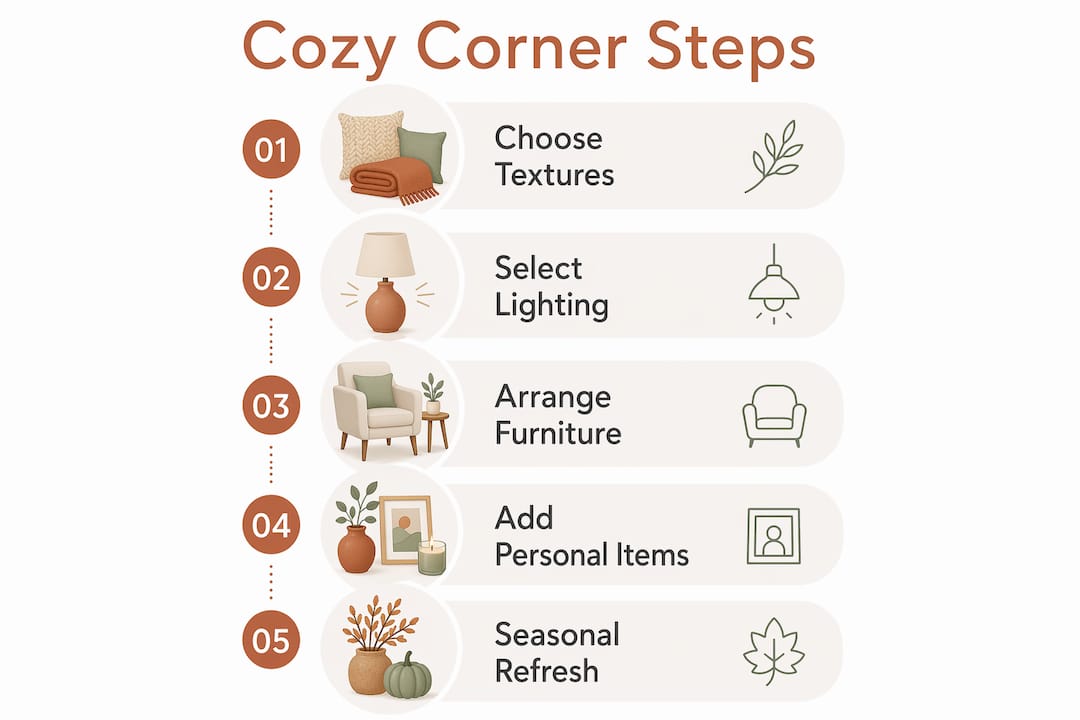
The right materials form the foundation of any comfortable corner. Before you rearrange furniture or change a single light bulb, gather the core elements that make a space feel physically and visually warm.
Lighting
- Warm bulbs rated at 2700K (sold as “warm white”)
- A table lamp, a floor lamp, and a wall sconce or clip light
- A dimmer switch or plug-in dimmer adapter
Textiles
- A chunky knit or wool throw
- At least two cushions in natural fabrics such as linen, bouclé, or velvet
- A rug large enough to anchor your seating (more on sizing below)
Furniture and decor
- A comfortable chair, armchair, or window seat
- A small side table or stool within arm’s reach
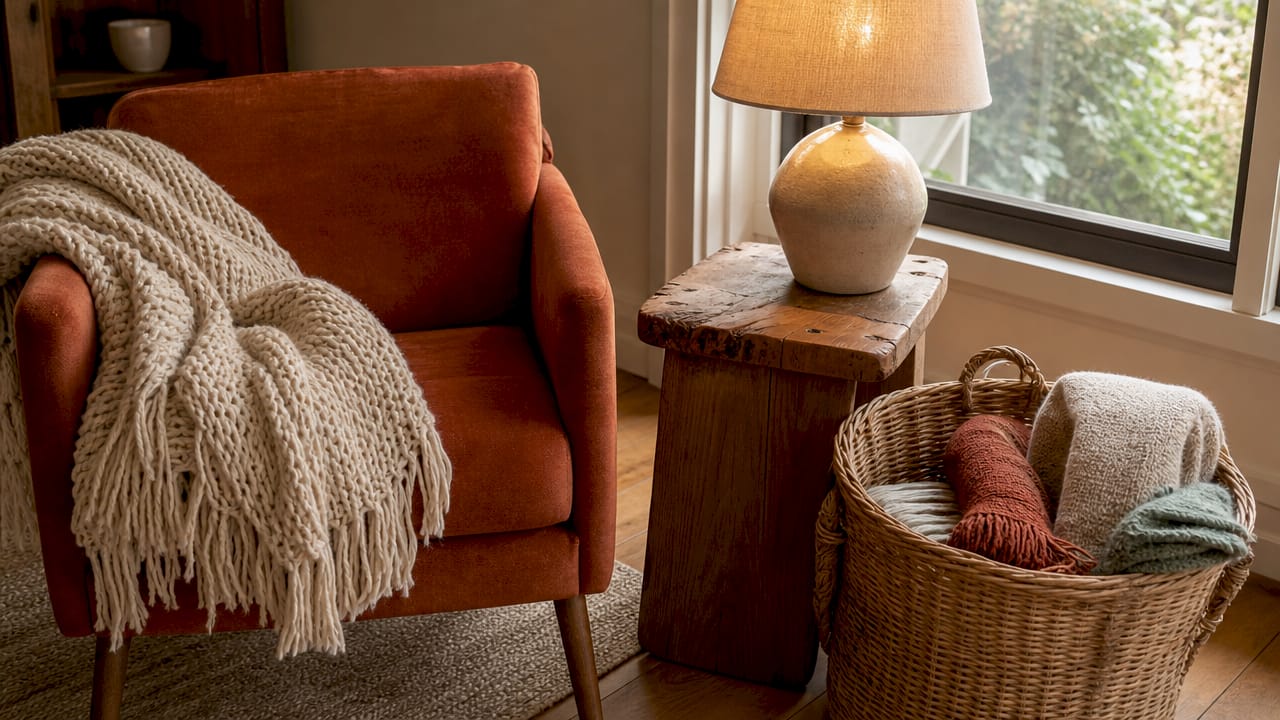
- One or two natural elements: a wooden ornament, a potted plant, or a woven basket
Pro Tip: Natural materials such as wood, linen, and wool activate biophilic comfort and signal safety to the brain. You do not need luxury pieces. A simple woven throw and a wooden tray achieve the same calming effect as far costlier alternatives.
Colour matters too. Stick to soft, tonal shades rather than bold contrasts. Warm neutrals, dusty pinks, sage greens, and earthy terracottas all reduce visual noise and lower the emotional weight of a room. Pair these with natural textures and you have a palette that soothes before you even sit down.
What lighting works best for a cozy atmosphere?
Lighting is the single most powerful tool for creating warmth in a small space. Get it wrong and no amount of cushions will save the corner.
Choose the right colour temperature
Bulbs rated at 2700K warm white produce the golden glow that the brain associates with safety and rest. Anything above 3000K reads as clinical and actively suppresses melatonin, making relaxation harder. Check the packaging before you buy: the Kelvin rating is always listed.
Turn off the overhead light
Overhead lighting eliminates coziness in the evening. The “big light” floods a room evenly, which removes the sense of shelter that makes a corner feel distinct and safe. Switch it off after dusk and rely on lower sources instead.
Use the triangle of light method
Position three light sources at eye level, arranged in a loose triangle around your seating area. A table lamp to one side, a floor lamp slightly behind, and a wall sconce or small lamp on a shelf opposite creates defined pools of light that the brain reads as enclosed and safe. This is the same principle used in hospitality design to make hotel lounges feel intimate.
Pro Tip: Fabric lampshades diffuse light far more softly than glass or metal ones. If your lamp feels too harsh even on a warm bulb, swap the shade before you replace the bulb.
Additional lighting tips worth applying:
- Fit a dimmer switch so you can lower intensity as the evening progresses
- Position lamps so the bulb sits roughly at seated eye level, not above your head
- Use blackout curtains or lined curtains to control natural light and prevent glare during the day
How should you arrange furniture for a cozy corner?
Furniture arrangement determines whether a corner feels like a defined retreat or just a chair pushed into a gap. The goal is to create a sense of enclosure without blocking the room.
Anchor the space with a rug
A rug that is too small makes seating feel temporary and unanchored. Rugs should extend at least 24 inches beyond the front legs of your furniture on every open side. At minimum, the front two legs of every main seat must sit on the rug. This physically defines the zone and signals to your brain that the space has boundaries. A woollen rug in a warm tone does double duty: it zones the area and adds tactile warmth underfoot.
Add a console or side table behind the sofa
In open-plan rooms, seating that floats in space feels exposed. Placing a console table behind your sofa, sized to roughly two thirds of the sofa’s length and no taller than the back cushions, creates a psychological boundary without building a wall. It also gives you a surface for a lamp, a plant, or a small stack of books.
Pro Tip: Group furniture tightly rather than pushing pieces against walls. A chair and side table pulled inward by even 30 centimetres creates a noticeably more enclosed, intimate feel.
For room layout guidance that goes beyond the corner itself, consider how the rest of the room’s furniture arrangement supports or undermines the zone you are creating. A cozy corner placed directly in a thoroughfare will never feel settled, no matter how well it is styled.
- Use a curtain panel on a ceiling-mounted track to partially enclose the corner on one side
- Keep a clear surface on your side table: one lamp, one drink, one book maximum
- Avoid placing the chair facing a wall. Angle it slightly toward the room for a sense of security with openness
Which colours and textures make a corner feel warm?
Colour and texture work on the nervous system before conscious thought kicks in. Soft, tonal colour palettes reduce the mental effort of processing a space, which is why relaxing rooms consistently use them. Strong contrasts and saturated tones do the opposite: they demand attention and keep the brain alert.
Calming colour schemes that work
| Colour family | Example shades | Why it works |
|---|---|---|
| Warm neutrals | Oat, sand, warm white | Reflects light softly without visual tension |
| Earthy tones | Terracotta, rust, clay | Grounds the space and adds warmth |
| Muted greens | Sage, olive, moss | Triggers biophilic calm and connects to nature |
| Dusty pinks | Blush, rose, mauve | Adds warmth without high contrast |
Pair your chosen palette with colour psychology principles to understand how each shade affects mood across different times of day and light conditions.
Layer textures to absorb sound and add warmth
Soft textures absorb sound as well as adding visual warmth. A corner with hard, smooth surfaces feels louder and colder even at the same temperature. Replace or layer over hard surfaces with:
- A bouclé or wool cushion cover on a leather or wooden chair
- A chunky knit throw draped over the arm or back of the seat
- A woven rug rather than a flat-weave or hard floor covering
- A linen curtain panel rather than a roller blind
The combination of these layers creates a space that feels physically softer and acoustically quieter. Both effects lower perceived stress.
How do you personalise and maintain a cozy corner?
A cozy corner that stays genuinely inviting over time requires two things: personal meaning and regular editing. Without both, it drifts toward either a cluttered storage spot or a sterile showroom corner.
Add objects with personal value
One or two meaningful objects anchor a corner emotionally. A framed photograph, a favourite mug on the side table, or a book you return to regularly all signal that this space belongs to you. Avoid filling every surface. One large structural plant creates far more grounding than a collection of small decorative items, which add visual noise without adding warmth.
Rotate textiles and refresh lighting seasonally
Swapping your throw for a lighter linen version in spring, or adding an extra cushion in a deeper tone for autumn, keeps the corner feeling current without a full redesign. Refreshing the lighting setup, perhaps moving a lamp or adding a candle cluster for winter evenings, maintains the sense of intentionality that makes a corner feel cared for rather than forgotten.
Pro Tip: Decluttering surfaces regularly is the single most effective maintenance habit for a cozy corner. Set a monthly reminder to remove anything that has drifted in without purpose.
Storage is part of the design. A woven basket beside the chair holds throws and magazines without exposing them. A small tray on the side table corrals remote controls, lip balm, and reading glasses so the surface reads as tidy even when it is in use. For small space styling in particular, storage that doubles as decor is the most practical approach.
Key takeaways
A cozy corner works because it combines the right lighting temperature, anchored furniture, soft natural textures, and intentional decluttering to trigger a genuine biological relaxation response.
| Point | Details |
|---|---|
| Lighting temperature matters | Use 2700K warm white bulbs and avoid anything above 3000K to support relaxation. |
| Rug sizing defines the zone | Extend rugs at least 24 inches beyond furniture to anchor seating and signal enclosure. |
| Soft textures reduce stress | Layer wool, linen, and bouclé to absorb sound and lower visual tension in the space. |
| Tonal colours calm the brain | Choose soft, muted palettes over strong contrasts to reduce mental effort and emotional weight. |
| Declutter to maintain coziness | Remove purposeless objects monthly and use storage that doubles as decor to keep surfaces clear. |
The cozy corner mistake I see most often
People assume cozy means more: more cushions, more candles, more ornaments. The corners that actually feel restorative tend to be the ones where someone has been ruthless about what stays. The most impactful change I have made in my own home was removing things rather than adding them. Taking a floor lamp out of the corner, switching off the overhead light, and replacing three small decorative plants with one large fiddle-leaf fig changed the entire feeling of the space without spending a penny.
The second mistake is treating the overhead light as neutral. Turning off the big light feels counterintuitive, especially in the evening when you want to see clearly. But the moment you switch to three lower lamps at eye level, the room shifts. The corner becomes a place rather than just a part of the room.
Balance matters too. A corner that is fully enclosed on all sides can feel claustrophobic rather than cozy. Aim for enclosure on two sides, openness on one, and a clear sightline to the rest of the room. That combination gives the brain the shelter it craves without triggering the discomfort of confinement. Small adjustments to furniture angle and lamp placement make a bigger difference than any single purchase.
— Cristiano
Homable’s picks for your cozy corner
Building a comfortable corner does not require a full room renovation. The right rug, a well-chosen throw, and a wooden ornament or two can shift a space entirely.

Homable stocks a curated range of rugs, textiles, and decorative accessories designed for exactly this kind of purposeful styling. The Baluchi Cannon Pink Woolen Rug is a strong starting point: it anchors seating beautifully and adds the warm texture that hard floors cannot provide. For natural decor accents, the wooden base ornament range brings biophilic warmth without visual clutter. Orders over £100 qualify for free shipping, making it straightforward to build your corner in one go.
FAQ
What is a cozy corner in a home?
A cozy corner is a small, intentionally designed area within a room that uses lighting, soft textures, and furniture arrangement to create a sheltered, relaxing space. It is defined by enclosure and warmth rather than size or cost.
What colour temperature bulb should I use for a cozy corner?
Use bulbs rated at 2700K, labelled as warm white. Anything above 3000K produces a cooler, more clinical light that actively works against relaxation.
How big should the rug be in a cozy corner?
The rug should extend at least 24 inches beyond the front legs of your seating. At minimum, the front two legs of every chair or sofa in the zone must sit on the rug to anchor the space effectively.
Can I create a cozy corner in a small room?
Yes. Cozy corners work particularly well in small rooms because the natural boundaries of the space provide built-in enclosure. Focus on a single chair, one lamp at eye level, a small rug, and one or two soft textiles to define the area without overcrowding it.
How do I stop my cozy corner becoming cluttered?
Edit the space monthly and remove anything that has no clear purpose there. Use a woven basket for throws and a small tray to corral everyday items. One large decorative object creates more warmth than several small ones, so favour scale over quantity when choosing decor.