Cart
0
TL;DR:
- Smart home decor integrates internet-connected devices seamlessly into a home’s design to enhance both function and appearance.
- Planning technology as a design layer improves aesthetics, comfort, energy efficiency, and home resale value.
Smart home decor is defined as the intentional integration of internet-connected devices, lighting systems, and climate controls into a home’s design so that technology enhances both function and appearance. The industry term for this practice is smart home interior design, and it sits at the crossroads of home automation and interior styling. The global smart home market is valued at $164.13 billion as of 2026. That figure reflects how mainstream this approach has become for homeowners who want their living spaces to work harder without looking like a server room. Devices like the Samsung Frame TV, Amazon Alexa-enabled speakers, and Philips Hue lighting systems are now designed to disappear into a room’s aesthetic rather than dominate it.
What is smart home decor and why does it matter now?
Smart home decor treats technology as a design layer, not an afterthought. Where traditional home automation focused purely on function, the modern approach asks a different question: does this device belong in this room visually? The answer shapes every purchase decision, from the finish on a light switch to the frame around a television screen.
The shift matters because poorly integrated tech creates visual clutter. A white plastic router on a marble shelf, a blinking LED strip behind a sofa, or a bulky black thermostat on a period wall all signal that technology was added rather than designed in. The design-first approach treats smart devices as architectural elements, planned alongside flooring, paint, and furniture rather than installed after the fact. This is the core principle that separates smart home decor from ordinary home automation.
What are the main benefits of smart home decor for homeowners?
The benefits of smart decor go well beyond convenience. They are measurable, financial, and deeply personal.
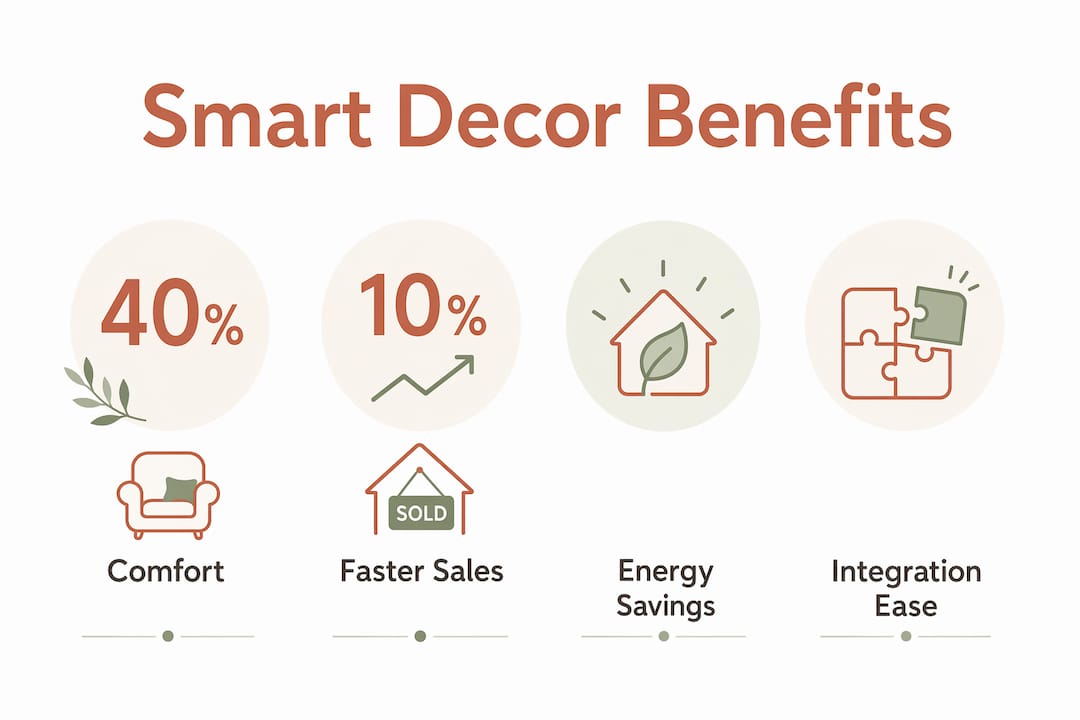
Dynamic mood lighting can improve comfort and satisfaction by up to 40%. That is not a minor quality-of-life gain. It means your living room genuinely feels different at 7pm on a Tuesday than it did at noon, without you touching a single switch. Automated systems also reduce electricity consumption by 20–30%, which translates directly to lower energy bills across a full year. Homes with integrated smart decor sell approximately 10% faster than comparable properties without it. Buyers recognise the value of a home that is already wired for modern living.
The personal benefits are equally strong. Smart climate control means your bedroom is always the right temperature when you go to sleep. Motorised window coverings let you manage light and privacy from your phone. Voice-controlled lighting means you never fumble for a switch in the dark.
Key benefits at a glance:
- Up to 40% improvement in comfort and satisfaction through mood lighting
- 20–30% reduction in energy consumption via automated systems
- Approximately 10% faster home resale with integrated smart decor
- Remote control of lighting, climate, and window treatments for daily convenience
- Personalised atmospheres in every room without manual adjustment
Pro Tip: When planning smart decor for resale value, focus on features buyers can see and use immediately: smart lighting, a video doorbell, and a programmable thermostat. These three alone have the strongest impact on buyer perception.
How can technology blend with home design without the hardware-store look?
The biggest mistake homeowners make is choosing technology first and worrying about aesthetics second. Retrofitting technology after design is the single most common cause of the cluttered, mismatched look that makes a smart home feel like an electronics showroom. The fix is to identify your room’s visual focal points before selecting a single device.
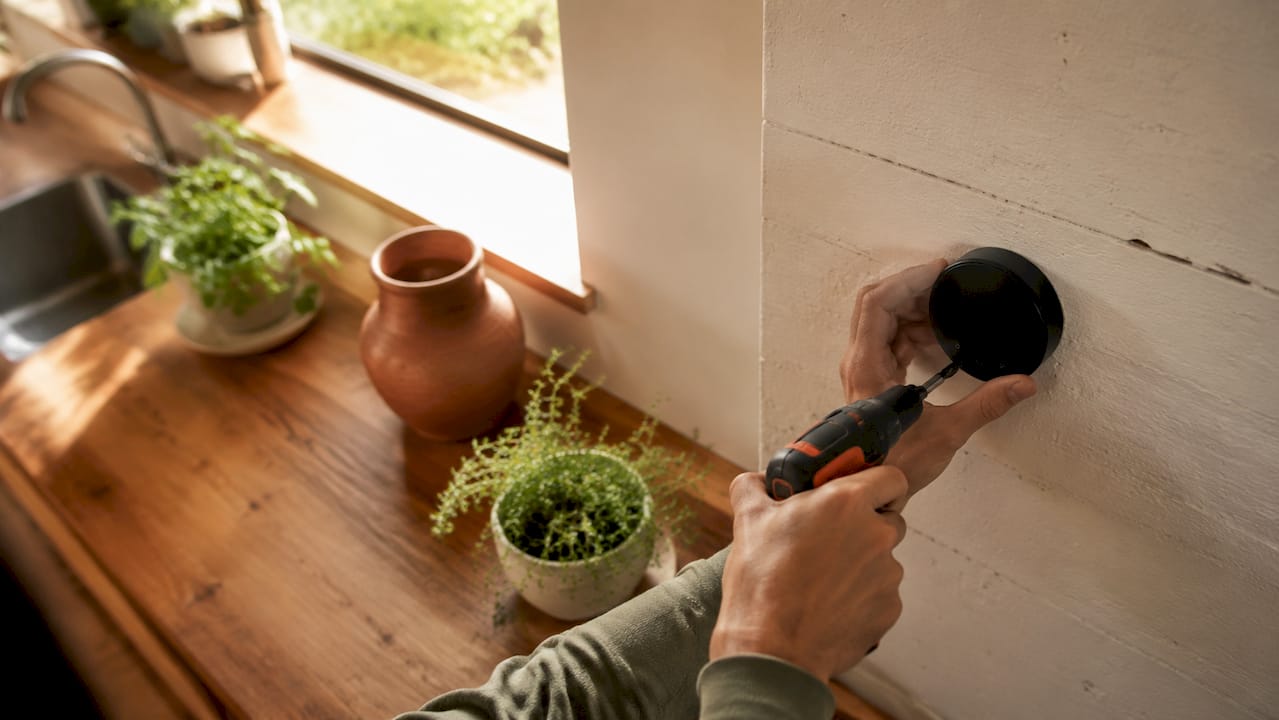
Materials and finishes like brushed brass, matte black, natural wood, and fabric-clad casings help smart devices blend with diverse interior styles. A matte black smart switch on a dark-painted wall becomes nearly invisible. A wooden-framed smart speaker on a bookshelf reads as décor. A fabric-covered Sonos speaker sits on a shelf like a sculpture, not a gadget. These choices are available across most major product categories and cost no more than their plastic equivalents.
Avoid devices with bright status LEDs, glossy white plastic, or visible cable runs. These are the hallmarks of tech that was designed for a warehouse, not a living room. Frame-style TVs, fabric speakers, and flush-mounted switches are specifically engineered for architectural integration and should be your default choice in any visible space.
| Standard device | Design-friendly alternative | Why it works |
|---|---|---|
| Glossy white plastic thermostat | Brushed metal smart thermostat (e.g., Nest) | Matches premium finishes and reads as décor |
| Freestanding black speaker | Fabric-clad speaker (e.g., Sonos Era) | Blends with soft furnishings and bookshelves |
| Standard flatscreen TV | Samsung Frame TV | Displays art when idle, frames like a painting |
| Exposed LED strip lighting | Recessed downlights or cove lighting | Invisible source, architectural quality light |
| Plastic wall switch | Brushed brass or matte black smart switch | Complements kitchen and living room finishes |
Pro Tip: Treat your smart home plan like a mood board. Collect images of rooms you love, then identify which devices appear in them. You will almost always find that the technology is either hidden or finished to match the room’s palette.
How do you choose smart home devices and ecosystems?
Choosing a single smart home ecosystem such as Amazon Alexa, Google Home, or Apple HomeKit is the most important technical decision you will make. A unified ecosystem means every device speaks the same language. You control lighting, heating, security, and entertainment from one app or one voice command. Mixing ecosystems creates friction, and friction is the enemy of a home that feels effortless.
Smart home technology should be planned as part of the architectural design, with cables and mounts routed behind walls and furniture before plastering or decorating begins. Recessed lighting, for example, costs £30–£80 per fixture to install professionally. That cost is far lower during a renovation than after one, when walls must be reopened.
Tips for choosing devices and platforms:
- Pick one ecosystem (Amazon Alexa, Google Home, or Apple HomeKit) and commit to it before buying any devices
- Check that every device you consider carries the relevant compatibility badge for your chosen ecosystem
- Prioritise devices with finishes that match your existing hardware, such as door handles, taps, and light fittings
- Plan cable routes and power points before walls are closed during any renovation or redecoration
- Buy fewer, better devices rather than filling every room with gadgets that add no clear value
- Read common home styling mistakes before purchasing to avoid costly errors
How to integrate smart decor room by room
Each room in your home has a different relationship with technology, and the devices you choose should reflect that.
Living room
The living room is where smart decor has the most visual impact. A Samsung Frame TV displays curated artwork when not in use, making it a focal point rather than a black rectangle on the wall. Recessed downlights replace floor lamps and table lamps, freeing up surface space and creating a cleaner silhouette. Hidden speakers, such as in-wall or in-ceiling models, deliver audio without any visible hardware. Smart appliances with motorised window coverings let you manage natural light and privacy at the touch of a button, or automatically at sunset.
Kitchen and bedroom
In the kitchen, smart appliances work best when they match existing cabinetry finishes. A smart oven or fridge in a panel-ready format disappears behind cabinet doors entirely. The technology is present; the hardware is not. For the bedroom, smart bulbs with warm dimming capability replace harsh overhead lights. A smart thermostat keeps the room at your preferred sleeping temperature without any manual adjustment. Avoid any device with a blinking LED in a bedroom. That small light is enough to disrupt sleep, and it signals that a gadget has been placed rather than designed in.
Home office
The home office benefits most from voice control. An Amazon Echo or Google Nest device manages calls, timers, and music without requiring you to leave your desk. Smart lighting with a colour temperature range lets you shift from cool, focused light during work hours to warmer tones in the evening. Elegant, flush-mounted switches replace standard plastic plates and maintain the professional feel of a well-styled workspace. For room-specific styling advice, Homable’s room-by-room decor tips offer practical guidance tailored to each space.
Key takeaways
Smart home decor works best when technology is planned as a design layer from the start, not added after decoration is complete.
| Point | Details |
|---|---|
| Define before you buy | Smart home decor integrates IoT devices into design for both function and aesthetics, not function alone. |
| Quantified benefits | Mood lighting raises comfort by up to 40%; automated systems cut energy use by 20–30%. |
| Design-first selection | Choose devices with finishes that match your room’s palette: brushed brass, matte black, wood, or fabric. |
| Unify your ecosystem | Commit to one platform (Alexa, Google Home, or HomeKit) before purchasing any devices. |
| Plan during renovation | Route cables and mounts before walls close; recessed lighting costs £30–£80 per fixture when done professionally. |
Why I think most people get smart home decor completely wrong
Most homeowners I speak with approach smart home decor the same way: they buy a gadget, plug it in, and then wonder why the room feels off. The problem is not the technology. The problem is the sequence.
The design-first mindset is shifting the industry, but it has not yet reached most living rooms. People still treat smart devices as appliances rather than as part of the room’s architecture. I have seen beautiful interiors ruined by a single glossy white smart hub sitting on a sideboard like a forgotten prop.
My honest advice: start with the feeling you want the room to create, then work backwards to the technology that supports it. A bedroom should feel calm and warm. A home office should feel focused and clean. A living room should feel relaxed and social. Every device you add should serve that feeling, or it should not be there. Homable’s guide to smart home aesthetics covers this principle in depth and is worth reading before you spend a penny on hardware.
The homes that get this right are the ones where you walk in and feel something, without immediately noticing a single piece of technology.
— Cristiano
Homable’s approach to smart home styling
Homable curates home decor and accessories with exactly this challenge in mind: making your home look and feel the way you want it to, without compromise.
Whether you are starting a full renovation or refreshing a single room, Homable’s collections are selected for design quality, material finish, and compatibility with modern living. From curtains and rugs that complement smart lighting schemes to storage solutions that conceal cables and hardware, every product is chosen to support a cohesive interior. Visit Homable’s home decor range to find pieces that work with your smart decor vision, not against it. Free shipping is available on orders over £100, and the full catalogue is updated regularly with new arrivals suited to contemporary British homes.
FAQ
What is smart home decor in simple terms?
Smart home decor is the practice of integrating internet-connected devices, such as smart lighting, thermostats, and speakers, into a home’s design so they enhance both function and appearance.
Does smart home decor actually add property value?
Homes with integrated smart decor sell approximately 10% faster than comparable properties, which reflects genuine buyer demand for connected, move-in-ready homes.
Which smart home ecosystem should I choose?
Amazon Alexa, Google Home, and Apple HomeKit are the three main options. Choose one and commit to it before buying devices, as mixing ecosystems creates compatibility problems and reduces ease of use.
How do I stop smart devices looking out of place?
Select devices with finishes that match your existing hardware, such as brushed brass, matte black, or natural wood. Avoid glossy plastic casings and visible status LEDs in any room you care about aesthetically.
When should I plan smart home technology in a renovation?
Plan device locations, cable routes, and power points before walls are plastered or decorated. Installing recessed lighting after a renovation costs significantly more and requires reopening finished surfaces.