Cart
0

TL;DR:
- Smart home aesthetics focus on seamlessly integrating technology into interior design to enhance visual harmony. Planning for invisible infrastructure during renovation produces a cleaner, more calming living space, while open ecosystem standards ensure long-term aesthetic and functional flexibility. Even small upgrades like smart lighting can significantly improve a home’s appearance and energy efficiency without a large investment.
Smart home aesthetics is defined as the deliberate integration of technology into interior design so that devices become part of the décor rather than interruptions to it. The global smart home market is valued at approximately $164.13 billion in 2026, which tells you one thing clearly: smart homes are no longer a luxury. They are the new standard. The industry term for this discipline is smart home interior design, and it covers everything from concealed wiring to circadian lighting systems. If you want a home that feels calm, considered, and genuinely modern, understanding what smart home aesthetics means in practice is the place to start.
What is smart home aesthetics and why does it matter?
Smart home aesthetics is the art of making technology disappear into your home without sacrificing its function. The goal is not to showcase gadgets. The goal is to create a living space where technology serves lifestyle without overwhelming the room.
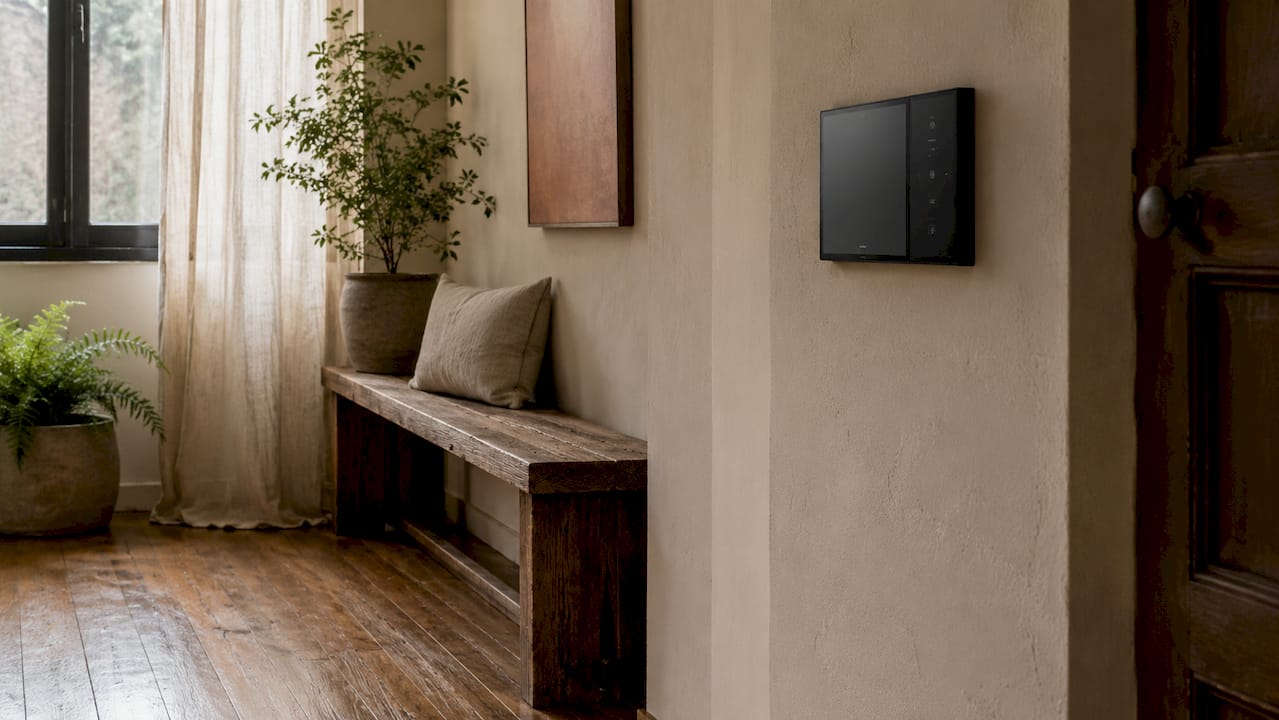
The most important shift in modern smart home interior design is the move from visible tech to invisible infrastructure. A decade ago, smart homes meant a wall covered in tablets and a tangle of cables behind the television. In 2026, the benchmark is a room where you cannot tell the technology is there at all. Flush-mounted controls sit level with the plaster. Speakers disappear into the ceiling. Lighting responds to the time of day without you touching a switch.
This matters for homeowners because the visual quality of a space directly affects how you feel in it. A cluttered room with visible gadgets creates low-level stress. A room where technology responds intuitively to your presence creates calm. Smart home aesthetics is the discipline that achieves the second outcome.
What components and design principles define a stylish smart interior?
The core of any aesthetically pleasing smart home is invisible infrastructure. This means planning where every cable, hub, and control point will live before a single wall is plastered. The result is a home where the technology is felt rather than seen.
The key design principles are:
- Concealed wiring and flush-mounted controls. Surface-mounted sockets and exposed cables are the fastest way to undermine an otherwise well-designed room. Recessed keypads and in-wall cabling keep surfaces clean.
- Material and finish coordination. Flush-mounted keypads and recessed speakers should match the surrounding materials, whether that is brushed brass, matte white, or natural stone. Generic black plastic breaks the visual rhythm of any interior.
- User journey mapping. Smart home interior design anticipates human movement through a space. Lighting brightens as you enter a room. The thermostat adjusts before you feel cold. Sound follows you from the kitchen to the sitting room. The technology responds to you rather than requiring you to respond to it.
- Circadian lighting. Smart lighting systems that shift colour temperature throughout the day, from cool white in the morning to warm amber in the evening, improve both mood and sleep quality. They also remove the need for multiple lamp switches, which reduces visual clutter.
- Recessed audio. In-ceiling and in-wall speakers from brands such as Sonos Architectural and Bowers and Wilkins offer high-quality sound without a single visible driver or cable.
Pro Tip: Choose control panels and switch plates in finishes that match your door furniture. A brushed nickel keypad next to a chrome handle creates visual noise that undermines the whole room.
Retrofit vs. architectural integration: which approach looks better?
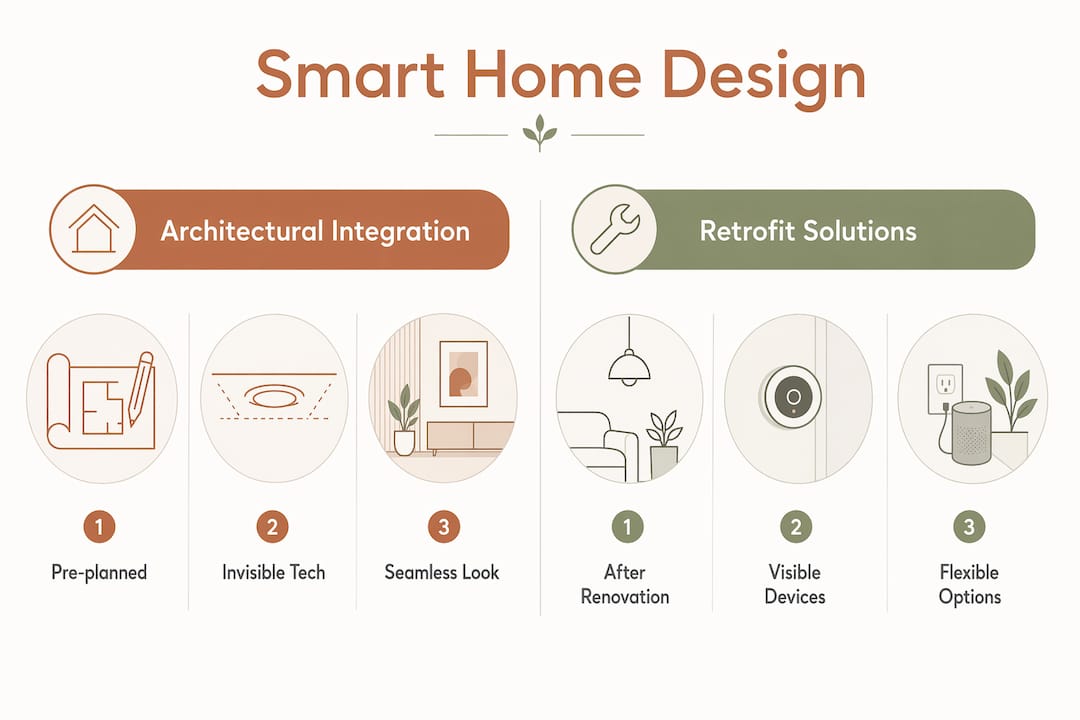
The single biggest factor in how good a smart home looks is when the planning happened. Pre-renovation planning is the most reliable way to hide wiring and hardware behind walls and cabinetry. Retrofitting technology into a finished home almost always involves compromise.
Here is how the two main approaches compare:
| Approach | Aesthetic Impact | Cost Implication | Flexibility |
|---|---|---|---|
| Architectural integration (pre-build) | Highest. Wiring and hardware fully concealed. | Higher upfront, lower long-term. | Limited changes post-build. |
| Retrofit (post-build) | Moderate. Some surface mounting required. | Lower upfront, higher remediation costs. | High. Devices can be swapped easily. |
| Wireless retrofit (e.g., Philips Hue, IKEA Dirigera) | Good for lighting. Less so for climate and audio. | Lowest entry cost. | Very high. No commitment required. |
Beyond timing, your ecosystem choice shapes long-term aesthetic consistency. Open standards like Matter and Thread are recommended over proprietary cloud-based systems. The reason is practical: if a manufacturer discontinues a product line, an open ecosystem lets you swap in a compatible replacement without replacing the entire system. Proprietary systems can lock you into hardware that eventually looks dated or stops receiving software support.
Home Assistant, the open-source hub platform, is the most widely used local-control solution in the UK market. It supports Matter, Thread, Zigbee, and Z-Wave, which means you can mix hardware from different manufacturers while maintaining a single, consistent interface.
Pro Tip: If you are renovating, ask your electrician to run conduit rather than just cable. Conduit lets you pull new wiring through finished walls years later without replastering. It costs very little extra at the time and saves a significant amount later.
Practical smart home design ideas to enhance your space
Upgrading a home with smart technology does not require a full renovation. The following approach works whether you are starting from scratch or improving an existing interior.
-
Start with lighting. Smart lighting is the highest-impact, lowest-disruption change you can make. Systems like Philips Hue, LIFX, and Lutron Caséta work without rewiring. Dynamic lighting design that shifts colour temperature and intensity throughout the day transforms the atmosphere of a room without altering a single piece of furniture.
-
Integrate climate control discreetly. Smart thermostats such as the Tado or Hive Active Heating replace standard thermostats with minimal visual change. The key is placement: a thermostat at eye level on a feature wall draws attention. One positioned near a door frame at shoulder height disappears.
-
Use natural materials to balance tech surfaces. Screens, speakers, and control panels have hard, reflective surfaces. Counterbalance them with linen cushions, timber shelving, and woven rugs. The contrast between warm natural textures and minimal tech hardware is what gives modern UK homes their particular appeal in 2026.
-
Avoid the sterile look. A common mistake is removing all decorative objects to create a “clean” smart home. The result is a room that feels like a showroom rather than a home. Keep personal objects, artwork, and plants. Technology should serve the room, not define it.
-
Plan your audio zones early. In-ceiling speakers require ceiling voids and cable runs. If you are not renovating, a compact soundbar or a single Sonos Era 100 placed on a shelf is a far better aesthetic choice than a visible cable run to a ceiling speaker.
Pro Tip: Group your smart home controls into a single app rather than managing five separate manufacturer apps. Google Home, Apple HomeKit, and Home Assistant all support multi-brand integration. One interface means less screen time and a calmer experience.
What are the real benefits of smart home aesthetics?
The benefits of a well-designed smart home go well beyond appearance. The most significant advantages are:
- Energy efficiency. Smart monitoring systems that track major energy loads can reduce overall energy consumption by 22% through dashboard insights that change behaviour. That is a meaningful reduction on a typical UK energy bill.
- Improved wellbeing. Circadian lighting systems that mirror natural daylight patterns support better sleep and reduced fatigue. The effect is subtle but consistent. Homes that align automated routines with natural human movement create a measurable sense of calm and order.
- Simplified daily life. A home that adjusts lighting, temperature, and security automatically removes dozens of small decisions from your day. That reduction in cognitive load is one of the most underrated benefits of smart home interior design.
- Long-term property value. Architecturally integrated smart systems add demonstrable value to a property. Visible gadgets that can be removed do not.
The distinction between a smart home that looks good and one that merely functions is the difference between technology that serves you and technology that demands your attention. The former improves your life. The latter adds to the noise.
Key takeaways
Smart home aesthetics succeeds when technology is planned as invisible infrastructure from the outset, not added as an afterthought.
| Point | Details |
|---|---|
| Define the goal first | Smart home aesthetics means technology that serves the room without being seen. |
| Plan before you build | Architectural integration during renovation produces far cleaner results than retrofitting. |
| Choose open ecosystems | Matter and Thread standards protect long-term aesthetic consistency and reduce replacement costs. |
| Balance tech with texture | Natural materials like timber, linen, and stone prevent smart interiors from feeling sterile. |
| Measure the benefits | Smart energy monitoring can reduce household consumption by 22%, making aesthetics and efficiency the same investment. |
Why aesthetics now leads technology in smart home design
I have spent years watching homeowners make the same mistake: they buy the technology first and design around it afterwards. The result is always the same. A room full of capable devices that feels uncomfortable to be in.
The shift I have seen in the past few years is genuinely significant. Architects and interior designers are now specifying smart infrastructure at the same stage as structural elements. Technology is treated as a material choice, not an add-on. That is the correct order of operations.
The misconception I encounter most often is that a smart home has to look like a smart home. It does not. The best-designed smart interiors I have seen are indistinguishable from beautifully designed non-smart interiors. The difference is that the lights know when you walk in, the temperature is always right, and you never think about either of those things.
If you are planning a renovation, the single most valuable thing you can do is read about modern interior design workflows before you brief your contractor. The conversation about conduit and cable routes costs nothing at the planning stage. It costs a great deal once the walls are plastered.
The other thing worth saying plainly: you do not need a large budget to start. Replacing your lighting with a smart system, choosing a single-app ecosystem, and being deliberate about where you place devices will take you most of the way there. The goal is a home that feels considered. That is achievable at almost any budget.
— Cristiano
Discover thoughtfully designed home accessories at Homable

The right accessories make the difference between a smart home that functions well and one that genuinely looks the part. Homable offers a curated range of home décor and accessories designed for modern UK interiors, from textured rugs and natural-material storage to decorative objects that balance the hard surfaces of smart technology. Every product is selected with both style and practicality in mind. If you are working on a smart home interior and want pieces that complement rather than compete with your technology, explore the Homable home accessories collection for ideas that suit the way you actually live. Free shipping is available on orders over £100.
FAQ
What is smart home aesthetics in simple terms?
Smart home aesthetics is the practice of integrating technology into a home so that devices blend with the interior design rather than disrupting it. The aim is a space that feels calm and considered, where technology is present but not visible.
Does a smart home have to look modern or minimalist?
No. Smart home technology can be integrated into traditional, rustic, and eclectic interiors as well as contemporary ones. The key is choosing hardware finishes and control interfaces that match the existing style of the room.
What is the most cost-effective way to improve smart home aesthetics?
Smart lighting is the highest-impact change at the lowest cost. Systems like Philips Hue or LIFX require no rewiring and can transform the atmosphere of a room through dynamic colour temperature and automated routines.
How does ecosystem choice affect the look of a smart home?
Open standards like Matter allow you to mix hardware from different manufacturers while maintaining a single interface. This prevents the visual clutter of multiple apps and mismatched devices, which is one of the most common aesthetic problems in smart homes.
How much does a full smart home integration typically cost?
A premium integration project for a large property, including circadian lighting and energy monitoring, costs in the region of £35,000–£40,000 and takes approximately 18 days to install. Smaller, room-by-room upgrades can be achieved for a fraction of that figure.